
Europe Weighs Emergency Diesel Release as Fuel Prices Surge
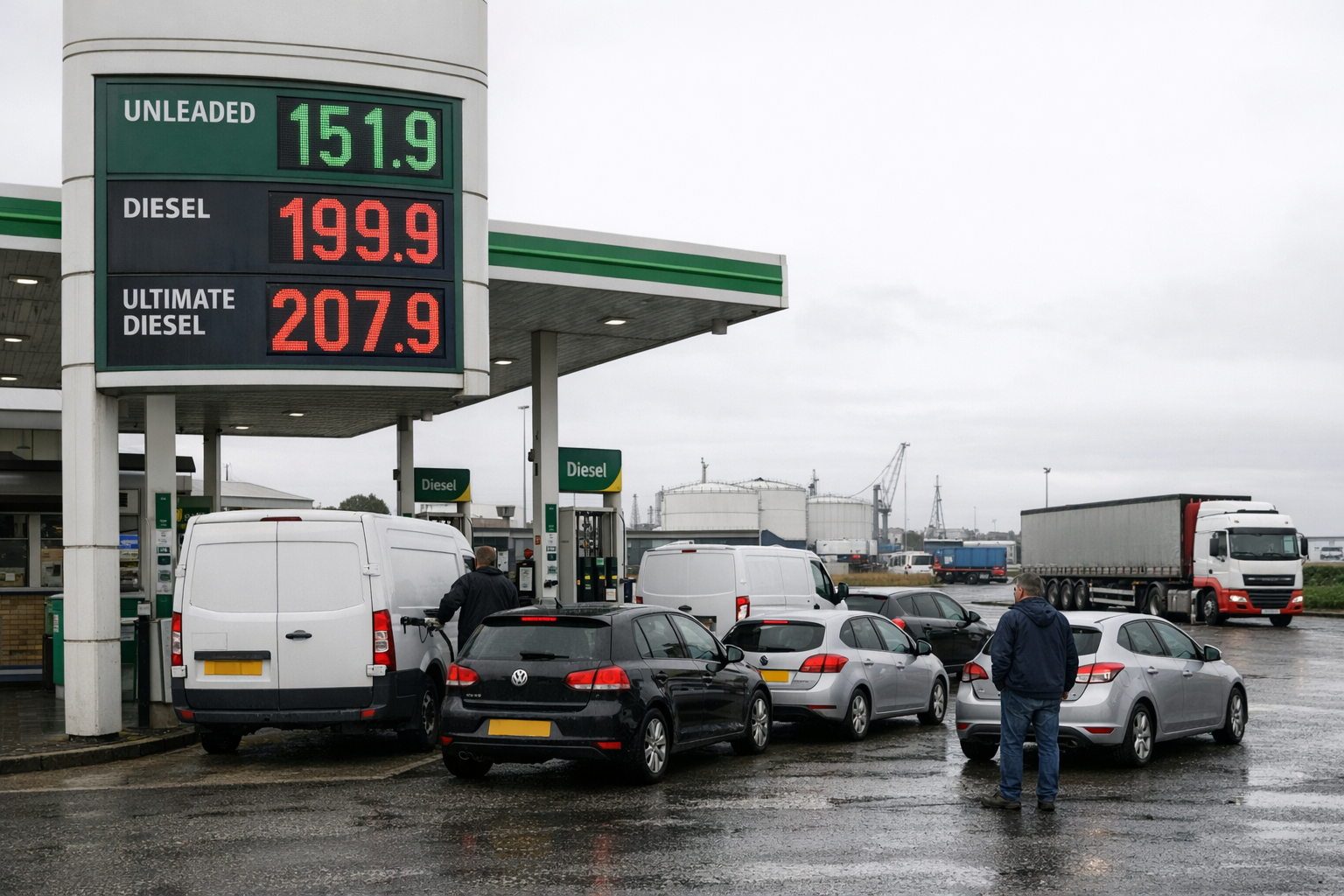
European governments scrambled on Friday to contain a worsening diesel crunch, debating an emergency release of fuel reserves after pressure from Washington and as motorists in Britain confronted record pump prices.
The talks underscored a sharp shift in the energy crisis set off by the war involving Iran: while crude oil exports from the Gulf have begun to recover, diesel and other refined fuels remain in short supply, driving up costs across Europe even as benchmark oil prices eased.
Officials were discussing a coordinated release centered on diesel, according to people familiar with the deliberations, with one proposal involving roughly 50 million barrels of diesel from European reserves alongside a possible 50 million-barrel crude release by members of the International Energy Agency. The prospect of extra supply immediately rippled through markets. Brent crude fell back below $100 a barrel, and gasoil prices also retreated as traders bet that emergency action could ease the pressure.
But the market reaction also highlighted the dilemma facing policymakers: Europe’s problem is no longer simply one of crude availability. It is increasingly a shortage of the fuels made from it, especially diesel, which powers freight trucks, farm machinery, industrial equipment, heating systems and backup generators. When diesel tightens, the effects spread quickly through food prices, transport costs and household bills.
Britain Tries to Calm Fears
In Britain, where average diesel prices reached a record £2 a litre, ministers sought to head off panic buying and reassure consumers that the country was not facing an imminent physical shortage.
Keir Mather, the transport minister, said supply to Britain remained “inherently resilient” and pointed to the country’s range of import sources as well as discussions with European partners over whether emergency stockpiles should be tapped. The government’s message was aimed at preventing a run on forecourts, a politically sensitive risk in a country where memories of fuel disruption remain potent.
The reassurance came as households and small businesses were already absorbing the hit from higher prices. Diesel costs in Britain have climbed more than 40 percent since late February, when the conflict began disrupting energy flows from the Gulf. For delivery firms, tradespeople, farmers and commuters, the rise has become an immediate economic strain.
Crude Is Flowing Again. Diesel Is Not.
What has unsettled officials is the widening gap between the recovery in crude exports and the continued scarcity of refined products.
Analysts say crude shipments through or around the Strait of Hormuz have largely returned to near prewar levels. Producers and shippers have adapted using pipelines, ship-to-ship transfers and rerouted cargoes, while some vessels have moved under military escort. That has helped calm fears of a sustained crude supply shock and has taken some heat out of headline oil prices.
Refined fuels have proved harder to restore. Diesel flows remain constrained by damage, dislocation and bottlenecks in the regional system that turns crude into usable products and gets them onto the right ships to the right destinations. In practical terms, that means Europe may be seeing more crude move again while still struggling to secure enough diesel for immediate consumption.
That divergence matters especially for Europe, which has become more dependent on imported middle distillates since breaking much of its previous reliance on Russian fuel. The continent now draws heavily on supplies from the United States and the Middle East, leaving it exposed when either source is disrupted.
Pressure From Washington
The urgency of Friday’s talks was heightened by warnings that any U.S. move to curb diesel exports could severely damage Europe’s supply outlook. American pressure on European allies to release reserves has come alongside concern in Europe that Washington might prioritize domestic fuel stability if prices continue to rise.
That leaves European governments in a difficult position: they are being urged to make more diesel available immediately, but they are also wary of depleting emergency inventories at the start of winter without clear assurances that overseas supply will remain open.
The strategic logic of releasing reserves is straightforward enough. A stock draw can signal to the market that governments are willing to intervene, temper speculative surges and provide near-term relief. But diesel is a logistical market as much as a financial one. Barrels in storage do not automatically solve a shortage unless they can be moved quickly into the regions and distribution systems where demand is most acute.
Why the Squeeze Matters Now
The pressure on diesel has broader economic significance than a rise in crude alone. Diesel is embedded deep in the real economy. It moves goods from ports to warehouses to shops; it powers harvests and construction; in some places it underpins heating and emergency electricity supply. A sustained shortage or price spike can therefore feed inflation more directly than movements in oil benchmarks suggest.
That risk is particularly acute heading into colder months, when competition for distillate fuels typically intensifies. Europe may yet succeed in cushioning the immediate blow through emergency releases or rerouted imports. But even if officials approve a coordinated drawdown, the underlying problem could persist if Gulf refining and export bottlenecks do not ease.
For now, the energy market is sending a mixed signal. Crude prices are softening on hopes of official intervention and recovering Gulf exports. Yet for consumers and businesses across Europe, the more relevant fuel is still getting harder to find and more expensive to buy.
Sources
Further reading and reporting used to add context:
- https://apnews.com/article/a2b99562febc21d84955e243c87f5d31
- https://www.axios.com/newsletters/axios-future-of-energy-fc67eb30-bcd9-11f1-9898-9fb7769bf407
- https://moneyweek.com/personal-finance/will-petrol-prices-rise
- https://apnews.com/article/2bba50d8a9f53a341f85629ba0960988
- https://www.theguardian.com/business/2026/oct/01/crude-oil-exports-strait-of-hormuz-transport-gulf-region-diesel
- https://tldrdailynews.com/news/business/energy/gulf-crude-flows-recover-but-diesel-shortages-and-stockpile-drains-keep-prices-high-4fguvqja5z
- https://www.juganews.com/article/crude-exports-from-hormuz-near-pre-war-levels-but-refined-fuel-shortages-keep-pressure-on-diesel-prices
- https://thelatinstandard.com/en/news/crude-oil-flows-through-strait-of-hormuz-stabilize-amid-persistent-refined-produ
- https://www.lse.co.uk/news/oil-falls-about-3-on-talks-over-diesel-crude-stock-releases-itmbg2vaz847oak.html
- https://www.theguardian.com/business/oil
- https://maritimegazette.co.uk/article/crude-exports-through-strait-of-hormuz-return-to-prewar-levels-but-fuel-flows-lag-9600109
- https://www.etfmandate.com/market-insights-posts/oil-flows-recover
- https://www.marketscreener.com/news/us-tells-france-and-germany-to-release-diesel-stocks-or-face-us-export-ban-sources-say-ce785ad3dc81f22c
- https://www.theguardian.com/business/2026/jun/15/return-pre-crisis-oil-gas-supplies-months-away-iran-strait-of-hormuz
- https://english.elpais.com/international/2026-10-01/tanker-transits-through-strait-of-hormuz-approach-prewar-figures.html
- https://staging.rferl.org/a/iran-oil-exports-hormuz-refinery-market/33867914.html
- https://www.reddit.com/r/politics/comments/1wvombs/us_urges_europe_to_immediately_release_diesel/
- https://www.reddit.com/r/oil/comments/1wvqvch/daily_oil_price_opinions_october_02_2026_all/
- https://www.theguardian.com/business/2026/oct/02/uk-is-not-facing-diesel-shortage-despite-fears-of-trump-export-ban-minister-says
- https://ca.finance.yahoo.com/news/europe-discussing-plan-diesel-stock-082140554.html
- https://www.theguardian.com/business/2026/oct/01/britain-talks-european-allies-eu-emergency-diesel-stockpiles-reserves
- https://uk.marketscreener.com/news/europe-weighs-new-diesel-stocks-release-after-us-pressure-sources-say-ce785ddadf8ef124
- https://live.euronext.com/en/financial-news/french-president-hold-call-g7-leaders-discuss-stock-releases
- https://www.independent.co.uk/news/uk/politics/diesel-shortage-trump-europe-uk-b3060233.html
- https://sundayguardianlive.com/world/uk-diesel-news-transport-minister-keir-mather-refutes-reports-of-diesel-shortage-reassures-general-public-of-diverse-supply-after-donald-trumps-export-ban-threat-297249/
- https://www.reddit.com/r/Economics/comments/1wvorxd/europe_discussing_plan_for_diesel_stock_releases/
- https://snslive.uk/article/2714818
- https://amp.dw.com/en/us-pressures-eu-allies-to-release-diesel-stockpiles/a-79509571
- https://english.indianews.in/business/exclusive-europe-weighs-new-diesel-stocks-release-after-us-pressure-sources-say-2-867720/
- https://www.independent.co.uk/bulletin/news/uk-diesel-european-stockpiles-talks-b3060254.html
- https://newsdive.net/2026/10/02/minister-assures-that-the-uk-will-not-experience-a-diesel-shortage-amid-concerns-over-potential-trump-export-restrictions/
- https://www.reddit.com/r/StockMarket/comments/1wvplzj/europe_weighs_new_diesel_stocks_release_after_us/
- https://www.reddit.com/r/oil/comments/1wvogbw/europe_discussing_plan_for_diesel_stock_releases/
- https://www.reddit.com/r/geopolitics/comments/1wvnty0/european_countries_agree_on_assertive_response_to/
- https://www.reddit.com/r/europeanunion/comments/1wvaae2/britain_in_talks_with_european_allies_over/
- https://www.horseandhound.co.uk//industry-news/equestrian-industry-hit-in-the-pocket-as-cost-of-diesel-hits-record-high
- https://media.rac.co.uk/diesel-tops-2-a-litre-for-first-time-ever
- https://www.lse.co.uk/news/uk-average-diesel-pump-price-hits-2-per-litre-for-first-time-ru3glk8vf8iq3ci.html
- https://www.aol.com/articles/uk-diesel-price-hits-2-101144000.html
- https://live.euronext.com/en/financial-news/oil-falls-about-3-talks-over-diesel-crude-stock-releases
- https://www.racfoundation.org/media-centre/diesel-pushes-through-2-a-litre-mark
- https://www.rac.co.uk/drive/news/fuel-news/october-sees-diesel-rocket-to-190.5p-a-litre
- https://www.racfoundation.org/
- https://www.fuel-finder.uk/blog/two-pound-diesel-one-in-four-reporting-uk-forecourts/
- https://media.rac.co.uk/cost-of-filling-a-family-diesel-car-breaks-100-mark-rac-statement-and-data
- https://stockti.com/uk-diesel-hits-fresh-peak-at-199-18p-nearing-2-mark
- https://www.rac.co.uk/drive/news/fuel-news/diesel-drops-record-17p-a-litre-in-june/
- https://media.rac.co.uk/rac-reacts-to-falling-fuel-prices-h72hln
- https://www.reddit.com/r/UKCostofLiving/comments/1wsavzf/uk_diesel_price_hits_alltime_high_rac_says/
- https://www.rha.uk.net/Portals/0/Membership/Annual%20Cost%20and%20Pay%20Surveys/RHA_Haulage%20Cost%20Movement%202025.pdf?ver=YcvqGQPRWYa2tmo7uBrpyQ%3D%3D
- https://www.reddit.com/r/CarTalkUK/comments/1wsavo6/uk_diesel_price_hits_alltime_high_rac_says/
- https://media.rac.co.uk/pressreleases/fuel-prices-rise-for-third-month-in-a-row-but-still-close-to-level-last-seen-three-years-ago-3362401.pdf
- https://www.racfoundation.org/wp-content/uploads/Fuel_Factsheet_20_April_2026.pdf?v=22042026
- https://www.reddit.com/r/ukpolitics/comments/1wu57qh/diesel_pushes_through_2_a_litre_mark/
- https://www.reddit.com/r/unitedkingdom/comments/1s1jlp6/diesel_prices_hit_threeyear_high_latest_rac/
- https://www.rac.co.uk/pdfs/advice/1115-rac-fuel-watch-november.pdf
- Europe discussing plan for diesel stock releases after US pressure, source says
- EU nations seek energy alternatives after spending over $113 billion extra since Iran war began
- Crude oil exports from strait of Hormuz largely return to pre-war levels | Oil | The Guardian