
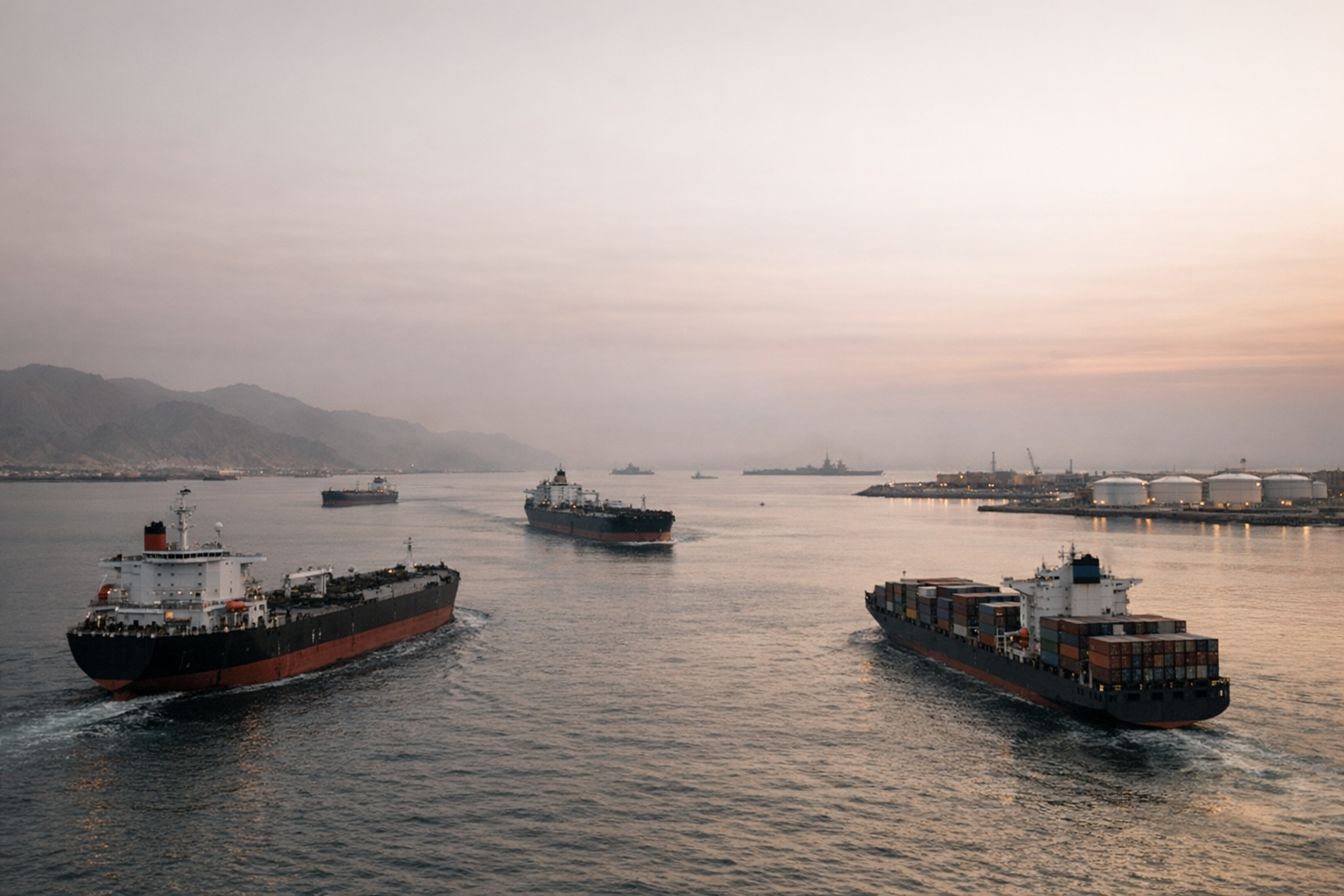
The United States and Iran appeared this week to be edging simultaneously toward a new crisis and a possible last-minute opening, as reports emerged that Vice President JD Vance had sent a private letter to one of Tehran’s top security officials even while military options remained under discussion in Washington.
The message, sent to Mohsen Rezaei, the secretary of Iran’s Supreme National Security Council, was described in differing ways by officials and news reports, underscoring the uncertainty surrounding the administration’s intentions. Some accounts said the letter was meant to revive diplomacy over Iran’s nuclear program and secure movement toward reopening the Strait of Hormuz, the vital maritime corridor whose disruption has rattled energy markets and regional governments alike. President Trump, however, was reported to have characterized the outreach more narrowly, saying it concerned medical supplies.
Iran has acknowledged receiving the message but, by late Thursday, had not publicly answered it.
That silence has left the region suspended between two possibilities: a diplomatic channel, however fragile, and a renewed confrontation with consequences likely to be felt far beyond Washington and Tehran.
A Region on Edge
The significance of any opening is magnified by how much the last round of fighting altered regional calculations.
A new assessment by the International Institute for Strategic Studies argues that the 2026 war exposed the vulnerability of Gulf states despite years of vast military spending and their long reliance on American protection. In the weeks before the April 8 cease-fire, the study said, 12 states in the region — mostly in the Gulf — faced 4,670 Iranian one-way attack drones and more than 1,400 ballistic missiles. Nearly half of those attacks were aimed at the United Arab Emirates.
Most were intercepted. But the report says the war still imposed immense costs, with one estimate putting damage to energy infrastructure at as much as $58 billion.
The conclusion is a sobering one for Gulf monarchies that have spent heavily on advanced air defenses, missile systems and American security ties: expensive arsenals and U.S. bases did not fully shield the economic lifelines on which those states depend. The report suggests that governments in the Gulf may now have to reconsider not only what they buy, but also the assumptions behind their entire defense posture.
That debate carries particular urgency as doubts grow about whether the United States, under another Trump administration, would respond in the same way to future attacks, or whether American facilities in the region might themselves become liabilities in a broader war with Iran.
Mixed Signals From Washington
The letter attributed to Mr. Vance has therefore been read in the region not merely as a diplomatic gesture, but as a test of whether Washington is seeking an exit from escalation or simply pairing pressure with a limited offer.
According to reports, the message followed mediation efforts led largely by Qatar, one of the few governments able to maintain working channels with both Washington and Tehran. One version of the proposal would require Iran to make early commitments on its nuclear activities, in exchange for sanctions relief and steps leading to the reopening of Hormuz within days. But the public explanation from Mr. Trump — that the contact related to medical aid — introduced ambiguity at a moment when ambiguity itself can be dangerous.
That uncertainty has been heightened by separate reporting that senior American military officials were also discussing possible strike options involving Iran. Such parallel tracks are not unusual in crises of this sort; administrations often combine coercive pressure with diplomatic outreach. But to Iranian leaders, and to nervous states around the Gulf, the mixed messaging may raise the question of whether the White House is offering a genuine negotiation or demanding concessions under threat.
The immediate question now is whether Tehran chooses to respond with a counteroffer, reject the sequencing demanded by Washington, or simply delay.
The Costs Beyond the Gulf
The regional fallout is already visible far from the capitals where strategy is debated.
In Taiz, Yemen’s third-largest city, local officials say worsening siege conditions are pushing civilians toward catastrophe. Nabil Shamsan, the city’s governor, said the Houthis were trying to send Taiz “back to the stone age,” with oxygen, food and water running short and reports of killings mounting.
The siege has tightened over the past month. Earlier reporting from Reuters said Houthi forces had cut the main road to Aden in early October, raising the prospect of a prolonged encirclement or even a direct assault. The Associated Press reported this week that local officials were describing famine conditions, severe water shortages, blocked cooking gas supplies and hospitals nearly out of oxygen. Human Rights Watch has warned that the siege could amount to starvation used as a method of warfare.
Taiz has long symbolized Yemen’s fragmented conflict, but the city’s deterioration now also reflects how broader regional instability can deepen existing wars. As the confrontation between the United States and Iran has sharpened, so too have anxieties that allied militias and proxy forces could exploit the moment, widening pressure points across the region.
A Narrow Off-Ramp
For Gulf governments, the juxtaposition is stark. On one side lies a new recognition that even trillion-dollar defense structures can leave economies exposed to swarms of drones, missile salvos and attacks on critical infrastructure. On the other lies the possibility — still unproved — that diplomacy may offer more security than another cycle of strikes and reprisals.
That is why Mr. Vance’s letter, despite the confusion around its contents, is being treated as more than a diplomatic footnote. It may represent the last available off-ramp before the United States and Iran slide back toward open confrontation. It may also prove to be little more than a brief gesture amid preparations for further coercion.
For now, the region is waiting on Tehran’s answer. But the larger message from the Gulf, and from places like Taiz, is that the costs of miscalculation are no longer theoretical. They are already being counted in damaged infrastructure, disrupted trade routes and civilians trapped in war zones with dwindling food, water and oxygen.
Sources
Further reading and reporting used to add context:
- https://apnews.com/article/172666b6c90fc3f0ed8a161f2457be2c
- https://apnews.com/article/8536818c3d496b04b00c13a995b8f8a1
- https://www.axios.com/2026/10/28/vance-iran-nuclear-talks-letter
- https://apnews.com/article/c032db4b09725fea0f6320eec49de5d4
- https://www.thedailybeast.com/leak-reveals-warning-for-trumps-shocking-post-election-plot
- https://www.thedailybeast.com/leak-reveals-staggering-details-of-trump-plot-for-post-election-shock
- https://www.theguardian.com/world/2026/oct/30/gulf-states-rethink-trillion-dollar-defence-us-iran-war-iiss-report
- https://www.iiss.org/publications/strategic-dossiers/the-gulf-at-war-strategic-security-and-geo-economic-dimensions/chapter-six-evolving-gulf-defence-priorities/
- JD Vance letter may offer last chance to avert fresh conflict between US and Iran | Iran | The Guardian
- https://www.inquirer.com/news/nation-world/jd-vance-peace-talks-iran-20261029.html
- https://www.iiss.org/publications/strategic-dossiers/the-gulf-at-war-strategic-security-and-geo-economic-dimensions/chapter-three-the-us-the-gulf-states-and-the-making-of-a-post-american-gulf/
- Explainer-Why is the battle for Yemen’s Taiz so important? By Reuters
- https://www.iiss.org/publications/strategic-dossiers/the-gulf-at-war-strategic-security-and-geo-economic-dimensions/
- https://ofac.treasury.gov/sanctions-programs-and-country-information/iran-sanctions
- https://www.streetinsider.com/Reuters/Vance%2Boutreach%2Bto%2BIran%2Brelated%2Bto%2Bmedical%2Bsupplies%2C%2Bsays%2BTrump/27255576.html
- https://www.streetinsider.com/Reuters/In%2BYemens%2BTaiz%2C%2Bshelling%2Bworsens%2Band%2Bprices%2Bspiral/27180160.html
- https://thesoufancenter.org/intelbrief-2026-october-1/
- https://www.cbsnews.com/live-updates/iran-war-us-trump-talks-strait-of-hormuz/?ftag=YHF4eb9d17
- https://www.everycrsreport.com/files/2026-02-20_IF12581_176173bfa584a752caccac3acd98d63be07e6051.pdf
- https://www.thedailybeast.com/mind-boggling-true-cost-of-trumps-war-on-iran-revealed
- https://www.hrw.org/news/2026/10/26/yemen-houthi-attack-on-taizz-road-threatens-lives-welfare
- https://mohr-ye.org/en/press-releases/2026/10/12/2111
- https://www.chinadailyasia.com/hk/article/641963
- https://www.aljazeera.com/news/2026/10/29/what-we-know-of-vances-letter-to-rezaei-as-trump-warns-gulf-to-prepare
- https://httnews.com/2026/10/29/trump-says-vance-s-iran-outreach-tied-to-medical-supplies/
- https://en.apa.az/america/trump-us-offered-iran-medical-supplies-532817
- https://www.everycrsreport.com/reports/R48971.html
- https://www.aol.co.uk/articles/vance-outreach-iran-related-medical-153840000.html
- https://www.istrategies.org/after-the-iran-war-the-gulf-searches-for-a-new-security-architecture/
- https://www.grc.net/documents/695d091168107GRC2026StrategicDossierFinal2.pdf
- https://www.inss.org.il/wp-content/uploads/2026/04/No.-2128.pdf
- https://www.iss.europa.eu/sites/default/files/2025-10/CP_187_ch10.pdf
- https://securityonscreen.com/wp-content/uploads/2026/03/A-Third-Gulf-War-Special-Report-March-2026-1.pdf
- https://www.govinfo.gov/content/pkg/CDOC-119hdoc162/pdf/CDOC-119hdoc162.pdf
- Evolving Gulf Defence Priorities