
Iran Broadens Retaliation to U.S. Positions in Gulf as Washington Faces Pressure at Home
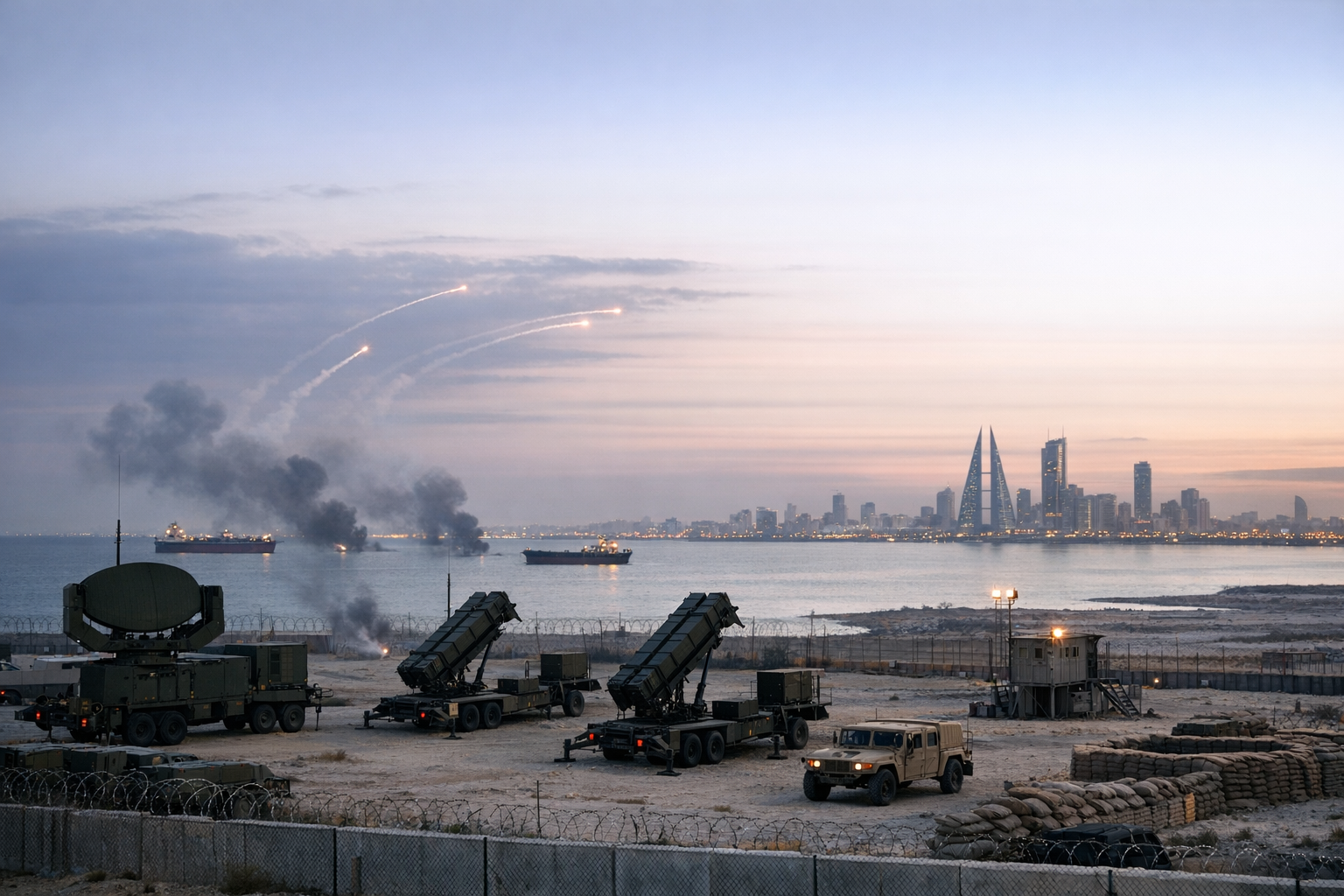
Iran said on Thursday that it had struck strategic American-linked targets in Kuwait and Bahrain, widening its response to a new round of U.S. attacks and signaling that the confrontation between Tehran and Washington is entering a more dangerous regional phase.
The claims came hours after the United States resumed major strikes on Iran after a brief pause, with U.S. Central Command saying it had hit dozens of targets tied to the Islamic Revolutionary Guard Corps, including command centers, missile and drone facilities and coastal defense sites. Iranian officials had warned beforehand that they would “punish the aggressor,” and by day’s end the conflict appeared to be spilling farther across the Gulf.
The exchange suggested that Iran was seeking to show it could impose costs not only on American forces directly, but also on the network of host countries and military facilities that underpin the U.S. presence in the region. Kuwait and Bahrain are central to that posture, and any sustained threat to bases there would sharpen concerns about the security of energy infrastructure, shipping lanes and already fragile diplomatic efforts.
Regional reports also pointed to mounting instability beyond the immediate strike zones, including after a drone attack in Egypt and renewed interceptions in Jordan and Kuwait. Together, the incidents underscored how quickly a tit-for-tat campaign can radiate outward, drawing in neighboring states even without a declared, full-scale war.
A Conflict Spreads Across Host Countries
For weeks, the United States and Iran have been locked in a cycle of attack and reprisal tied to threats against shipping and U.S. regional positions. But the latest exchanges appeared to mark a shift in scale and geography.
Washington has cast its operations as defensive, aimed at protecting U.S. forces and safeguarding maritime routes. The strikes announced on Thursday targeted military infrastructure that American officials say supports Iranian attacks and proxy operations. Tehran, in turn, has increasingly framed its retaliation as regional rather than strictly bilateral, threatening or targeting U.S. facilities in Gulf states and Jordan after American attacks on Iranian military sites.
That matters because the American military footprint in the Gulf depends on access, logistics and political support from partner governments. Bahrain hosts the U.S. Navy’s Fifth Fleet, while Kuwait is a critical hub for American troop movements and operations. Even limited strikes or attempted strikes against such sites can force costly military adjustments, raise insurance and shipping concerns, and place Gulf governments in the uncomfortable position of being both U.S. partners and potential targets.
The immediate question now is whether the conflict remains contained as an attack-for-attack campaign or expands into a sustained effort against Gulf infrastructure, maritime transit or additional U.S.-aligned states. The risk is especially acute around the Strait of Hormuz and nearby routes, where even isolated attacks can reverberate through global energy markets.
Congress Shows Unease, but Trump Retains Room to Escalate
In Washington, the military escalation unfolded alongside a renewed but unsuccessful effort in Congress to restrain President Trump’s actions against Iran. The Senate failed, 49 to 50, to advance another war-powers measure that would have limited the president’s ability to continue hostilities without clearer authorization.
The narrow vote showed that resistance to a wider conflict exists in both parties, with several Republicans siding with Democrats. But it also demonstrated the limits, for now, of congressional efforts to slow the administration’s military campaign. As a result, Mr. Trump retains broad freedom to continue strikes even as diplomacy falters and regional risks grow.
The White House has paired the military response with calls for tougher economic pressure. Mr. Trump has urged Congress to add Iran-related measures to a broader sanctions bill targeting Russia and Tehran. Yet tariffs on Iran would have little direct commercial bite: trade between the United States and Iran is already negligible. The larger significance of the push is political and symbolic, reinforcing an administration strategy that combines force with maximal pressure even when the immediate economic tools are constrained.
Diplomacy Under Strain
The latest U.S. strikes came after the collapse of an earlier cease-fire framework and after more than five days without a major American attack. That pause had offered a narrow opening for mediation, but the renewed bombardment and Iran’s expanded retaliation have left those efforts in jeopardy.
Neither side appears, at least publicly, to be preparing for a full conventional war. But the danger lies in cumulative escalation: more strikes on bases, more interceptions over neighboring countries, more pressure on commercial vessels, and less room for mediators to engineer a climbdown.
For Gulf states, the message from Tehran appears clear. If the United States intensifies its campaign, Iran is prepared to answer across a wider map, targeting the regional architecture that supports American power. For Washington, that presents a strategic dilemma: how to punish and deter Iran without provoking exactly the broader regional conflict that U.S. officials say they want to avoid.
With attacks now reaching into key American partner states and Congress unable to impose immediate limits, the confrontation is no longer defined only by what happens inside Iran. It is increasingly being measured by how much instability the two sides are willing to risk across the Middle East.
Sources
Further reading and reporting used to add context:
- https://apnews.com/article/85aefd04354af77b20999da367c297f2
- https://apnews.com/article/8dc77ed6a65f389ea4af84635d2473bd
- https://apnews.com/article/d7744d3063116944d49a616c007d669c
- https://www.axios.com/2026/07/27/kuwait-pipeline-oil-iran-private-equity
- https://theweek.com/world-news/the-iran-war-despair-in-washington
- https://www.investing.com/news/commodities-news/iran-targets-sites-in-bahrain-kuwait-after-wave-of-us-strikes-4780656
- https://www.theguardian.com/world/2026/jul/26/us-pauses-trump-netanyahu-attacks-on-iran-talks-hormuz
- https://www.investing.com/news/commodities-news/iran-escalates-attacks-on-us-bases-in-gulf-states-warns-of-more-incidents-in-strait-4787482
- https://www.globalguardian.com/newsroom/risk-barometer-july-2026
- https://www.washingtonpost.com/world/2026/07/08/trump-declares-ceasefire-with-iran-has-ended/
- https://www.onvista.de/news/2026/07-08-iran-greift-us-stuetzpunkte-in-bahrain-und-kuwait-an-0-20-26529953
- https://www.theguardian.com/world/iran%2Bmiddleeast
- https://www.cbsnews.com/live-updates/iran-us-war-strait-of-hormuz-trump-nato/
- https://www.washingtonpost.com/world/2026/07/15/us-hits-dozens-iranian-targets-trump-demands-renewed-negotiations//
- https://www.marketscreener.com/news/iran-renews-attacks-on-gulf-states-after-another-night-of-us-strikes-ce7f51dadc81f325
- https://apnews.com/article/ab55674b8ca973a1f2be28488e082b23
- https://www.thedailybeast.com/trumps-iran-war-crisis-explodes-as-his-plan-to-end-it-unravels/
- https://www.axios.com/2026/07/29/us-airstrikes-iran-trump-resume
- https://www.axios.com/2026/07/29/senate-russia-sanctions-lindsey-graham
- https://www.cbsnews.com/news/senate-trump-iran-war-powers/
- https://www.reutersconnect.com/item/trump-says-he-thinks-iran-and-hezbollah-will-be-added-to-russia-sanctions-bill/dGFnOnJldXRlcnMuY29tLDIwMjY6bmV3c21sX1ZBNzk0MDE0MDcyMDI2UlAx
- https://www.investing.com/news/politics-news/us-house-votes-to-curb-trumps-iran-war-powers-but-senate-backs-president-4809657
- https://www.investing.com/news/world-news/us-senate-blocks-resolution-curbing-trumps-iran-war-powers-4809648
- https://www.investing.com/news/politics-news/us-senate-narrowly-blocks-new-bid-to-rein-in-trump-war-powers-4745977
- https://www.investing.com/news/politics-news/us-senate-blocks-latest-bid-to-rein-in-trump-iran-war-powers-support-grows-4685922
- https://www.investing.com/news/commodities-news/iran-will-halt-attacks-as-long-as-us-maintains-pause-iranian-source-says-after-trump-calls-off-strikes-4812898
- https://www.khaleejtimes.com/uae/iran-targets-bahrain-kuwait-sites-after-us-strikes?amp=1
- https://www.investing.com/news/commodities-news/ship-hit-in-hormuz-as-millions-march-for-ayatollah-iran-says-no-talks-unless-trump-halts-threats-4778531
- https://today.lorientlejour.com/article/1539563/iran-launches-strikes-on-us-military-sites-in-kuwait-bahrain-in-response-to-us-attacks.html
- https://www.marketscreener.com/news/iran-targets-sites-in-bahrain-kuwait-after-wave-of-us-strikes-ce7f5ed8de89f421
- https://www.reddit.com/r/USNEWS/comments/1vb6z78/iran_vows_to_punish_the_aggressor_today_after_us/
- https://www.reddit.com/r/RWATimes/comments/1vb6ist/trump_says_sanctions_bill_should_include_tariffs/
- https://apnews.com/article/e31d249ba6443decdd3e63cd00f0fb84
- https://www.senate.gov/about/powers-procedures.htm
- https://www.schiff.senate.gov/news/press-releases/news-senate-moves-to-curtail-iran-war-powers/
- https://www.schiff.senate.gov/news/press-releases/news-sen-schiff-files-new-war-powers-resolution-after-collapse-of-u-s-iran-ceasefire/
- https://www.war.gov/News/News-Stories/Article/Article/4541171/centcom-completes-another-wave-of-strikes-against-iran/
- https://www.centcom.mil/MEDIA/PUBLIC-RELEASES/Article/4504919/us-defends-disables-threats-in-response-to-iranian-aggression/
- https://www.congress.gov/congressional-record/volume-166/issue-30/senate-section/article/S1051-7
- https://www.schiff.senate.gov/news/press-releases/watch-senate-blocks-sens-schiff-kaine-and-schumers-war-powers-resolution-to-end-trumps-illegal-war-in-iran/
- https://www.democrats.senate.gov/newsroom/press-releases/leader-schumer-statement-celebrating-both-chambers-of-congress-rebuking-trumps-dangerous-war-by-passing-iran-war-powers-resolution
- https://www.congress.gov/congressional-record/volume-166/issue-5/senate-section/article/S129-1
- https://www.foreign.senate.gov/press/dem/release/-ranking-member-shaheen-statement-on-60-days-of-president-trumps-war-with-iran
- https://www.capito.senate.gov/news/in-the-news/west-virginia-senators-oppose-resolution-limiting-presidents-iran-war-powers
- https://www.reddit.com/r/war/comments/1vagyle/us_strikes_irgc_targets_in_iran/
- https://www.reddit.com/r/NewIran/comments/1vah3ui/centcom_announced_the_completion_of_strikes_on/
- https://www.reddit.com/r/navy/comments/1vahz6v/footage_from_tonights_strikes_on_iran/
- https://en.wikipedia.org/wiki/2026_Iran_war_order_of_battle
- https://www.govinfo.gov/content/pkg/CREC-2026-04-30/pdf/CREC-2026-04-30.pdf
- US launches strikes on Iranian targets a day after it foiled missile attack on American forces
- US and Iran trade missile barrages as hopes dim for a quick resolution to the five-month conflict
- Iran will halt attacks as long as US maintains pause, Iranian source says after Trump calls off strikes By Reuters