
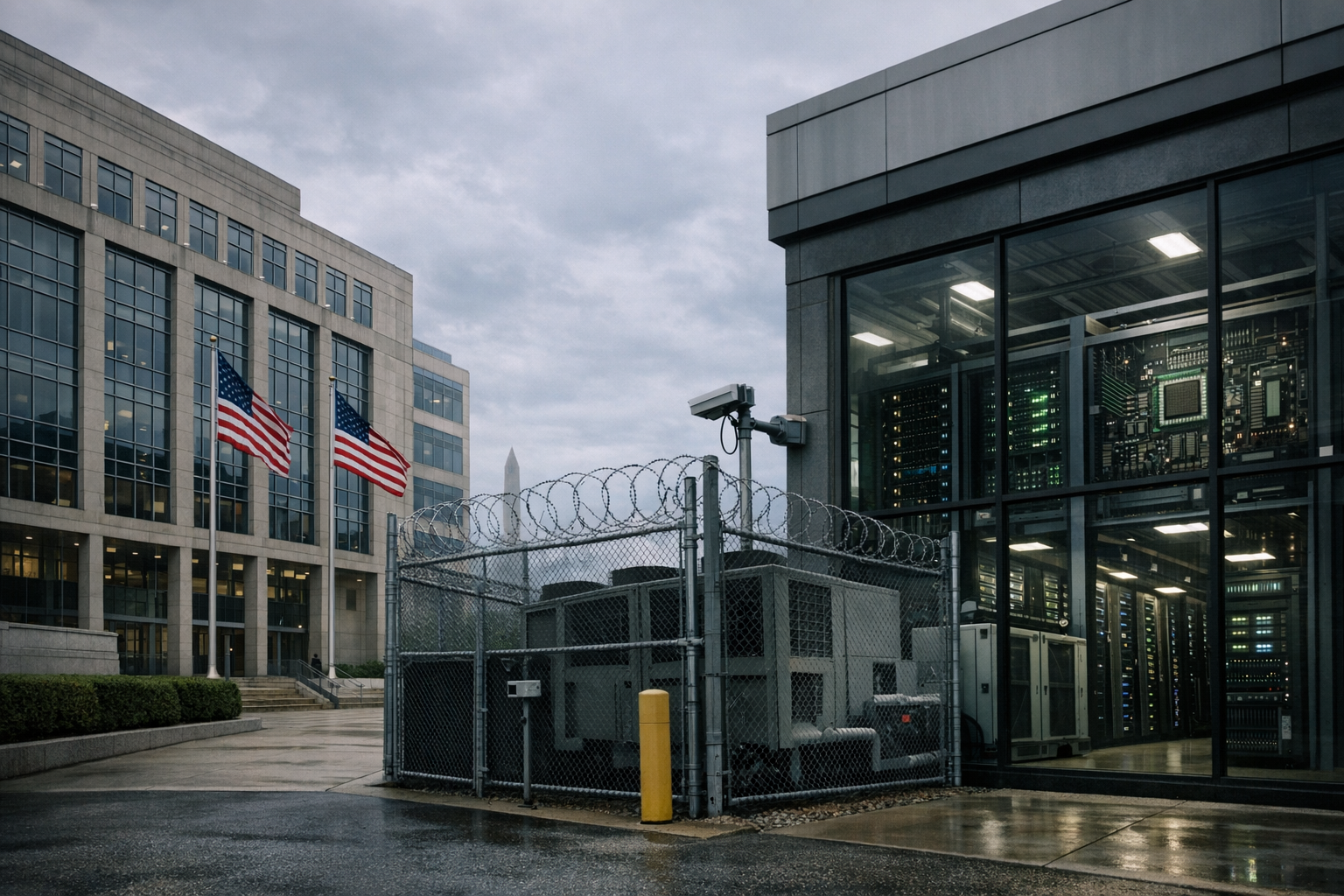
Washington Tightens the Net Around Nvidia as Scandal Spills Into U.S.-China Chip Fight
The widening fallout from Nvidia’s leadership crisis reached Washington in a more concrete form on Sunday, as the Trump administration moved to close what officials see as a significant loophole in U.S. chip restrictions on China: access to advanced American artificial-intelligence hardware through remote connections and overseas data centers.
The Commerce Department issued an interim rule requiring stricter screening of remote users of U.S. AI chips and barring listed or military-linked parties from obtaining such access, according to people familiar with the measure and details released on Nov. 16. The action reflects a sharp escalation in the government’s response to a controversy that, only days ago, seemed centered on corporate misconduct and boardroom upheaval at one of America’s most important technology companies.
It now touches export-control enforcement, the broader contest with Beijing over advanced computing and a politically sensitive question in Washington: whether the Commerce Department, under Secretary Howard Lutnick, was too permissive toward Nvidia and China-linked business at the very moment his family’s financial connections to the chipmaker were under growing scrutiny.
The new rule, written with involvement from the Treasury Department and the National Security Council, is aimed at a problem that has vexed policymakers for months. Even as the United States restricted shipments of cutting-edge chips to China, Chinese users could still potentially tap the same computing power by renting capacity in third-country data centers or accessing U.S.-based servers remotely. For lawmakers and national-security officials worried that advanced AI tools could aid China’s military or surveillance capabilities, that gap had become increasingly untenable.
Pressure Builds on Lutnick
The administration’s move came as Senator Maria Cantwell, the Washington Democrat who has been among the most vocal critics of the department’s handling of the issue, urged Mr. Lutnick to halt AI chip sales to China-linked entities ahead of an expected meeting between President Trump and China’s leader, Xi Jinping.
In pressing the secretary, Ms. Cantwell said Commerce had allowed advanced AI chips to flow to companies linked to the People’s Republic of China, intensifying a debate over whether U.S. controls have been strong enough — and enforced aggressively enough — to prevent sensitive American technology from reaching Chinese customers either directly or through intermediaries.
That criticism has landed with particular force because Nvidia occupies such a central role in the global AI economy. Its chips are the core infrastructure behind training and deploying many of the world’s most advanced AI systems, and they are in demand not just by American technology giants but also by cloud providers, foreign data-center operators and a web of resellers and leasing firms. Any clampdown on remote access, cloud usage or third-country transactions could reverberate well beyond Nvidia itself, affecting how AI computing is sold and consumed around the world.
The issue has also become entangled with ethics concerns surrounding Mr. Lutnick. He has faced questions over his relationship with Jensen Huang, Nvidia’s ousted chief executive, as well as his family’s business ties to the company and its wider ecosystem. Those concerns have sharpened as lawmakers ask whether political or personal proximity may have influenced the department’s posture toward Nvidia-related China exposure.
A Corporate Crisis Becomes a Policy Flashpoint
The immediate catalyst for the turmoil was Mr. Huang’s resignation last week after revelations about an affair involving Alice Huang, a former executive at Megaspeed International, a Singapore-based cloud and AI infrastructure company. Some reports have alleged Chinese intelligence links involving Ms. Huang, but those claims remain publicly unproven.
Megaspeed, breaking its silence over the weekend, said it was a “legitimate and lawful business” and rejected recent assertions about its operations, supply chain and global footprint as unsupported by verifiable evidence. The company also said Ms. Huang had left the business in late 2025.
What began as a damaging personal scandal has since become something more consequential for policymakers. Lawmakers and administration officials have focused on whether advanced Nvidia chips may have reached Chinese users through foreign intermediaries, cloud providers or leased data-center capacity — channels that can be harder to police than direct sales.
That concern helps explain the urgency behind Sunday’s interim rule. Washington has spent several years tightening export controls on advanced semiconductors and chipmaking tools in an effort to slow China’s progress in frontier AI and high-performance computing. But as restrictions multiplied, companies and customers alike adapted, shifting to more complex global supply chains and service-based access models that often fall into gray areas.
In effect, the government is now trying to catch up to the way the AI market actually works: not simply through physical shipments of chips, but through the sale of computing as a service.
Trump Backs a Huang Return
At the same time, the political and corporate battle over Nvidia’s future took another unexpected turn when Mr. Trump said he supported calls for Mr. Huang’s return to the company.
The president’s endorsement adds weight to an already noisy campaign from parts of Silicon Valley arguing that Mr. Huang should be reinstated despite the scandal. Mr. Trump suggested that the executive had “learned a big lesson,” aligning himself with technology leaders and investors who view Mr. Huang as uniquely important to Nvidia’s dominance and, by extension, to American leadership in AI.
That position could place additional pressure on Nvidia’s board, which must now navigate not only questions about governance and reputational risk but also overt political intervention from a president eager to keep the United States ahead in the AI race.
The company has not resolved whether it will resist or accommodate the growing push to restore its co-founder. But the support Mr. Huang is drawing from both the industry and the White House underscores how unusual Nvidia’s position has become. Few companies are so central to national industrial strategy that the fate of a chief executive becomes a matter of geopolitical discussion.
Why the Stakes Are Rising
The significance of the administration’s latest move lies in what it signals about the next phase of U.S. tech policy toward China. Earlier restrictions focused largely on what chips could be shipped and to whom. The newer approach is more expansive, targeting access itself — whether through cloud contracts, remote log-ins or data-center leasing in friendly third countries.
If enforced aggressively, that could reshape the business models of cloud providers and AI infrastructure firms, forcing them to adopt tougher customer screening and compliance systems. It could also bring new scrutiny to Singapore, the Gulf states and other fast-growing data-center hubs that have become important nodes in global AI infrastructure.
Just as importantly, Sunday’s developments suggest that Congress may not stop at public letters. Hearings, formal investigations and additional restrictions remain possible, especially if lawmakers conclude that previous controls were inadequately enforced or that conflicts of interest clouded official decision-making.
Much remains unresolved. It is not yet clear how broad the remote-access rule will be in practice, whether additional companies will be added to U.S. restriction lists, or whether any formal export-control violations by Nvidia or related intermediaries will be alleged. Nor has public evidence emerged to substantiate the espionage accusations surrounding Alice Huang.
But the direction of travel is unmistakable. What began as a crisis inside Nvidia has become a test of how far Washington is willing to go to prevent China from tapping American AI power — and of whether political influence, personal ties and the commercial realities of the global cloud economy have made that task harder than officials were prepared to admit.
Sources
Further reading and reporting used to add context:
- https://apnews.com/article/a31165456bf217de16f1c4e646b72bd2
- https://apnews.com/article/202e72d0c05646479e96a4936620b983
- https://apnews.com/article/ffc5e5a2d384f00960034ec10087502e
- https://www.axios.com/2026/11/16/jensen-huang-ceo-nvidia-donald-trump
- https://apnews.com/article/35786b8f539ec95f16ae0500f71cfcc7
- https://www.axios.com/2026/11/15/bessent-nvidia-earnings-china-chip-sales-ceo
- https://www.axios.com/newsletters/axios-pro-rata-e1701604-785f-4db0-b6d3-aee779abaf93
- https://www.thedailybeast.com/sex-mad-ceos-trumpy-comeback-scheme-leaks
- https://www.theatlantic.com/international/2026/11/ai-race-china-us/689439/?utm_source=openai
- https://apnews.com/article/e9e2e18169dce0b30a34f39715bf35ed
- https://apnews.com/article/1b7431af84c9d78773c277672a9486f3
- https://www.kiplinger.com/investing/stocks/stocks-slip-as-wall-street-weighs-nvidias-ceo-crisis-stock-market-today
- https://theweek.com/business/the-chips-are-down-where-does-nvidia-go-from-here
- https://www.cbsnews.com/news/trump-nvidia-jensen-huang/
- https://www.theguardian.com/business/live/2026/nov/16/ai-sell-off-resumes-jensen-huang-discusses-comeback-nvidia-ceo-dollar-stock-markets-latest-news-updates?page=with%3Ablock-6afb10898f08b41b552d213f
- https://www.theguardian.com/business/live/2026/nov/16/ai-sell-off-resumes-jensen-huang-discusses-comeback-nvidia-ceo-dollar-stock-markets-latest-news-updates?page=with%3Ablock-6afb14d98f08e07eae10ee8a
- https://www.washingtonpost.com/technology/2026/11/16/trump-says-he-would-not-mind-jensen-huangs-return-nvidia/
- https://www.tradeprepared.com/news/rss/Imh0dHBzOi8vd3d3LmNuYmMuY29tLzIwMjYvMTEvMTYvY2FudHdlbGwtbHV0bmljay1haS1jaGlwLWNoaW5hLmh0bWwi%3A1xStvo%3AWmNWBjTAoIgqurbjRuTdv33BElzScCFyUa0mpTs0cus/
- https://www.brokerpick.com/news/cantwell-urges-lutnick-to-block-advanced-ai-chip-sales-to-china
- https://stockscreener.finance/en/news/lutnick-faces-questions-over-nvidia-spy-scandal-his-sons-firm-has-deep-ties-to/
- https://newsfilter.io/articles/lutnick-faces-questions-over-nvidia-spy-scandal-his-sons-firm-has-deep-ties-to-b13bb86e2c3a5ba0a0805bd50f5874a0
- https://skim.plus/articles/cantwell-urges-lutnick-to-stop-ai-chip-sales-to-china-ahead-of-xi-meeting-7482caf5
- https://ground.news/article/lutnick-faces-questions-over-nvidia-spy-scandal-his-sons-firm-has-deep-ties-to-the-chipmaker
- https://ucapital.com/en/news/breaking/17799573
- https://aigregate.com/story/lutnick-faces-questions-over-nvidia-spy-scandal-his-sons-firm-has-5705910
- https://www.bulltale.tech/app/event/9302
- https://agiwatch.ai/signals/sig-2026-11-16-cantwell-letter-commerce-failed-chip-controls
- https://thegopfiles.com/story/lutnick-faces-questions-over-his-sons-cantor-fitzgerald-ties-to-nvidia-after-huang
- https://salars.net/breaking/58910a9e-6da7-371d-8deb-5d9a00000000
- https://www.standardpost.in/media/2026-11/november_14_2026_sp_mumbaii.pdf
- https://www.reddit.com/r/WhatTrumpHasDone/comments/1xwv0zz/lutnick_pushed_to_weaken_chip_rules_that_overlap/
- https://www.reddit.com/r/wallstreetbets/comments/1xxpl65/us_moves_to_limit_remote_access_to_advanced_ai/
- https://www.reddit.com/r/NVDA_Stock/comments/1xxbg45/they_wanted_to_destroy_the_influence_jensen_had/
- https://www.theatlantic.com/economy/2025/12/trumps-china-ai-chips/685235/?utm_source=apple_news
- https://www.reddit.com/r/law/comments/1xx0uy9/lutnick_pushed_to_weaken_chip_rules_that_overlap/
- https://www.axios.com/newsletters/axios-ai-govt-e3042ad0-9f95-11f0-b4e6-ddb7e2902822
- https://www.reddit.com/r/wallstreetbets/comments/1xwfmsx/singaporean_governments_clarification_statement/
- https://time.com/5841314/china-npc-growth-economy-hong-kong-national-security/
- https://www.commerce.senate.gov/press/dem/release/cantwell-tells-lutnick-you-failed-to-protect-national-security-americas-tech-edge/
- https://www.finance.senate.gov/wp-content/uploads/2026/11/11122026wydenneallettertolutnickonnvidia.pdf
- https://www.bluntrochester.senate.gov/wp-content/uploads/2026/11/Letter-to-Secretary-Lutnick-Re_-Gaps-in-AI-Chip-Export-Controls_FINAL-PDF.pdf
- https://www.bluntrochester.senate.gov/news/press-releases/news-senators-blunt-rochester-curtis-demand-trump-administration-strengthen-ai-chip-export-controls/
- https://www.bennet.senate.gov/2026/11/11/bennet-presses-trump-administration-on-failure-to-stop-megaspeeds-apparent-ai-tech-diversion-to-china/
- https://www.cantwell.senate.gov/news/press-releases/cantwell-and-colleagues-push-trump-to-negotiate-ai-guardrails-with-xi-jinping
- https://www.commerce.senate.gov/press/dem/release/ranking-member-cantwell-floor-speech-on-ai-risks-and-the-need-for-strong-federal-guardrails/
- https://www.finance.senate.gov/ranking-members-news/wyden-and-neal-begin-to-investigate-administration-scheme-to-take-cut-of-nvidia-ai-chip-sales-to-chinese-companies-trump-and-commerce-department-reportedly-ignored-warnings-about-former-ceos/
- https://www.bluntrochester.senate.gov/news/press-releases/icymi-blunt-rochester-curtis-call-for-ai-hearings-regulation/
- https://www.commerce.senate.gov/press/dem/release/cantwell-rounds-urge-white-house-to-build-strong-coordinated-approach-to-ai-safety-cyber-defense/
- https://www.banking.senate.gov/imo/media/doc/letter_to_lutnick.pdf
- https://www.cotton.senate.gov/news/press-releases/cotton-to-lutnick-combat-communist-chinas-ai-diffusion-strategy/
- https://www.cantwell.senate.gov/news/press-releases/cantwell-outlines-comprehensive-governance-framework-for-safe-and-secure-frontier-ai
- https://www.slotkin.senate.gov/wp-content/uploads/2025/07/20250729-Nvidia-H20-Letter_vF.pdf
- https://www.commerce.senate.gov/press/dem/release/trump-nist-nominee-faces-bipartisan-backlash-over-lutnick-s-actions-undermining-u-s-investment-in-manufacturing-chips-r-d/
- https://www.cantwell.senate.gov/news/press-releases/cantwell-votes-no-on-advancing-lutnick-for-commerce-secretary-slams-his-enthusiasm-for-inflationary-tariffs
- https://public-inspection.federalregister.gov/2026-00789.pdf
- https://public-inspection.federalregister.gov/2026-00789.pdf?1768338907=
- https://public-inspection.federalregister.gov/2026-00789.pdf?curius=6461
- https://public-inspection.federalregister.gov/2025-00711.pdf
- https://public-inspection.federalregister.gov/2024-28270.pdf
- https://www.bis.doc.gov/index.php/documents/sies/111-final-rule-on-reporting-offset-agreements-12-09/file
- https://www.thedailybeast.com/trumps-plans-for-ai-industry-revealed-following-nvidia-ceo-scandal
- https://apnews.com/article/17582a5098a5fb4c8fe866a084a6e52b
- https://www.thedailybeast.com/trump-goon-scott-bessent-throws-howard-lutnick-under-bus-over-sex-mad-nvidia-ceo-jensen-huang-scandal
- https://www.pcgamer.com/hardware/graphics-cards/clear-national-security-concerns-that-need-to-be-addressed-immediately-new-letters-to-jensen-huang-from-congress-strike-a-tougher-tone-for-the-ex-nvidia-ceo/
- https://www.pcgamer.com/hardware/graphics-cards/law-firms-lining-up-for-a-chance-to-bop-nvidias-nose-on-behalf-of-its-own-shareholders-president-trump-says-fbi-are-sniffing-around-the-case/
- https://www.axios.com/newsletters/axios-closer-476fe4d5-ed05-44fe-af08-c0c7722795b9
- https://aventure.vc/news/2026-11-15-lutnick-faces-questions-over-nvidia-spy-scandal-his-sons-firm-has-ties-to-the-chipmaker
- https://www.internationly.com/news/lutnick-faces-questions-over-nvidia-spy-scandal-his-sons-firm-has-deep-ties-to-the
- https://www.snapfeed.news/article/lutnick-faces-questions-over-nvidia-spy-scandal-his-sons-firm-has-deep-ties-to-the-chipmak-1250312
- orders from customers in the United States for end use in the United States for any of its “advanced-node integrated circuits” products (taking into account normal lead times), and that global foundry capacity that would otherwise be used to produce similar node or more advanced integrated circuits for end users in the United States will not be diverted to produce commodities authorized by this license for exports to China;
- Campaign to reinstate Nvidia CEO Jensen Huang gains momentum with support from tech leaders
- Megaspeed says Alice Huang left in 2025 as company conducts internal probe over Nvidia fallout