
Labour’s Succession Drama Becomes a Market Test
Britain’s political uncertainty has spilled decisively into the financial markets, as Andy Burnham’s emergence as the most closely watched potential successor to Prime Minister Keir Starmer prompted investors to scrutinize not only Labour’s leadership struggle but the fiscal instincts of the man who may one day inherit it.
Over the weekend, Mr. Burnham, the mayor of Greater Manchester, moved to calm those nerves. He publicly backed the government’s fiscal rules and said that public debt would need to be placed on a downward path, an attempt to reassure traders after a sharp market reaction to his declaration on May 15 that he would seek a return to Parliament through the Makerfield by-election.
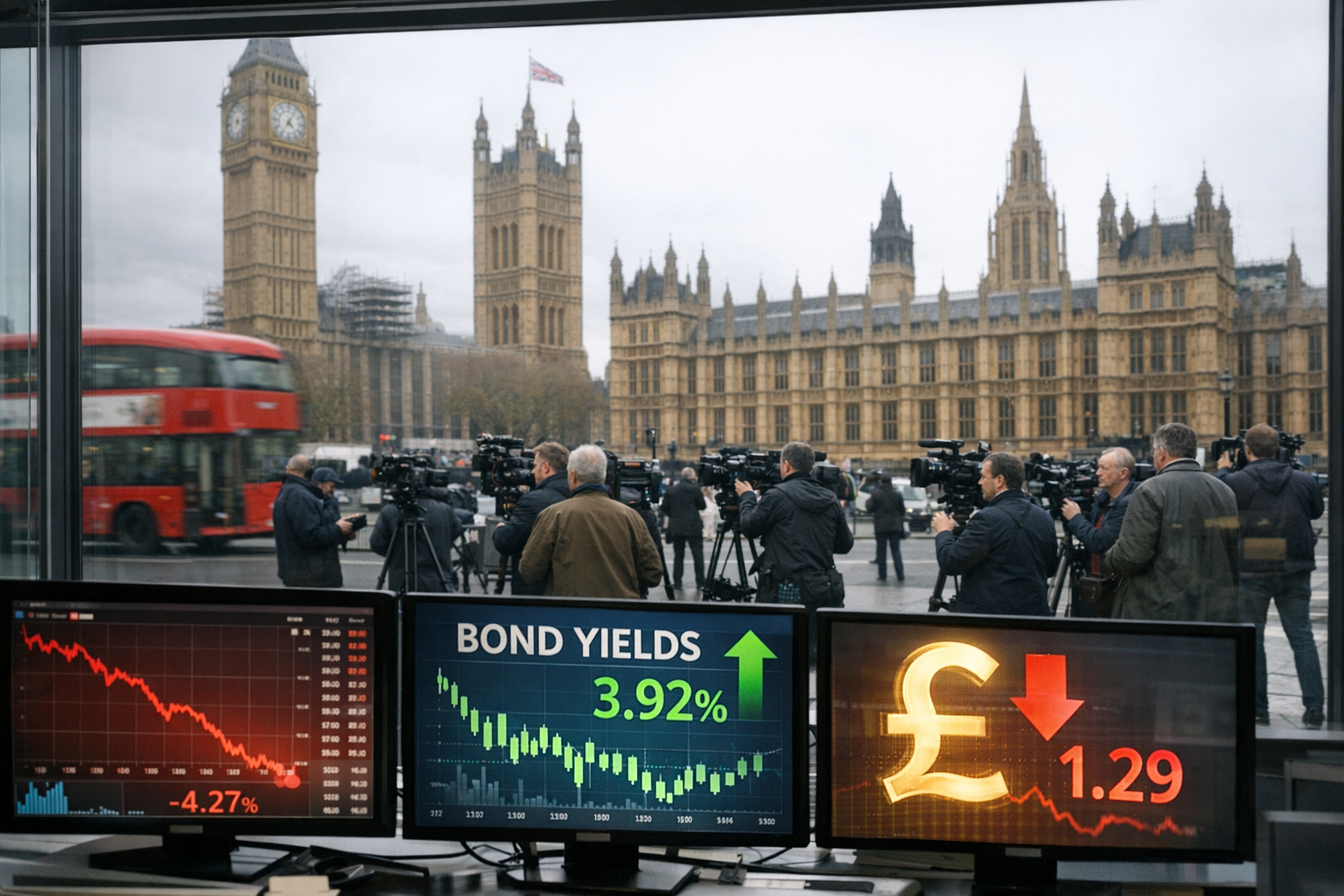
That announcement was followed by a sell-off in British assets. Yields on 30-year government bonds rose toward levels not seen in nearly three decades, the FTSE 100 fell 1.7 percent, and sterling weakened, a sign that investors were beginning to price in not just a Labour dispute but the possibility of a different economic doctrine at the top of government.
By Monday, gilts had steadied somewhat. But the episode underscored how quickly leadership speculation in Britain can become a referendum on fiscal credibility.
A Leadership Contest in All but Name
The immediate political backdrop is Labour’s deepening turmoil after poor local election results this month intensified pressure on Mr. Starmer. Reports that a substantial bloc of Labour lawmakers wanted him gone have fed an atmosphere in which every move by a plausible rival is treated as a test of the post-Starmer order.
David Lammy, the deputy prime minister and one of Mr. Starmer’s closest allies, sought on Monday to shut down talk of an imminent handover. Mr. Starmer, he said, was not setting out a timetable for departure, and Labour would not be forgiven by voters for descending into weeks of public argument over the leadership and Britain’s relationship with Europe.
Mr. Lammy nonetheless praised Mr. Burnham as someone who would be “a great addition to Parliament,” a formulation that captured the balancing act now facing Labour’s senior figures: trying to stop the succession story from consuming the party while tacitly acknowledging that Mr. Burnham’s move to Westminster could transform the contest.
Under Labour’s rules, a formal leadership challenge would require 81 nominations from Members of Parliament, a high threshold but one that no longer appears wholly theoretical. The greater uncertainty is more immediate: whether Mr. Burnham can win Makerfield, and whether, if he does, Mr. Starmer can survive the symbolism of a rival entering the Commons with momentum behind him.
Why Investors Are Uneasy
The market anxiety surrounding Mr. Burnham is not simply about personality or party intrigue. It is about whether a Burnham-led Labour government would preserve the fiscal discipline that investors increasingly treat as nonnegotiable in Britain.
Mr. Burnham has long been associated with Labour’s left and has previously criticized what he sees as the country’s excessive dependence on bond markets. That history, combined with his populist appeal and his positioning as a break from Mr. Starmer’s cautious leadership, has stirred fears among traders that he might seek looser borrowing rules or a more flexible approach to the public finances.
For investors, these are not abstract concerns. In Britain, rising gilt yields quickly translate into higher borrowing costs for the state and can feed into mortgage pricing and broader perceptions of economic competence. Since the market upheaval of recent years made the dangers of fiscal missteps painfully clear, traders have become acutely sensitive to any sign that a future prime minister might challenge the framework underpinning budget policy.
Mr. Burnham’s latest intervention appears designed to counter exactly that impression. By endorsing the existing fiscal rules, he signaled continuity rather than rupture. But there remains enough ambiguity in his broader politics to keep markets alert. His language has reassured investors for now, yet it has not fully answered the question of whether he would ultimately seek more room to borrow for investment if he were ever to enter Downing Street.
The Makerfield Route
Mr. Burnham’s potential return to Westminster has been building for months. A former cabinet minister and one-time leadership contender, he has been looking for a route back into the House of Commons after being blocked from contesting an earlier by-election in Gorton and Denton. Makerfield now offers a live opening.
He would not be required by law to resign as mayor simply to stand for Parliament, a technical point that has become newly relevant as the race has drawn national attention. But any attempt to hold both positions, even temporarily, would be politically contentious and could become another flash point inside Labour.
That practical question sits alongside a larger political one: whether Mr. Burnham is merely re-entering Parliament as a senior Labour figure or doing so as the leading vessel for post-Starmer renewal.
The answer matters beyond Westminster because markets have begun treating him not as a hypothetical future contender but as a plausible prime minister in waiting.
A Party Struggling to Contain the Story
Labour’s problem is that the leadership drama is now colliding with other internal disputes, including arguments over Britain’s long-term relationship with the European Union and maneuvering among other ambitious figures. The resignation of Wes Streeting and his criticism of the government’s “drift” have only intensified the sense of a party turning inward at a dangerous moment.
For Mr. Starmer’s allies, the risk is that every attempt to tamp down speculation only confirms that the question is live. For Mr. Burnham, the risk is different: that in presenting himself as a credible alternative, he also invites harsher scrutiny from the bond market before he has even secured a seat in Parliament.
That is why his remarks on debt and fiscal discipline mattered. In another era, leadership positioning inside the Labour Party might have been judged mainly by party members and lawmakers. Now it is also being judged in real time by traders in the gilt market.
Whether that market attention fades or intensifies will depend first on the Makerfield result, and then on whether Labour can restore the appearance of cohesion. For now, Britain’s opposition turmoil — and perhaps the future of its government — is being measured not just in parliamentary numbers, but in basis points.
Sources
Further reading and reporting used to add context:
- https://www.theguardian.com/politics/2026/may/18/keir-starmer-not-setting-out-timetable-departure-david-lammy-andy-burnham-labour
- https://www.theguardian.com/politics/live/2026/may/18/keir-starmer-labour-leadership-wes-streeting-andy-burnham-david-lammy-brexit-eu-latest-news-updates
- https://www.theguardian.com/politics/2026/may/18/all
- https://www.independent.co.uk/bulletin/news/starmer-resignation-david-lammy-labour-leadership-b2978427.html
- Burnham seeks to reassure markets but keeps room to bend the rules | ITV News
- https://www.theguardian.com/politics/2026/may/17/culture-secretary-lisa-nandy-says-wes-streeting-rejoin-eu-call-odd
- https://www.lbc.co.uk/article/starmer-not-set-a-timetable-for-resignation-david-lammy-5HjdZJg_2/
- https://ground.news/article/starmer-will-not-set-a-timetable-for-resignation-says-lammy
- PM Starmer will not set out a timetable to quit, says his deputy | MarketScreener UK
- https://www.theguardian.com/politics/2026/may/17/explainer-uk-eu-relationship-brexit-bid-rejoining
- https://www.itv.com/news/2026-05-17/keir-starmer-deciding-whether-to-announce-a-departure-timetable
- https://es.marketscreener.com/noticias/el-primer-ministro-starmer-no-fijar-un-calendario-para-su-dimisi-n-afirma-su-n-mero-dos-ce7f5adad889ff25
- https://cadenaser.com/nacional/2026/05/11/miembros-del-gobierno-piden-a-starmer-que-considere-un-calendario-para-salir-del-gobierno-britanico-cadena-ser/
- https://www.reddit.com/r/ukpolitics/comments/1tgfs2j/fighter_keir_starmer_will_not_set_out_departure/
- https://www.reddit.com/r/NBCauto/comments/1tgfzn4/world_britains_prospective_next_pm_tries_to/
- https://www.reddit.com/r/LabourUK/comments/1tfo18j/culture_secretary_says_streetings_call_for_uk_to/
- https://en.wikipedia.org/wiki/2026_United_Kingdom_local_elections
- https://www.marketscreener.com/news/uk-stocks-drop-as-burnham-challenge-and-rising-oil-frazzle-nerves-ce7f5bd3d981f12c
- https://www.marketscreener.com/news/uk-shares-slide-as-burnham-leadership-threat-and-oil-prices-unsettle-investors-ce7f5bd2de89f127
- https://www.marketscreener.com/news/sterling-drops-as-markets-watch-uk-politics-pm-starmer-s-future-ce7f5bd9d080f226
- https://www.bloomberg.com/news/articles/2026-05-15/gilts-slump-as-investors-brace-for-burnham-challenge-to-starmer
- https://www.lse.co.uk/news/markets-recoil-as-left-leaning-mayor-finds-potential-path-to-be-uk-pm-2ug85r54pojkh90.html
- https://www.marketscreener.com/news/who-could-replace-keir-starmer-as-britain-s-prime-minister-ce7f5bdede81f320
- https://www.marketscreener.com/news/starmer-rival-burnham-says-uk-bond-investors-safe-under-his-economic-vision-ce7e58ddd98af020
- https://www.bloomberg.com/news/articles/2026-05-15/gilts-slump-as-investors-brace-for-burnham-challenge-to-starmer?srnd=phx-uk-politics
- https://es.marketscreener.com/noticias/la-renta-variable-brit-nica-retrocede-ante-el-desaf-o-de-burnham-y-el-repunte-del-crudo-ce7f5bd3d981f12c
- https://uk.marketscreener.com/news/uk-stocks-drop-as-burnham-challenge-and-rising-oil-frazzle-nerves-ce7f5bd3d981f12c
- UK bond yields leap as Burnham sees possible route to power | Financial News
- https://es.marketscreener.com/noticias/los-inversores-se-alarman-ante-el-avance-de-andy-burnham-hacia-el-parlamento-brit-nico-ce7f5bd2dc88f425
- https://www.lemonde.fr/en/international/article/2026/05/16/andy-burnham-s-all-in-gamble-puts-him-in-pole-position-to-challenge-keir-starmer_6753517_4.html
- https://en.wikipedia.org/wiki/Andy_Burnham
- https://en.wikipedia.org/wiki/2026_Gorton_and_Denton_by-election
- https://www.gulf-times.com/pdf/2026/05/12/main-20260512-1.pdf?ts=003627
- https://www.theguardian.com/business/live/2026/may/18/bond-market-rout-inflation-fears-gilts-yields-burnham-imf-reeves-live-updates?filterKeyEvents=false&page=with%3Ablock-6a0ac0318f080104b7fba36d
- https://ca.investing.com/news/economy-news/dollar-steady-as-oil-climbs-bond-selloff-deepens-4644496
- https://za.investing.com/news/economy-news/dollar-steady-as-oil-climbs-bond-selloff-deepens-4285917
- https://www.theguardian.com/business/live/2026/may/18/bond-market-rout-inflation-fears-gilts-yields-burnham-imf-reeves-live-updates?filterKeyEvents=false&page=with%3Ablock-6a0ab4b38f0854b7b87dbe8e
- https://www.marketscreener.com/news/dollar-firms-as-oil-climbs-bond-rout-saps-risk-appetite-ce7f5bd3d088ff2c
- https://www.investing.com/news/economy-news/morning-bid-bonds-get-a-taste-of-oils-demand-destruction-4694627
- https://www.theguardian.com/business/live/2026/may/18/bond-market-rout-inflation-fears-gilts-yields-burnham-imf-reeves-live-updates?filterKeyEvents=false&page=with%3Ablock-6a0aab228f080104b7fba2ff
- https://www.theguardian.com/business/live/2026/may/18/bond-market-rout-inflation-fears-gilts-yields-burnham-imf-reeves-live-updates?filterKeyEvents=false&page=with%3Ablock-6a09fe4c8f08679a6ea04373
- https://www.brecorder.com/news/40421596
- https://www.marketscreener.com/news/g7-finance-chiefs-seek-to-tackle-imbalances-in-wake-of-bond-selloff-ce7f5adad88df025
- https://ca.investing.com/news/economy-news/morning-bid-bonds-get-a-taste-of-oils-demand-destruction-4644484
- https://think.ing.com/downloads/pdf/article/think-ahead-politics-meets-the-bond-market-again
- https://www.reddit.com/r/BreakingUKNews/comments/1te1ev5/ftse_100_plunges_as_burnham_triggers_bond_markets/
- https://www.reddit.com/r/ukpolitics/comments/1tais61/my_premiership_wont_bring_down_the_economy/
- https://www.reddit.com/r/ukpolitics/comments/1tfc504/rumours_speculation_questions_and_reaction/
- https://www.newser.com/first-dry/Why-Britains-Potential-Next-PM-Is-Putting-Investors-on-Edge-12-2430
- https://www.newser.com/aticles-market/Why-Britains-Potential-Next-PM-Is-Putting-Investors-on-Edge-12-2430
- https://www.babcmichigan.org/
- https://napp.uz/ru/pages/register-of-imb
- https://napp.uz/ru/pages/statistics-and-analysis-for-im
- https://napp.uz/ru/pages/sug-urta-faoliyatini-litsenziyalash
- https://www.reddit.com/r/TheColorIsBlue/comments/1te5cb7/andy_burnham_will_push_to_become_pm_before_labour/
- https://www.sada.co.za/
- https://mbachicago.org/
- https://www.sabencos.co.in/
- https://www.reddit.com/r/TheColorIsBlue/comments/1tdwvkl/pound_heads_for_worst_week_in_18_months_as/
- https://www.stonvex.com/news
- https://investor.wedbush.com/wedbush/news/category?Category=Europe+News
- https://napp.uz/ru/news/ermap
- https://www.cnbc.com/video/2025/03/26/2026-will-be-year-of-fiscal-stimulus-debt-and-deficit-going-higher-says-jpmorgans-david-kelly.html
- https://www.cnbc.com/2024/12/19/how-vuori-is-taking-on-lululemon.html
- https://www.cnbc.com/2016/04/21/microsofts-key-this-earnings-season-discipline.html
- https://www.cnbc.com/video/2025/08/05/clearbridge-investments-margaret-vitrano-expect-a-volatile-2nd-half-but-a-pretty-good-2026-setup.html/
- https://www.cnbc.com/2025/07/24/european-central-bank-holds-rates-as-tariffs-keep-policymakers-on-edge.html
- https://www.cnbc.com/2016/08/02/wall-street-set-to-edge-lower-as-japan-unveils-fiscal-stimulus.html
- https://www.cnbc.com/2011/05/13/week-ahead-volatile-stocks-and-commodities-keep-investors-on-edge.html
- https://www.cnbc.com/2015/12/21/investors-on-edge-brazil-to-scale-back-austerity.html
- https://www.cnbc.com/2013/01/10/farr-crying-wolf-may-make-markets-complacent.html
- https://www.cnbc.com/2024/08/29/nvidia-stock-is-up-what-gives-it-an-edge.html
- https://www.cnbc.com/2022/05/08/disney-investors-focus-on-streaming-shouldnt-forget-theme-parks.html
- https://www.cnbc.com/2017/06/09/alphabes-ruth-porat-era-boston-robotics-sale-new-discipline.html
- https://fm.cnbc.com/applications/cnbc.com/resources/editorialfiles/2026/01/12/warrenletter.pdf
- https://fm.cnbc.com/applications/cnbc.com/resources/editorialfiles/2012/05/03/2226781_SchwabSentiment.pdf
- https://fm.cnbc.com/applications/cnbc.com/resources/editorialfiles/2018/11/12/10%20Steps%20Before%20You%20Take%20the%20Leap.pdf
- https://fm.cnbc.com/applications/cnbc.com/resources/editorialfiles/2023/05/01/American_Edge_Project_990.pdf
- https://www.parliament.uk/about/how/elections-and-voting/general/dissolution/
- https://www.parliament.uk/about/mps-and-lords/members/electing-mps/candidates/
- https://www.parliament.uk/about/mps-and-lords/members/how-mps-leave-office/
- https://www.electoralcommission.org.uk/guidance-candidates-and-agents-combined-authority-mayoral-elections/what-you-need-know-you-stand-a-candidate/qualifications-and-disqualifications-standing-election-pcc/disqualifications/members-parliaments-and-assemblies
- https://questions-statements.parliament.uk/written-questions/detail/2025-04-24/47703
- https://www.gov.uk/become-councillor
- https://www.gov.uk/government/publications/election-guidance-for-civil-servants/general-election-guidance-2019-guidance-for-civil-servants
- https://www.greatermanchester-ca.gov.uk/the-mayor/?domain=greatermanchester-ca.gov.uk
- https://hansard.parliament.uk/Lords/2026-03-26/debates/2031efc3-d4d2-4fd0-8e73-7d16406ff6e3/LordsChamber
- https://www.parliament.uk/about/how/role/relations-with-other-institutions/parliament-government/
- https://www.lincolnshire.gov.uk/employment-policies/politically-restricted-posts-policy/6
- https://en.wikipedia.org/wiki/Mayor_of_Greater_Manchester
- https://commonslibrary.parliament.uk/research-briefings/SN05000./
- https://en.wikipedia.org/wiki/Mayor_of_Salford
- https://www.parliament.uk/documents/commons-chief-executive/GE2019/Dissolution-Guidance-Members-Not-Standing-Final.pdf
- https://www.greatermanchester-ca.gov.uk/media/f1qkf3rm/standing-together-deputy-mayor-s-annual-report-2023-2024.pdf
- https://researchbriefings.files.parliament.uk/documents/CBP-10319/CBP-10319.pdf
- https://en.wikipedia.org/wiki/2024_Greater_Manchester_mayoral_election
- https://en.wikipedia.org/wiki/Tony_Lloyd
- https://en.wikipedia.org/wiki/Member_of_Parliament_%28United_Kingdom%29
- https://www.parliament.uk/globalassets/about-parliament/general-election/members_standing_redacted_-1.pdf
- https://assets.publishing.service.gov.uk/government/uploads/system/uploads/attachment_data/file/645454/Disqualification_criteria_for_councillors_and_mayors.pdf
- https://qna.files.parliament.uk/qnadailyreports/Written-Questions-Answers-Statements-Daily-Report-Commons-2025-04-30.pdf
- https://www.reddit.com/r/UKGreens/comments/1td3bdo/labour_mp_to_stand_down_to_allow_burnham_run_for/
- https://www.reddit.com/r/ukpolitics/comments/1qmhkhl/starmer_rival_barred_from_contesting_seat/
- https://www.reddit.com/r/AskBrits/comments/1td5diw/does_andy_burnham_have_to_resign_as_mayor_before/
- https://www.reddit.com/r/ukpolitics/comments/1qkv58r/andy_burnham_wants_gary_nevillestyle_successor/
- https://www.reddit.com/r/ukpolitics/comments/1qmgn6d/starmer_allies_vow_to_block_burnham_from_standing/