
Traffic Through Hormuz Shows Signs of Recovery, Calming Oil Markets
After days of sharp disruption tied to the fighting involving Iran and the United States, shipping traffic through the Strait of Hormuz is beginning to recover, offering a measure of relief to oil markets and the global energy trade.
The improvement is tentative, but it has been enough to ease some of the panic that had built into crude prices this week. Analysts said stronger oil flows through the strait, one of the world’s most critical energy chokepoints, had started to reduce the conflict-driven “war premium” that traders had added amid fears of a deeper supply shock.
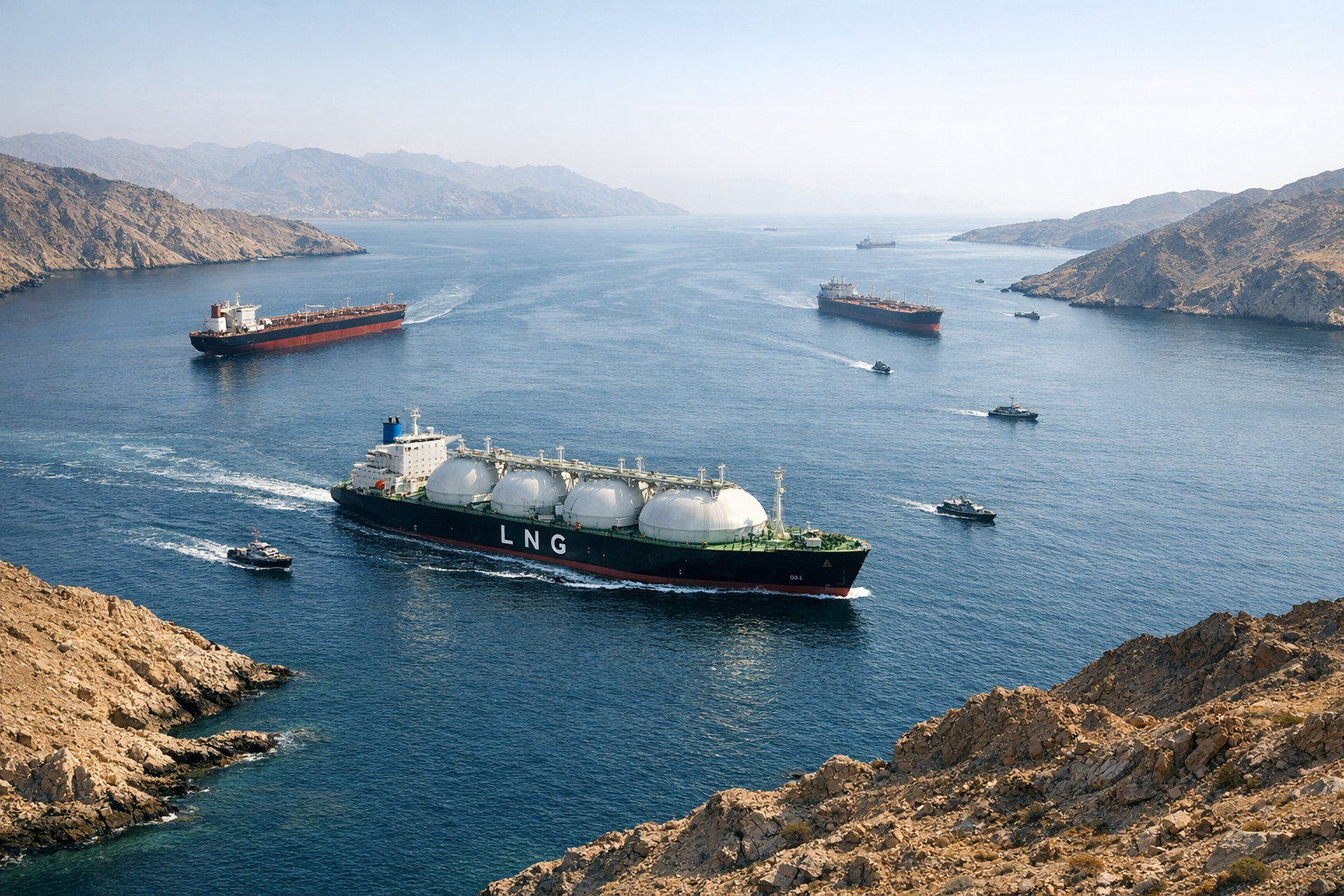
Ship-tracking data provided one of the clearest signs yet that traffic was resuming. On July 29, the QatarEnergy-controlled liquefied natural gas tanker *Al Areesh* exited the strait, according to maritime analytics data, marking the first visible LNG departure through Hormuz since July 11. The movement suggested that at least some vessels that had been delayed by the latest escalation were again willing — or able — to move out.
That matters well beyond the Gulf. The Strait of Hormuz carries roughly 20 million barrels a day of oil and oil products, according to energy agencies, and LNG passing through the corridor accounts for more than a fifth of global trade in the fuel. Even a partial resumption can soften fears of immediate shortages, temper price spikes and reduce pressure on shipping costs.
A Chokepoint With Global Reach
The Strait of Hormuz, a narrow waterway between Iran and Oman, has long been one of the most strategically sensitive passages in global commerce. When conflict flares there, the consequences are felt quickly in crude benchmarks, tanker rates, insurance costs and, ultimately, consumer fuel prices.
The latest disruption was severe. Maritime data compiled by Lloyd’s List Intelligence showed tanker transits falling to 39 in the week of July 13 to 19, down from 85 the week before. That collapse underscored how rapidly shipowners and charterers pulled back after strikes and threats in the region reignited fears that vessels could be caught in the crossfire.
Even when the strait remained technically open, traffic patterns changed markedly. Shipping monitors observed more voyages hugging the Iranian side of the channel rather than the Omani lane, a sign of how navigational choices were being shaped by security calculations as much as by geography.
For oil traders, the distinction between an outright closure and a steep reduction in usable traffic is not academic. A waterway can remain open on paper while becoming far less functional in practice if insurers raise premiums, crews refuse assignments or operators decide the risk is too high.
Relief, but Not a Return to Normal
The market reaction on Friday reflected that nuance. Oil prices eased as traders took the recovery in flows as a sign that the worst-case scenario — a prolonged paralysis in Hormuz — might be avoided for now. But shipping and energy analysts cautioned that the rebound was still far from a full normalization.
One reason is that outbound movement alone does not settle the broader question. Some of the visible traffic may represent ships that were already loaded and waiting for a chance to leave. The more important test is whether inbound tankers, and the companies that operate them, are prepared to re-enter the Gulf in sustained numbers.
That uncertainty is keeping markets on edge. Traders and maritime specialists are watching for signs of renewed military action, as well as for less visible constraints such as insurance availability, crew safety concerns and the use of obscured or “dark” transits that make it harder to judge real shipping volumes in real time.
The result is a market that has relaxed, but only somewhat. The fear premium embedded in crude has ebbed, not disappeared.
A Wider Crisis at Sea
The strain on Hormuz is also part of a broader remaking of maritime risk. Shipowners in recent months have been forced to rethink routes not only through the Gulf, but also through the Red Sea and the Black Sea, where conflict has upended assumptions about the safety of major trade corridors.
That accumulation of danger is reshaping shipping economics. Longer rerouting around insecure waterways adds time, fuel and labor costs. Higher war-risk insurance and tighter vessel availability can feed into freight rates. For energy markets, those costs can keep pressure on prices even when outright supply losses are avoided.
In Europe, where consumers are particularly sensitive to fuel costs, the consequences have already begun to show up at the pump. In Britain, motoring groups have warned that petrol prices are likely to rise to their highest levels of the year, a reminder that geopolitical shocks in a narrow channel thousands of miles away can quickly reach household budgets.
Why the Next Few Days Matter
For now, the reopening trend through Hormuz is offering traders and policymakers a badly needed signal that the global energy system retains some resilience, even under acute military stress. But the fragility of that recovery is hard to ignore.
A handful of successful transits can calm a market that had been bracing for something worse. They do not, by themselves, restore confidence in a corridor where a single strike, seizure or escalation could again send shipping volumes lower.
The immediate question is whether the recent movements mark the start of a durable return or merely a brief clearing of a backlog. If more tankers and LNG vessels continue to pass through in coming days, the pressure on oil prices may ease further. If they do not, the respite could prove short-lived.
For the global economy, that distinction is critical. In a year when supply chains are already under strain and conflict has spread across multiple maritime frontiers, even a partial recovery in Hormuz is significant — not because the danger has passed, but because so much still depends on whether one narrow strait can keep functioning.
Sources
Further reading and reporting used to add context:
- https://apnews.com/article/2fdef9c0b59d90367206d103f0939d30
- https://apnews.com/article/2b81f0e01bb318ae8d4281964f89f2f1
- https://apnews.com/article/8dc77ed6a65f389ea4af84635d2473bd
- https://www.theatlantic.com/international/2026/07/iran-war-hormuz-strait/688062/?utm_source=apple_news
- https://moneyweek.com/personal-finance/will-petrol-prices-rise
- https://theweek.com/world-news/stranded-at-sea-iran-war-ships-persian-gulf
- https://www.theguardian.com/business/2026/jun/25/oil-price-falls-pre-iran-war-levels-more-tankers-exit-strait-of-hormuz
- https://www.investing.com/news/commodities-news/hormuz-traffic-slows-to-twomonth-low-as-renewed-us-iran-strikes-raise-safety-risk-4788710
- https://www.theguardian.com/business/2026/jun/15/return-pre-crisis-oil-gas-supplies-months-away-iran-strait-of-hormuz
- https://au.investing.com/news/commodities-news/oil-prices-gain-as-focus-shifts-to-supply-recovery-and-demand-4520065
- https://www.investing.com/news/commodities-news/four-oil-and-gas-tankers-turn-back-from-hormuz-strait-after-vessel-attacks-4780670
- https://www.theguardian.com/world/2026/jul/22/oil-price-increases-middle-east-conflict-escalates-us-iran
- https://mediaselangor.com/en/2026/07/383370
- https://au.investing.com/news/commodities-news/qatar-brings-lng-tankers-into-hormuz-despite-shipping-slowdown-4496881
- https://www.internazionale.it/ultime-notizie-reuters/2026/07/08/four-oil-and-gas-tankers-turn-back-from-hormuz-strait-after-vessel-attacks
- https://www.commbank.com.au/articles/newsroom/2026/04/oil-prices-rise-but-wall-street-stocks-slip.html
- https://www.reddit.com/r/oil/comments/1vbi06v/oil_prices_ease_as_recovering_hormuz_strait/
- https://www.commbankresearch.com.au/sfc/servlet.shepherd/version/renditionDownload?rendition=ORIGINAL_PDF&versionId=068Oa00000lt8mhIAA
- https://www.independent.co.uk/news/business/brent-crude-prices-today-asian-stocks-iran-war-strait-of-hormuz-b2964086.html
- https://www.investing.com/news/commodities-news/oil-prices-fall-as-tankers-exit-strait-of-hormuz-4759517
- https://www.reddit.com/r/RWATimes/comments/1vbjpbh/oil_prices_ease_as_recovering_hormuz_strait/
- https://au.investing.com/analysis/brent-crude-backwardation-points-to-ongoing-physical-market-tightness-200613400
- https://hk.marketscreener.com/news/stocks-dip-below-record-highs-as-gulf-tensions-flare-ce7f5ddadb8bff21
- https://www.stockopedia.com/share-prices/commonwealth-bank-of-australia-ASX%3ACBA/news/australia-nz-dollars-slip-on-mixed-signals-over-gulf-peace-deal-019e6dd5-5736-758c-810d-e55c4834c569/
- https://uk.marketscreener.com/news/commonwealth-bank-of-australia-oil-prices-rise-after-the-us-says-it-would-block-iranian-ports-ce7e50d9de8cf426
- https://www.lse.co.uk/news/oil-heads-for-weekly-gain-as-middle-east-supply-risks-persist-zwagfbvrp1gdl89.html
- https://www.sahmcapital.com/news/content/goldman-says-us-iran-escalation-could-slow-recovery-in-gulf-oil-supplies-2026-07-09
- https://www.sahmcapital.com/news/content/commonwealth-bank-warns-oil-markets-face-renewed-shock-risk-as-brent-nears-usd-120-a-barrel-2026-03-23
- https://www.creditbank.com/en/Information/-/media/Creditbank/DailyReport/Daily%20Market%20Report%2029-05-2025.pdf
- https://www.lloydslistintelligence.com/resources/events-webinars
- https://www.lloydslistintelligence.com/resources/blog/strait-of-hormuz-brief-21-july-2026
- https://www.lloydslist.com/the-lloyds-list-shipping-podcast
- https://www.lloydslistintelligence.com/resources/events-webinars/strait-of-hormuz-weekly-maritime-risk-briefing—9-july
- https://info.lloydslistintelligence.com/lli-singapore-outlook-forum-2026
- https://www.iiss.org/events/2026/03/securing-the-strait-of-hormuz-in-wartime-military-options-and-strategic-challenges/
- https://www.lloydslist.com/LL1157740/The-Week-in-Charts-LNG-carrier-transits-plunge-as-Iran-repeats-claim-of-control-over-Hormuz–Key-container-lines-have-pulled-most-ships-from-Middle-East-Gulf
- https://www.lloydslist.com/LL1157281/The-Week-in-Charts-Irans-shadow-fleet-exercising-caution-but-has-not-completely-abandoned-market–One-in-every-six-Strait-of-Hormuz-transits-is-fraudulently-flagged
- https://www.kpler.com/blog/strait-of-hormuz-crossings-drop-70-as-tanker-traffic-shifts-almost-entirely-to-the-iranian-route
- https://news.usni.org/2026/07/10/hormuz-sees-traffic-bump-despite-ongoing-iranian-attacks
- https://mc.linkedin.com/company/lloyds-list-intelligence/
- https://news.usni.org/2026/05/01/strait-of-hormuz-commercial-transits-at-lowest-level-since-operation-epic-fury-start-shipping-data-shows
- https://www.lloydslist.com/-/media/lloyds-list/daily-pdf/2026/03-march/dailypdf240326.pdf
- https://www.reddit.com/r/oil/comments/1uyocs3/lloyds_list_dashboard_and_weekly_webinar/
- https://www.lloydslist.com/-/media/lloyds-list/daily-pdf/2026/03-march/dailypdf190326v3.pdf?rev=d0043528fecf45a8917583466056b097
- https://www.reddit.com/r/oil/comments/1tz964f/hormuz_traffic_tracking/
- https://www.lloydslist.com/-/media/lloyds-list/daily-pdf/2025/06-june/dailypdf240625.pdf?rev=0c41df26eb724ecabab321b7ddbe8647
- https://live.euronext.com/en/financial-news/oil-prices-fall-one-week-low-after-us-pauses-attacks-iran
- https://www.fidelity.com/news/article/default/202607272345RTRSNEWSCOMBINED_L1N43T12C_1
- https://www.fidelity.com/news/article/international/202606260024RTRSNEWSCOMBINED_L1N42Y034_1
- https://www.lse.co.uk/news/oil-prices-drop-after-us-iran-pause-fighting-over-weekend-81qx5u4nilxqghx.html
- https://live.euronext.com/en/financial-news/oil-prices-hit-one-week-low-after-us-iran-pause-fighting-over-weekend
- https://live.euronext.com/en/financial-news/oil-slips-4-after-us-iran-pause-fighting-over-weekend
- https://live.euronext.com/en/financial-news/oil-prices-near-one-week-low-after-us-iran-pause-fighting-over-weekend
- https://live.euronext.com/en/financial-news/oil-slips-5-after-us-iran-pause-fighting-over-weekend
- https://live.euronext.com/en/financial-news/oil-touches-over-one-week-low-pause-attacks-brings-hope-usiran-deal
- https://www.marketscreener.com/news/oil-edges-lower-but-heads-for-weekly-gain-as-middle-east-supply-risks-persist-ce7f5ededc80f722
- https://apnews.com/article/8d2ae29300a8dc5495a4ce56c5312bf1
- https://www.eia.gov/international/analysis/special-topics/World_Oil_Transit_Chokepoints
- https://www.eia.gov/todayinenergy/detail.php?id=65504&stream=top
- https://www.eia.gov/todayinenergy/detail.php?id=61002&os=f
- https://www.epa.gov/system/files/documents/2026-04/national-fuel-waiver-dc-4-30-2026.pdf
- https://www.eia.gov/todayinenergy/detail.php?id=39932&os=frefapp
- https://www.eia.gov/international/content/analysis/special_topics/World_Oil_Transit_Chokepoints/wotc.pdf
- https://www.eia.gov/outlooks/steo/archives/jun26.pdf
- https://www.iea.org/about/oil-safety-and-emergency-response/strait-of-hormuz
- https://ebs.publicnow.com/view/E08158F7D5730F78F34B9CE617A3948BC8FCAE50
- https://www.iea.org/news/iea-closely-monitoring-strait-of-hormuz-situation-stands-ready-to-act-if-needed
- https://www.congress.gov/crs-product/R45281
- https://www.iea.org/news/new-iea-report-highlights-options-to-ease-oil-price-pressures-on-consumers-in-response-to-middle-east-supply-disruptions
- https://www.linkedin.com/posts/u-s-energy-information-administration_amid-regional-conflict-the-strait-of-hormuz-activity-7340407419258236930-V_02
- https://www.iea.org/topics/the-middle-east-and-global-energy-markets
- https://arxiv.org/abs/2605.11990
- https://en.wikipedia.org/wiki/2026_Iran_war_fuel_crisis
- https://en.wikipedia.org/wiki/2026_Strait_of_Hormuz_crisis
- https://en.wikipedia.org/wiki/Strait_of_Hormuz
- https://en.wikipedia.org/wiki/2026_United_States_naval_blockade_of_Iran
- https://en.wikipedia.org/wiki/Economic_impact_of_the_2026_Iran_war
- https://en.wikipedia.org/wiki/2026_Strait_of_Hormuz_campaign
- Oil prices ease as recovering Hormuz Strait traffic tempers war premium
- Strait of Hormuz – About – IEA
- Hormuz crossings drop 70% as traffic shifts to Iran route Strait of Hormuz crossings drop 70% as tanker traffic shifts almost entirely to the Iranian route | Kpler – Jul 23, 2026
- Oil prices ease as recovering Hormuz Strait traffic tempers war premium