
Russia Presses in Donetsk as Questions Grow Over Its Staying Power
Russian forces have stepped up attacks in eastern Ukraine, renewing pressure on the Donetsk region’s remaining Ukrainian strongholds even as Western officials say Moscow is sustaining losses that outpace its ability to replace troops.
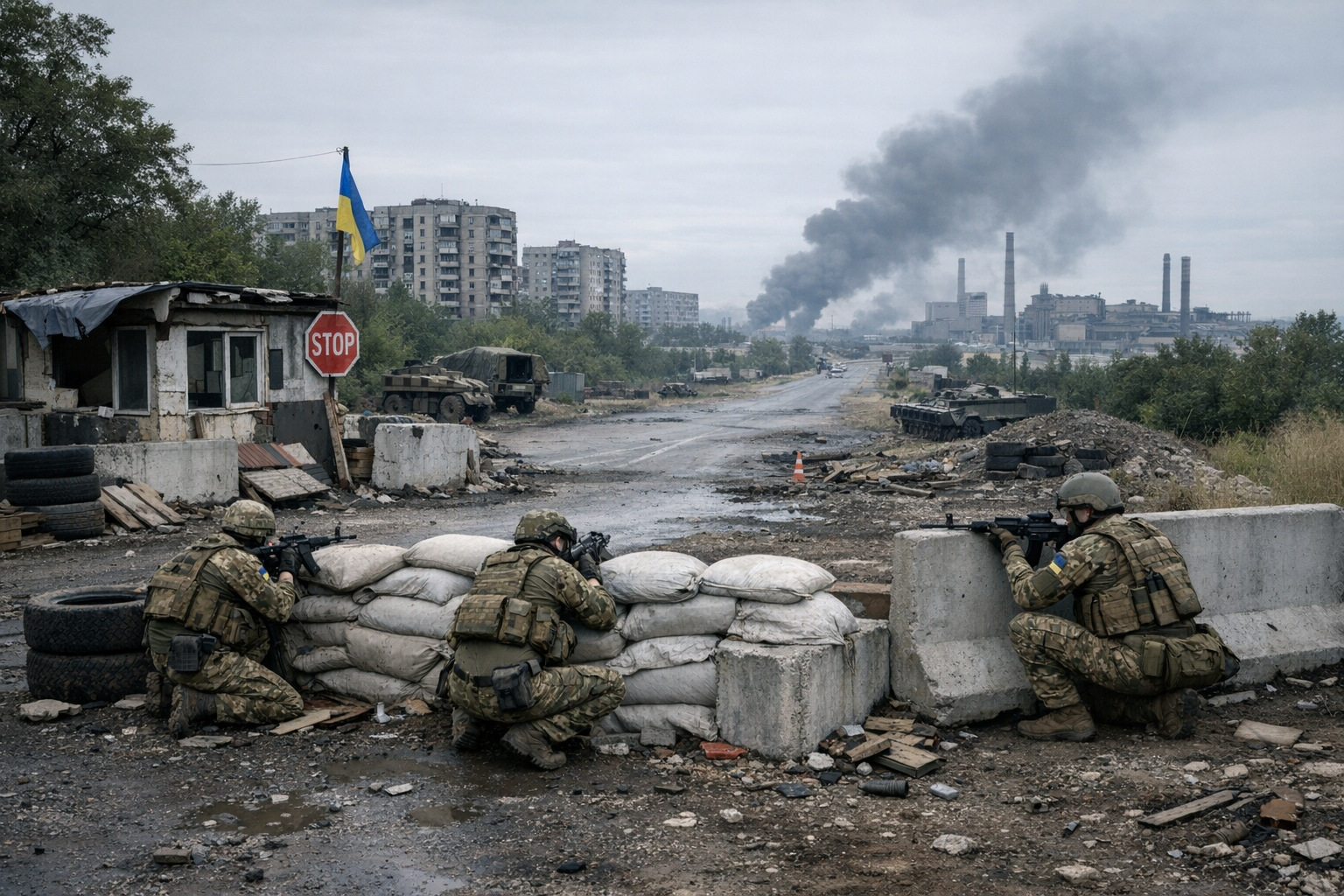
The fighting has centered on the approach to Sloviansk and Kramatorsk, twin cities that form the backbone of Ukraine’s defenses in Donetsk. Russian officials have asserted new advances toward the cities, while Ukrainian authorities have described an increasingly intense assault on what is often called the region’s “fortress belt.” Open-source battlefield analysts, however, suggest that Russian troops remain short of entering the cities themselves.
The battlefield surge comes at a moment of broader strain and uncertainty for Moscow. Western officials say Russia is recruiting roughly 1,000 people a day, but is still losing about 6,000 more troops each month than it can bring in, a sign that the Kremlin’s costly war machine remains active but may be under growing pressure.
That combination — tactical momentum on the ground, mounting casualties and sharpening confrontation with the West — is creating a volatile new phase in the war.
A Familiar Objective, at Rising Cost
For Russia, the push toward Sloviansk and Kramatorsk reflects one of the war’s oldest aims: seizing the remainder of Donetsk, a region the Kremlin has long claimed as its own but never fully controlled. Capturing the two cities would deal a major symbolic and operational blow to Kyiv, whose forces have spent years building layered defenses there.
Recent weeks have also brought an intensification of long-range warfare. Russia has continued heavy drone and missile attacks across Ukraine, while Ukrainian forces have sought to strike Russian command posts, supply routes and logistics targets farther from the front. The result has been a war that is broadening in reach even as it remains grindingly attritional along the eastern front.
Still, battlefield pressure alone does not resolve the larger question facing Moscow: whether it can sustain the tempo. Western estimates that Russian losses are outstripping recruitment do not mean the offensive is about to collapse. Russia has repeatedly shown a capacity to absorb enormous casualties while continuing assaults. But the figures suggest a narrowing margin, especially if the Kremlin hopes to keep pressing in Donetsk without ordering another politically fraught mobilization.
NATO Fears Shadow the Front
At the same time, concern has been rising in Washington and European capitals that the conflict could expand beyond Ukraine.
That anxiety was underscored by reports that CIA Director John Ratcliffe made a rare secret trip to Moscow this week to warn Russia against attacking NATO members. The reported message, delivered at a time of escalating drone and missile strikes and increasingly heated rhetoric, suggested that American officials see a genuine risk that miscalculation or deliberate escalation could pull the alliance into a more direct confrontation with Moscow.
President Trump publicly played down the visit, calling it “semi-routine.” But the secrecy of the trip, and the reports surrounding its purpose, highlighted how seriously the United States appears to be treating threats at Europe’s edge.
Russia has added to those tensions with new warnings aimed at Britain and France after both countries moved to support Ukraine’s long-range strike capabilities. Britain’s government has said it will help Ukraine gain access to technology for domestic production of Storm Shadow-type cruise missiles, and France has also agreed to provide missile-related support. Moscow responded by accusing the two countries of “playing with fire” and threatening retaliation against military targets inside and outside Ukraine.
Such threats are a familiar part of the Kremlin’s messaging, which has often sought to deter Western military assistance by raising the specter of a wider war. But they are landing in a climate made more combustible by the fighting in Donetsk and the steady expansion of strikes far behind the lines.
Europe Reopens Debate on Russian Assets
As military pressure builds, Ukraine is also seeking more durable financial backing from its allies.
Kyiv this week welcomed a fresh push by four European Union countries to revive debate over whether more than €200 billion in frozen Russian sovereign assets could be used more directly to support Ukraine. The bloc has already used profits generated by immobilized Russian assets to aid Kyiv, but the assets themselves have remained largely untouched because of legal, political and financial concerns.
The renewed discussion reflects a growing view among some European governments that the war’s scale and duration require more forceful measures. Supporters argue that Russian state assets should help pay for the defense and reconstruction of the country Russia invaded. Critics warn that outright seizure could carry legal risks and unsettle confidence in European financial institutions.
For Ukraine, the argument is not abstract. The costs of defending cities like Sloviansk and Kramatorsk are mounting as Russia presses forward, and Kyiv’s need for ammunition, air defense and financing remains acute more than four years into the full-scale invasion.
A War Entering a More Dangerous Phase
What is emerging is not a simple picture of Russian strength or weakness. Moscow is still capable of concentrating force in eastern Ukraine and driving the war forward with punishing intensity. Yet it is doing so while consuming manpower at a rate that Western officials say may be hard to sustain indefinitely.
At the same time, the political geography of the war is becoming more perilous. The reported American warning to the Kremlin, Russia’s threats over Western missile support and Europe’s debate over tapping frozen Russian assets all point to a conflict that is no longer defined only by trench lines in Donetsk.
For now, the immediate test is on the battlefield east of Sloviansk and Kramatorsk, where Russia is trying again to turn incremental advances into a strategic breakthrough. But the significance of the current moment lies just as much beyond the front: in whether the Kremlin can keep feeding the war, whether the West is prepared to harden its response, and whether the next escalation remains contained within Ukraine’s borders.
Sources
Further reading and reporting used to add context:
- https://www.thedailybeast.com/putin-given-humiliating-ukraine-war-warning-in-secret-john-ratcliffe-meeting/
- https://www.thedailybeast.com/alarming-sign-putin-is-plotting-revealed-something-is-up/
- https://www.thedailybeast.com/insiders-reveal-alarming-reason-behind-cia-chief-john-ratcliffes-trip-to-russia/
- https://apnews.com/article/4efffcaac5ef6736e2b10cef73054e48
- https://www.axios.com/2026/08/27/trump-nato-russia-ukraine-war
- https://www.theatlantic.com/international/2026/08/cia-director-ratcliffe-moscow/688424/?utm_source=apple_news
- https://apnews.com/article/52630a94448a2d2aa830a733ae899c33
- https://www.axios.com/2026/08/25/cia-director-ratcliffe-visits-moscow
- https://theweek.com/politics/cia-directors-secret-flight-to-moscow
- https://apnews.com/article/09c7d8030a2e11fbd8ee3f7176b3f2d4
- https://www.cbsnews.com/news/cia-john-ratcliffe-warned-russia-not-to-attack-nato-moscow-trip/
- https://www.theguardian.com/world/2026/aug/28/russia-losing-6000-more-troops-than-it-can-recruit-each-month-in-ukraine-says-west
- https://www.washingtonpost.com/national-security/2026/08/27/putin-sees-us-weakened-by-iran-war-intelligence-reports-say//
- https://abcnews.com/amp/International/cia-director-warned-russia-attack-nato-countries-moscow/story?id=135992825
- https://qz.com/russia-threatens-uk-military-sites-storm-shadow-missiles-082726
- https://www.reutersconnect.com/item/russia-threatens-to-target-uk-military-facilities-over-ukraines-use-of-british-missiles/dGFnOnJldXRlcnMuY29tLDIwMjY6bmV3c21sX09XQU5BQ0FBVklERU8yMDI2MDgyNzQyMzE4OTE2
- https://www.marketscreener.com/news/trump-says-putin-will-not-attack-nato-territory-downplays-ratcliffe-trip-ce7858ded18ef32d
- https://www.aljazeera.com/news/2026/8/28/ukraine-reinforces-donetsk-as-it-seeks-to-disrupt-russias-weapons-flow
- https://www.channelnewsasia.com/world/cia-director-john-ratcliffe-russia-visit-nato-kremlin-6342771
- https://currentwire.us/story/during-secretive-trip-cia-chief-warned-russia-not-to-attack-nato-c468be12c3a58
- https://apnews.com/article/e71dbed50bbdc710372f96deead36665
- https://apnews.com/article/c841f3aa849a38ddca94e2dd44556c3a
- https://apnews.com/article/15d84a5a1f52e376ffdf98082cdf9712
- https://apnews.com/article/f9db9e721a230e5881405603a423785c
- https://apnews.com/article/5e6f60963f2662907441e95c635470c4
- https://dn.gov.ua/en/news/shchonaimenshe-10-liudei-poraneni-vnaslidok-sohodnishnikh-rosiiskykh-udariv-po-sloviansku-ta-kramatorsku
- https://www.europapress.es/internacional/noticia-rusia-asegura-tropas-avanzan-donetsk-ofensiva-prosigue-disminuir-intensidad-20260827124103.html
- https://www.criticalthreats.org/analysis/russian-offensive-campaign-assessment-august-27-2026
- https://www.themoscowtimes.com/2026/08/27/russian-forces-inching-closer-to-slovyansk-in-eastern-ukraines-donetsk-region-gerasimov-says-a93589
- https://www.washingtonpost.com/world/2026/08/28/russia-ukraine-war-attacks-economy-kherson/7f50b980-a2ce-11f1-8606-1d40ad00172e_story.html
- https://dn.gov.ua/en/news/shchonaimenshe-4-liudyny-poraneni-vnaslidok-obstrilu-slovianska
- https://www.euronews.com/my-europe/2026/08/14/russian-strike-kills-one-injures-17-in-kramatorsk-as-ukraine-hits-russian-oil-port
- https://www.vibetrader.com/news/72adc1df-10c6-44d4-9793-a2b0769c8484
- https://timesbrasil.com.br/mundo/forcas-russas-intensificam-ataques-em-donetsk-enquanto-ucrania-elogia-nova-iniciativa-da-ue-para-desbloquear-ativos-congelados/
- https://dn.gov.ua/en/news/operatyvna-sytuatsiia-po-oblasti-stanom-na-ranok-7-serpnia
- https://www.investing.com/news/commodities-news/russia-strikes-ukraines-capital-with-waves-of-drones-4880799
- https://www.reddit.com/r/RUPOV/comments/1w01opd/the_russian_army_is_advancing_at_an_unabated_pace/
- https://www.consilium.europa.eu/en/press/press-releases/2026/06/15/russia-s-war-of-aggression-against-ukraine-new-eu-sanctions-target-energy-revenues-the-military-industrial-complex-propaganda-and-human-rights-violations/pdf/
- https://audiovisual.ec.europa.eu/en/media/video/I-293570
- https://www.consilium.europa.eu/en/press/press-releases/2026/08/18/statement-by-the-high-representative-on-behalf-of-the-european-union-on-the-alignment-of-certain-countries-concerning-restrictive-measures-in-view-of-russia-s-actions-destabilising-the-situation-in-ukraine-23-july-2026/
- https://www.devdiscourse.com/article/international/3968979-ukraine-grateful-to-four-eu-member-states-for-push-to-use-frozen-russian-assets-fm-says
- https://www.eeas.europa.eu/delegations/ukraine/eu-receives-eur14-billion-revenue-immobilised-russian-assets-be-used-supporting-ukraine_en
- https://www.anews.com.tr/world/2026/08/28/ukraine-grateful-to-four-eu-member-states-for-push-to-use-frozen-russian-assets
- https://www.internazionale.it/ultime-notizie-reuters/2026/08/27/four-eu-countries-seek-to-reopen-debate-on-russian-frozen-assets-for-ukraine
- https://live.euronext.com/en/financial-news/eu-use-eu14-billion-interest-frozen-russian-assets-help-ukraine
- https://www.internazionale.it/ultime-notizie-reuters/2026/08/27/eu-states-revive-plan-to-use-frozen-russian-assets-for-ukraine-ft-reports
- https://www.marketscreener.com/news/four-eu-countries-seek-to-reopen-debate-on-russian-frozen-assets-for-ukraine-ce7858ded18bf023
- https://www.marketscreener.com/news/eu-to-use-eur1-4-billion-from-interest-on-frozen-russian-assets-to-help-ukraine-ce7f50dfdc88ff27
- https://www.devdiscourse.com/article/international/3968505-eu-states-revive-plan-to-use-frozen-russian-assets-for-ukraine-ft-reports
- https://www.youtube.com/watch?v=QcFFS_LVygI
- https://www.internazionale.it/ultime-notizie-reuters/2026/08/05/eu-to-use-1-4-billion-from-interest-on-frozen-russian-assets-to-help-ukraine
- https://europa.eu/newsroom/ecpc-failover/pdf/ip-26-768_en.pdf
- https://www.youtube.com/watch?v=MxkiS6oPZUA
- https://www.reddit.com/r/worldnews/comments/1vzlyjk/eu_states_including_sweden_the_netherlands_spain/
- https://www.gulf-times.com/pdf/2025/12/04/main-20251204-1.pdf?ts=005804
- https://www.reddit.com/r/UkrainianConflict/comments/1vzkw6p/eu_states_revive_plan_to_use_frozen_russian/
- https://www.reddit.com/r/neoliberal/comments/1w0ex08/eu_states_revive_plan_to_use_frozen_russian/
- https://www.reddit.com/r/EU_Economics/comments/1w0mci1/sweden_is_suggesting_the_european_union_should/
- https://www.reddit.com/r/europe/comments/1vzo0hb/eu_states_revive_plan_to_use_frozen_russian/
- https://www.reddit.com/r/ukraine/comments/1w01hpz/eu_states_revive_plan_to_use_frozen_russian/
- Ukraine reinforces Donetsk as it seeks to disrupt Russia’s weapons flow | Russia-Ukraine war News | Al Jazeera
- Russia losing 6,000 more troops than it can recruit each month in Ukraine, says west | Russia | The Guardian
- Zelenskyy details rift with Ukraine's dismissed Defense Minister Fedorov