
A Prime Minister Weakened, and a Party Looking Past Him
Keir Starmer’s authority as Britain’s prime minister came under sharper strain on Friday as allies publicly acknowledged what had until recently been said more quietly inside Labour: he has become deeply unpopular, and his survival now depends less on enthusiasm than on the absence, so far, of a rival strong enough to finish him.
The latest blow came after Wes Streeting resigned as health secretary and called for a leadership contest, stopping short of formally triggering one but dramatically escalating a crisis that has been building since Labour’s bruising local election losses last week. At the same time, Andy Burnham, the mayor of Greater Manchester and a longtime figure of interest to Labour MPs looking beyond Mr. Starmer, appeared to gain a possible route back to the House of Commons through a potential by-election in Makerfield.
The result is a government caught in a dangerous in-between state: not yet in open revolt, but no longer convincingly in command.
Starmer has insisted he will fight on. But even some of those defending him are now doing so in strikingly bleak terms. Steve Reed, the housing secretary and one of Mr. Starmer’s closest cabinet allies, said the prime minister was “unpopular” but argued that Labour should not descend into the kind of rolling leadership warfare that helped wreck the Conservatives in their final years in office.
That defense, intended as a stabilizing message, also underscored how far the situation has deteriorated. The case for Mr. Starmer is no longer being made on strength. It is being made on fear of the alternative.
Rivals Circle, but No One Has Moved
The immediate question in Westminster is whether private discontent hardens into a formal challenge. More than 90 Labour lawmakers have called on Mr. Starmer to step aside or to set out a timetable for his departure, according to recent reporting, yet no challenger has assembled the 81 nominations believed necessary to start the process.
That has left Labour in a familiar but perilous position: a leader visibly weakened, potential successors maneuvering, and colleagues waiting to see who moves first.
Mr. Streeting’s resignation was particularly destabilizing because of his stature in the party and because his intervention gave public voice to an argument that had been gathering force behind closed doors — that Labour cannot recover politically while Mr. Starmer remains in place. Even so, he did not immediately launch a bid himself, adding to the sense of suspended conflict.
Mr. Burnham’s name has meanwhile moved closer to the center of the conversation. Josh Simons, the Labour lawmaker for Makerfield, said he would leave his seat, opening the possibility of a by-election that could provide Mr. Burnham with a route back to Parliament. Party figures have indicated he may be granted the waiver needed to stand despite serving as a metro mayor.
But that path is not instantaneous. A by-election would most likely take five to six weeks, making early July the earliest plausible moment for Mr. Burnham to return to Westminster. In the meantime, Labour remains trapped between the urgency of the present crisis and the logistical limits of replacing a leader.
Markets Register the Danger
What makes this episode more serious than an ordinary bout of party infighting is that it is no longer confined to Westminster.
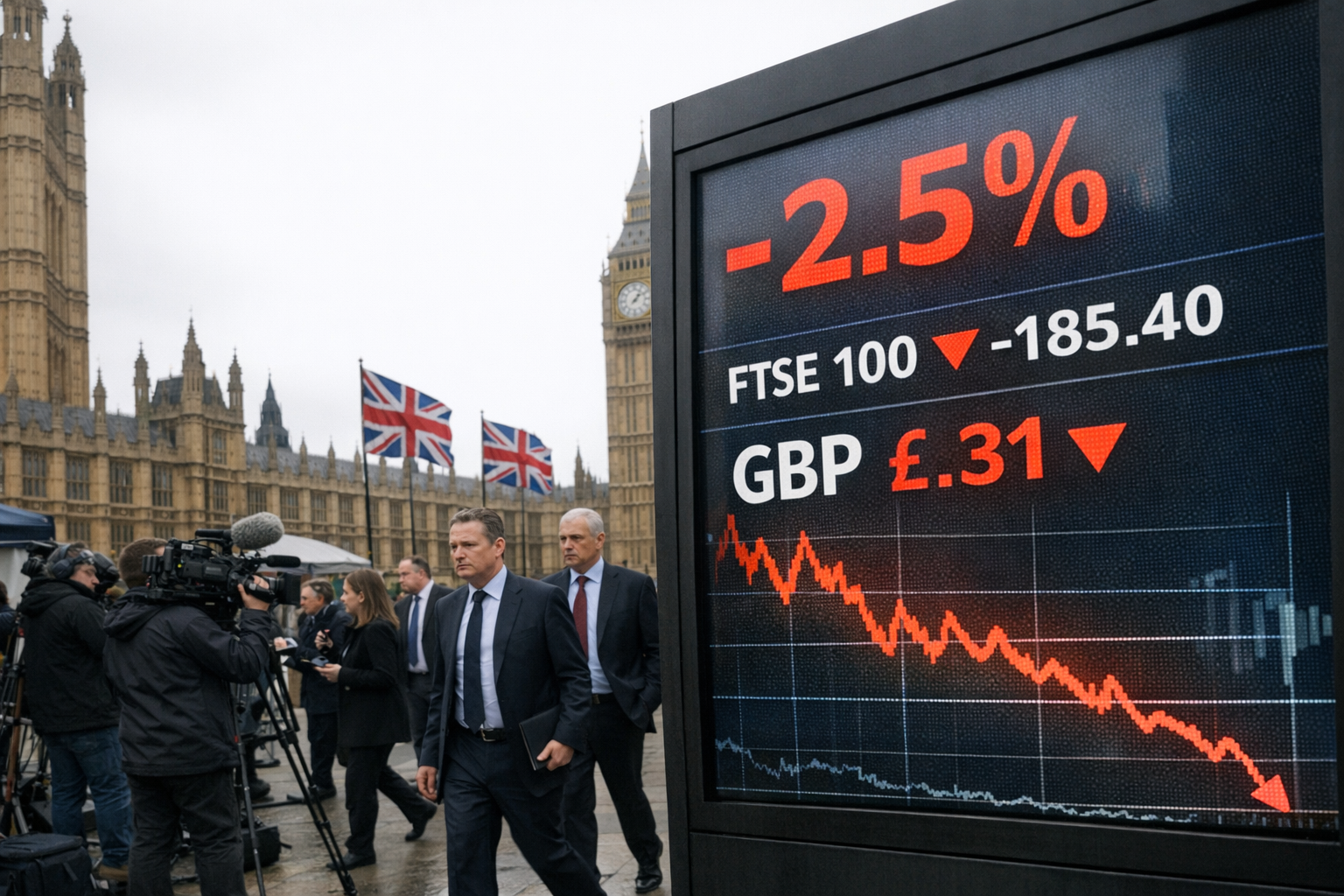
On Friday, British assets fell as investors reacted to the prospect of a prolonged power struggle and the possibility that a successor could shift Labour in a more fiscally expansive direction. Gilts, sterling and U.K. stocks all came under pressure. Gilt yields, already rattled by broader global inflation concerns, have swung sharply this week and reached levels not seen in decades.
The market reaction reflects a concern that Britain could face not just political instability, but policy paralysis at a delicate moment. If ministers are consumed by succession planning, the government’s ability to push through spending decisions, fiscal restraint or market-calming signals could be sharply reduced. Investors are also weighing what a post-Starmer Labour Party might look like — and whether a new leader would feel compelled to loosen the government’s fiscal stance to shore up support inside the party and across the country.
That helps explain why Mr. Starmer’s crisis matters beyond Labour itself. Britain has spent much of the past decade testing how quickly political instability can spill into the economy. The memory of market turmoil under previous governments remains fresh, and investors are showing little patience for another prolonged period of uncertainty.
The Election Losses That Changed the Mood
The immediate roots of the revolt lie in Labour’s heavy losses in local elections on May 7, results widely seen as a major shock less than two years after the party’s general-election landslide. Those setbacks deepened doubts among Labour lawmakers about whether Mr. Starmer could still serve as an electoral asset.
For months, grumbling about his leadership had centered on style, caution and a perceived inability to translate government into renewed political momentum. The local elections turned those concerns into something more existential. MPs who had tolerated disappointment began to ask whether staying loyal posed the greater risk.
That shift is crucial. Parties often endure poor poll numbers; they are less able to endure the belief among their own lawmakers that decline is structural and that the leader cannot reverse it. Once that view takes hold, contests can become less about ideology than about survival.
Mr. Starmer’s defenders are trying to stop exactly that logic from taking over. Their argument is that a leadership battle would freeze government, magnify public perceptions of chaos and risk making Labour look like the Conservatives it replaced. But every public plea for unity now also reveals the depth of the danger.
What Happens Next
For now, the crisis turns on three unresolved questions.
The first is whether Mr. Streeting or another senior figure will convert criticism into a formal challenge. The second is whether Mr. Burnham, long discussed as an alternative power center, can secure a return to Parliament quickly enough to become a real contender rather than a symbol of dissatisfaction. The third is whether Mr. Starmer can do enough, and do it fast enough, to persuade both MPs and markets that his government is still capable of functioning.
If he cannot, Britain may be heading into weeks of political drift at a moment when investors are already uneasy and Labour’s own patience is running thin.
For now, Mr. Starmer remains in Downing Street. But the language around him has changed unmistakably. Loyalists are no longer insisting he is strong. They are arguing that removing him could be worse. In modern British politics, that is often the clearest sign that the endgame has begun.
Sources
Further reading and reporting used to add context:
- https://www.theguardian.com/politics/2026/may/12/starmer-cabinet-labour-leadership
- https://www.theguardian.com/politics/2026/may/14/labour-mp-to-stand-down-to-allow-burnham-run-for-byelection-amid-leadership-row
- https://www.theguardian.com/politics/live/2026/may/13/keir-starmer-labour-party-prime-minister-leadership-wes-streeting-kings-speech-latest-news-updates?page=with%3Ablock-6a04615b8f08eb526a03212c
- https://www.theguardian.com/politics/live/2026/may/12/keir-starmer-prime-minister-resignation-labour-leadership-cabinet-meeting-yvette-cooper-shabana-mahmood-andy-burnham-wes-streeting-uk-politics-latest-news-updates?page=with%3Ablock-6a037b868f08830779870737
- https://www.theguardian.com/politics/live/2026/may/12/keir-starmer-prime-minister-resignation-labour-leadership-cabinet-meeting-yvette-cooper-shabana-mahmood-andy-burnham-wes-streeting-uk-politics-latest-news-updates?filterKeyEvents=false&page=with%3Ablock-6a0385fe8f082e881a333c71
- https://www.theguardian.com/politics/2026/may/10/starmer-faces-perilous-24-hours-streeting-readying-leadership-bid
- https://www.theguardian.com/politics/live/2026/may/12/keir-starmer-prime-minister-resignation-labour-leadership-cabinet-meeting-yvette-cooper-shabana-mahmood-andy-burnham-wes-streeting-uk-politics-latest-news-updates?page=with%3Ablock-6a02e7ef8f081516e2507e7e
- https://www.theguardian.com/politics/2026/may/11/more-than-60-labour-mps-call-on-starmer-to-set-timetable-to-quit
- https://www.theguardian.com/world/2026/may/14/thursday-briefing-is-this-starmers-last-stand
- https://www.theguardian.com/politics/live/2026/may/12/keir-starmer-prime-minister-resignation-labour-leadership-cabinet-meeting-yvette-cooper-shabana-mahmood-andy-burnham-wes-streeting-uk-politics-latest-news-updates?page=with%3Ablock-6a0382d68f08830779870762
- https://www.theguardian.com/politics/live/2026/may/14/angela-rayner-says-starmer-should-reflect-on-stepping-aside-after-hmrc-clears-her-over-tax-affairs-uk-politics-live?filterKeyEvents=false&page=with%3Ablock-6a057fe78f082dc7c0230ef0
- https://www.theguardian.com/politics/live/2026/may/14/angela-rayner-says-starmer-should-reflect-on-stepping-aside-after-hmrc-clears-her-over-tax-affairs-uk-politics-live?filterKeyEvents=false&page=with%3Ablock-6a060d828f08f817fdb239fa
- https://advertising.theguardian.com/assets/files/media-kit-2026-1772022840.pdf
- https://usadvertising.theguardian.com/assets/files/the-guardian-us–corporate-sustainability_-consumer-sentiments-research-x-script.pdf
- https://apnews.com/article/291b0731f6d895c5ac4ba85adee5a0c2
- https://apnews.com/article/54774b2c5f1813cfb94afea8221643a6
- https://apnews.com/article/6bd359148664c9478ed01b36ebb6e37d
- https://apnews.com/article/4bcdb20f449a8bf625dfdf57da6048ae
- https://apnews.com/article/656fd7ba1ec1921ae05d1098bfac9d1e
- https://www.itv.com/news/2026-05-14/wes-streeting-resigns-paving-way-for-leadership-coup-against-starmer
- UK’s Starmer faces survival battle as potential rivals circle By Reuters
- https://www.gmanetwork.com/news/topstories/world/987709/senior-uk-minister-resigns-calls-for-a-leadership-contest-to-oust-pm-starmer/story/
- https://www.investing.com/news/economy-news/uk-health-minister-wes-streeting-resigns-4688322
- https://www.cbsnews.com/news/uk-health-secretary-resigns-prime-minister-keir-starmer-challenge/
- https://www.theguardian.com/politics/live/2026/may/12/keir-starmer-prime-minister-resignation-labour-leadership-cabinet-meeting-yvette-cooper-shabana-mahmood-andy-burnham-wes-streeting-uk-politics-latest-news-updates?filterKeyEvents=false&page=with%3Ablock-6a02fd098f0894ddcedce3e0
- https://news.sky.com/story/starmer-latest-burnham-streeting-rayner-leadership-quit-cabinet-resign-kings-speech-local-elections-12593360?postid=11686297
- https://news.sky.com/story/starmer-latest-burnham-streeting-rayner-leadership-quit-cabinet-resign-kings-speech-local-elections-12593360?postid=11687069
- https://www.itv.com/news/2026-05-14/starmer-wes-streeting-labour-prime-minister-angela-rayner
- https://news.sky.com/story/starmer-latest-burnham-streeting-rayner-leadership-quit-cabinet-resign-kings-speech-local-elections-12593360?postid=10168718
- https://elpais.com/internacional/2026-05-13/el-partido-laborista-se-resigna-a-una-cruenta-batalla-interna-para-reemplazar-a-starmer.html
- https://en.wikipedia.org/wiki/2026_United_Kingdom_local_elections
- https://en.wikipedia.org/wiki/Starmer_ministry
- https://www.reddit.com/r/ukpolitics/comments/1tcx43a/streeting_would_lose_leadership_contest_against/
- https://www.reddit.com/r/ukpolitics/comments/1tcw956/streeting_resigns_as_health_secretary_and/
- https://www.investing.com/news/stock-market-news/european-shares-slip-as-inflation-worries-keep-investors-on-edge-4691222
- https://www.investing.com/news/economic-indicators/global-bonds-tumble-as-flaring-inflation-spooks-investors-4691179
- https://www.japantimes.co.jp/news/2026/05/15/world/politics/uk-starmer-rivals-circle/
- https://news.sky.com/story/politics-latest-rishi-sunak-to-address-northern-tory-conference-as-former-party-chair-lashes-out-at-civil-service-blob-12593360
- https://www.marketscreener.com/news/uk-minister-reed-urges-labour-party-to-get-behind-pm-starmer-ce7f5bd2da80f523
- https://in.marketscreener.com/news/uk-minister-reed-urges-labour-party-to-get-behind-pm-starmer-ce7f5bd2da80f523
- https://www.lse.co.uk/news/uk-bonds-claw-back-losses-as-starmer-challenger-fails-to-emerge-ljxid88knckcky0.html
- https://www.theguardian.com/politics/live/2026/may/12/keir-starmer-prime-minister-resignation-labour-leadership-cabinet-meeting-yvette-cooper-shabana-mahmood-andy-burnham-wes-streeting-uk-politics-latest-news-updates?page=with%3Ablock-6a02f8ea8f0818f8ca4fc6f3
- https://www.theguardian.com/politics/live/2026/may/12/keir-starmer-prime-minister-resignation-labour-leadership-cabinet-meeting-yvette-cooper-shabana-mahmood-andy-burnham-wes-streeting-uk-politics-latest-news-updates?page=with%3Ablock-6a02f7e68f08f6f151d1b2b6
- Britain's pound, stocks and bonds fall on political uncertainty, global inflation angst | MarketScreener
- https://www.lemonde.fr/en/international/article/2026/05/11/starmer-s-future-as-uk-prime-minister-hangs-by-a-thread_6753324_4.html
- https://theweek.com/politics/labour-party-losses-local-elections-keir-starmer
- https://theweek.com/politics/five-moments-it-all-went-wrong-for-starmer
- https://www.theguardian.com/politics/2026/may/08/keir-starmer-local-election-losses-labour
- https://www.theguardian.com/politics/2026/may/08/labour-reform-uk-england-local-elections-2026-scotland-wales
- https://www.theguardian.com/politics/2026/may/09/british-leader-keir-starmer-under-pressure-after-heavy-election-losses
- https://www.aljazeera.com/news/2026/5/8/uks-labour-set-for-heavy-losses-in-elections-as-reform-makes-early-gains
- https://www.local10.com/news/2026/05/08/starmer-says-he-wont-quit-after-local-elections-deliver-losses-for-labour-and-wins-for-reform-uk/
- https://www.euronews.com/my-europe/2026/05/08/partial-results-show-losses-for-labour-and-wins-for-reform-uk-in-local-elections
- https://www.local10.com/news/world/2026/05/08/partial-results-show-losses-for-starmers-labour-and-wins-for-reform-uk-in-local-elections/
- https://www.investing.com/news/stock-market-news/uks-labour-party-punished-in-local-elections-populist-reform-gains-4671208
- https://www.aljazeera.com/news/2026/5/8/uk-elections-early-results-and-takeaways-will-starmer-have-to-resign
- https://www.local10.com/news/world/2026/05/08/starmer-says-he-wont-quit-after-local-elections-deliver-losses-for-labour-and-wins-for-reform-uk/
- https://www.theguardian.com/politics/2026/may/08/labour-disastrous-night-local-elections-keir-starmer-leadership
- https://elpais.com/internacional/2026-05-08/starmer-se-niega-a-dimitir-tras-el-hundimiento-del-laborismo-en-las-eleccciones-municipales-y-autonomicas-del-reino-unido.html
- https://www.lemonde.fr/en/international/article/2026/05/08/reform-uk-records-historic-breakthrough-in-local-elections-that-mark-labour-s-collapse-and-the-end-of-two-party-politics_6753268_4.html
- https://en.wikipedia.org/wiki/2026_Oldham_Metropolitan_Borough_Council_election
- https://en.wikipedia.org/wiki/2026_London_local_elections
- UK’s Labour Party punished in local elections, populist Reform gains By Reuters