
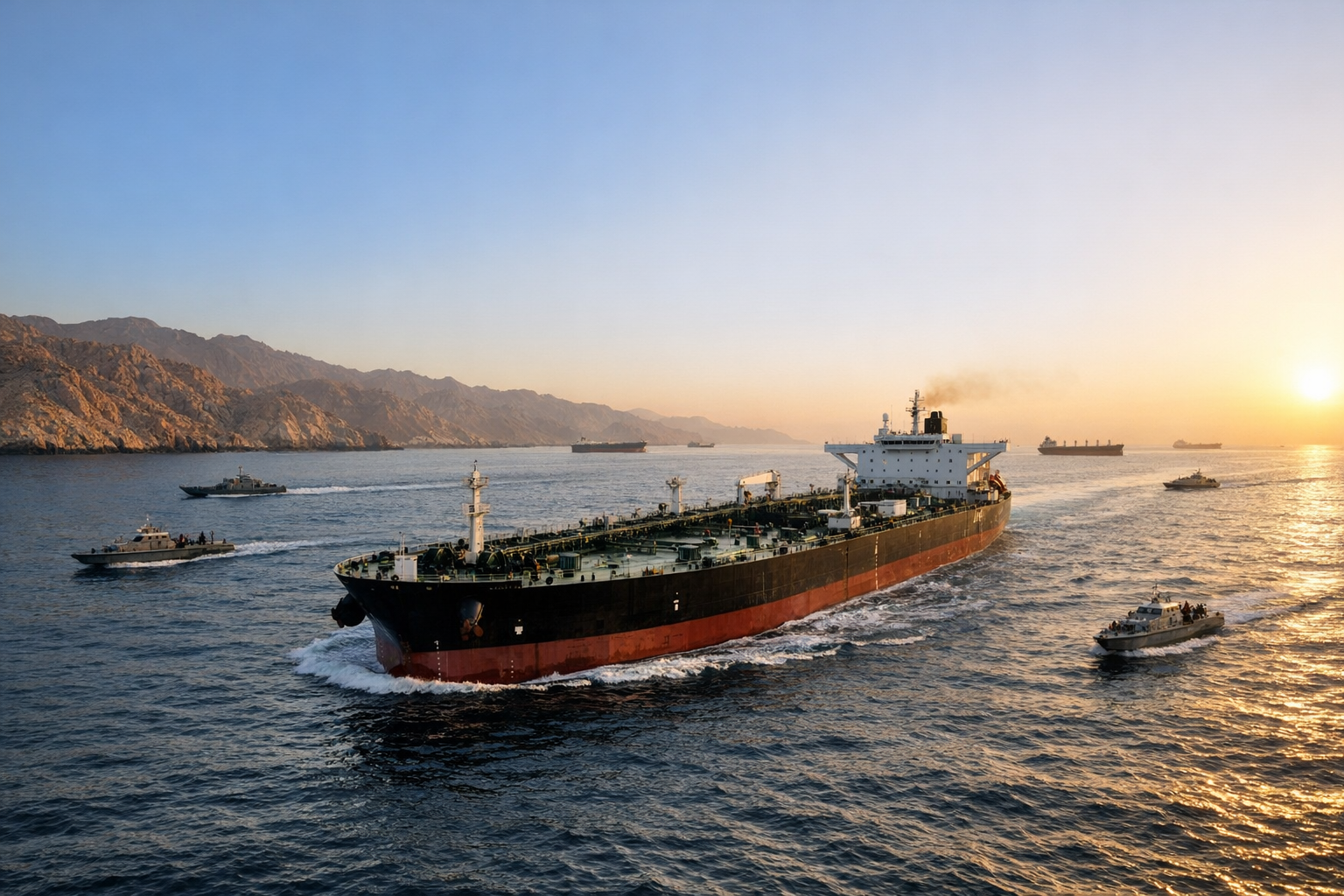
Diplomatic efforts to wind down the U.S.-Iran conflict showed tentative momentum this week, offering a measure of relief to investors and governments alike. But two unresolved disputes — over Iran’s stockpile of enriched uranium and the future of shipping through the Strait of Hormuz — continued to cast a long shadow over the talks, keeping oil markets jumpy and raising fears of a summer supply crunch.
Secretary of State Marco Rubio said on Thursday that there were “some good signs” that an agreement could be within reach. Iranian officials, in comments reported by Reuters, also suggested that gaps had narrowed after weeks of indirect negotiations. Yet the optimism was tempered by signs that the hardest questions remain unsettled.
Those questions matter far beyond the negotiating table. The conflict has already disrupted more than 14 million barrels a day of Middle Eastern oil supply, according to Reuters, and traders have treated each diplomatic update as a potential turning point for global energy flows. Oil prices climbed sharply this week as skepticism grew that a breakthrough was imminent, even as stock markets in Asia and elsewhere rose on hopes that diplomacy might still avert a deeper crisis.
Two Sticking Points
At the center of the deadlock is Iran’s enriched uranium stockpile, which Washington wants removed from the country or otherwise rendered unusable for any weapons-related purpose. Tehran has resisted that demand. Reuters reported that Iran’s supreme leader had instructed that the material should not leave the country, a position that threatens to undercut one of the United States’ core conditions for a lasting settlement.
The second major dispute is the Strait of Hormuz, the narrow waterway through which a large share of the world’s seaborne oil and gas passes. Iran has continued to press sovereignty-related claims tied to the passage, including tolling arrangements that American officials say would make any deal unworkable. For energy markets, the issue is not simply whether a political agreement is announced, but whether commercial shipping can resume freely and reliably.
That distinction has become increasingly important as the war’s economic effects spread. A fragile cease-fire has been in place for roughly six weeks, with Pakistani mediation playing a central role in keeping talks alive. But the current negotiations are now confronting the same questions that cease-fires often defer rather than solve: what military de-escalation looks like in practice, and who controls the terms of normal commerce afterward.
Markets Swing Between Hope and Doubt
The result has been a market driven less by fundamentals alone than by the latest headline out of Washington, Tehran or the Gulf.
Oil rose about 3 percent as traders questioned whether the two sides could close the remaining distance. Equities, by contrast, were steadier, with some investors betting that even limited progress reduced the immediate risk of escalation. Currency and commodity markets have been similarly sensitive, reflecting how closely tied the diplomatic process is to the outlook for energy supply, inflation and global growth.
The mixed reaction underscored a broader truth: investors are no longer asking only whether the war can end, but whether any peace arrangement would be robust enough to restore shipping through Hormuz and reverse the supply losses already inflicted on the region.
Fatih Birol, the executive director of the International Energy Agency, warned this week that the oil market could enter a “red zone” by July and August if the strait is not fully reopened and exports remain constrained as summer travel demand accelerates. He said the “single most important” solution to the energy shock caused by the Iran conflict was the full and unconditional reopening of Hormuz.
That warning has resonated because inventories are already thin by seasonal standards, and summer typically brings stronger consumption of gasoline, jet fuel and diesel. A diplomatic framework that leaves shipping vulnerable to fees, delays or renewed disruption would do little to calm traders worried about tightening supply.
Why the Next Phase Matters
The challenge for negotiators now is not simply to produce a statement of principles, but to bridge gaps that go to the core of sovereignty and security.
For Washington, allowing Iran to retain a significant enriched uranium stockpile at home risks inviting criticism that any deal merely postpones the nuclear question. For Tehran, surrendering that material abroad could be portrayed domestically as capitulation after a costly conflict. The same tension applies in Hormuz, where Iran’s strategic leverage has long rested in part on its proximity to one of the world’s most critical maritime chokepoints.
There is also the question of enforcement. Markets are weighing whether former President Donald Trump’s warning that strikes could resume if he did not receive the “right answers” is mainly negotiating pressure or a genuine indication of the fallback option if diplomacy fails. That uncertainty has made even positive signals hard to trust fully.
For now, the talks have bought time, and perhaps created a narrow path toward de-escalation. But as long as the uranium dispute is unresolved and the Strait of Hormuz remains only partially restored, the world economy will continue to feel the conflict’s aftershocks.
In recent days, the central paradox of the negotiations has come into sharper focus: peace may be closer than it was, but not yet close enough to reassure the oil market.
Sources
Further reading and reporting used to add context:
- https://apnews.com/article/0f000c53c261611dcaa1a882a33e3315
- https://www.theguardian.com/world/2026/may/21/oil-markets-nearing-red-zone-as-holiday-season-nears-warns-iea-chief
- https://energynews.oedigital.com/oil-refineries/2026/05/21/oil-market-could-reach-ared-area-in-july-and-august-iea-chief-claims
- https://oilprice.com/Latest-Energy-News/World-News/Oil-Prices-Rise-as-Traders-Grow-Skeptical-of-US-Iran-Deal.amp.html
- https://www.briefs.co/news/iea-oil-markets-red-zone-july/
- Oil market could hit ‘red zone’ in July-August, IEA chief says | KELO-AM
- https://www.theguardian.com/environment/2026/apr/24/global-oil-crisis-changed-fossil-fuel-industry-for-ever-iea-chief-fatih-birol
- https://www.theguardian.com/world/2026/mar/23/iran-war-energy-crisis-1970s-oil-shocks-fatih-birol-iea
- https://m.economictimes.com/news/short-videos/oil-market-may-enter-red-zone-in-july-august-amid-strait-of-hormuz-tensions-warns-iea-chief/amp_videoshow/131258423.cms
- https://www.streetinsider.com/Commodities/Oil%2Bprices%2Bmore%2Bthan%2B3%25%2Bas%2Bfears%2Bof%2Brenewed%2BUS-Iran%2Bcombat/26497473.html
- https://www.brecorder.com/news/40420009/oil-falls-3-on-middle-east-peace-hopes-brent-below-100-a-barrel
- https://www.investing.com/news/stock-market-news/us-and-bahrain-push-unbacked-action-for-hormuz-as-washington-seeks-maritime-coalition-4658975
- https://www.rferl.org/amp/trump-rubio-iran-ceasefire-hormuz-uranium/33762051.html
- https://www.axios.com/2026/05/07/gas-prices-iran-war-peace-deal
- https://www.lemonde.fr/en/economy/article/2026/03/20/closure-of-strait-of-hormuz-is-greatest-global-energy-security-threat-in-history-warns-iea-chief_6751653_19.html
- https://www.axios.com/2026/05/06/iran-us-deal-one-page-memo
- https://apnews.com/article/b70f88f5aeef24e3c3e139c52f79c6fe
- https://en.wikipedia.org/wiki/May_2026_United_States_strikes_on_Iran
- https://www.reddit.com/r/worldnews/comments/1tjl697/oil_prices_jump_more_than_3_after_iran_supreme/
- https://apnews.com/article/20c93cae93453da1e1994e676c05e895
- https://www.axios.com/2026/05/17/trump-iran-warning-harder-strikes
- https://ca.investing.com/news/commodities-news/us-oil-prices-rise-as-investors-doubt-breakthrough-in-usiran-peace-talks-4655234
- https://www.investing.com/news/forex-news/dollar-perched-near-sixweek-high-on-uncertainty-over-usiran-deal-4705689
- US and Iran still at odds on key issues, but Rubio sees some good signs – Internazionale
- https://www.globalbankingandfinance.com/us-oil-prices-rise-investors-doubt-breakthrough-us-iran/
- https://www.marketscreener.com/news/stocks-climb-dollar-near-six-week-high-amid-iran-talks-uncertainty-ce7f5adfdd8bf32d
- https://www.straitstimes.com/world/middle-east/us-and-iran-still-at-odds-on-key-issues-but-rubio-sees-some-good-signs
- https://www.marketscreener.com/news/wall-st-indexes-end-higher-as-investors-focus-on-mideast-peace-hopes-ce7f5adfd88bf425
- https://www.investing.com/news/stock-market-news/european-shares-rise-on-signs-of-progress-in-usiran-peace-talks-4705843
- https://www.marketscreener.com/news/tehran-reviewing-latest-us-response-as-trump-suggests-he-can-wait-ce7f5ad9d089f224
- https://www.investing.com/news/commodities-news/iran-us-narrow-differences-after-pakistani-mediation-but-splits-remain-senior-iranian-official-says-4617300
- https://www.brecorder.com/news/amp/40422351
- https://www.axios.com/2026/04/13/iran-uranium-enrichment-moratorium-talks-vance
- https://www.axios.com/2026/04/17/iran-us-deal-20-billion-frozen-funds-uranium
- https://www.axios.com/2026/05/10/trump-iran-war-us-peace-plan-tehran-response-inappropriate