
Washington Sharpens Its Cuba Offensive, Stirring Fears of a More Dangerous Phase
The Trump administration’s campaign against Cuba has taken a striking new turn, moving beyond sanctions and diplomatic isolation toward language — and legal steps — that many officials and analysts regard as the kind of escalation that can precede a far more dangerous confrontation.
This week, the Justice Department unsealed criminal charges against Raúl Castro, the 94-year-old former Cuban leader, and five others in connection with the 1996 shoot-down of two Brothers to the Rescue civilian aircraft. A day later, President Trump openly suggested he could be the American president who finally “does” something about Cuba, while Secretary of State Marco Rubio cast doubt on the chances of a negotiated settlement.
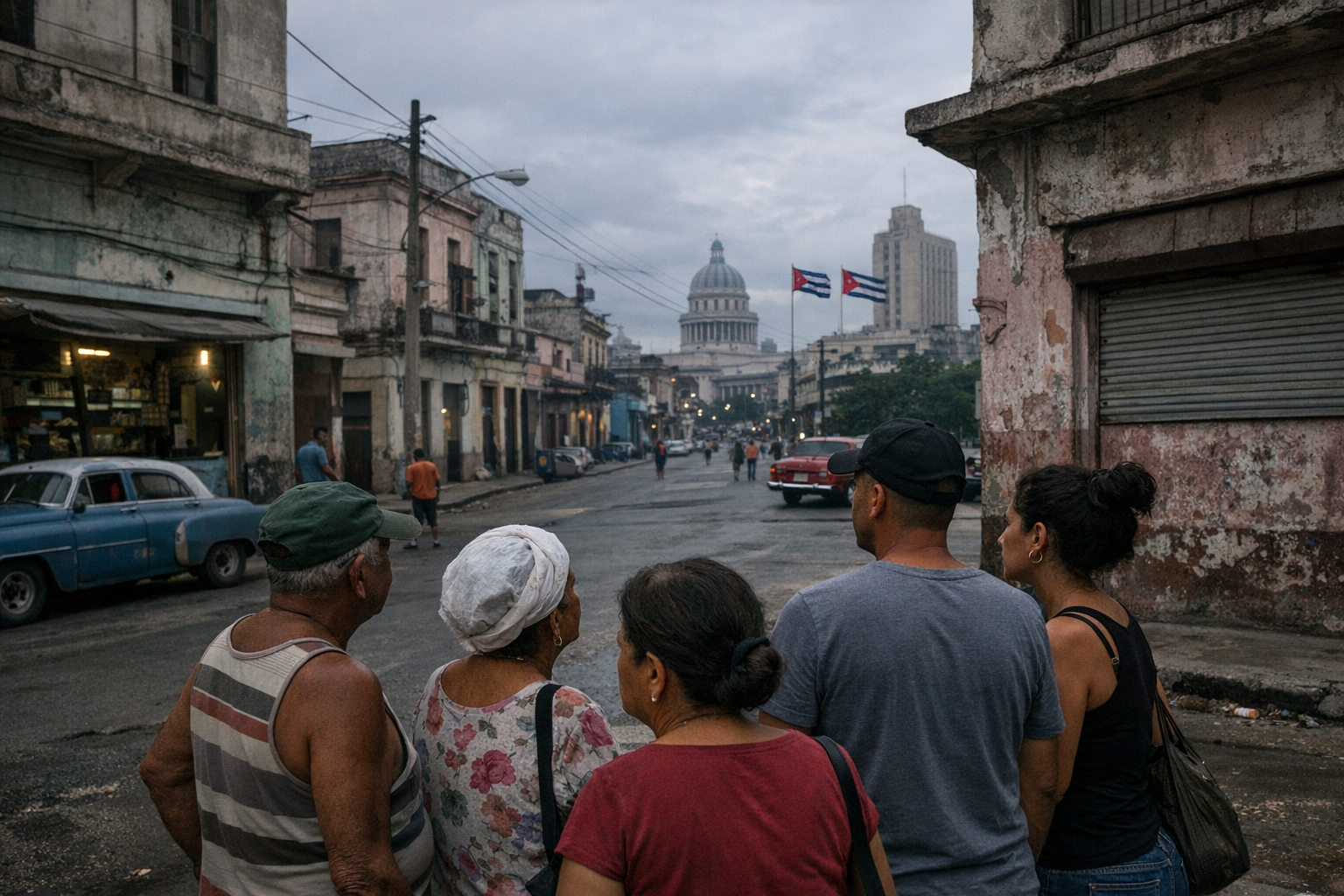
Taken together, the actions amount to the administration’s most forceful signal yet that its Cuba policy is no longer confined to economic punishment and rhetorical condemnation. In Havana, where state officials and ordinary residents alike have spent decades living under embargo and periodic threats from Washington, the latest developments are being interpreted as something more ominous: a possibility, however uncertain, that American military action is now being discussed as a real option.
The indictment, filed in federal court in Miami, accuses Mr. Castro and his co-defendants of conspiracy to kill U.S. nationals, murder and destruction of aircraft in the 1996 attack, when Cuban warplanes shot down two aircraft operated by Brothers to the Rescue, a Miami-based exile group. The episode, which killed four men, became one of the defining flashpoints in the long and bitter conflict between Havana and Cuban exiles in Florida.
For years, the shoot-down remained a symbol of the Cuban government’s impunity in American political discourse. By reviving it now in the form of a criminal prosecution, the administration has supplied itself with both a legal rationale and a politically resonant case for hardening its approach.
From Pressure Campaign to Coercive Signaling
The White House has been tightening the screws on Cuba for months. In late January, Mr. Trump declared a national emergency over Cuba and authorized a tariff mechanism aimed at countries supplying oil to the island, an attempt to deepen pressure on an economy already battered by shortages, blackouts and emigration. On May 1, he signed another executive order broadening sanctions on individuals and entities linked to Cuba’s security apparatus and repression.
Administration officials have cast the measures as part of a larger national-security effort, portraying Cuba not simply as an authoritarian neighbor but as a state aligned with hostile foreign actors and destabilizing forces in the hemisphere.
Yet even as the pressure campaign intensified, there were signs that Washington had not entirely closed the door to talks. Senior American officials, including Mr. Rubio and C.I.A. Director John Ratcliffe, have had recent contacts with Cuban officials, according to reporting by The Associated Press. Those efforts appear to have yielded little. Mr. Rubio, speaking publicly this week, said Mr. Trump would prefer a negotiated arrangement but suggested the prospects were dim.
That combination — stalled diplomacy, expanding sanctions, criminal charges against a former head of state and increasingly explicit references to military action — has made this moment feel different from the many previous cycles of U.S.-Cuba tension.
The United States has threatened Cuba before, and presidents of both parties have sought, in different ways, to bend the island’s government. But public speculation from a sitting president about using force, arriving immediately after an indictment of the country’s most recognizable revolutionary figure, has raised the risk that signaling intended as coercive leverage could be read in Havana as preparation for something more.
Alarm in Havana
In Cuba, the response has mixed outrage, disbelief and anxiety.
The charges against Mr. Castro have been received not merely as an attack on a retired leader but as an assault on the legitimacy of the revolutionary state itself. For many Cubans, including those critical of the government, the move reinforces a longstanding suspicion that Washington’s objective is not reform or accountability but regime change.
At the same time, fear has spread in more intimate ways. In neighborhoods near residences of senior officials or military officers, residents have begun to talk about proximity in practical terms — who lives near whom, and what that might mean if the United States were ever to target the country’s leadership or security apparatus. Such conversations, rare even during prior moments of strain, reflect how seriously some in Havana are taking the latest American rhetoric.
There is, so far, no public evidence that the United States has made a decision to strike Cuba, and officials have not announced any military deployment or timetable. But in crises like this, perception can become a force of its own. The danger lies not only in what Washington intends, but in what Cuban authorities believe Washington may be preparing to do.
The Weight of History
Any confrontation with Cuba carries an unusually heavy historical burden.
For more than six decades, the relationship has been defined by invasion attempts, covert operations, assassination plots, sanctions and episodic openings that rarely lasted. The Bay of Pigs remains central to Cuba’s national memory; so, too, does the missile crisis, when the island became the focal point of a nuclear standoff between the United States and the Soviet Union.
That history makes even ambiguous threats especially combustible. In Washington, tough talk on Cuba has long had domestic political resonance, particularly in South Florida. In Havana, American pressure is often used by the government to rally support, justify repression and frame dissent as collaboration with an external enemy.
The renewed focus on the 1996 shoot-down also connects today’s showdown to one of the exile community’s deepest grievances. Brothers to the Rescue began as a humanitarian group searching for rafters fleeing Cuba, but its flights became an enduring provocation to Havana, which viewed them as hostile incursions. The downing of the planes helped lead to the Helms-Burton Act, which further codified the U.S. embargo. By bringing criminal charges three decades later, the administration has reopened not only a legal case but an old emotional and political wound.
What Comes Next
The central question now is whether the administration’s threats are designed to extract concessions or to prepare domestic and international opinion for more concrete action.
The indictment itself may never produce a practical courtroom outcome; Mr. Castro is in Cuba, and there is little reason to believe Havana would cooperate. Its immediate value is symbolic and strategic. It brands the former leader a criminal defendant in an American court and offers the administration a fresh justification for portraying the Cuban state as beyond normal diplomacy.
But military rhetoric has consequences even when no operation follows. It can unsettle markets and allies, harden positions in Havana, narrow room for quiet negotiation and increase the odds of miscalculation. Regional governments, many of which oppose both the Cuban government and American interventionism, would face intense pressure to respond if the crisis deepened. U.S. allies, too, would have to weigh support for Washington against the risks of endorsing force in the Caribbean.
For now, the evidence points clearly to escalation, but not yet to an imminent strike. What has changed is the atmosphere. After months of tightening sanctions and warnings, the administration has added criminal prosecution and open-ended military threats to its arsenal. In a relationship shaped by decades of mutual hostility, that shift alone is enough to make this one of the most volatile moments in years.
Sources
Further reading and reporting used to add context:
- Rubio doubtful of diplomacy with Cuba as Trump raises new threat | AP News
- https://apnews.com/article/9522edaf65977013e02c09422190cc16
- https://apnews.com/article/846cffc2af0505d55eead059deda877b
- https://apnews.com/article/0f000c53c261611dcaa1a882a33e3315
- https://www.thedailybeast.com/state-department-busted-in-embarrassing-donald-trump-blunder-about-marco-rubios-cuban-heritage/
- Office of Public Affairs | U.S. Unseals Superseding Indictment Charging Raul Castro and Five Castro Regime Co-Defendants for 1996 Shoot-Down of Brothers to the Rescue Aircraft | United States Department of Justice
- https://www.investing.com/news/commodities-news/us-plans-to-indict-cubas-raul-castro-doj-official-says-4691052
- https://www.washingtonpost.com/national-security/2026/05/20/former-cuban-president-ral-castro-indicted-us-murder-conspiracy-charges/
- https://www.pbs.org/newshour/world/trump-administration-prepares-to-seek-raul-castro-indictment-as-it-pressures-cuba-ap-sources-say
- https://www.justice.gov/opa/pr/justice-department-sues-revoke-us-citizenship-convicted-cuban-spy
- https://www.pbs.org/newshour/politics/watch-trump-says-raul-castro-indictment-is-a-very-important-moment-for-cubans
- https://www.justice.gov/usao-pr/pr/members-and-associates-transnational-criminal-organization-based-out-anasco-puerto-rico?bm-verify=AAQAAAAN_____0NKFq0K5P7EiQjlwVXWLYzc85W0Xb-iEqFJbLxCYjPzcCRIuYlqPU6cJKMokpe_VRvDcii05aOm84_dZpJO8IldyNwCqi3lxXXeJSpsdeYILCmzihI0lh3B7daNBqTdwIfeUfzFipjymFqvTRaf04Kj-grOUldAkSGLdvQIS43S-dFUBbtdmOU4LJC6ktCnjLazmYeOD54MoD2oLvGGnQa8LLf9mXhgHp5euo2D5ndfAODUomQC3ePZllqbxDOcWtMjHXJZOnRlbp3MLJca7yD9fZLC2xe6QHXsNIEtHyjD6qDgFt-neeDe-A3o9ms6GYBekzRYCKnUqh8b1BOZNJlnNMRFlulrGzQA0FHUbkMJk1RxliFU
- https://www.justice.gov/opa/pr/more-25-defendants-charged-nationwide-tren-de-aragua-crackdown-resulting-seizure-over-80
- https://www.justice.gov/opa/pr/foreign-operators-and-technical-superintendent-mv-dali-indicted-roles-key-bridge-crash
- https://www.justice.gov/usao-sdny/pr/governor-sinaloa-and-nine-other-current-and-former-mexican-officials-charged-drug
- https://www.justice.gov/opa/pr/twenty-seven-members-and-associates-tren-de-aragua-splinter-faction-anti-tren-charged-2024
- https://www.investing.com/news/world-news/trump-raises-prospect-of-friendly-takeover-of-cuba-4532430
- https://www.whitehouse.gov/fact-sheets/2026/01/fact-sheet-president-donald-j-trump-addresses-threats-to-the-united-states-by-the-government-of-cuba/?query-11-page=3
- https://www.whitehouse.gov/fact-sheets/2026/01/fact-sheet-president-donald-j-trump-safeguards-venezuelan-oil-revenue-for-the-good-of-the-american-and-venezuelan-people/
- Addressing Threats to the United States by the Government of Cuba – The White House
- https://www.whitehouse.gov/presidential-actions/2026/01/adjusting-imports-of-semiconductors-semiconductor-manufacturing-equipment-and-their-derivative-products-into-the-united-states/
- https://www.whitehouse.gov/briefings-statements/2026/05/presidential-message-on-cuban-independence-day/
- https://www.whitehouse.gov/fact-sheets/2025/01/fact-sheet-president-donald-j-trump-declares-a-national-emergency-at-the-southern-border/
- https://www.whitehouse.gov/presidential-actions/2026/01/safeguarding-venezuelan-oil-revenue-for-the-good-of-the-american-and-venezuelan-people/?query-11-page=3
- https://www.whitehouse.gov/releases/2026/01/57-times-sick-unhinged-democrats-declared-war-on-law-enforcement/
- https://www.whitehouse.gov/presidential-actions/2026/04/presidential-determination-pursuant-to-section-303-of-the-defense-production-act-of-1950-as-amended-on-natural-gas-transmission-processing-storage-and-liquefied-natural-gas-capacity/
- https://www.whitehouse.gov/presidential-actions/executive-orders/
- https://www.whitehouse.gov/presidential-actions/2026/01/regarding-the-acquisition-of-certain-assets-of-emcore-corporation-by-hiefo-corporation/?query-11-page=3
- https://www.whitehouse.gov/releases/2026/01/inaugural-meeting-of-us-india-drug-policy-working-group/
- https://www.whitehouse.gov/wp-content/uploads/2026/01/WHOSTP-2025-Wins.pdf
- https://www.whitehouse.gov/wp-content/uploads/2026/01/Frequently-Asked-Questions-During-a-Lapse-in-Appropriations_Final.pdf
- https://www.whitehouse.gov/wp-content/uploads/2026/01/SAP-HConRes-61.pdf
- https://www.whitehouse.gov/wp-content/uploads/2026/04/2026-Economic-Report-of-the-President-1.pdf
- https://www.whitehouse.gov/fact-sheets/2026/05/fact-sheet-president-donald-j-trump-imposes-sanctions-on-cuban-regime-officials-responsible-for-repression-and-threats-to-u-s-national-security-and-foreign-policy/?query-11-page=73
- https://www.whitehouse.gov/presidential-actions/2026/05/imposing-sanctions-on-those-responsible-for-repression-in-cuba-and-for-threats-to-united-states-national-security-and-foreign-policy/
- https://ofac.treasury.gov/sanctions-programs-and-country-information/cuba-sanctions
- https://www.whitehouse.gov/fact-sheets/2026/05/2026-national-drug-control-strategy-fact-sheet/
- https://ofac.treasury.gov/faqs/1251
- https://ofac.treasury.gov/faqs/all-faqs
- https://ofac.treasury.gov/recent-actions/20260501_33
- https://ofac.treasury.gov/faqs/added
- https://home.treasury.gov/news/press-releases/sb0409
- https://www.whitehouse.gov/presidential-actions/2026/01/addressing-threats-to-the-united-states-by-the-government-of-cuba/?query-11-page=41
- https://www.whitehouse.gov/fact-sheets/?s=tariffs
- https://ofac.treasury.gov/media/935581/download
- https://ofac.treasury.gov/media/935571/download?inline=
- https://ofac.treasury.gov/media/935581/download?inline=
- https://ofac.treasury.gov/system/files/126/cuba_fact_sheet_11082017.pdf
- https://ofac.treasury.gov/media/20276/download?inline=
- https://home.treasury.gov/system/files/266/TreasuryStrategicPlan-FY2022-2026.pdf