
Washington Expands Its AI Oversight, From Models to Microchips
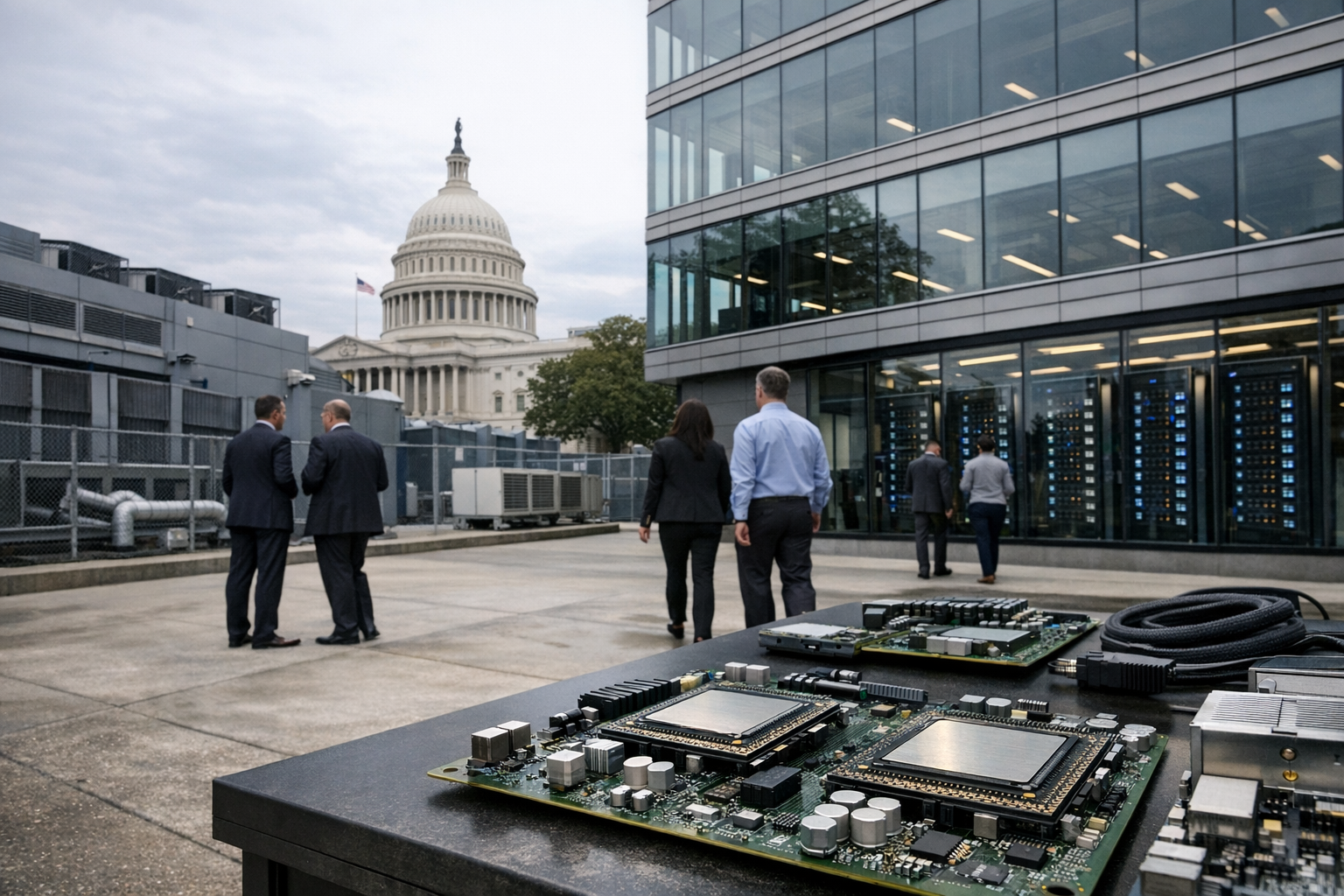
The battle over how to police artificial intelligence in the United States is widening rapidly, moving beyond the software made by companies like OpenAI to the semiconductors and data centers that power it.
In recent days, OpenAI said it would comply with a new Trump administration framework that asks the makers of the most advanced A.I. systems to give the government an early look at their models before broader release. At nearly the same time, Senator Elizabeth Warren, Democrat of Massachusetts, intensified pressure on Nvidia, urging its chief executive, Jensen Huang, to testify before the Senate about chip sales to China, export-control compliance and the policy choices fueling the nation’s sprawling A.I. infrastructure boom.
Taken together, the moves amount to a significant shift in Washington’s approach to A.I. governance. For years, policymakers argued largely in the abstract about existential risks, innovation and competition with China. Now the federal government is trying to build oversight across both layers of the industry: the frontier models that can generate code, text and analysis, and the hardware supply chain that determines who can train and deploy those systems at scale.
George Osborne, OpenAI’s head of countries, told CNBC that governments “have a big role to play in how this technology is used and deployed,” signaling the company’s willingness to work within the administration’s new review process.
A Voluntary Review System Takes Shape
President Trump signed the executive order on June 2, establishing what the White House has described as a voluntary framework for early review of the country’s most advanced A.I. models. The order directs federal agencies to define a classified benchmark for what will count as a “covered frontier model” and allows developers to provide the government access to such systems for as many as 30 days before wider release.
The order is explicit about what it does not do: It does not create a licensing system, and it does not require formal government preclearance before a model can reach the public. That distinction appears to have been important to the industry. Public reporting has indicated that major A.I. labs viewed a shorter review window as manageable, especially after an earlier and more stringent concept — a 90-day review period — was narrowed following company objections.
The administration’s push came after growing alarm inside government over increasingly capable models, particularly those with advanced cyber abilities. Reporting has indicated that Anthropic’s “Mythos” system helped sharpen internal debates over whether existing guardrails were too weak for the next generation of A.I. tools.
OpenAI has for months signaled support for a stronger federal framework around frontier-model safety, and its decision to cooperate gives the White House an early win as it tries to turn broad concern into an actual process. But much remains unsettled, including which systems will meet the classified threshold for review and how many companies will choose to participate if the regime remains voluntary.
Congress Trains Its Sights on Nvidia
At the same time, scrutiny in Washington is extending to the companies that sit beneath the model makers. Ms. Warren has invited Mr. Huang to appear at a June 11 Senate Banking Committee hearing focused on A.I., where lawmakers are expected to press him on whether advanced Nvidia chips are reaching China, how export restrictions are being interpreted and whether the current policy is adequately protecting national security.
The pressure on Nvidia has been building for months. Ms. Warren, along with Senator Jim Banks, Republican of Indiana, previously urged the Commerce Department to examine whether Mr. Huang’s public comments about chip diversion may have influenced licensing decisions. Ms. Warren has also criticized the administration’s decision in May to allow advanced Nvidia chip sales to China, arguing that the move risked undercutting U.S. efforts to limit Beijing’s access to the computing power needed for cutting-edge A.I.
Nvidia has become an unavoidable target because of its dominance in the industry. The company recently reported $75.2 billion in quarterly data-center revenue, a figure that underscores how central its chips have become to the global race to build more powerful A.I. systems. Any serious effort to regulate A.I., lawmakers increasingly recognize, must grapple not just with what models can do but with who gets the processors, electricity and capital to build them.
The Politics of the A.I. Stack
The twin developments reflect a deeper change in the politics of artificial intelligence. The first wave of debate in Washington centered on whether model makers should self-police and whether government should step in only after harms emerged. The new approach suggests that officials are no longer satisfied with focusing on lab conduct alone.
Instead, they are treating A.I. as an interconnected system of models, chips, cloud infrastructure, export controls and energy-intensive data centers. That is broadening the policy conversation from safety and misinformation to industrial strategy, national security and the economics of domestic infrastructure.
For the White House, the new review framework offers a way to establish a formal channel into the most advanced A.I. releases without immediately provoking a bruising fight over licensing. For Congress, the scrutiny of Nvidia signals that concern about China’s access to advanced computing — and about how the United States is financing and expanding its own A.I. buildout — is becoming a central front in the governance debate.
What happens next is uncertain. It remains unclear whether Nvidia’s chief executive will testify on June 11, whether Congress or the Commerce Department will tighten export rules, or whether lawmakers will seek to close suspected overseas-shipment loopholes. On the model side, it is not yet known whether the administration’s cooperative review system will remain limited and voluntary or become the foundation for a tougher regulatory regime.
What is clear is that Washington is no longer looking at A.I. as simply a matter of what happens inside a laboratory. The government is beginning to treat the technology as a full supply chain — one that starts with advanced chips, runs through giant data centers and culminates in models whose release is now, at least in some cases, expected to come with a knock on the government’s door first.
Sources
Further reading and reporting used to add context:
- https://www.tomshardware.com/tech-industry/nvidia-keynote-computex-2026-gtc-taipei-where-to-watch
- https://www.techradar.com/news/live/nvidia-computex-2026
- https://www.techradar.com/pro/ai-is-now-useful-nvidia-ceo-jensen-huang-thinks-a-new-era-for-ai-is-here-and-its-partnership-with-microsoft-could-be-key-for-achieving-it
- https://www.techradar.com/pro/security/new-trump-executive-order-requests-ai-companies-voluntarily-allow-the-white-house-to-test-the-advanced-cyber-capabilities-of-ai-models
- https://apnews.com/article/e41af74f7b0865482f07d10fe7a50fe3
- https://www.cnbc.com/2025/08/27/nvidia-jensen-huang-real-possibility-blackwell-ai-chip-to-china.html
- https://www.cnbc.com/2025/08/16/senate-democrats-letter-trump-advanced-ai-chip-sales-china.html
- https://techcrunch.com/2026/06/02/trump-signs-narrower-executive-order-on-ai-oversight-after-industry-objections/
- https://www.techbuzz.ai/articles/warren-summons-nvidia-ceo-to-senate-over-china-chip-sales
- https://www.cnbc.com/2025/05/06/nvidia-ceo-says-missing-china-ai-market-would-be-tremendous-loss-.html
- https://www.tomshardware.com/tech-industry/artificial-intelligence/trump-signs-ai-executive-order-seeking-30-day-government-access-to-frontier-models-before-release
- https://www.bloomberg.com/news/articles/2026-03-16/nvidia-expects-to-make-1-trillion-from-ai-chips-through-2027
- https://www.cnbc.com/2025/06/12/nvidia-ceo-if-us-wont-participate-in-china-huawei-has-china-covered.html
- https://uk.marketscreener.com/news/warren-invites-nvidia-ceo-huang-to-senate-hearing-on-china-business-ce7f5ddddb8efe24
- https://www.cnbc.com/2025/09/18/nvidias-huang-calls-5-billion-intel-stake-an-incredible-investment.html/
- https://www.cnbc.com/2025/09/17/china-us-nvidia-chip-ban.html
- https://www.techechelon.com/post/senator-warren-invites-nvidia-ceo-jensen-huang-to-senate-hearing-on-china-ai-chip-sales
- https://www.reddit.com/r/Mag7shares/comments/1tx40l8/warren_invites_nvidia_ceo_jensen_huang_to_senate/
- https://en.wikipedia.org/wiki/Jensen_Huang
- https://techxplore.com/news/2026-05-china-nvidia-ai-chips-huang.pdf
- https://www.banking.senate.gov/imo/media/doc/20250528bankswarrenlettertonvidiaonshanghairesearchdevcenter.pdf
- https://www.reddit.com/r/wallstreetbets/comments/1tuby9s/no_huang_answers_nvidia_gtc_taipei_2026_keynote/
- https://www.tomshardware.com/tech-industry/nvidia-has-received-pos-from-chinese-customers
- https://www.tomshardware.com/tech-industry/artificial-intelligence/huawei-could-seize-chinas-ai-chip-crown-in-2026-as-nvidias-h200-shipments-stall-in-regulatory-limbo-beijing-pushes-homegrown-ai-hardware-dominance-in-a-market-projected-to-hit-usd67-billion-by-2030
- https://www.tomshardware.com/pc-components/gpus/nvidia-says-h200-demand-in-china-is-very-high-as-export-licenses-near-completion
- https://www.tradingkey.com/analysis/stocks/us-stocks/261947836-nvda-ai-nvidia-tradingkey
- https://www.banking.senate.gov/hearings/ai-and-the-american-dream-promoting-innovation-affordability-and-american-dominance
- https://www.techradar.com/pro/we-expect-at-least-usd1-trillion-revenue-nvidia-ceo-predicts-huge-windfall-on-rubin-and-blackwell-chips-as-he-reveals-new-vera-cpu-and-server-racks
- https://www.streetinsider.com/Reuters/Nvidia%2Bhas%2Bcapacity%2Bto%2Bsupply%2Brobust%2BAI%2Bgrowth%2Bdespite%2Bconstraints%2C%2Bsays%2BCEO/26585767.html
- https://www.marketscreener.com/news/us-clears-h200-chip-sales-to-10-china-firms-as-nvidia-ceo-looks-for-breakthrough-ce7f5bddd98df020
- https://www.tomshardware.com/tech-industry/us-senators-want-to-suspend-nvidia-ai-chip-export-licenses-to-china-and-its-intermediaries-bipartisan-letter-to-commerce-dept-says-that-huangs-claims-of-no-chip-diversion-were-contradicted-by-reporting-available
- https://www.banking.senate.gov/newsroom/minority/banks-warren-press-nvidia-on-national-security-risks-of-shanghai-randd-facility
- https://www.warren.senate.gov/newsroom/press-releases/warren-blumenthal-question-whether-nvidias-20-billion-groq-deal-is-attempt-to-avoid-antitrust-laws
- https://www.banks.senate.gov/news/in-the-news/us-lawmakers-ask-whether-nvidia-ceos-smuggling-remarks-misled-regulators/
- https://www.banking.senate.gov/newsroom/minority/senator-warren-statement-on-president-trumps-clearing-the-sale-of-advanced-ai-chips-to-china
- https://www.warren.senate.gov/newsroom/press-releases/warren-wyden-blumenthal-call-on-federal-regulators-to-investigate-meta-google-nvidia-reverse-acqui-hire-deals
- https://www.warren.senate.gov/newsroom/news-coverage/nvidias-20-billion-groq-deal-queried-by-warren-blumenthal
- https://www.banking.senate.gov/imo/media/doc/letter_from_rms_warren_and_meeks_re_h200_12222025pdf.pdf
- https://www.axios.com/2026/06/02/trump-signs-new-ai-executive-order
- https://www.theatlantic.com/technology/2026/06/trump-ai-executive-order/687410/?utm_source=apple_news
- Promoting Advanced Artificial Intelligence Innovation and Security – The White House
- https://www.pymnts.com/news/artificial-intelligence/2026/white-house-executive-order-seeks-access-new-ai-models/
- https://www.insidegovernmentcontracts.com/2026/06/white-house-releases-executive-order-on-advanced-ai-innovation-and-security/
- https://www.theguardian.com/us-news/2026/jun/02/trump-executive-order-ai-voluntary-review
- https://www.latimes.com/politics/story/2026-06-02/trump-signs-executive-order-to-vet-top-ai-models-for-national-security-risks
- https://www.techtimes.com/articles/317626/20260602/trump-ai-executive-order-signed-musk-zuckerberg-lobbied-review-down-30-days.htm
- https://www.ansi.org/standards-news/all-news/6-4-26-white-house-issues-executive-order-on-ai-innovation-and-cybersecurity
- https://www.nextgov.com/artificial-intelligence/2026/06/trump-signs-ai-executive-order-after-postponement-last-month/413912/
- https://www.theguardian.com/politics/2026/feb/18/countries-do-not-embrace-ai-left-behind-george-osborne
- https://federalnewsnetwork.com/cybersecurity/2026/06/ai-executive-order-sets-stage-for-new-cybersecurity-directives/?readmore=1
- Trump signs order designed to give government early look at powerful AI models – The Washington Post
- https://www.reddit.com/r/AIDangers/comments/1two993/trumps_ai_executive_order_june_2_2026_technical/
- https://www.reddit.com/r/politics/comments/1tv0jok/trump_signs_executive_order_to_review_ai_models/
- https://www.reddit.com/r/pwnhub/comments/1tv2i71/new_ai_executive_order_is_out/
- https://www.banking.senate.gov/newsroom/minority/warren-raises-national-security-concerns-with-nvidias-acquisition-of-critical-software-used-in-supercomputing-systems
- https://www.banking.senate.gov/newsroom/minority/warren-probes-financial-stability-illicit-finance-and-consumer-protection-concerns-related-to-metas-integration-of-stablecoins-on-its-platform
- https://www.banking.senate.gov/newsroom/minority/warren-merkley-seek-records-on-2-billion-trump-stablecoin-deal-from-uae-firm-and-binance
- https://www.banking.senate.gov/newsroom/minority/warren-presses-secretary-bessent-on-cybersecurity-resilience-of-financial-sector-amidst-growing-risks-of-ai-enabled-cyberattacks
- https://www.banking.senate.gov/newsroom/minority/senators-warren-and-banks-probe-nvidia-ceo-on-upcoming-trip-to-peoples-republic-of-china
- https://www.warren.senate.gov/newsroom/press-releases/warren-presses-openai-ceo-on-spending-commitments-and-bailout-requests-after-cfo-suggests-government-backstop
- https://www.banking.senate.gov/newsroom/minority/ahead-of-bessent-hearing-warren-presses-trump-administration-to-monitor-and-address-risks-posed-by-k-shaped-economy
- https://www.banking.senate.gov/newsroom/minority/warren-presses-warsh-on-divestment-of-more-than-100-million-of-secret-investments-ahead-of-his-swearing-in
- https://www.banking.senate.gov/newsroom/minority/warren-criticizes-nvidia-ceos-closed-door-meeting-on-capitol-hill-presses-administration-not-to-greenlight-sale-of-h200-ai-chips-to-china
- https://www.banking.senate.gov/imo/media/doc/20260415lettertoseconenforcement.pdf
- https://www.banking.senate.gov/imo/media/doc/warren_letter_to_meta_re_stablecoin.pdf
- https://www.warren.senate.gov/imo/media/doc/letter_to_bessent_and_irs_on_temporary_appointments.pdf
- https://www.investing.com/news/stock-market-news/nvidia-forecasts-quarterly-revenue-above-estimates-announces-80-billion-share-buyback-4702363
- https://www.investing.com/news/stock-market-news/nvidia-says-its-forecast-for-200-billion-cpu-market-includes-china-4708031
- https://www.investing.com/news/stock-market-news/nvidia-says-its-forecast-for-200-billion-cpu-market-includes-china-4708275
- https://www.investing.com/news/stock-market-news/nvidia-ceo-says-he-believes-china-market-will-open-over-time-4696684
- https://wdsm710.com/2026/06/01/nvidia-ceo-says-has-capacity-to-supply-robust-cpu-and-gpu-growth/
- https://www.investing.com/news/stock-market-news/nvidia-to-stop-including-china-in-forecasts-amid-us-chip-export-controls-cnn-reports-4093891
- https://www.axios.com/2026/03/16/nvidia-ceo-jensen-huang-nvidia-gtc
- https://m.investing.com/news/stock-market-news/us-lawmakers-ask-whether-nvidia-ceos-smuggling-remarks-misled-regulators-4578261?ampMode=1
- https://www.banking.senate.gov/imo/media/doc/letter_to_commerce_nvidia_supermicro.pdf
- https://www.warren.senate.gov/newsroom/press-releases/warren-for-time-tax-ai-and-invest-in-people
- https://www.axios.com/2026/05/29/inside-democratic-resistance-ai
- https://www.axios.com/2026/03/25/warner-ai-data-center-moratorium-aoc-idiocy
- https://www.marketscreener.com/news/sen-warren-calls-for-trump-to-close-loophole-allowing-ai-chips-to-be-sent-to-overseas-units-of-ch-ce7f5dd9dd8df125
- https://www.warren.senate.gov/newsroom/press-releases/senator-warren-lawmakers-open-investigation-into-big-tech-data-centers-role-in-driving-up-families-utility-costs
- https://www.warren.senate.gov/newsroom/press-releases/warren-hawley-secure-mandatory-energy-use-reporting-requirements-for-data-centers
- https://www.reutersconnect.com/item/ai-data-center-infrastructure-hearing/dGFnOnJldXRlcnMuY29tLDIwMjY6bmV3c21sX01UMVNJUEEwMDAyNUcwWVg
- https://www.investing.com/news/stock-market-news/data-center-coolingrelated-stocks-drop-after-nvidia-ceo-huangs-comments-4433174
- https://www.warren.senate.gov/newsroom/videos/watch/its-time-to-tax-ai-and-invest-in-people
- https://www.warren.senate.gov/newsroom/press-releases/warren-dean-democrats-urge-commerce-department-watchdog-to-investigate-lutnick-familys-conflicts-of-interest-impact-on-ai-data-center-decisions
- https://www.warren.senate.gov/newsroom/press-releases/warren-releases-new-data-from-joint-committee-on-taxation-revealing-that-pass-through-deduction-is-a-giveaway-to-millionaires
- https://www.warren.senate.gov/newsroom/news-coverage/sen-warren-questions-dod-about-anthropic-blacklist-that-appears-to-be-retaliation
- https://nvidianews.nvidia.com/_gallery/download_pdf/6a0e17dc3d633295d45282e6/
- https://www.warren.senate.gov/imo/media/doc/letter_to_eia_re_data_center_transparency.pdf
- https://www.troutman.com/insights/policymakers-consider-temporary-pause-on-ai-data-center-construction-what-stakeholders-need-to-know/?pdf=display
- https://en.wikipedia.org/wiki/Valerie_Foushee
- https://www.brookings.edu/wp-content/uploads/2026/02/20260217_AI_sovereignty_final.pdf
- https://en.wikipedia.org/wiki/Opposition_to_AI_data_centers
- https://www.tomshardware.com/tech-industry/artificial-intelligence/google-microsoft-and-xai-agree-to-let-us-govenment-test-ai-models-before-public-release
- https://www.tomshardware.com/tech-industry/artificial-intelligence/trump-administration-considers-mandatory-pre-release-vetting-of-ai-models
- https://www.investing.com/news/economy-news/openais-altman-to-urge-us-lawmakers-not-to-require-ai-model-approvals-4724935
- https://openai.com/index/frontier-safety-blueprint/
- https://www.investing.com/news/world-news/trump-signed-order-to-promoteadvanced-ai-innovation-and-security-white-house-says-4722541
- https://www.mlex.com/mlex/articles/2485401/openai-says-democratic-governments-need-to-determine-ai-safeguards
- https://www.spokesman.com/stories/2026/jun/02/trump-signs-executive-order-seeking-oversight-of-a/
- https://enterprisedna.co/resources/news/openai-frontier-governance-framework-enterprise-2026
- https://www.forbes.com/sites/tylerroush/2026/05/04/white-house-may-review-new-ai-models-before-public-release-report-says/
- https://www.opb.org/article/2026/06/02/trumps-new-ai-safety-order-seeks-voluntary-review-of-new-models/
- https://en.wikipedia.org/wiki/Executive_Order_14110
- https://en.wikipedia.org/wiki/Executive_Order_14179
- https://en.wikipedia.org/wiki/OpenAI