
The AI Boom Meets Its Hardest Test Yet
For much of the past two years, the market’s faith in artificial intelligence has rested on a simple proposition: that demand for computing power would keep rising so quickly that the companies supplying it could outrun almost any concern about cost, competition or concentration.
On Wednesday, that proposition faced a sharper test.
Investors were awaiting Nvidia’s quarterly earnings report and evening conference call as a referendum not just on one chipmaker’s growth, but on the durability of the broader AI trade. At nearly the same moment, OpenAI, one of the most aggressive builders of AI capacity, was grappling with an internal infrastructure shake-up after the departure of Chris Malone, the executive overseeing data centers.
Taken together, the developments underscored how the AI story is changing. The central question is no longer merely whether companies want more AI. It is whether the industry can actually finance, build and operate enough infrastructure to support its ambitions — and whether that demand is broad and durable enough to justify the extraordinary sums now being committed.
Nvidia as a Market Bellwether
Nvidia has become the clearest proxy for AI optimism on Wall Street, with its chips and systems serving as the backbone of the current generative AI buildout. The company entered its earnings report after telling investors to expect roughly $91 billion in revenue for the quarter, following a record $81.6 billion in the prior period, including $75.2 billion from its data-center business alone.
Those figures have helped turn Nvidia into something larger than a semiconductor company. Its results are now treated as a reading on whether the most important market trend of this era is still accelerating.
That has also made investors unusually sensitive to the composition of Nvidia’s demand. A central concern heading into the earnings report was the company’s dependence on a relatively small group of hyperscale cloud providers and giant AI developers whose spending has driven much of the boom. If those buyers continue to expand aggressively, Nvidia’s growth case remains intact. If their spending begins to normalize, the implications could reverberate far beyond the company’s own shares.
The question is not whether demand for AI computing exists. It plainly does. The question is whether that demand is deepening across a wider customer base, or remaining concentrated among a handful of the world’s richest technology companies.
Financing the Next Wave
Nvidia has been trying to answer that concern with a new strategy: finance as infrastructure policy.
This month, the company has highlighted efforts with Apollo, BlackRock, Blackstone, Brookfield, Goldman Sachs and KKR to help mobilize more than $500 billion for AI infrastructure. The goal is straightforward: make it easier for a larger set of customers to afford the expensive systems, data centers and power arrangements needed to compete in AI.
That push can be read in two ways, and investors are likely to debate both after the earnings call. On one hand, it suggests the market for AI computing is maturing, with new financing mechanisms broadening access beyond the wealthiest cloud companies. On the other, it raises the possibility that the next phase of growth may require more active financial engineering because the costs of staying in the race have become so immense.
Either interpretation points to the same reality. AI is increasingly constrained not by imagination, but by capital intensity.
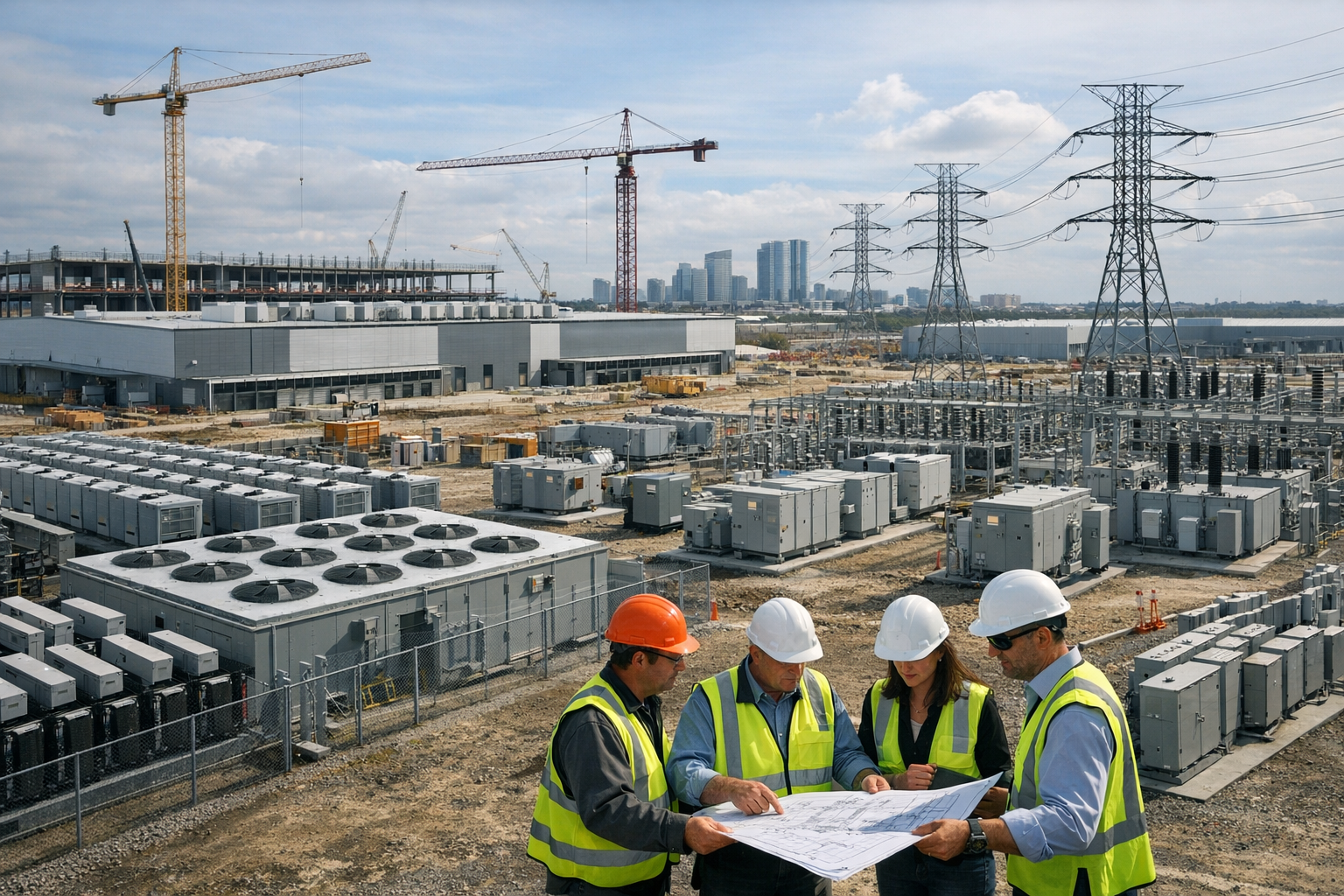
Building frontier models and the infrastructure behind them now demands spending on a scale more commonly associated with power plants, telecommunications networks or national transportation systems. Chips, servers, cooling systems, grid access and land have all become strategic inputs. So has patience from investors.
OpenAI’s Infrastructure Strain
That pressure is also visible at OpenAI, where infrastructure has become one of the company’s most consequential battlegrounds.
OpenAI said that it had recently reorganized its infrastructure organization to support the “scale and pace” of its work, following the exit of Mr. Malone, its data-center chief. The company has experienced a string of executive departures in recent months, but this one stands out because of where the business is now.
For a company racing to train larger models and serve hundreds of millions of users, compute is not an administrative function. It is a core competitive asset. Leadership stability in that area matters because delays in securing and operating data-center capacity can directly affect product rollouts, model development and costs.
The reorganization comes as OpenAI is pursuing one of the largest infrastructure expansions in the technology industry. In January 2025, it joined the announcement of Stargate, a plan to invest $500 billion over four years in American AI infrastructure. That initiative was intended to address a growing consensus across the industry: that the race for AI leadership would be won not only with algorithms and products, but with access to electricity, land, chips and data-center capacity.
This month, Nvidia said OpenAI was expected to be the customer for 8 IT-gigawatts at the PORTS-Pike campus in Ohio, an enormous commitment that illustrates the physical scale of the company’s ambitions. Such projects are far removed from the relatively asset-light image Silicon Valley long cultivated. They look more like industrial buildouts.
Why This Moment Matters
The pairing of Nvidia’s earnings test and OpenAI’s infrastructure reshuffling captures a broader turn in the AI economy.
The first phase of the boom was about possibility: what large language models could do, how quickly users would adopt them, and which companies appeared best positioned to profit. The current phase is about execution: who can secure the chips, raise the capital, sign the power contracts, build the facilities and manage the systems at a pace that keeps the whole machine running.
That shift matters now because valuations, spending plans and strategic alliances across the industry increasingly assume that AI demand will remain not just strong, but voracious. Nvidia’s results are expected to provide one of the clearest snapshots yet of whether that assumption still holds. OpenAI’s reorganization, meanwhile, is a reminder that even the companies at the center of the boom are not immune to the operational stresses of scaling at unprecedented speed.
If Nvidia shows that spending remains broad and accelerating, it could reinforce the idea that the AI buildout is still in an early stage. If the numbers suggest heavier reliance on a narrow customer set, or a need for more aggressive financing support, investors may begin asking harder questions about how durable the cycle really is.
And if OpenAI’s infrastructure changes prove routine, they may be forgotten quickly. But if they signal deeper strain in managing compute at scale, they will serve as an early warning that the AI race is becoming harder to operationalize, even for its front-runners.
For an industry that has spent years promising abundance, this week’s developments point to a more grounded truth: the future of AI may depend as much on balance sheets, construction schedules and organizational discipline as on breakthrough models themselves.
Sources
Further reading and reporting used to add context:
- https://www.kiplinger.com/investing/stocks/stocks-pause-for-nvidia-earnings-warsh-remarks-stock-market-today
- https://timesbrasil.com.br/empresas-e-negocios/tecnologia-e-inovacao/chris-malone-chefe-da-area-de-data-centers-da-openai-deixa-a-empresa/
- https://www.investing.com/news/stock-market-news/nvidia-faces-growth-test-as-rubin-debut-meets-ai-financing-scrutiny-4874842
- https://www.youtube.com/watch?v=ZFpgXNKVK58
- https://www.techspindle.ai/story/57661
- https://www.tradingview.com/news/cnbctv%3Aa2854d90f094b%3A0/
- https://stechtimes.com/en/article/openai-data-centre-chief-exit-adds-leadership-risk-to-600-billion-comput-mt9d8ie3
- https://www.ithome.com/0/994/324.htm
- https://www.cnbc.com/2025/08/29/cnbc-daily-open-main-street-and-wall-street-are-still-alive-and-kicking.html/
- https://www.axios.com/2026/08/12/nvidia-ai-financing-blackrock-goldman
- https://podcasts.apple.com/us/podcast/ai-trade-in-focus-with-nvidia-looming-8-25-26/id1524487980?i=1000785807510
- https://www.axios.com/2026/08/14/openai-executive-greg-brockman-ipo
- https://news.bloomberglaw.com/private-equity/openai-data-center-executive-chris-malone-departs-the-ai-startup
- https://biz.chosun.com/en/en-it/2026/08/26/GTX73PQG4REIZORYSOAFIWTBTM/?outputType=amp
- https://www.reddit.com/r/Mag7shares/comments/1vyp649/cnbc_daily_open_nvidia_carries_world_of_ai_on_its/
- https://www.reddit.com/r/BetterOffline/comments/1vyjatl/openai_data_center_chief_chris_malone_is_out_the/
- https://s201.q4cdn.com/141608511/files/doc_financials/2026/q2/NVDA-Q2-2026-Earnings-Call-27-August-2025-5_00-PM-ET.pdf
- https://www.youtube.com/watch?v=G-wB6GjOihI
- https://www.reddit.com/r/TradeVerseNetwork/comments/1vya965/openai_head_of_data_centers_chris_malone_departs/
- https://www.reddit.com/r/StockMarket/comments/1vyhjty/openais_head_of_data_centers_has_left_company/
- https://www.reddit.com/r/VCX_Fundrise/comments/1vya1jx/openai_data_center_lead_leaves/
- https://www.reddit.com/r/MarketFluxHub/comments/1vy9v4s/openai_data_center_chief_chris_malone_exits_amid/
- https://www.reddit.com/r/XGramatikInsights/comments/1vy9zty/openais_head_of_data_centers_chris_malone_left/
- https://www.reddit.com/r/federationAI/comments/1vyjmvm/openai_data_center_chief_chris_malone_is_out_the/
- https://investor.nvidia.com/news/press-release-details/2026/NVIDIA-Sets-Conference-Call-for-Second-Quarter-Financial-Results/default.aspx
- https://investor.nvidia.com/events-and-presentations/events-and-presentations/event-details/2026/NVIDIA-2nd-Quarter-FY27-Financial-Results/default.aspx
- https://investor.nvidia.com/home/default.aspx?ncid=ref-inpa-842809
- https://investor.nvidia.com/events-and-presentations/events-and-presentations/event-details/2025/NVIDIA-2nd-Quarter-FY26-Financial-Results/default.aspx?mod=livecoverage_web
- https://investor.nvidia.com/news/press-release-details/2026/NVIDIA-Announces-Financial-Results-for-First-Quarter-Fiscal-2027/default.aspx
- https://investor.nvidia.com/news/press-release-details/2025/NVIDIA-Announces-Financial-Results-for-Second-Quarter-Fiscal-2026/default.aspx
- https://investor.nvidia.com/search-results/default.aspx?PageNumber=57
- https://investor.nvidia.com/financial-info/financial-reports/default.aspx
- https://investor.nvidia.com/news/press-release-details/2026/NVIDIA-Stockholder-Meeting-Set-for-June-24-Individuals-Can-Participate-Online/default.aspx
- https://investor.nvidia.com/news/press-release-details/2026/NVIDIA-Announces-Financial-Results-for-Fourth-Quarter-and-Fiscal-2026/
- https://investor.nvidia.com/financial-info/Annual-Meeting/default.aspx
- https://investor.nvidia.com/financial-info/sec-filings/sec-filings-details/default.aspx?FilingId=19467022
- https://investor.nvidia.com/files/doc_financials/2026/q3/13e6981b-95ed-4aac-a602-ebc5865d0590.pdf
- https://investor.nvidia.com/files/doc_financials/2025/Q425/Q4FY25-CFO-Commentary.pdf
- https://techcrunch.com/2026/08/25/openai-loses-a-top-data-center-exec-as-stream-of-high-profile-departures-continues/
- https://www.bloomberght.com/openai-da-yaprak-dokumu-suruyor-bir-yonetici-daha-ayrildi-3786431
- https://newsdig.tbs.co.jp/articles/withbloomberg/2896533?display=1
- https://thenextweb.com/news/openai-head-of-data-centres-chris-malone-departure
- https://www.newsquawk.com/headlines/openai-head-of-data-centres-chris-malone-has-left-the-co-reports-wsj
- https://www.tipranks.com/news/the-fly/openais-head-of-data-centers-left-the-company-last-week-wsj-reports-thefly-news
- https://finance.yahoo.com/technology/ai/articles/openai-executive-brad-lightcap-leaves-163333296.html
- https://fortune.com/2026/08/11/openai-exec-brad-lightcap-leaving-start-something-new/
- https://www.fortune.com/2026/08/18/openai-data-center-deal-with-nvidia-comes-in-145-billion-lower-than-reportedsignaling-concerns-of-artificial-demand-for-chips/
- https://www.streetinsider.com/Trader%2BTalk/OpenAI%2BHead%2BOf%2BData%2BCenters%2BChris%2BMalone%2BHas%2BLeft%2BCompany%2B-%2BWSJ/26974343.html
- https://bloomberg.com/latest/data-center-backlash
- https://www.reddit.com/r/wallstreetbets/comments/1vybwg5/openais_head_of_data_centers_has_left_the_company/
- https://www.reddit.com/r/BetterOffline/comments/1vs852x/wsj_openai_secondquarter_sales_show_tepid_growth/
- https://d1psq0mijjjwzs.cloudfront.net/site/media/69bab0ad8ca4b_Si%CC%81ntesis%20Informativa%20AMELAF_18-03-2026.pdf
- https://www.wsj.com/public/resources/documents/iSxO7b16ar1tDrQpPSt1-WSJNewsPaper-10-7-2025.pdf
- https://www.reddit.com/r/neoliberal/comments/1vydjgx/openais_head_of_datacenters_has_left_the_company/
- https://www.reddit.com/r/technology/comments/1vyadsi/openais_head_of_data_centers_has_left_the_company/
- https://www.reddit.com/r/OpenAI/comments/1viizyv/37_people_have_left_openai_or_anthropic_to_start/
- https://www.reddit.com/r/aigossips/comments/1vpq8m8/openai_is_falling_apart_right_now/
- https://www.reddit.com/r/WTFisAI/comments/1vp961q/openai_is_falling_apart_right_now/
- https://blogs.nvidia.com/blog/nvidia-ai-factory-compute/
- https://investor.nvidia.com/news/press-release-details/2026/NVIDIA-Partners-With-Apollo-BlackRock-Blackstone-Brookfield-Goldman-Sachs-and-KKR-to-Establish-AI-Compute-Infrastructure-Financing-Platforms-to-Mobilize-Over-500-Billion-of-Third-Party-Capital/default.aspx
- https://blogs.nvidia.com/blog/nvidia-unlocks-ai-compute-at-scale-capital-partners-to-power-ai-infrastructure-buildout/
- https://investor.nvidia.com/news/press-release-details/2026/NVIDIA-Guarantees-SB-Energys-PORTS-Pike-Technology-Campus-in-Ohio-to-Exclusively-Host-NVIDIA-AI-Compute/default.aspx
- https://blogs.nvidia.com/blog/securing-the-infrastructure-of-intelligence/?preview_id=97752
- https://www.investing.com/news/stock-market-news/goldman-in-talks-with-investors-on-nvidia-financing-deal-after-landing-prized-role-sources-say-4859677
- https://nvidianews.nvidia.com/news/latest?page=122
- https://investor.nvidia.com/news/press-release-details/2026/NAVER-NVIDIA-and-Brookfield-to-Expand-Koreas-National-AI-Factory-Infrastructure-Buildout/default.aspx
- https://blogs.nvidia.com/blog/nvidia-and-partners-build-in-america-for-america/
- https://www.marketscreener.com/news/why-nvidia-and-wall-street-are-lining-up-half-a-trillion-dollars-ce7859dbd18af02d
- https://www.marketscreener.com/news/wall-street-giants-partner-with-nvidia-on-500-billion-ai-financing-deal-ft-reports-ce7859dadb8ff123
- https://nvidianews.nvidia.com/helper-search-news?ct=releases&page=1&q=500
- https://investor.nvidia.com/files/doc_presentations/2025/10/NVIDIA-2025-NDR-Deck-1.pdf
- https://nvidianews.nvidia.com/_gallery/download_pdf/6a0e17dc3d633295d45282e6/
- https://www.nvidia.com/content/dam/en-zz/Solutions/industries/public-sector/govt-affairs/nvidia-in-america-handout.pdf
- https://www.reddit.com/r/ValueInvesting/comments/1vyni0y/wsj_nvidia_has_become_a_banker_to_the_ai_boom/
- https://openai.com/index/announcing-the-stargate-project/
- https://openai.com/index/stargate-sb-energy-partnership/
- https://openai.com/index/five-new-stargate-sites/
- https://openai.com/global-affairs/openai-for-countries/
- https://openai.com/index/stargate-advances-with-partnership-with-oracle/
- https://openai.com/index/stargate-michigan-data-center/
- https://openai.com/index/building-the-compute-infrastructure-for-the-intelligence-age/
- https://openai.com/index/stargate-community/
- https://cdn.openai.com/global-affairs/9c98a71f-7d2f-4566-9da7-4a7628c60bea/oai-ideas-to-power-democratic-ai-june-2025.pdf.
- https://openai.com/index/introducing-stargate-uae/
- https://cdn.openai.com/global-affairs/openai-doe-rfi-5-7-2025.pdf
- https://openai.com/de-DE/index/announcing-the-stargate-project/
- https://openai.com/es-ES/index/announcing-the-stargate-project/
- https://cdn.openai.com/pdf/21b88bb5-10a3-4566-919d-f9a6b9c3e632/openai-ostp-rfi-oct-27-2025.pdf
- https://cdn.openai.com/pdf/0ada8797-a5ae-4577-857e-94598d5234d5/2025-04-09-openai-defendants-counterclaims-answer-and-defenses.pdf
- https://cdn.openai.com/global-affairs/f9361fe7-e452-4c78-94dc-e6946c73c858/openai-south-korea-economic-blueprint-october-2025.pdf
- https://cdn.openai.com/sg/stargate-request-for-proposal-rfp.pdf
- https://nacsfsa-website.glueup.com/
- https://techcrunch.com/2026/02/11/openai-disbands-mission-alignment-team-which-focused-on-safe-and-trustworthy-ai-development/
- https://techcrunch.com/2025/09/05/openai-reorganizes-research-team-behind-chatgpts-personality/
- https://techcrunch.com/2026/04/03/openai-executive-shuffle-new-roles-coo-brad-lightcap-fidji-simo-kate-rouch/
- https://news.linxi.com.au/news/openai-data-center-chief-chris-malone-departs-in-latest-executive-exit
- https://www.wired.com/story/openai-new-hires-scaling/
- https://fortune.com/2025/11/05/openai-greg-brockman-ai-infrastructure-data-center-master-builder/
- https://www.bitsfull.com/en/market-news/484915618188995310
- https://techcrunch.com/2025/06/18/openai-drops-scale-ai-as-a-data-provider-following-meta-deal/
- https://www.readgloss.com/article/openai-mission-alignment-chief-futurist
- https://www.theregister.com/ai-and-ml/2026/08/19/openais-overhead-will-rise-20-percent-for-some-workloads-as-it-hardens-security/5289303
- https://techxplore.com/news/2024-10-openai-nonprofit-future.pdf
- https://www.arabtimesonline.com/arabtimes/uploads/images/2024/10/13/32517.pdf
- https://www.reddit.com/r/BetterOffline/comments/1unart2/openais_apparent_failure_to_visit_key_site_raises/
- https://time.com/6342827/ceo-of-the-year-2023-sam-altman/
- https://epaper.indianchronicledaily.com/media/2025-11/26-ic-distri.pdf
- https://techxplore.com/news/2024-02-openai-chief-trillions-reshape-semiconductor.pdf
- https://www.reddit.com/r/u_enoumen/comments/1s0i6pw/ai_weekly_news_rundown_the_great_realignment/
- NVIDIA Corporation – NVIDIA Sets Conference Call for Second-Quarter Financial Results
- NVIDIA Corporation – NVIDIA Partners With Apollo, BlackRock, Blackstone, Brookfield, Goldman Sachs and KKR to Establish AI Compute Infrastructure Financing Platforms to Mobilize Over $500 Billion of Third-Party Capital
- NVIDIA Corporation – NVIDIA Announces Financial Results for First Quarter Fiscal 2027
- Nvidia faces growth test as Rubin debut meets AI financing scrutiny By Reuters