
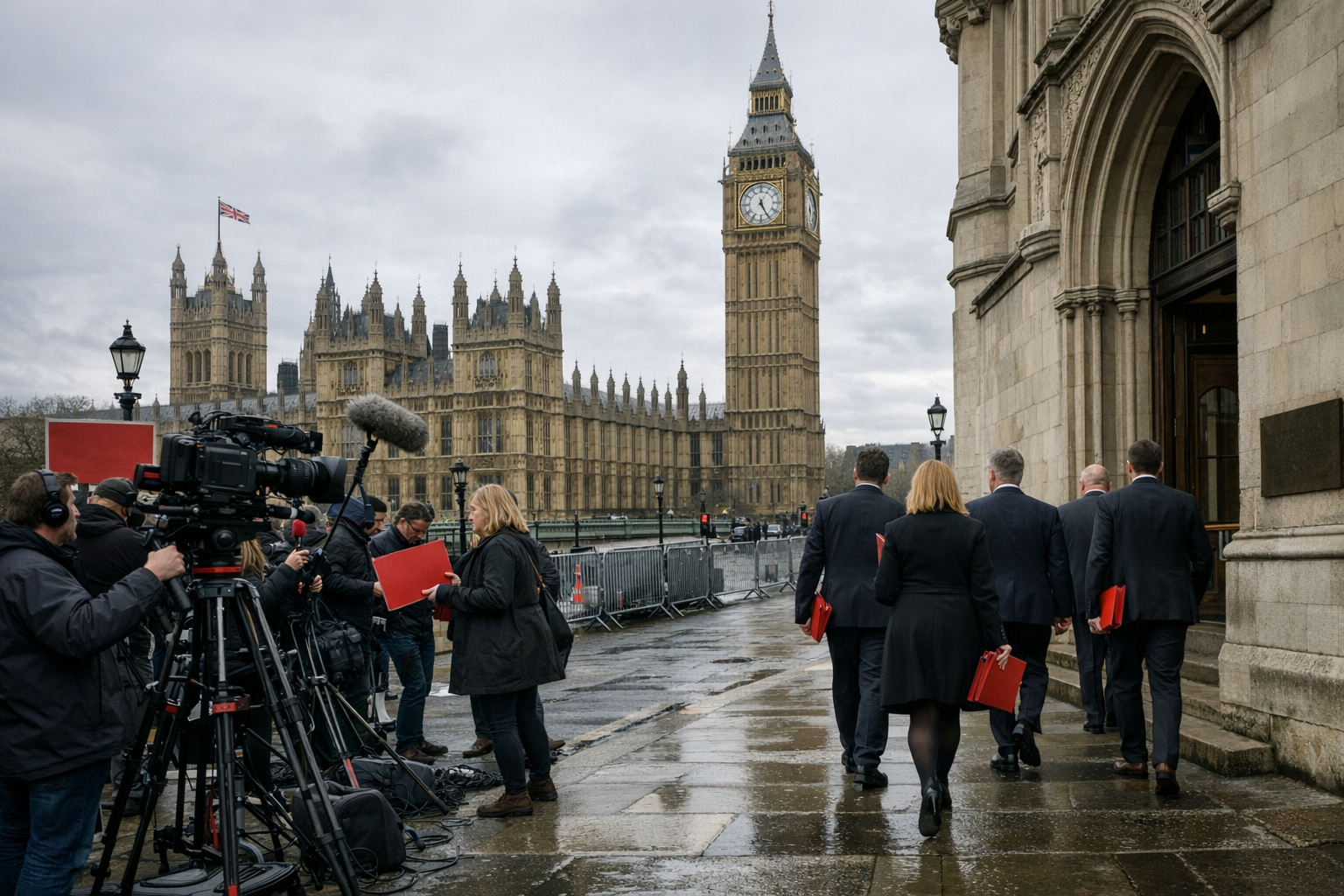
A changing of the guard raises larger questions for Labour
Keir Starmer spent Wednesday performing the rituals of a political farewell — a final Cabinet meeting in Downing Street, a last appearance at Prime Minister’s Questions — as Labour prepared for a transfer of power that now appears all but settled.
Andy Burnham, the mayor of Greater Manchester and longtime Labour figure, is expected to take over formally at a special party conference on Friday after securing the backing of 349 Labour lawmakers, enough to make any rival challenge impossible under party rules. What might otherwise have been a brief internal succession is instead becoming a defining early test of what kind of government Labour intends to be next: how interventionist, how business-friendly and how willing to rewrite the rules of British democracy.
That combination of uncertainty and urgency has made the transition unusually consequential. Starmer’s resignation on June 22, after mounting pressure from Labour lawmakers and ministers, exposed strains inside a governing party rattled by the rise of Reform UK and by doubts over its political direction. Burnham has moved quickly to consolidate support. But as he nears Downing Street, attention is shifting from whether he will win to how he will govern.
The Treasury question
No decision looms larger than Burnham’s choice for chancellor.
In Westminster and the City of London, the possibility that Ed Miliband could take the Treasury brief has become a source of intense private anxiety. Miliband, a former Labour leader with a record of challenging corporate power and advocating a more interventionist state, is viewed by many business leaders as hostile to markets and instinctively skeptical of private enterprise.
The concern is not simply ideological. Britain remains constrained by weak growth, stretched public services and persistent pressure on the public finances. Investors and executives are watching for any sign that a Burnham government might depart from the fiscal discipline Labour has spent years trying to project.
That has sharpened debate around whether Burnham will pair his own more populist, regionally focused politics with a figure seen as reassuring to markets. Alternative names circulating in Labour circles include Wes Streeting and Shabana Mahmood, both of whom are regarded in business as steadier hands. Burnham has left the matter unresolved, preserving flexibility but also prolonging uncertainty.
For companies, the fear is that a poorly received Treasury appointment could become an early and avoidable shock. For Burnham, the calculation is more delicate: choosing Miliband could signal ideological seriousness and a break with caution; choosing a more market-friendly chancellor could reassure investors but disappoint those in Labour who want a more muscular economic program.
A broader ideological test
The dispute over the Treasury is really a proxy for a larger argument inside Labour about what this handover is for.
Burnham has long cultivated an image distinct from the technocratic style associated with Starmer. He has argued for a more active state, stronger regional investment and a politics that speaks more directly to voters who feel ignored by Westminster. Supporters see in him a chance to reconnect Labour with disaffected communities and to answer the populist challenge from the right with an agenda of visible economic change.
But that promise comes with familiar risks. Britain’s experience in recent years has made markets acutely sensitive to any hint of fiscal drift. Labour’s leadership knows that credibility, once lost, can be hard to recover. Burnham’s first appointments are therefore likely to be read not merely as staffing choices but as statements of economic doctrine.
Pressure to toughen election laws
At the same time, Burnham is being pressed to show greater boldness on democratic reform.
The government’s Representation of the People Bill already contains measures aimed at tightening political finance, including a moratorium on cryptocurrency donations and a cap on donations from overseas electors. Yet critics inside Labour say the package remains too narrow for a political system facing fast-evolving threats.
Rushanara Ali, a former democracy minister who helped draft the legislation before resigning last year, has argued that the bill was too timid and too incremental. She and others want Burnham to strengthen it substantially, expanding action on online disinformation, deepfake content, enforcement against abuses on social media and broader questions of voting reform.
Their argument is that the rules governing elections have not kept pace with the digital realities of campaigning or with new routes for opaque money to influence politics. Britain, like many democracies, has struggled to regulate online political content effectively, especially as artificial intelligence tools make manipulated audio and video cheaper and more convincing. Concerns over foreign-linked money, hidden influence and weak enforcement have only grown more acute.
Whether Burnham embraces a broader overhaul could become an early measure of his appetite for institutional reform. Allies say he has an opportunity to show that Labour understands not only the economic discontent reshaping British politics, but also the vulnerabilities in the democratic system itself.
Why the transition matters now
The convergence of these debates — over the Treasury, over business confidence and over electoral law — explains why this week’s transition has taken on such significance.
Starmer’s departure closes a chapter in which Labour sought to present itself above all as safe, disciplined and electable. Burnham inherits the benefits of that work, but also the frustrations that accumulated around it. He is arriving under pressure to be bolder than his predecessor without unsettling the financial and political foundations of a government in waiting.
That leaves three immediate questions hanging over the handover. Will he select a chancellor who calms markets or one who excites Labour’s interventionist wing? Will he preserve the broad outlines of the elections bill or recast it into something more sweeping? And can he persuade both voters and investors that a more activist government would still remain fiscally credible?
For now, the choreography of departure continues for Starmer, complete with the courtesies of a final day at Westminster. But the real drama has already moved on. Britain is no longer simply watching one Labour leader leave. It is waiting to see what kind of government the next one intends to build.
Sources
Further reading and reporting used to add context:
- https://www.theguardian.com/politics/pmqs
- Andy Burnham prepares for power as emotional Keir Starmer bows out | Labour party leadership | The Guardian
- https://www.theguardian.com/politics/2026/jun/21/keir-starmer-expected-to-announce-departure-as-prime-minister-on-monday
- https://www.theguardian.com/politics/2026/jun/22/keir-starmer-resigns-as-prime-minister
- https://www.theguardian.com/politics/2026/may/12/starmer-cabinet-labour-leadership
- https://www.theguardian.com/politics/2026/jun/22/keir-starmer-quits-prime-minister-what-will-happen-next-uk-politics-explained
- https://www.theguardian.com/politics/2026/jun/19/keir-starmer-pressure-andy-burnham-wes-streeting-allies-not-fight-leadership-challenge
- https://www.theguardian.com/politics/live/2026/jun/22/keir-starmer-resignation-timeable-andy-burnham-labour-leadership-prime-minister-latest-news-updates?page=with%3Ablock-6a3906448f08cfbed83f8ce5
- https://www.theguardian.com/politics/live/2026/jun/25/andy-burnham-rachel-reeves-keir-starmer-uk-politics-latest-news-updates?page=with%3Ablock-6a3d1bb78f0857cd81608ef8
- https://www.theguardian.com/politics/edmiliband%2Blabourleadership
- https://www.theguardian.com/politics/live/2026/jun/25/andy-burnham-rachel-reeves-keir-starmer-uk-politics-latest-news-updates
- https://www.theguardian.com/politics/live/2026/jun/25/andy-burnham-rachel-reeves-keir-starmer-uk-politics-latest-news-updates?page=with%3Ablock-6a3d131c8f0857cd81608e98
- https://advertising.theguardian.com/assets/files/rate-card-2026-%281%29.pdf
- https://recruiters.theguardian.com/assets/files/inclusive_recruitment/The-Guardian-Jobs-guide-to-inclusive-recruitment.pdf
- https://usadvertising.theguardian.com/assets/files/the-guardian-us-brand-safety-white-paper-%281%29-%281%29-%281%29.pdf
- https://usadvertising.theguardian.com/assets/files/the-guardian-us–corporate-sustainability_-consumer-sentiments-research-x-script.pdf
- https://www.perspectivemedia.com/starmer-faces-final-cabinet-and-pmqs-as-burnham-edges-closer-to-no-10/
- https://www.theguardian.com/business/2026/jul/05/make-ed-miliband-chancellor-ex-chief-treasury-adviser-nicholas-stern-tells-andy-burnham
- https://hansard.parliament.uk/pdf/Commons/2025-07-17
- https://www.standwithcrypto.org/gb/politicians/person/rushanara—ali—gb
- https://www.reutersconnect.com/item/british-cabinet-meeting-in-london/dGFnOnJldXRlcnMuY29tLDIwMjY6bmV3c21sX1JDMjhRTEE4M01QQQ
- https://www.theguardian.com/politics/2026/jun/24/progressive-economists-reject-unite-leader-sharon-graham-criticism-ed-miliband
- https://commonsbusiness.parliament.uk/Document/102867/Pdf?subType=Standard
- https://hansard.parliament.uk/pdf/commons/2026-07-06
- https://bylinetimes.com/2026/03/04/11-loopholes-in-labours-elections-bill-which-mps-are-pushing-to-close/
- https://hansard.parliament.uk/commons/2026-07-06/debates/CCBDD112-3D4E-4E31-BBEC-355D1359DEC8/ForeignInterferenceInUKPolitics
- https://news.sky.com/story/ed-miliband-should-be-andy-burnhams-chancellor-says-harriet-harman-13557688
- https://en.wikipedia.org/wiki/Rushanara_Ali
- https://www.lbc.co.uk/article/andy-burnham-chancellor-choice-streeting-miliband-5HjdbxC_2/
- https://www.ukanticorruptioncoalition.org/work/gbngis4st1bvloya4zryuer3i855rt
- https://www.ucl.ac.uk/social-historical-sciences/constitution-unit/constitution-unit-publications/monitor/monitor-89
- https://www.ucl.ac.uk/news/headlines/2026/jul/make-ed-miliband-chancellor-ex-chief-treasury-adviser-tells-andy-burnham
- https://bills.parliament.uk/publications/65476/documents/8047
- https://commonsbusiness.parliament.uk/Document/105332/Pdf?subType=Standard
- https://www.reddit.com/r/unitedkingdom/comments/1ucwgbv/andy_burnham_supporters_divided_over_who_should/
- https://commonsbusiness.parliament.uk/Document/105325/Pdf?subType=Standard
- https://www.reddit.com/r/unitedkingdom/comments/1udcts1/who_could_burnham_pick_for_his_chancellor_and/
- https://www.reddit.com/r/ukpolitics/comments/1uc004j/streeting_talked_up_as_burnhams_chancellor_as_mps/
- https://www.theguardian.com/politics/2026/jun/24/keir-starmer-to-stay-labour-mp
- https://www.theguardian.com/politics/2026/jul/13/andy-burnham-confirmed-labour-leader-landslide-support
- https://www.theguardian.com/politics/2026/jun/17/wes-streeting-labour-leadership-challenge-keir-starmer
- https://www.theguardian.com/politics/2026/jun/21/keir-starmer-expected-exit-plan-clear-way-andy-burnham-become-pm
- https://www.theguardian.com/politics/2026/may/15/labours-nec-approves-burnham-byelection-pathway-parliament
- https://www.theguardian.com/politics/2026/jun/23/burnham-and-starmer-hold-frosty-meeting-to-thrash-out-transition-of-power
- https://advertising.theguardian.com/assets/files/media-kit-2026-1772022840.pdf
- https://www.theguardian.com/politics/2026/jun/22/andy-burnham-supporters-divided-chancellor-ed-miliband-wes-streeting
- https://www.theguardian.com/business/2026/jul/05/new-direction-same-old-problems-the-economic-challenges-facing-andy-burnham
- https://www.theguardian.com/politics/2026/jun/28/labour-lucy-powell-ed-miliband-chancellor
- https://www.theguardian.com/politics/economy%2Bbusiness/business
- https://www.theguardian.com/world/2026/jul/07/tuesday-briefing-first-edition-ed-miliband-next-chancellor
- https://www.theguardian.com/politics/2026/jun/18/andy-burnham-top-economists-possible-leadership-run
- https://www.theguardian.com/commentisfree/2026/jul/03/the-guardian-view-on-labours-next-chancellor-send-for-ed-miliband
- https://www.theguardian.com/politics/2026/jun/23/in-or-out-burnham-cabinet-ed-miliband-shabana-mahmood-wes-streeting
- https://www.ukfactcheck.com/article/298/labour-backbenchers-push-for-ps1m-cap-on-uk-political-donations-backed-by-burnham
- https://www.lbc.co.uk/article/kemi-badenoch-summer-of-chaos-burnham-5HjdcHD_2/
- https://cms.ccsassociation.org/wp-content/uploads/2026/06/CCSA-All-Member-Forum-slides-23-June.pdf
- https://www.reddit.com/r/unitedkingdom/comments/1unudi1/make_ed_miliband_chancellor_exchief_treasury/
- https://www.reddit.com/r/LabourUK/comments/1uwlj8x/andy_burnhams_allies_block_ed_miliband_from/
- https://www.reddit.com/r/ukpolitics/comments/1uwibx1/andy_burnhams_allies_block_ed_miliband_from/
- https://www.reddit.com/r/ukpolitics/comments/1uwh1h5/andy_burnhams_allies_block_ed_miliband_from/
- https://topstoryreview.com/
- https://www.theautomaticearth.com/tag/supreme-court/
- Starmer faces final Cabinet and PMQs as Burnham edges closer to No 10 | Perspective Media