
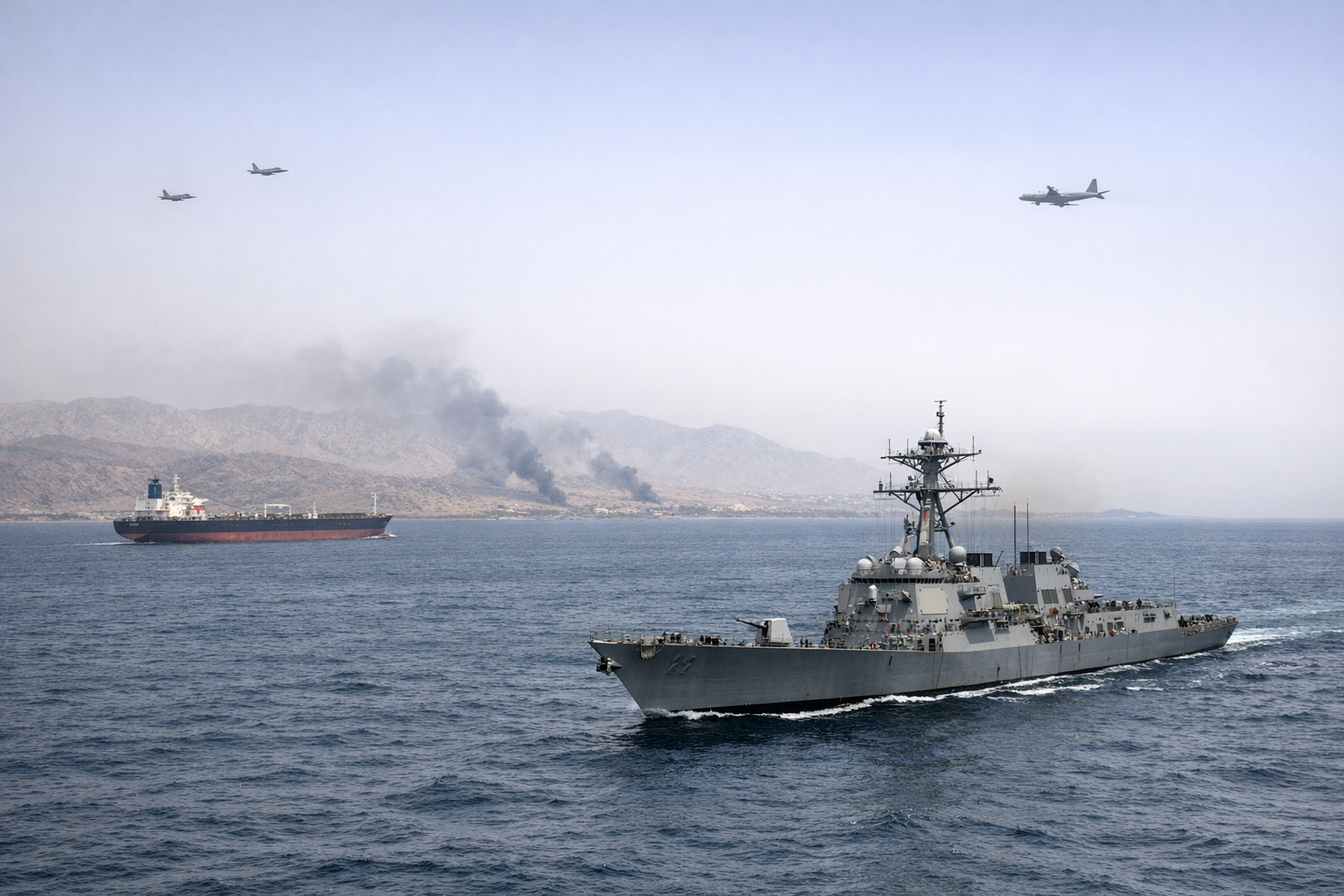
U.S. Widens Campaign Against Iran as Trump Says Ceasefire Is Over
The United States sharply escalated its confrontation with Iran on Tuesday and Wednesday, carrying out a new round of strikes on Iranian missile and air-defense sites, reimposing a naval blockade on Iranian ports and threatening to widen the campaign further to include civilian infrastructure if Tehran does not return to negotiations.
President Trump said the ceasefire that had tenuously held since last month was finished, turning what had been a fragile, mediated pause into a broader strategy of coercion built on military force, maritime pressure and economic disruption. In a television interview, he warned that unless Iran “gets to the table and negotiate,” the United States could next target power plants and bridges.
The new American strikes, described by U.S. officials as aimed at degrading Iran’s ability to threaten shipping near the Strait of Hormuz, unfolded over several hours after the blockade resumed. Iranian officials, for their part, claimed retaliatory attacks against U.S.-linked targets in Bahrain and reported other regional missile activity, underscoring how quickly the conflict is spreading beyond a direct bilateral clash.
The renewed fighting sent oil prices higher, reviving fears of a deeper shock to global energy markets at a moment when traders had only begun to price in a measure of calm after the earlier truce.
From Uneasy Truce to Renewed War Footing
The latest escalation follows the collapse of a June interim arrangement that had paused an earlier U.S. blockade and opened a 60-day negotiating window over shipping security, Iran’s nuclear program and wider regional tensions. Even after Mr. Trump publicly declared the ceasefire “over” on July 10, indirect diplomacy had continued through mediators, and some officials had held out hope that the arrangement might still be salvaged.
But repeated attacks on commercial shipping and reciprocal military strikes steadily eroded that framework. By late Monday, Washington restored the blockade, effective at 4 p.m. Eastern time, and by Tuesday night the United States had resumed major combat operations.
The shift is significant not simply because hostilities have restarted, but because the American approach now appears more expansive. Rather than limiting itself to deterrent strikes or naval escort operations, Washington is combining bombardment with a direct effort to restrict Iran’s access to its ports, a move that risks drawing in regional states, commercial shipping companies and global energy consumers.
At the same time, Mr. Trump abandoned one of his most controversial recent proposals: a 20 percent fee on ships transiting the Strait of Hormuz. He portrayed that reversal as the product of talks with Gulf leaders and said the United States would pursue investment and trade arrangements instead. But the withdrawal of the toll threat did not amount to de-escalation. If anything, it suggested that Washington had dropped a politically awkward economic measure while preserving — and intensifying — its military and maritime pressure on Iran.
A Chokepoint With Global Consequences
Few waterways matter more to the world economy than the Strait of Hormuz, the narrow passage connecting the Persian Gulf to open seas. Roughly a fifth of global oil and liquefied natural gas trade moved through the strait before the present war, making any disruption there instantly consequential for fuel prices, inflation and shipping costs far beyond the Middle East.
That is why even limited exchanges between Washington and Tehran have repeatedly rattled markets. The latest rise in oil prices reflected concern not only about immediate supply losses, but also about the risk that insurers, shipping firms and energy exporters could grow more hesitant to move cargoes through an increasingly militarized corridor.
For governments already struggling with inflation, the timing is especially fraught. Higher crude prices can quickly feed into gasoline, diesel and transport costs, adding pressure to central banks and threatening to complicate economic planning from Europe to Asia.
Threats Against Infrastructure Raise New Alarm
What most distinguishes this phase of the crisis is Mr. Trump’s open threat to strike infrastructure beyond the military sphere. His remarks about knocking out Iranian power plants and bridges if Tehran refuses to negotiate went far beyond the rationale offered for the current strikes, which U.S. officials say are directed at missile and air-defense systems involved in attacks on shipping.
Such threats are likely to intensify scrutiny from allies and legal experts, particularly if they move from rhetoric to targeting decisions. Strikes on civilian infrastructure could deepen humanitarian suffering inside Iran and widen the diplomatic costs for Washington, even as administration officials argue that only overwhelming pressure can force Tehran back into meaningful talks.
It remains unclear whether the threat is intended primarily as leverage or as a preview of operational plans already under consideration. In past crises, both the United States and Iran have used maximalist language to shape negotiations. But the pace of recent escalation has narrowed the space between warning and action.
Regional Fallout and Unanswered Questions
Iran’s claims of retaliatory attacks against Bahrain, Kuwait and Jordan, along with missile alerts reported around the region, point to the danger that this conflict could spill further into neighboring countries that host American personnel or are closely aligned with Washington. Bahrain, home to the U.S. Fifth Fleet, is particularly sensitive in that regard.
The broader regional picture is also clouded by other pressure points linked to Iran’s network of allies and partners. Concerns about Iranian support to the Houthis in Yemen have re-entered the foreground, with Yemeni officials accusing Tehran of violating Yemeni sovereignty through flights they say have carried equipment for the movement. Those accusations reflect a wider fear among U.S. partners that any confrontation with Iran can quickly animate multiple fronts at once.
For now, much remains uncertain. It is not clear whether the administration’s objective is to force a rapid return to talks or to embark on a sustained campaign to degrade Iran’s military and economic capacity. It is also unclear how effectively the United States can enforce a blockade of Iranian ports without committing substantially more naval resources, or whether Gulf Arab states fully support the latest turn.
Casualty figures and battle damage assessments remain difficult to verify independently, with much of the available information coming from governments directly involved in the fighting or from state media during active operations.
What is clearer is that the conflict has entered a more dangerous phase. A truce that once promised a narrow opening for diplomacy has given way to a campaign that threatens not only Iran and the United States, but also the fragile stability of the Gulf and the flow of energy on which much of the world depends.
Sources
Further reading and reporting used to add context:
- https://www.axios.com/2026/07/14/trump-hormuz-toll-demand-trade-fee
- US military reimposes its blockade of Iranian ports | AP News
- https://apnews.com/article/27d166510dda957bb0d4e4d1b1b11e23
- https://www.axios.com/2026/07/15/trump-situation-room-iran-bombing
- https://www.thedailybeast.com/trump-humiliated-after-biggest-deal-blows-up-in-his-face/
- https://www.thedailybeast.com/trump-thirsts-over-invading-iran-in-weird-rant/
- https://www.thedailybeast.com/president-donald-trump-hit-with-humiliating-poll-as-iran-crisis-spirals/
- https://apnews.com/article/abd060c55feea216625689e57d8f76be
- https://www.theatlantic.com/national-security/2026/07/trump-iran-airstrikes-ceasefire-hormuz/687851/?utm_source=apple_news
- https://www.theguardian.com/world/2026/jul/14/us-strikes-iran-bahrain-jordan-uae-tankers
- https://www.theguardian.com/world/strait-of-hormuz/2026/jul/14/all
- https://www.theguardian.com/world/2026/jul/13/us-iran-war-missile-strikes-news-attacks-strait-of-hormuz
- https://www.theguardian.com/world/live/2026/jul/13/us-iran-strikes-middle-east-strait-of-hormuz-military-latest-news-updates?page=with%3Ablock-6a5515788f08454ce624d44e
- https://www.theguardian.com/world/live/2026/jul/14/us-iran-war-live-updates-strikes-strait-of-hormuz-middle-east-crisis-trump-latest-news?page=with%3Ablock-6a562c748f08c251661ce277
- https://world.kbs.co.kr/service/news_view.htm?Seq_Code=202898&lang=e
- https://www.koreatimes.co.kr/world/20260715/trump-threatens-to-hit-iran-power-plants-next-week-if-no-deal
- https://www.theguardian.com/world/2026/apr/05/trump-warns-iran-to-reopen-strait-of-hormuz-by-tuesday-or-face-hell
- https://www.axios.com/2026/07/10/trump-iran-talks-ceasefire-over
- https://www.axios.com/2026/07/08/trump-iran-ceasefire-over
- https://apnews.com/article/f8d20baa977b2162ba235a1bbfd4246f
- https://www.theatlantic.com/podcasts/2026/07/ra-iran-reescalation/687849/?utm_source=apple_news
- https://theweek.com/politics/trump-nato-summit-iran-war
- Trump says US agreed to Iran’s request to continue talks, but ceasefire is over By Reuters
- Oil prices rise as hostilities worsen in the Middle East By Reuters
- https://www.investing.com/news/commodities-news/us-oil-prices-jump-after-us-military-launches-strikes-against-iran-4780487
- https://au.marketscreener.com/news/oil-rises-after-us-iran-hostilities-flare-again-with-strikes-on-energy-targets-ce7f5edddc8eff26
- https://theprint.in/world/trump-says-us-agreed-to-irans-request-to-continue-talks-but-ceasefire-is-over/2983381/
- https://ca.investing.com/news/commodities-news/trump-says-us-agreed-to-irans-request-to-continue-talks-but-ceasefire-is-over-4729688
- https://www.marketscreener.com/news/trump-says-us-agreed-to-iran-s-request-to-continue-talks-but-ceasefire-is-over-ce7f5eded08ff72c
- https://www.investing.com/news/commodities-news/oil-rises-after-us-launches-fresh-strikes-against-iran-4782900
- https://www.investing.com/news/commodities-news/oil-climbs-to-onemonth-high-as-us-iran-step-up-attacks-in-strait-of-hormuz-4789642
- https://theprint.in/world/trump-says-interim-accord-to-end-iran-war-is-over-warns-of-us-strikes-on-wednesday/2981469/
- https://www.investing.com/news/commodities-news/us-says-it-has-completed-anew-round-of-strikes-on-iran-4780643
- https://www.thedailybeast.com/marco-rubios-warning-on-strait-of-hormuz-from-just-three-weeks-ago-comes-back-to-bite-him/
- https://www.centcom.mil/MEDIA/PUBLIC-RELEASES/Article/4504919/us-defends-disables-threats-in-response-to-iranian-aggression/
- https://www.centcom.mil/MEDIA/PUBLIC-RELEASES/Article/4502431/statement-from-centcom-on-recent-iranian-aggression/
- https://www.washingtonpost.com/world/2026/07/13/airstrikes-intensify-between-us-iran/
- https://www.whitehouse.gov/fact-sheets/2026/02/fact-sheet-president-donald-j-trump-addresses-threats-to-the-united-states-by-the-government-of-iran/?query-11-page=2
- Trump Iran blockade in Strait of Hormuz starts Tuesday
- https://efe.com/mundo/2026-07-14/estados-unidos-bloqueo-naval-bombardeos-iran/
- https://www.globalsecurity.org/military/library/news/2026/07/mil-260713-centcom01.htm
- https://www.centcom.mil/MEDIA/PRESS-RELEASES/Article/4499878/us-blockade-of-iran-reaches-milestone-of-redirecting-100-ships/
- https://news.antiwar.com/2026/07/14/centcom-reimposes-blockade-of-iranian-ports-bombs-iran-for-fourth-straight-day/
- https://news.usni.org/2026/07/13/u-s-reinstates-naval-blockade-in-strait-of-hormuz
- https://www.defensenews.com/news/your-navy/2026/07/13/us-to-begin-enforcing-maritime-blockade-on-iran-on-tuesday/
- https://www.aljazeera.com/amp/news/2026/6/18/us-military-says-it-has-lifted-naval-blockade-of-iranian-ports
- https://www.centcom.mil/Portals/6/Documents/Publications/260406-FactSheet.pdf?ver=ezk_KiJvld1N84sCwrTJEg%3D%3D
- https://www.reddit.com/r/navy/comments/1uvjyyb/footage_from_centcom_of_ships_enforcing_the/
- https://en.wikipedia.org/wiki/2026_United_States_naval_blockade_of_Iran
- https://www.centcom.mil/Portals/6/Documents/Transcripts/20230323HASC.pdf
- https://apnews.com/article/6c2c44cfdd089d6393d18fa5930ed620
- https://apnews.com/article/935364080d8083d6137d399bbeb9205f
- https://www.investing.com/news/commodities-news/us-military-renews-strikes-on-iran-while-tankers-come-under-attack-in-strait-of-hormuz-4791422
- https://www.investing.com/news/world-news/iran-targets-us-bases-in-jordan-and-the-gulf-after-trump-orders-strikes-near-hormuz-4734312
- https://www.investing.com/news/world-news/us-says-it-struck-140-iranian-military-targets-saturday-4787324
- https://za.investing.com/news/commodities-news/oil-jumps-more-than-3-after-us-iran-launch-strikes-in-mideast-4365268
- https://www.investing.com/news/world-news/us-attacks-iranian-sites-after-iran-launches-drones-in-latest-gulf-flareup-4729541
- https://www.marketscreener.com/news/iran-and-us-stage-new-attacks-battle-over-control-of-strait-of-hormuz-ce7f5edcdf89f12d
- https://apnews.com/article/0472764b119d7aa204de4f7f5e44a9bf
- https://www.theguardian.com/us-news/2026/apr/06/trump-iranians-strikes-on-infrastructure
- https://www.theguardian.com/law/2026/apr/03/us-war-crimes-iran-civilian-infrastructure-international-law-school-strike
- https://www.theguardian.com/world/2026/jul/09/iran-trade-strikes-ceasefire-extended-donald-trump
- https://www.malaymail.com/news/world/2026/07/15/trump-says-us-will-hit-iran-power-plants-and-bridges-unless-tehran-agrees-to-deal/227616
- https://www.theguardian.com/us-news/2026/mar/30/trump-threatens-to-obliterate-irans-energy-grid-if-ceasefire-not-reached-shortly
- https://www.china.org.cn/world/Off_the_Wire/2026-07/15/content_118599443.shtml
- https://www.anews.com.tr/world/2026/07/15/trump-threatens-strikes-on-iran-power-plants-and-bridges/amp
- https://gulfnews.com/world/mena/trump-threatens-strikes-on-irans-bridges-power-plants-major-escalation-beyond-military-targets-1.500608186
- https://www.anews.com.tr/world/2026/07/15/trump-threatens-to-hit-iran-power-plants-next-week-if-no-deal/amp
- https://au.marketscreener.com/news/trump-threatens-strikes-on-iran-power-plants-bridges-energy-sites-ce7f5edddf88f02c
- https://www.chinadaily.com.cn/a/202607/15/WS6a56e3d2a310986e2b465544.html
- https://www.theguardian.com/p/x4ycbp
- https://www.reddit.com/r/WhatTrumpHasDone/comments/1uwxfsg/trump_again_threatens_to_strike_irans_power/
- https://www.reddit.com/r/worldnews/comments/1uwq6ap/trump_again_threatens_to_strike_irans_power/
- https://www.wsj.com/public/resources/documents/3THzRsqNXLX2XG414QmL-WSJNewsPaper-4-6-2026.pdf
- https://en.wikipedia.org/wiki/2026_Iran_war
- https://www.wsws.org/en/articles/2026/04/20/vmvz-a20.pdf