
A Youth Revolt Over Exams Becomes a Wider Test for Modi
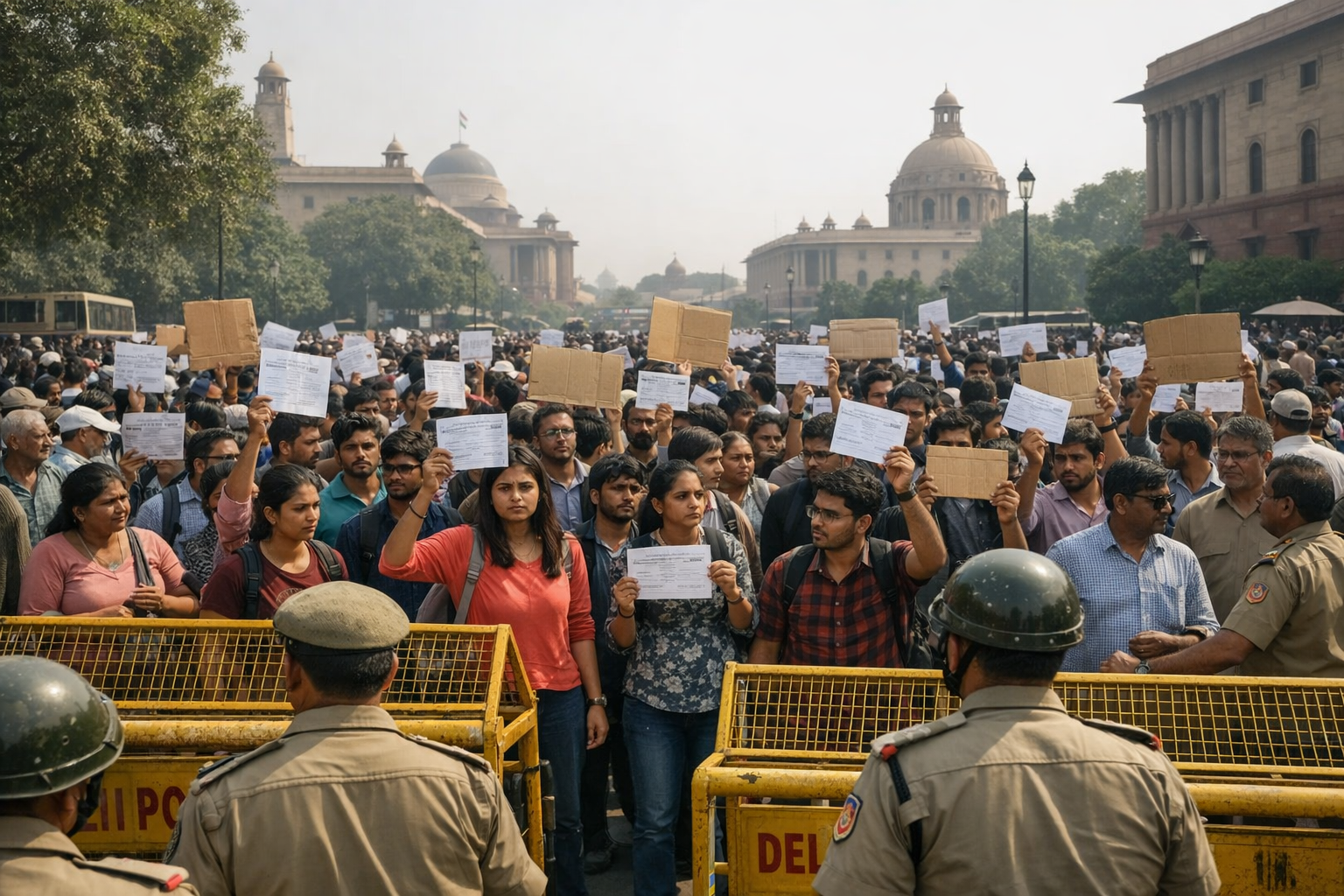
What began as fury over leaked exam papers has swollen into one of the most significant youth-led protests Prime Minister Narendra Modi has faced in years, widening from a narrowly focused student grievance into a broader challenge over jobs, state accountability and the use of police force against demonstrators.
On Thursday, the activist Sonam Wangchuk ended a 26-day hunger strike that had helped propel the movement into the national spotlight, saying he feared further escalation and possible violence. But his decision did little to slow the momentum. Organizers called for more demonstrations, insisting that the campaign would continue until the government delivered concrete action.
In recent days, the protests have spread beyond student circles and into the political mainstream. Opposition lawmakers disrupted proceedings in Parliament this week and demanded the resignation of Education Minister Dharmendra Pradhan, transforming street anger into an institutional confrontation in the capital.
Modi, who had remained publicly silent as the unrest grew, responded by promising swift punishment for officials involved in leaking exam papers and by backing fast-track courts for such cases. “Those who try to harm the future of our youth will not be spared,” he said in a public message aimed at calming outrage.
Whether that will be enough is far from clear.
From Satire to Street Power
The protests have rallied under the banner of the “Cockroach Janta Party,” a satirical youth formation that emerged in May after unemployed young Indians were likened to “cockroaches,” a remark that many took as a cutting symbol of elite contempt for a generation struggling for opportunity. What began as an act of political mockery soon became an organizing vehicle.
Its immediate cause was the leakage of competitive exam papers, particularly for high-stakes entrance tests that can determine access to medical colleges, universities and government careers. In India, where millions of students compete fiercely for a limited number of seats and stable jobs, any breach in exam integrity touches a nerve far beyond the classroom.
For many young Indians, the scandal confirmed a deeper belief: that even after years of grueling preparation, the system can be manipulated by corruption and political indifference.
That sense of betrayal has helped explain the scale of the demonstrations. Protesters have poured into the streets of New Delhi and other cities, many of them young, but increasingly joined by parents, professionals and others who see the issue as part of a wider breakdown in trust.
Parliament Drawn In
The movement crossed a political threshold when opposition parties took up the cause inside Parliament. On Wednesday, lawmakers led by the Congress party staged protests in solidarity with demonstrators, forcing repeated disruptions and sharpening demands for ministerial accountability.
For the opposition, the protests have offered a potent issue: one that combines economic anxiety, youth anger and accusations of heavy-handed policing. For the government, they present a more complicated problem than many previous demonstrations, because the grievance is both emotionally immediate and politically resonant. It concerns not an abstract ideological dispute but the futures of millions of families.
The pressure has intensified since a march toward Parliament on July 20 was met with a police crackdown that protesters and opposition leaders denounced as brutal. Images and testimonies from the clashes appear to have broadened sympathy for the movement, especially among those who may not have initially been drawn in by exam reform alone.
Why This Matters Now
India’s examination system has long been a source of extraordinary pressure. Admission to elite institutions and access to public-sector employment often hinge on a handful of tests taken by vast pools of candidates. In a country with a large youth population and persistent unemployment, those exams are not merely educational milestones; they are gateways to social mobility.
That is why paper leaks can trigger such explosive anger. To many families, they are evidence that the state has failed at one of its most basic promises: that effort and merit will be fairly judged.
The current protests have gained force because they connect that anger to broader frustrations. Young people confronting an unforgiving job market are asking not only whether exams are fair, but whether the political system is responsive at all. The movement’s growth suggests that this is no longer just a scandal about testing procedures. It is becoming a referendum on whether the government can restore faith in institutions central to middle-class aspiration.
For Modi, whose political brand has long rested on discipline, competence and direct communication with younger voters, the unrest is especially sensitive. A protest led by students and recent graduates cuts at a demographic crucial to India’s political future.
An Uncertain Next Phase
The government’s promise of fast-track punishment may buy time, but protesters are seeking more than symbolic reassurance. They want accountability for those responsible, changes to the exam system and answers over police conduct. The demand for Pradhan’s resignation has become a focal point, though it remains uncertain whether the government will sacrifice a minister to contain the crisis.
There is also a larger question hanging over the movement: whether it can remain cohesive as it expands. What began as a campaign around exam integrity now encompasses grievances over unemployment, governance and political arrogance. Such breadth gives it power, but also raises the risk of fragmentation.
For now, however, the movement’s energy appears undiminished. Wangchuk may have ended his fast, but the protests he helped amplify have moved beyond any single figure. What was once dismissed as a satirical youth outburst has become a national test of how far public anger can travel — from exam halls to the streets, and from the streets into the heart of Indian politics.
Sources
Further reading and reporting used to add context:
- https://apnews.com/article/e2f114b6cf6568bb8f5d739fe36349ed
- https://apnews.com/article/e0f21cf241b4e3a8a5831a8cff4948c8
- https://apnews.com/article/25aa6700a59f1cb343a6e60ae84aafda
- https://apnews.com/article/0bb7c16a58f21649fb5df72db9714c31
- https://apnews.com/article/59d045fbd485635def01b01f3898307b
- https://theweek.com/world-news/sonam-wangchuk-and-hunger-striking-in-india
- https://apnews.com/article/c184ea65c36de9e30705d508e1933dc7
- https://www.indiatoday.in/india/story/sonam-wangchuk-ends-hunger-strike-after-meeting-union-ministers-jp-nadda-jitendra-singh-2954843-2026-07-24
- https://www.hindustantimes.com/india-news/sonam-wangchuk-ends-hunger-strike-after-26-days-pm-modi-abhijeet-dipke-react-101784835485334-amp.html
- https://www.theguardian.com/world/2026/jul/20/cockroach-janta-party-protest-march-sonam-wangchuk-india-parliament
- https://indianexpress.com/article/india/parliament-neet-cjp-protest-monsoon-session-10795819/
- https://www.theguardian.com/world/2026/jul/18/indian-activist-linked-to-cockroach-party-moved-to-hospital-after-20-day-hunger-strike
- https://www.indiatoday.in/india/story/govt-promised-not-to-file-case-against-protesting-cjp-students-youth-sonam-wangchuk-1st-message-after-ending-hunger-strike-2954873-2026-07-24
- https://www.reutersconnect.com/item/uncaptioned-hunger-strike-intensifies-pressure-on-india-over-exam-leak-scandal/dGFnOnJldXRlcnMuY29tLDIwMjY6bmV3c21sX09XQ1ZNQzQ0MjAxMi1WSURFTw
- https://www.hindustantimes.com/india-news/end-of-hunger-beginning-accountability-sonam-wangchuk-why-he-called-off-fast-cjp-jantar-mantar-protest-jp-nadda-jitendra-101784859900592-amp.html
- https://www.theguardian.com/world/india%2Bnarendra-modi
- https://www.channelnewsasia.com/asia/india-student-protests-exams-education-minister-cockroach-party-6272286
- https://m.economictimes.com/news/politics-and-nation/sonam-wangchuk-ends-hunger-strike-after-meeting-union-ministers-jp-nadda-jitendra-singh/amp_articleshow/132591168.cms
- Tens of thousands of Cockroach movement protesters defy police with Delhi march | India | The Guardian
- A single photo captures the resolve behind India's "Cockroach" protests
- A protest movement is challenging India's establishment. What to know about the 'Cockroaches'
- Indian activist Wangchuk ends 26-day hunger strike as 'Cockroach' protesters vow to press on