
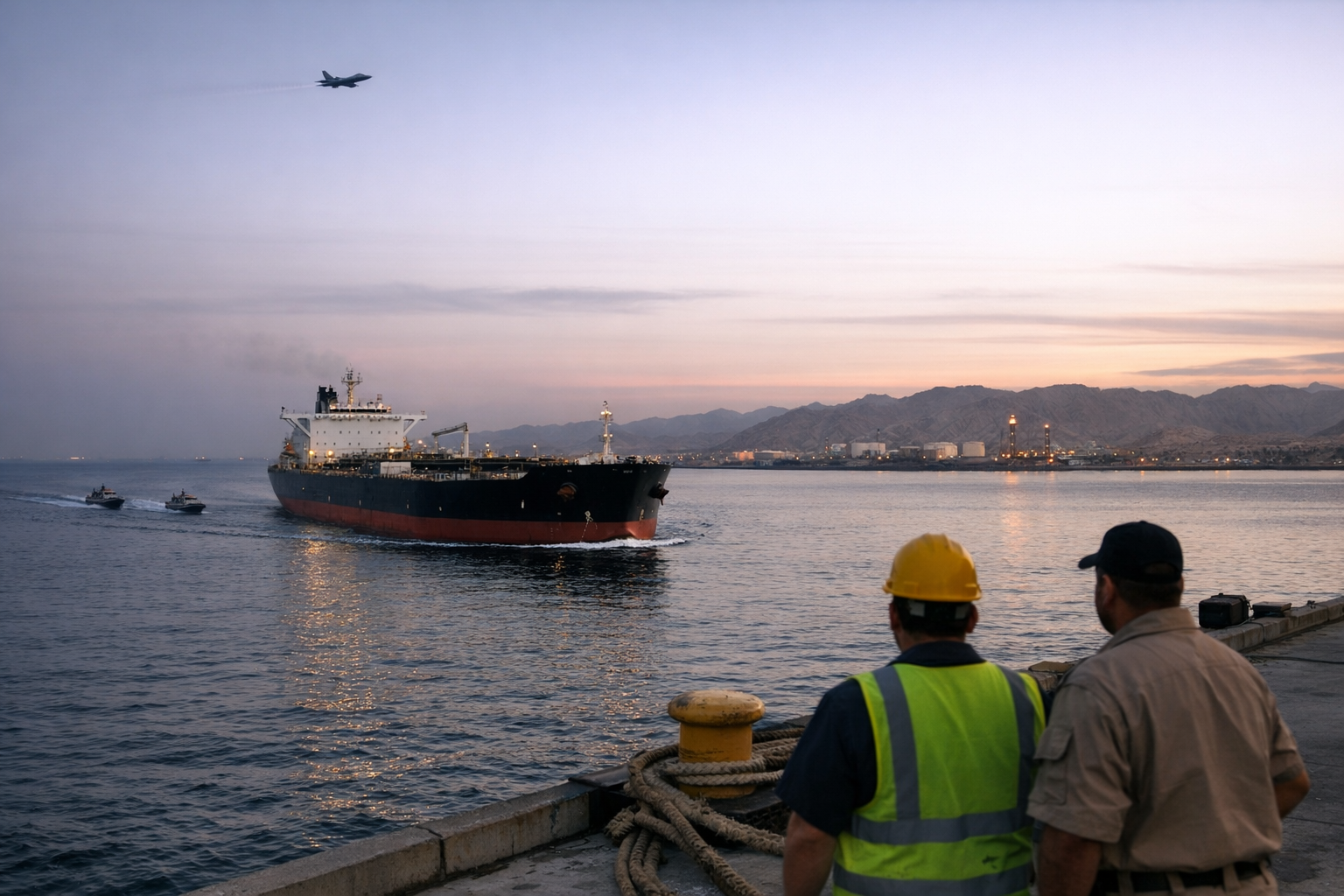
Oil prices climbed on Tuesday as traders confronted a widening arc of danger stretching from the Strait of Hormuz to Saudi Arabia, with fresh reports of tanker attacks, new British military support for the kingdom and a deadly Houthi strike in Yemen underscoring how quickly regional conflict can spill into global energy markets.
Brent crude rose to about $109.64 a barrel in early trading, reflecting mounting concern that threats to shipping and oil infrastructure in the Middle East could further tighten supplies. The gains came as Iran’s Revolutionary Guards said naval mines had struck three tankers attempting to transit the Strait of Hormuz using what Tehran described as an illegal route, a claim that had not been independently verified.
The episode sharpened anxiety around a waterway that carries a significant share of the world’s seaborne oil. Even when exports continue to flow, the perception of heightened danger in Hormuz can lift insurance costs, raise freight rates and inject a risk premium into crude prices almost immediately.
Military moves and market nerves
The sense of escalation deepened as Britain said it would deploy Royal Air Force Typhoon fighter jets to help defend Saudi cities and critical infrastructure from Houthi missiles and drones. British officials said the aircraft would fly defensive missions rather than take part in offensive strikes, but the move nonetheless signaled a more visible Western role in shielding the world’s largest oil exporter from attacks that have repeatedly targeted airports and energy facilities.
The announcement came days after one of the deadliest Houthi attacks since Yemen’s civil war reignited in September. A ballistic missile strike on a training camp for Yemeni government security forces in Shabwa Province killed at least 53 recruits and injured more than 200 others, according to Yemeni officials, a reminder that the conflict is intensifying even as its consequences are increasingly felt far beyond Yemen’s borders.
For oil markets, the concern is not only the immediate damage from any single strike, but the possibility that repeated attacks could disrupt production, shipping schedules or investor confidence across a region central to the global energy system.
A chokepoint under pressure
The Strait of Hormuz has long been one of the world’s most sensitive maritime chokepoints, and the latest tensions fit a broader pattern of deteriorating security there. The International Maritime Organization said in late August that at least 70 attacks on international shipping had been verified during the Hormuz crisis this year. The United Kingdom Maritime Trade Operations, which monitors threats to commercial vessels, has continued to report tanker-related security incidents near Oman and the strait.
That accumulation of risk has made the market acutely sensitive to any new threat, verified or not. Traders are watching not only whether vessels continue to pass through the strait without major interruption, but also whether shipowners begin rerouting, delaying sailings or demanding sharply higher premiums to enter the area.
The pressure is already feeding into a darker outlook for the broader economy. The International Energy Agency has said the war involving Iran has tightened supply, pushed up fuel prices and worsened the global economic picture, warning that a prolonged period of insecurity in the region could reverberate through inflation, transport costs and industrial output far beyond the Gulf.
Beyond the trading screen
The turmoil is also playing out in the daily lives of people who depend on the strait. Along Iran’s southern coast, ferries and workboats still move through the narrow passage, which remains both a strategic flashpoint and a basic lifeline for communities that live and work on its shores. Even under wartime conditions, commerce and local travel have not stopped, leaving civilians, sailors and port workers exposed to the same instability now unnerving global markets.
What remains uncertain is whether Tuesday’s developments mark another brief shock or the start of a more serious disruption. Iran’s account of the tanker mine strikes has yet to be fully corroborated. It is not clear whether Britain’s expanded air-defense role will deter further Houthi attacks or draw outside powers deeper into the conflict. And markets are still weighing the risk that Saudi oil infrastructure could again come under direct assault.
For now, that uncertainty itself is helping keep crude prices elevated. In a market already tightened by war and wary of supply disruptions, even the credible threat of violence in Hormuz or against Saudi facilities is enough to keep traders on edge.
Sources
Further reading and reporting used to add context:
- https://apnews.com/article/6afad4ec4c22dcccd379152ea87cb0e2
- https://apnews.com/article/3e56f4679565c985fd036302168a4f79
- https://apnews.com/article/6f69abd6470c9b43b75de7b223011486
- https://www.axios.com/2026/10/16/iran-backed-militias-sending-money-irgc-centcom
- https://apnews.com/article/03d81c6dd9cf107482392105c21fc1e4
- https://apnews.com/article/8a036054a8f0cd38ff8ee0101947f708
- https://www.investing.com/news/commodities-news/houthi-attack-kills-53-at-yemen-government-training-camp-officials-say-4957722
- https://www.theguardian.com/uk-news/2026/oct/20/uk-raf-typhoon-fighters-saudi-arabia-houthi-attacks
- https://www.investing.com/news/commodities-news/oil-price-rises-after-iran-says-it-stops-ships-in-hormuz-4828985
- https://www.straitstimes.com/world/middle-east/iran-guards-say-three-tankers-hit-mines-crossing-strait-of-hormuz
- https://questions-statements.parliament.uk/written-statements/detail/2026-10-20/HCWS394
- https://www.imo.org/en/mediacentre/secretarygeneral/pages/secretary-general-statements.aspx
- https://www.washingtonpost.com/world/2026/10/20/britain-sends-fighter-jets-defend-saudi-arabia-amid-houthi-attacks/
- https://en.wikipedia.org/wiki/2026_Shabwah_missile_attack
- https://www.imo.org/en/mediacentre/pressbriefings/pages/statement-on-the-ongoing-crisis-in-the-strait-of-hormuz.aspx
- https://www.yemenmonitor.com/en/Details/ArtMID/908/ArticleID/185344
- https://www.aol.com/articles/uk-fly-raf-missions-defending-103719000.html
- https://www.streetinsider.com/Reuters/Britain%2Bsays%2Bit%2Bwill%2Bcarry%2Bout%2Bdefensive%2Bair%2Bmissions%2Bover%2BSaudi%2BArabia/27206667.html
- https://www.ukmto.org/?trk=public_post-text
- https://en.wikipedia.org/wiki/2026_in_Yemen
- https://en.wikipedia.org/wiki/Timeline_of_the_2026_Iran_war
- https://www.reddit.com/r/worldnews/comments/1xart1x/uk_to_deploy_fighter_jets_to_defend_saudi_cities/
- https://apnews.com/article/c2265fa62a4511229dd83693d94d32e2
- https://apnews.com/article/5da500114e070ccaa27d36837b095de5
- https://apnews.com/article/811b5e2f17b74f81de9e5f9f6128497c
- https://apnews.com/article/839cad4e83990c95385558906dfa1f92
- https://apnews.com/article/20b888f186e28f1d0069926aa2c5535b
- https://apnews.com/article/f7d499cb13525df2bc7eb318e0fc1404
- https://uk.marketscreener.com/news/oil-rises-on-middle-east-supply-worries-ce785cd8df89f324
- https://www.aa.com.tr/en/middle-east/iran-s-revolutionary-guard-navy-says-oil-tanker-struck-mine-in-strait-of-hormuz/4085529
- https://www.euronews.com/2026/10/20/irgc-mines-set-tankers-ablaze-as-tehran-threatens-expanded-attacks
- https://tankerbrief.com/
- https://crisisbrief.ai/analysis/hormuz-disruption-bab-al-mandeb-fighting-and-oil-market-pressure-fa2af682
- https://commoditynews.morgandowney.com/news/2026-10-21?sub=1
- https://www.ibtimes.com.au/iran-claims-mines-stopped-tankers-strait-hormuz-1877113
- https://www.euronews.com/business/2026/08/10/oil-prices-rise-as-traders-assess-us-iran-talks-on-strait-of-hormuz-deal
- https://news.sbs.co.kr/english/article.do?news_id=N1008807014
- https://www.youtube.com/watch?v=UmOB1h7Nxzo
- https://www.aljazeera.com/news/2026/10/18/iran-says-two-tankers-catch-fire-after-hitting-mines-in-strait-of-hormuz
- https://www.youtube.com/watch?v=ozNLzTfszdY
- https://apnews.com/article/494fbe4361a0360b2f6368e7a6d8f058
- https://apnews.com/article/d2655f64db7ec8ae450525d58f97b628
- https://apnews.com/article/a9d46861d0fc12826d1719f9433a1e71
- https://apnews.com/article/0071b4f3792c9912b977b0ee73505b18
- https://www.imo.org/en/mediacentre/hottopics/pages/middle-east-strait-of-hormuz.aspx
- https://www.iea.org/reports/oil-market-report-october-2026
- https://www.eia.gov/todayinenergy/detail.php?id=39932&os=4209072
- https://www.ukmto.org/?adsBeforeAudio=true&adsBeforeVideo=true&core_dmena=pro&primarySection=%2Flos40_mexico%2Fla_corneta&sdi=ser_home_vistoenlos40&sv=4051bc4a68a84a45abdf33df4d0f2217&sv=e0c3d4569ac8082cae6d64afa38c6da0
- https://www.newsquawk.com/headlines/ukmto-has-received-a-report-of-an-incident-involving-a-tanker-and-military-forces-approximately-121nm-east-of-duqm-oman
- https://gulfnews.com/world/mena/six-months-into-the-iran-war-hormuz-is-still-a-chokepoint-under-siege-and-uncertainty-grips-energy-markets-1.500651257
- https://www.cwdynamics.com/alerts/alert/33475
- https://www.wpxi.com/news/business/energy-agency-lowers/6MSKI3WLTA7URD4KAIXPTBA2DA/
- https://www.al-monitor.com/originals/2026/08/six-months-iran-war-hormuz-traffic-way-down-sailors-stranded
- https://www.imo.org/en/mediacentre/pressbriefings/pages/imo-accounces-evacuation-plan-in-strait-of-hormuz.aspx
- https://en.royanews.tv/news/75112
- https://www.eia.gov/finance/markets/reports_presentations/2025/Finley_EIAWS_2025.pdf
- https://www.ukmto.org/-/media/ukmto/products/20260311-ukmto_warning_021-26-update-001.pdf?rev=52a1e05613504b56b3d03f2a2d0489ee
- https://iea.blob.core.windows.net/assets/f7785a70-754e-49d9-bf47-3c44cf77ca98/-14APR2026_OilMarketReport_Free_version.pdf
- Oil rises on Middle East supply worries | MarketScreener UK
- The Strait of Hormuz is the world's most important oil transit chokepoint – U.S. Energy Information Administration (EIA)
- Written statements – Written questions, answers and statements – UK Parliament
- Iran Guards say tankers hit mines in Strait of Hormuz | The Straits Times