
Security Dominates Israel’s Final Campaign Push as West Bank Crackdown Deepens
On the eve of Israel’s election, a late surge of violence in the occupied West Bank has thrust security back to the center of a campaign already defined by war, political fragmentation and unresolved anger over the failures of Oct. 7, 2023.
Israeli voters are set to go to the polls on Tuesday in the country’s first national election since the Hamas-led attack three years ago. But in the final days of campaigning, attention has shifted sharply to Hebron, where Israeli forces have mounted a sweeping operation after a shooting near the city on Friday killed two Israeli soldiers.
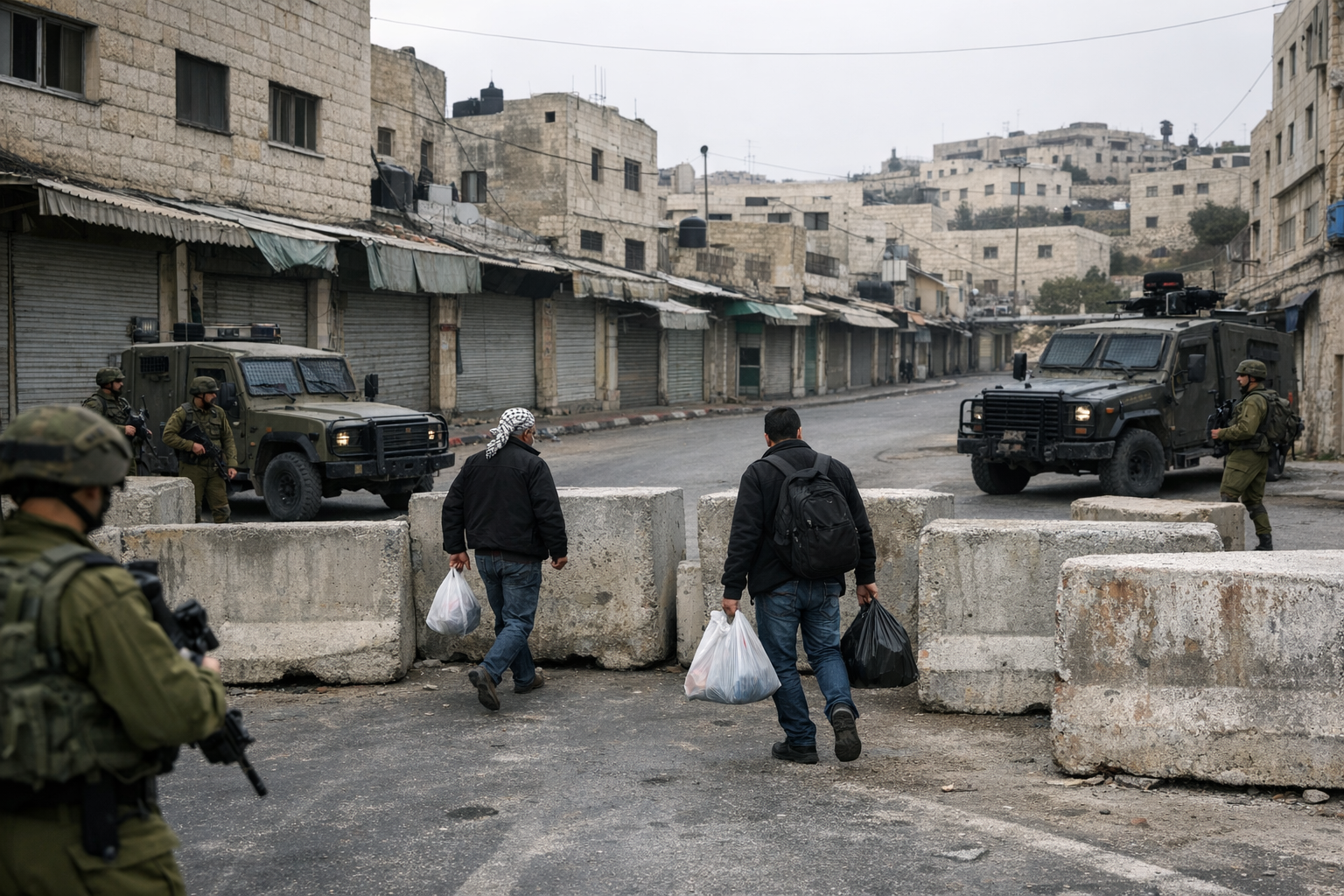
The military response — including arrests, demolitions, checkpoint closures and the takeover of homes for military use — has displaced large numbers of Palestinians and sealed off parts of one of the West Bank’s largest cities. Palestinian residents and local officials have described the measures as collective punishment. For Prime Minister Benjamin Netanyahu, the crackdown has also become a test of whether he can still persuade voters that he is Israel’s most credible guardian of security.
That question has hovered over the entire campaign. Mr. Netanyahu has tried to run on wartime achievements against Hamas, Hezbollah and Iran, while his opponents have argued that no military successes can erase responsibility for the catastrophic security breakdown of Oct. 7. Now, with polls indicating that neither the pro-Netanyahu camp nor its rivals has a clear path to a parliamentary majority, the events in Hebron have become both a human crisis and a political proving ground.
Hebron Becomes the Campaign’s Flashpoint
The operation in Hebron began after the deadly shooting at an Israeli checkpoint outside the city on Friday. In the days that followed, Israeli forces expanded their presence across the area, closing entrances to the city, conducting raids and ordering families from their homes.
Reporting from Hebron described neighborhoods emptied as soldiers moved into residential buildings and as bulldozers razed or marked areas for destruction. Estimates of those displaced have varied, but the scale has been significant: hundreds of families, and by some local counts nearly 2,000 Palestinians, have been forced out.
For residents, the speed with which the city was transformed underscored how suddenly local lives could become entwined with Israeli electoral politics. Hebron had not been a central focus of the campaign until the attack. Then it became a stage for televised visits by Israeli leaders eager to project resolve.
Mr. Netanyahu vowed a powerful response. His far-right finance minister, Bezalel Smotrich, also traveled to the area, reinforcing the message to right-wing voters that the government would answer attacks with overwhelming force.
The timing was impossible to miss. With only days left before voting and with surveys suggesting a tight race, the crackdown offered Mr. Netanyahu a familiar political frame: Israel under threat, and a leader promising strength.
A Vote Shaped by Oct. 7 and Its Aftermath
This election was always going to be a referendum, at least in part, on Mr. Netanyahu’s leadership during war. It is the first time Israelis have gone to the polls since the Oct. 7 assault shattered the country’s sense of security and exposed deep failures in intelligence, preparedness and command.
Those failures have haunted Mr. Netanyahu even as he has sought to recast himself as the leader best equipped to prosecute Israel’s regional conflicts. He has argued that his government has weakened Hamas, confronted Hezbollah and deterred Iran. His critics say he has never fully accepted responsibility for the attack that occurred on his watch and has offered no convincing political endgame for Gaza or the broader conflict.
The campaign has also been shaped by domestic strains, including disputes over military-service exemptions for ultra-Orthodox Jews and by broader fatigue with years of unstable coalition politics. Yet as Election Day approached, security once again eclipsed nearly everything else.
That dynamic has often benefited Mr. Netanyahu in the past. Whether it still can is less certain now.
Coalition Math May Matter More Than the Final Speeches
Even before the violence in Hebron, final polling suggested that neither camp was on course for a straightforward victory. In Israel’s parliamentary system, elections are often decided less by who finishes first than by who can assemble a coalition commanding at least 61 seats in the 120-member Knesset.
That arithmetic is especially fraught this year. The anti-Netanyahu camp remains divided, and any effort to unseat him would most likely depend on a patchwork alliance of parties with clashing priorities. Smaller factions, including Arab-led parties or parties willing to offer outside support, could once again emerge as kingmakers.
For Mr. Netanyahu, that has made the closing message simple: only a strong right-wing vote can prevent paralysis and deliver a government capable of fighting a war. His opponents, including former military chiefs who have challenged his record, have argued that strength without accountability has already proved disastrous.
But the overlap between the major blocs on Palestinian policy has narrowed the practical stakes for Palestinians themselves. Even many Netanyahu rivals support continued military pressure, oppose the creation of a Palestinian state under current conditions and back, to varying degrees, the expansion of Jewish settlements in the West Bank. That has contributed to a deep sense among Palestinians that the election may alter personalities and coalition partners without fundamentally changing the trajectory of Israeli policy.
In Gaza and the West Bank, Few Expect Relief
That pessimism is particularly acute in Gaza, where the humanitarian catastrophe has remained largely peripheral to the Israeli campaign even as the territory’s civilians continue to endure displacement, shortages and the threat of airstrikes.
For many Palestinians, the war’s devastation has become political backdrop in Israel rather than a subject of urgent moral reckoning. Both Mr. Netanyahu and his chief rivals have spoken more about defeating Hamas than about what political settlement, if any, might follow. The effect has been to reinforce a widespread belief in Gaza and the West Bank that Palestinian suffering is being treated chiefly as a security issue, or as campaign material, rather than as a matter requiring a new policy direction.
The crackdown in Hebron has sharpened that fear. Residents there are left wondering whether the operation is a short-term reprisal after Friday’s attack or an early sign of a broader post-election hardening in the West Bank.
That question may outlast the vote itself. Even if Tuesday’s results weaken Mr. Netanyahu, there is little evidence that a successor government would move quickly to ease military pressure in the West Bank or pursue a markedly different strategy in Gaza.
Why the Final Hours Matter
The election’s last hours have therefore become about more than a familiar debate over who can keep Israel safe. They are also about whether a fresh security crisis can reorder a race in which many voters remain torn between fear, anger and exhaustion.
For Mr. Netanyahu, the gamble is that a forceful response in Hebron will remind wavering voters of his political strengths and mute lingering blame for the failures of 2023. For his challengers, the danger is that events on the ground once again pull the campaign onto terrain where he has long been most formidable.
For Palestinians, the stakes are more immediate and more tangible: homes emptied, neighborhoods damaged, movement restricted, and little expectation that whichever coalition emerges from the Israeli vote will offer meaningful relief.
By Tuesday night, Israelis may know which bloc has the advantage. It could take much longer to learn whether Hebron was a brief election-season flashpoint or the beginning of an even harsher phase in the West Bank.
Sources
Further reading and reporting used to add context:
- Netanyahu’s legacy is on the line as Israel heads into elections | AP News
- The main issues in the Israeli elections | AP News
- https://apnews.com/article/1bbe91078c25e1efb4dc4f7ce6c3f5c6
- https://www.axios.com/2026/10/25/netanyahu-trump-israeli-elections
- https://apnews.com/article/13be720412a77fd3a3aa3a310ed1619d
- https://apnews.com/article/9547f83319b8c5be32ab3ab81534772a
- https://apnews.com/article/6ca2df0cfa031d211ea025fd8520015d
- Israel presses West Bank army operation as election looms | AP News
- https://apnews.com/article/d7ebbcf1fd30cc608c9b9ed5126deb95
- https://theweek.com/world-news/what-happens-gaza-netanyahu-ousted
- https://www.theguardian.com/world/2026/oct/25/gaza-suffering-campaign-fodder-palestinians-fear-worst-israel-election
- The latest polls ahead of Israel’s October election
- https://www.israel.com/israel-election-2026
- https://www.theguardian.com/world/2026/oct/26/collective-punishment-palestinians-displaced-israeli-forces-take-over-hebron-homes
- https://www.investing.com/news/world-news/israeli-elections-how-they-work-and-who-is-in-the-race-4958012
- https://www.timesofisrael.com/topic/2026-israeli-elections/
- https://www.fidelity.com/news/article/default/202607290419RTRSNEWSCOMBINED_KBN3TP0UV-OUSWD_1
- https://www.israelgazette.com/election/polls/
- https://apnews.com/article/36486edb61b3bf4e0df67e8a17123e44
- https://apnews.com/article/f6646718072b4ff6929cff43297edd05
- https://apnews.com/article/88eb7c38cefd13f576778c918a1b8f74
- https://apnews.com/article/63b08f2612d1a89f6bfb864ce1efee66
- https://apnews.com/article/5debed4bd13d543101ca63cad0572bac
- https://apnews.com/article/b6036878d5124f14b5a3202986f95e3e
- https://apnews.com/article/326915f855b605b42874f541f2a22e27
- https://apnews.com/article/20950e811130e9a1ee4056f207150f55
- https://apnews.com/article/18252d84c29658ca13ac3380743953be
- https://apnews.com/article/89ebd068167669db357ad1fa4f3a8758