
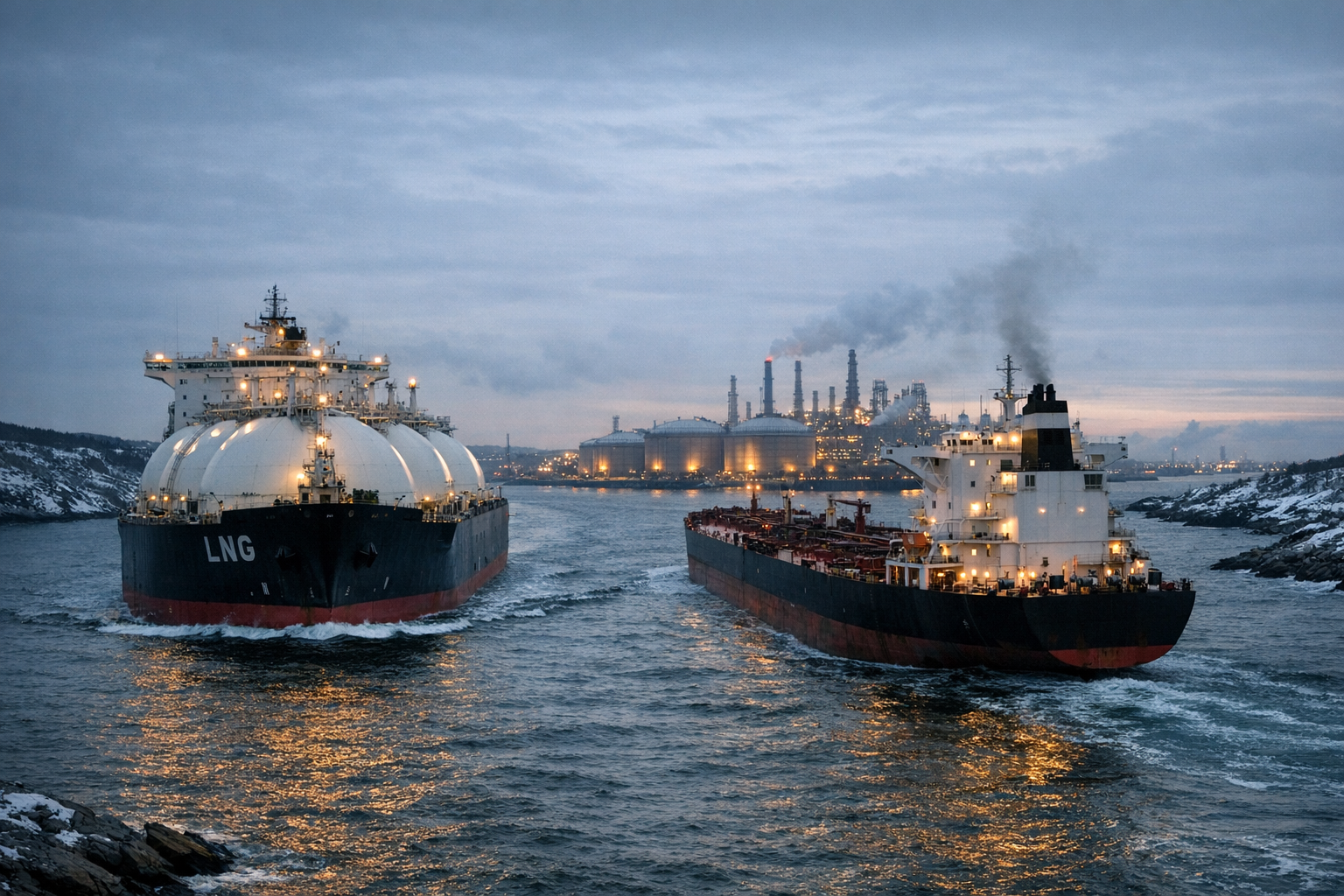
Oil prices fell on Monday after Saudi Arabia sent one of its most senior royals to Tehran for talks aimed at containing the widening Middle East conflict, a rare diplomatic opening that briefly reassured traders even as President Trump publicly dangled the prospect of either a bargain with Iran or a fresh military escalation.
The market reaction captured the whiplash now defining global energy trading. Crude eased on signs that regional powers might be trying to pull back from a broader confrontation. But in Europe, natural gas prices surged to their highest level since 2022 as colder weather and fears of supply disruption fed anxiety over the coming winter.
The result was a sharp reminder that every signal from the region — a diplomatic visit, a missile interception, a presidential threat — is now moving markets far beyond the battlefield.
A fragile opening in Tehran
Prince Khalid bin Salman, the Saudi defense minister, traveled to Tehran on Monday for discussions with Iranian officials in an effort to reopen channels and lower the risk of further spillover. Senior Turkish and Pakistani representatives were also involved, underscoring how urgently regional powers are trying to contain a conflict that has already spread across multiple fronts.
The visit helped push oil lower, as traders interpreted the meeting as at least a tentative effort to reduce the chances of attacks that could threaten Gulf energy infrastructure or shipping lanes. Saudi Arabia remains the world’s largest crude exporter, and any sign that Riyadh and Tehran are willing to talk tends to calm fears of a direct disruption to supply.
But the relief was partial and brittle. Saudi officials said the kingdom had intercepted new missiles and drones launched by Iran-backed Houthi forces in Yemen, with the targets said to include airports and oil facilities. Those attacks reinforced the central dilemma for investors: even if senior officials are talking, the network of militias and proxy forces tied to the conflict can still keep the region on edge.
Trump’s brinkmanship keeps risk premium alive
Hovering over the diplomacy was Mr. Trump’s own warning that he would soon decide whether to “make a deal” with Iran or “finish it off,” language that injected fresh uncertainty into an already volatile market.
For traders, the statement was significant not only because of its bluntness, but because it suggested Washington itself has not settled on a clear next step. The administration appears to be preserving both options — negotiation and force — and that ambiguity has made it harder for markets to price the conflict cleanly.
That uncertainty matters because the war has already redrawn the energy map of the region. The current phase of fighting traces back to Feb. 28, when American and Israeli strikes on Iran set off a wider confrontation that spread to Saudi Arabia and Yemen. Since then, the Strait of Hormuz and the Bab al-Mandab, two of the world’s most sensitive shipping chokepoints, have become central flashpoints for oil and liquefied natural gas traders alike.
Even without a sustained physical outage, the fear that tankers, export terminals or processing facilities could be caught up in the conflict has kept a geopolitical premium embedded in prices.
Europe’s gas anxiety returns
If oil traders found some comfort in the Saudi-Iran talks, Europe’s gas market moved in the opposite direction.
Benchmark gas prices climbed sharply, reaching their highest level in four years, as colder temperatures increased heating demand and traders worried that a further deterioration in the Middle East could complicate winter supply. Europe is far more dependent than it once was on global LNG cargoes, and any threat to shipping routes or export flows can quickly reverberate through prices.
The jump illustrated how exposed Europe remains, even several years after the energy shock that followed Russia’s invasion of Ukraine. Storage levels, weather patterns and import flexibility all still matter enormously, but so does sentiment. Traders do not need to see an actual interruption in supply to start bidding up prices; the mere prospect of conflict affecting LNG movements can be enough.
That vulnerability is especially acute because the Middle East conflict touches both of the maritime corridors most closely watched by gas markets. Any threat to the Bab al-Mandab can complicate shipments through the Red Sea, while instability around the Gulf raises concerns about flows from major LNG exporters whose cargoes are critical to balancing winter demand.
Why markets are reacting so quickly
The speed of Monday’s moves reflected a simple reality: energy investors are trying to price not only supply and demand, but also the probability of miscalculation.
The Saudi outreach to Tehran was the first such high-level contact since the kingdom’s August defense pact with Turkey and Pakistan, making it a notable attempt at regional crisis management. It suggested that countries closest to the conflict are seeking a political off-ramp before attacks on infrastructure or shipping create a much larger global shock.
Still, the open questions are considerable. It is not clear whether the talks in Tehran will produce any concrete restraint from Iran or from the Houthis. Nor is it clear whether Mr. Trump’s rhetoric will lead to actual diplomacy, another round of strikes, or a continuation of pressure without a decisive change in policy.
For oil, the immediate concern is the security of Gulf production and export routes. For gas, the worry is that winter, shipping disruptions and already elevated geopolitical risk could combine to tighten Europe’s supply outlook quickly.
That is why markets are lurching with each headline. A single diplomatic gesture can knock crude lower. A single threat can send gas surging. And until there is evidence of either a durable cease-fire or a defined political settlement, traders are likely to remain trapped between hopes of de-escalation and fears that the next turn in the conflict could be far more costly.
Sources
Further reading and reporting used to add context:
- https://apnews.com/article/36486edb61b3bf4e0df67e8a17123e44
- https://apnews.com/article/7d1bcf08210539085ea0b5ed56ef4d4c
- https://apnews.com/article/6ca2df0cfa031d211ea025fd8520015d
- https://www.thedailybeast.com/leak-reveals-staggering-details-of-trump-plot-for-post-election-shock
- https://apnews.com/article/2195b4226316fa8cb13b875f08d5df88
- https://www.theatlantic.com/national-security/2026/10/trump-iran-war-strikes-after-midterms/689121/?utm_source=openai
- https://apnews.com/article/3e56f4679565c985fd036302168a4f79
- https://www.kiplinger.com/economic-forecasts/energy
- https://theweek.com/personal-finance/what-will-happen-to-uk-energy-prices-in-2026
- https://www.theguardian.com/business/2026/oct/26/european-gas-prices-four-year-high-winter-supply-fears-middle-east
- https://www.ayde.com/news/843835-european-gas-prices-soar-to-four-year-high-over-winter-supply-fears
- https://www.investing.com/news/commodities-news/iran-hosts-saudi-defence-pact-states-as-houthis-launch-more-attacks-4972847
- https://www.main-currents.news/stories/2026/10/26/european-gas-prices-jumped-to
- https://www.theguardian.com/business/2026/jul/20/european-gas-prices-high-us-iran-war-supply-shortages-oil-price
- https://www.theguardian.com/business/commodities
- https://mezha.net/eng/news/mezha-356bb60a9f9a9d92eb8295b6_european_gas_prices/
- https://www.theguardian.com/business/oil
- https://www.aol.co.uk/articles/top-officials-mecca-pact-countries-032019000.html
- https://www.cbsnews.com/live-updates/iran-war-us-trump-saudi-arabia-houthi/?intcid=CNR-01-0623
- https://www.thedailybeast.com/leak-exposes-trump-teams-plans-for-post-election-shock
- https://au.investing.com/news/commodities-news/oil-prices-down-almost-1-in-early-trading-4713138
- https://www.investing.com/news/commodities-news/saudi-arabia-intercepts-drones-and-missiles-as-fighting-with-yemens-houthis-continues-4971080
- https://www.investing.com/news/commodities-news/trump-weighs-quick-end-to-iran-war-against-letting-conflict-wither-4970054
- https://uk.marketscreener.com/news/top-officials-from-mecca-pact-countries-to-meet-iranian-officials-in-tehran-on-monday-two-sources-s-ce785cdfd08df723
- https://www.investing.com/news/world-news/saudi-arabia-faces-new-missile-and-drone-fire-after-major-attacks-on-airports-4944571
- https://gvwire.com/2026/10/23/trump-weighs-quick-end-to-iran-war-against-letting-conflict-wither/
- https://www.internazionale.it/ultime-notizie-reuters/2026/09/26/saudi-says-it-intercepted-2-drones-launched-by-houthis-towards-riyadh
- https://www.aol.com/articles/iran-prolongs-talks-stalemate-influence-102559000.html
- Iran hosts Saudi defence pact states as Houthis launch more attacks By Reuters