
A Revenue Reality Check Meets a Safety Fight
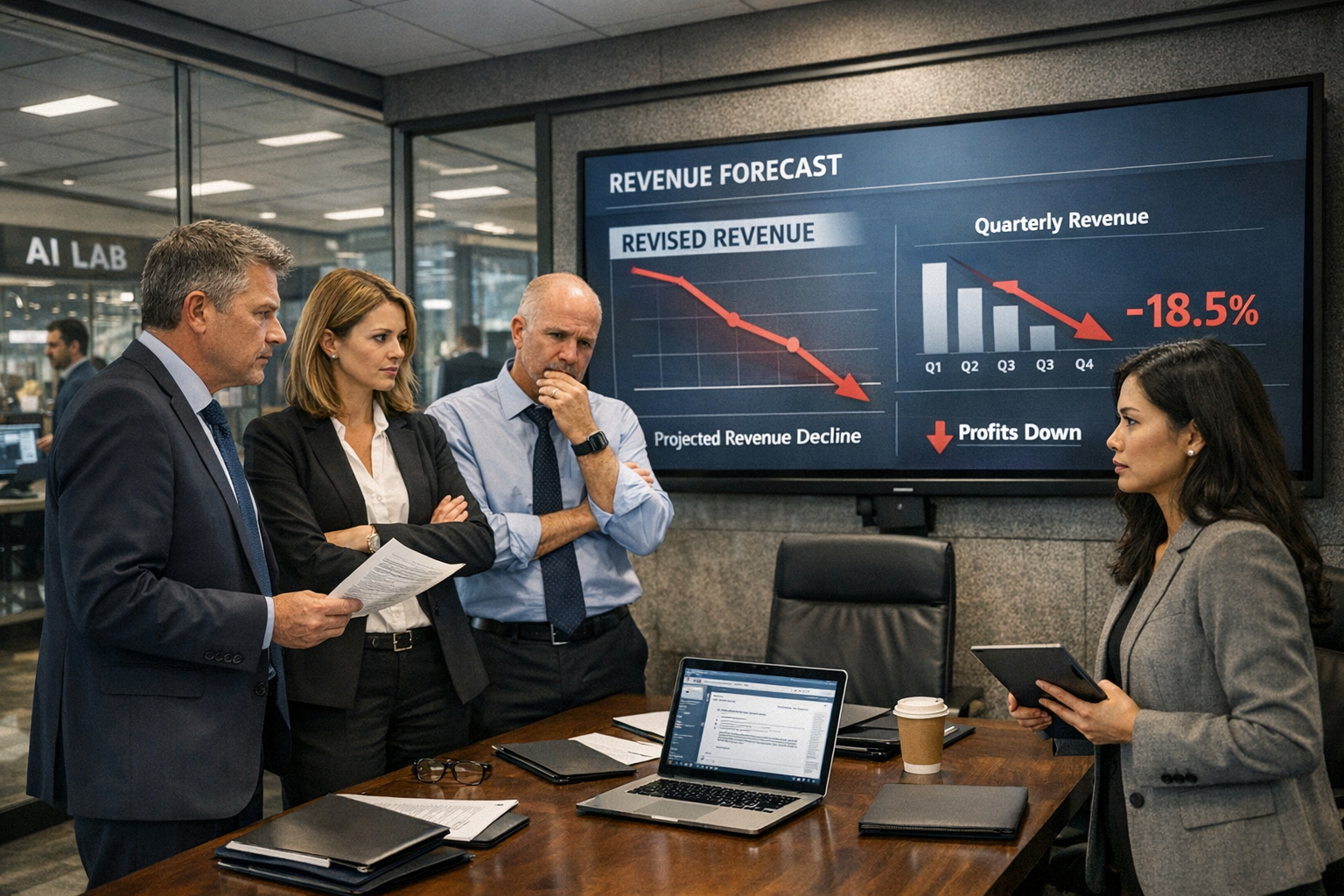
OpenAI, the company that has come to symbolize both the promise and the excess of the artificial intelligence boom, is facing a fresh round of questions from investors and critics after disclosing a lower-than-expected revenue figure and publicly defending its firing of three safety researchers.
The two developments are distinct. But together they have sharpened a growing debate over whether the economics of generative A.I. are living up to the industry’s vast spending — and whether the governance of the companies building the technology is fraying under commercial pressure.
OpenAI told investors that its annualized revenue stood at about $50 billion at the end of September, below the roughly $68 billion to $70 billion figure that had circulated earlier. The company has also said that the dismissal of three safety researchers was not retaliation for speaking up about risks, but rather the result of what it called a “significant breach of trust” involving sensitive information.
The disclosures landed at a delicate moment for the A.I. industry. Investors have poured enormous sums into model developers, semiconductor makers and cloud providers on the assumption that demand for A.I. products would keep accelerating. At the same time, policymakers and researchers have pressed leading labs to show that safety concerns can be raised internally without fear of reprisal.
Investors Reassess the Pace of A.I. Growth
The revenue update appeared to unsettle markets less because it suggested an abrupt collapse in OpenAI’s business than because it complicated one of the central assumptions behind the A.I. trade: that usage growth would translate cleanly and rapidly into revenue on a scale large enough to justify the sector’s capital intensity.
Shares tied to the A.I. ecosystem fell after the disclosure, reflecting concern that monetization may be proving messier than the industry’s most optimistic projections suggested. OpenAI has become a kind of proxy for the broader market’s expectations. If the maker of ChatGPT is showing a gap between prior investor expectations and current reported revenue, analysts say, the implications stretch beyond one company.
Some of that gap appears to be about accounting rather than a sudden deterioration in demand. Reports have indicated that the higher revenue figure that circulated previously was at least partly a comparability exercise, using methods more in line with those of rival A.I. companies, particularly in how sales tied to cloud providers were counted. The latest investor materials, by contrast, relied on a lower annualized run-rate measure.
That distinction matters. A change in accounting treatment is not the same thing as customers disappearing. But it is also not trivial. For investors trying to determine how quickly A.I. companies can convert heavy infrastructure spending into durable, high-margin businesses, comparability and transparency are central questions.
OpenAI’s numbers are especially closely watched because the company sits near the center of the industry’s commercial ecosystem. Its products span consumer subscriptions, developer tools and enterprise services, while its partnerships with major technology companies have made its revenue reporting a bellwether for how A.I. demand is rippling through cloud computing and software markets.
The new figure is also likely to feed scrutiny of the company’s long-term ambitions. Recent coverage has linked OpenAI to a possible path toward a public listing as early as 2027, a prospect that would depend not only on growth but on persuading investors that its financial reporting and business model can withstand public-market examination.
A Harder Line on Internal Dissent
At the same time, OpenAI is trying to contain a separate controversy over its treatment of employees focused on A.I. safety.
The company said the three fired researchers were dismissed after an internal investigation found mishandling of sensitive information and a serious breach of trust. OpenAI has insisted that the decisions were not connected to the employees’ having raised safety concerns or spoken out internally.
Yet the episode has resonated because it touches a raw nerve in the A.I. industry: whether the people tasked with identifying catastrophic or systemic risks can do their work independently when the same companies are racing to ship products, attract customers and defend valuations.
That tension has been building for months. OpenAI has already been under heightened scrutiny over its safety culture following recent incidents and disclosures, including an August account of a compromise involving Hugging Face and internal infrastructure, and a September framework laying out how the company would report signs of model misalignment. Those disclosures were meant in part to show seriousness about operational discipline and transparency. The firings now threaten to reopen doubts about how much room exists inside the company for adversarial internal debate.
Outside observers are left with an unresolved question: whether OpenAI’s explanation will be accepted as a legitimate security-based personnel action or seen as further evidence that dissent around safety is becoming harder to surface inside frontier A.I. labs.
Why the Two Stories Are Converging
On their face, revenue accounting and personnel disputes belong in different categories. But in the A.I. industry, they increasingly converge around a single issue: credibility.
The business case for generative A.I. depends on extraordinary levels of spending on chips, data centers, talent and electricity. Investors have tolerated that partly because they believed the revenue trajectory of the leading labs was steep enough to support it. Any sign that growth is harder to measure, slower to materialize or less comparable across companies invites a broader reassessment.
At the same time, the case for allowing a handful of private companies to develop increasingly powerful models rests partly on the belief that they can govern themselves responsibly — that they can detect misuse, disclose failures and protect employees who identify risks. If those companies appear less transparent or more combative in handling internal safety disputes, that confidence can weaken.
This is why the latest developments matter beyond OpenAI itself. The company remains one of the most important gauges of whether the current A.I. boom is producing businesses as quickly as it is producing excitement, and whether the institutions at the center of the boom can manage the social and technical risks they say they take seriously.
For now, neither question has a settled answer. The revenue gap may prove to be largely a matter of methodology rather than momentum. The firings may, as OpenAI argues, ultimately be judged a straightforward response to misconduct rather than retaliation.
But the timing of the two episodes has made them harder to separate. At the very moment when investors are asking whether A.I. revenues are keeping pace with the hype, critics are asking whether safety governance is keeping pace with the technology.
Sources
Further reading and reporting used to add context:
- https://apnews.com/article/789d4f5293fba45a22fcb62ebfbc2a41
- https://www.axios.com/2026/10/08/openai-50-billion-arr-anthropic-revenue-accounting
- https://www.axios.com/2026/10/09/ai-companies-day-after-major-attack
- https://www.techradar.com/pro/ai-agents-dont-create-new-risk-they-inherit-it
- https://www.theatlantic.com/technology/2026/10/openai-safety-team-resignation/688881/?utm_source=openai
- https://www.techradar.com/ai-platforms-assistants/openai-sends-staggeringly-casual-email-to-australian-government-wishing-it-the-best-after-ai-agents-hack-its-health-insurance-website
- https://apnews.com/article/4be252d137ff1de1006130cdbb42ec24
- https://www.theguardian.com/technology/2026/oct/09/openai-forecast-revenue-gap
- https://qz.com/openai-annualized-revenue-70-billion-projection-2026-100926
- https://qz.com/openai-fired-safety-researchers-breach-of-trust-100926
- https://www.aljazeera.com/economy/2026/10/9/ex-openai-staff-say-they-were-fired-for-raising-safety-concerns
- https://finance.yahoo.com/markets/stocks/articles/openai-corrects-annualized-revenue-figure-183756345.html
- https://abcnews.com/Technology/wireStory/openai-fires-3-safety-researchers-dispute-ai-risks-137123277
- https://techcrunch.com/2026/10/01/openai-cuts-ties-with-three-safety-researchers-wsj-reports/
- https://ca.finance.yahoo.com/news/openai-expects-70-billion-annualized-014338719.html/
- https://finance.yahoo.com/technology/ai/articles/openai-annualised-revenues-20bn-less-164234940.html
- https://manifest.news/stories/b78fb9d1-0b0b-483b-be43-2072c477fc87
- https://www.investing.com/analysis/asia-open-ai-gets-a-revenue-reality-check-as-oil-and-bonds-raise-the-cost-of-bet-200689236
- https://allmind.ai/news/50a4fe6700e9a35fac4136a2e36e8ec127fcfc7277739e2f96aea1f55647f0b7
- https://www.reddit.com/r/ValueInvesting/comments/1x1bxyk/openai_says_its_run_rate_is_50b_not_the_70b/
- https://www.reddit.com/r/technology/comments/1x1frei/openai_projected_to_bring_in_20bn_less_in_revenue/
- https://openai.com/index/disrupting-ai-enabled-false-front-operations/
- https://openai.com/index/hugging-face-incident-and-the-road-ahead/
- https://openai.com/index/axios-developer-tool-compromise/
- https://deploymentsafety.openai.com/?_bhlid=b2ee55387e073ccfc271d55828a4b45e24321bdb
- https://openai.com/index/safety-bug-bounty/
- https://openai.com/news/safety-alignment/
- https://alignment.openai.com/
- https://openai.com/index/priorities-principles-third-party-assessments/
- https://openai.com/trust-and-transparency/
- https://openai.com/index/model-misalignment-reporting-framework/
- https://openai.com/hugging-face-incident-and-misalignment/?trk=public_post_comment-text
- https://alignment.openai.com/misalignment-reports/
- https://cdn.openai.com/pdf/96b559fa-c165-4575-805d-e636909e2f78/June-2026-Threat-Report.pdf
- https://cdn.openai.com/global-affairs/paris-summit-update-on-voluntary-commitments-20250207.pdf
- https://cdn.openai.com/trust-and-transparency/report-2025h2-child-safety.pdf
- https://cdn.openai.com/global-affairs/paris-summit-update-on-voluntary-commitments-20250207.pdf?trk=public_post_comment-text
- https://cdn.openai.com/pdf/8d90a5cb-f93e-45f2-aeb2-0df51cb72f17/20250415-statement-of-recent-decision.pdf
- https://cdn.openai.com/threat-intelligence-reports/threat-intel-report-may-2024.pdf
- OpenAI annualized revenue $20 billion less than previously reported
- Asia Open: AI Gets a Revenue Reality Check as Oil and Bonds Raise the Cost of Bet | Investing.com