
A New Wartime Trade Is Reordering Tech Markets
The wars in Ukraine and Iran are reshaping not only military planning but also the hierarchy of technology companies favored by investors, accelerating a shift away from the old defense model of sprawling weapons programs and toward firms that promise software-driven warfare, rapid deployment and constant iteration.
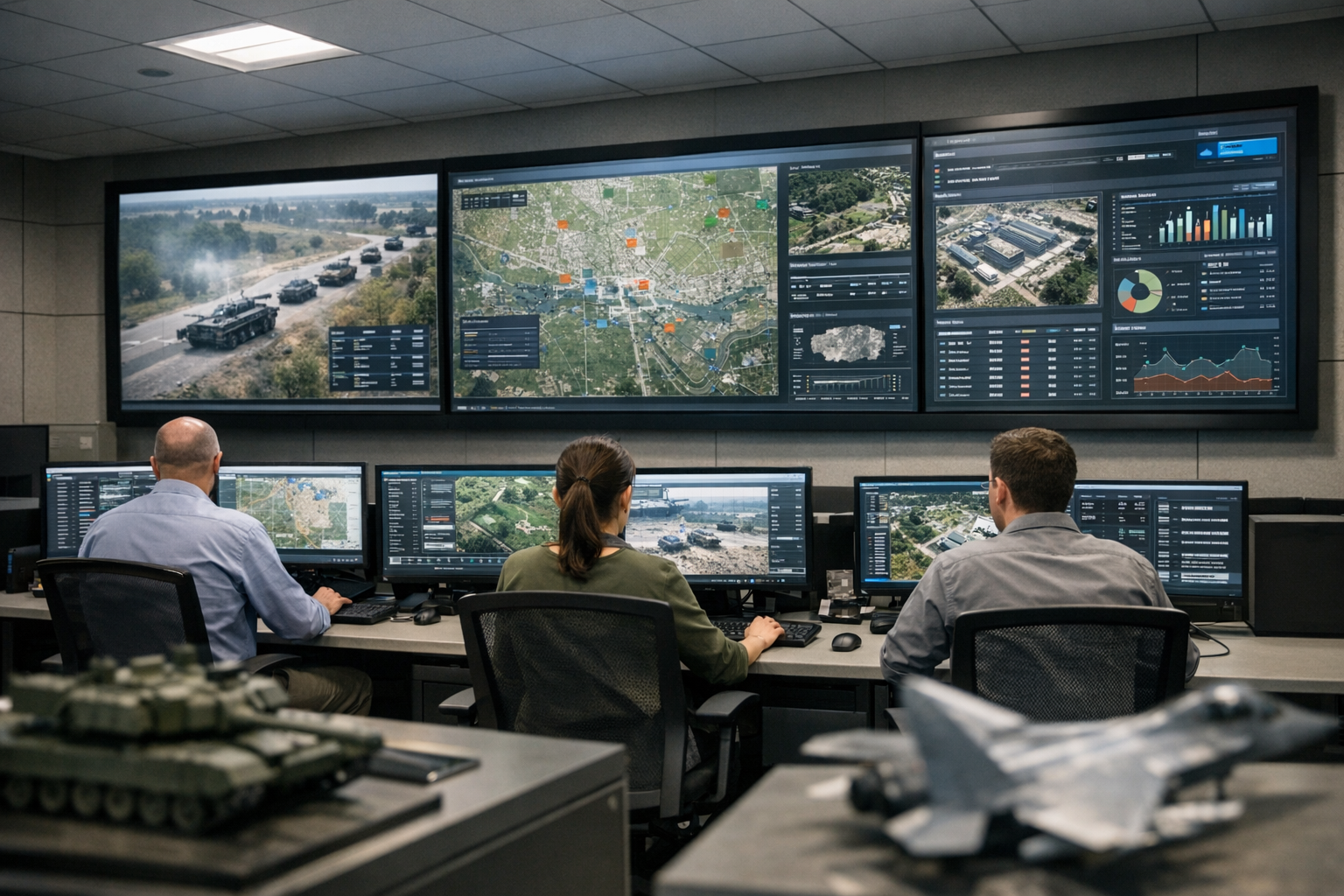
At the center of that realignment is Palantir, the data analytics and artificial intelligence company whose products have become increasingly entwined with American military operations and whose stock has become a proxy for a broader investor bet: that modern conflict will reward code, autonomy and battlefield software as much as tanks, ships and aircraft.
That bet has been tested in recent days. Even after former President Donald J. Trump publicly praised Palantir, the company’s shares suffered their worst week in more than a year as the conflict involving Iran dragged on and investors weighed the gap between wartime relevance and Wall Street expectations. Michael Burry, the hedge fund manager made famous by “The Big Short,” said he was still holding long-dated put options against the company, underscoring a deeper skepticism that the market’s enthusiasm for defense-oriented A.I. can be sustained at current valuations.
From Legacy Weapons to Software-Led War
The shift now underway has been building since Russia’s full-scale invasion of Ukraine, which exposed the advantages of systems that can be built quickly, updated in real time and deployed at lower cost and in greater numbers than traditional military hardware. Drones, battlefield intelligence platforms, autonomous systems and software used for target identification and command coordination have become more central to how militaries think about deterrence and combat.
That dynamic has only intensified as tensions in the Middle East have elevated the importance of tools that can process large volumes of surveillance and operational data quickly. In that environment, companies with roots in Silicon Valley rather than the traditional defense-industrial base have gained a new prominence.
Palantir has emerged as one of the clearest examples. Its Maven Smart System has been reported as part of U.S. operations in Iran, placing the company at the intersection of military demand, political scrutiny and financial speculation. The system traces its lineage to Project Maven, a Pentagon initiative originally designed to use artificial intelligence to analyze surveillance imagery and video. Over time, that effort evolved into a broader operational platform, and Palantir secured a $480 million Maven prototype contract in 2024, followed by a $795 million contract modification in 2025.
Those deals reflect more than one company’s success. They signal how procurement priorities have changed under the pressure of war, with the Pentagon showing greater willingness to back platforms that can be tested, upgraded and fielded far faster than conventional defense programs.
Why Palantir Has Become a Flashpoint
Palantir’s rise has made it both a market favorite and a lightning rod. The company remains deeply tied to government spending; its filings show that government customers accounted for 54 percent of its $4.5 billion in revenue in 2025. That concentration helps explain why developments in U.S. military operations, Pentagon contracting and national-security politics can move the stock so sharply.
For bullish investors, that government exposure is the point. As military planners adapt to conflicts that prize speed and flexible decision-making, Palantir’s software is seen as the type of tool likely to sit at the center of future operations. The appeal is not merely that the company sells to the government, but that it is aligned with a changing conception of military power: one in which data fusion, machine-assisted targeting, real-time intelligence analysis and rapid software updates are decisive advantages.
But the same factors that make Palantir attractive have also made it vulnerable to swings in sentiment. The company has traded at valuations that imply years of robust growth, leaving little room for disappointment. Mr. Burry’s continuing bearish wager suggests that some investors believe the defense-and-A.I. trade has raced ahead of the underlying business fundamentals, even if the geopolitical case for such companies has strengthened.
A Broader Repricing Across Defense Tech
What is happening to Palantir is part of a larger repricing of what defense leadership looks like in public and private markets. For decades, military spending was associated primarily with long-cycle programs run by established contractors, where procurement stretched over years and technical changes moved slowly. The wars now shaping strategic thinking have challenged that template.
Ukraine, in particular, became a proving ground for lower-cost, rapidly iterated technologies that could be modified mid-conflict. That lesson has reverberated across Washington and in venture capital circles, where companies focused on autonomy, battlefield software and sensing technologies have drawn fresh attention. The conflict involving Iran has further highlighted the value of systems that can turn immense flows of information into usable operational decisions at speed.
Investors have increasingly treated those capabilities as strategic assets with durable demand. Companies connected to defense artificial intelligence have therefore won premium valuations, supported by the idea that geopolitical instability is no longer a temporary tailwind but a structural force shaping technology markets.
The Risks Behind the Enthusiasm
Yet the surge in interest carries unresolved questions. Wartime urgency does not always translate neatly into long-term procurement. Technologies that perform well in specific operations may prove harder to integrate across military bureaucracies. And A.I.-enabled systems, particularly those tied to targeting and operational planning, remain subject to questions about reliability, oversight and political acceptance.
For investors, the central issue is whether today’s battlefield relevance becomes tomorrow’s recurring revenue. Palantir’s trajectory captures that tension. The company’s contracts and military role suggest that software-centric defense tools are no longer peripheral. But its volatile stock performance is a reminder that strategic importance does not settle debates over valuation.
What the market is grappling with, in other words, is not whether war is changing technology demand. It plainly is. The harder question is which companies can convert that moment into durable businesses once the immediacy of conflict gives way to the slower rhythms of government budgets and institutional adoption.
For now, the direction is unmistakable: wars that reward faster, cheaper and more adaptable systems are elevating a new class of defense-tech and A.I. firms. Whether that becomes a lasting new order — or another cycle of wartime exuberance — remains the question hanging over both the Pentagon and Wall Street.
Sources
Further reading and reporting used to add context:
- https://www.gurufocus.com/news/8787731/michael-burry-maintains-bearish-stance-on-palantir-technologies-pltr
- https://www.bloomberg.com/news/articles/2025-11-04/burry-discloses-puts-on-nvidia-and-palantir-after-bubble-warning
- https://www.financialcontent.com/article/marketminute-2026-4-10-the-big-short-20-why-michael-burry-is-betting-1-billion-against-palantirs-ai-future
- https://finance.yahoo.com/news/michael-burry-betting-against-palantir-130002523.html
- https://www.axios.com/2025/11/06/palantir-stock-alex-karp-ceo
- https://finance.yahoo.com/news/michael-burry-shorts-doing-far-174839022.html
- https://moneyweek.com/investments/tech-stocks/big-short-investor-michael-burry-closes-hedge-fund-scion-capital
- https://www.forbes.com/sites/jonmarkman/2025/11/06/why-michael-burry-is-betting-against-the-future-and-why-hes-wrong/
- https://www.axios.com/2025/11/05/michael-burry-alex-karp-palantir-ai
- https://dailyhodl.com/2025/11/14/legendary-investor-michael-burry-bets-282500000-on-six-stocks-after-turning-bearish-on-nvidia-and-palantir/
- https://finance.yahoo.com/news/big-short-investor-michael-burry-151755673.html
- https://www.tipranks.com/news/nvda-pltr-michael-burry-bets-big-against-palantir-and-nvidia-stocks-with-new-put-options
- https://www.newsminimalist.com/articles/michael-burry-maintains-bearish-bet-on-palantir-with-long-dated-put-options-4bc115a4
- https://www.kiplinger.com/investing/stocks/dow-cuts-1277-point-drop-as-trump-tames-energy-threat-stock-market-today
- https://www.thedailybeast.com/famed-big-short-investor-michael-burry-bets-a-billion-against-ai/
- https://wtop.com/news/2025/12/7-michael-burry-stocks-and-bearish-bets-to-watch/
- https://www.forbes.com/sites/tylerroush/2026/03/03/defense-stocks-stumble-as-iran-conflict-escalates-lockheed-martin-palantir-rtx-down//
- https://en.wikipedia.org/wiki/Michael_Burry
- https://www.reddit.com/r/WallStreetbetsELITE/comments/1onrl9e
- https://www.reddit.com/r/ValueInvesting/comments/1r1vqca/michael_burry_unveils_massive_downside_price/
- https://www.investing.com/news/stock-market-news/burry-still-bearish-on-palantir-despite-trump-endorsement-93CH-4608464
- https://apnews.com/article/8118f58d75859b9fc74ab133fa9e8c3e
- https://www.washingtonpost.com/business/2025/11/04/palantir-nvidia-stock-market-michael-burry/
- https://omniekonomi.se/burry-fortsatter-blanka-palantir-trots-trumps-stod/a/wr33zM
- https://en.wikipedia.org/wiki/2026%E2%80%932028_world_oil_market_chronology
- https://uk.finance.yahoo.com/news/palantir-stock-plunges-michael-burry-190354373.html
- https://m.economictimes.com/news/international/us/palantir-stock-sinks-as-michael-burry-turns-bearish-and-ceo-alex-karp-plans-95m-share-sale-is-pltr-about-to-collapse/amp_articleshow/125488294.cms
- https://m.economictimes.com/news/international/us/michael-burry-effect-short-legend-bets-against-ai-and-685-billion-vanishes-from-nvidia-and-palantir-in-3-days/amp_articleshow/125172058.cms
- https://japanesecrafts.com/products/ak-gk-14
- https://www.forbes.com/sites/catherinebrock/2025/11/07/stock-prices-finish-week-lower-after-short-filing-on-nvidia-palantir/
- https://en.wikipedia.org/wiki/False_or_misleading_statements_by_Donald_Trump_%28second_term%29
- https://www.spokesman.com/stories/2026/mar/06/us-military-relying-on-ai-as-tool-to-speed-iran-op/
- https://www.moneycontrol.com/world/how-palantir-and-anthropic-ai-helped-the-us-hit-1-000-iran-targets-in-24-hours-article-13853331.html
- https://en.wikipedia.org/wiki/Project_Maven
- https://blackwire.world/articles/irgc-kill-list-18-tech-companies-april-2026.html
- https://www.military.com/feature/2026/03/22/pentagon-expands-palantirs-role-ai-contract.html
- https://www.hurriyetdailynews.com/iran-war-speeds-tie-up-between-tech-start-ups-and-us-military-220336
- https://www.cnbc.com/2025/02/19/palantir-shares-pentagon-cuts-trump.html
- https://www.theregister.com/2026/03/13/palantirs_maven_smart_system_iran/
- https://www.aol.com/news/palantir-stock-briefly-jumps-trump-191950143.html
- https://www.linkedin.com/posts/cnbc_palantir-rallies-15-for-the-week-as-iran-activity-7435815274576252928-UNwA
- https://www.democracynow.org/2026/3/31/project_maven_manson_bloomberg_ai_warfare
- https://www.business-standard.com/amp/blueprint-defence-magazine/reports/the-hyperwar-is-here-126040700385_1.html
- https://en.oninvest.com/article/rosenblatt-expects-palantir-shares-to-rise-nearly-40-due-to-the-iran-war
- https://en.wikipedia.org/wiki/Anduril_Industries
- https://epaper.thesouthindiatimes.com/media/2026-03/chennai-tsit-5th-march–2026.pdf
- https://www.reddit.com/r/politics/comments/1shz8kp/trump_praises_palantir_as_stock_has_worst_week_in/
- https://en.wikipedia.org/wiki/Palantir
- https://epaper.thesouthindiatimes.com/media/2026-03/hyd-tsit-14th-march–2026.pdf
- https://thegaze.media/news/ukraines-war-lessons-go-global-how-iran-became-the-worlds-new-battlefield
- https://podwise.ai/dashboard/episodes/7710453
- https://fortune.com/2025/09/12/defense-spending-rise-global-conflict-brainstorm-tech/
- https://www.themeridiem.com/articles/defense-tech-hits-reality-gap-as-iran-conflict-tests-ai-weapons
- https://www.iiss.org/globalassets/media-library—content–migration/files/publications/military-balance/2025-military-balance/the-military-balance-2025_defence-spending-and-procurement-trends.pdf
- https://defense.info/highlight-of-the-week/exporting-the-ukrainian-way-kyivs-battle-tested-playbook-against-iranian-drones/
- https://warontherocks.com/2025/08/ukraine-isnt-the-model-for-winning-the-innovation-war/
- https://news.m4ra.net/
- https://www.cfr.org/podcasts/why-it-matters/autonomous-ukraine-we-are-in-a-new-era-of-warfare/
- https://eir.news/2025/06/nato-summit-focuses-on-arms-race-in-the-silicon-valley-age/
- https://gazette.com/2025/10/02/los-angeles-tech-startups-get-big-cash-infusion-as-silicon-valley-pivots-to-defense-2/
- https://responsiblestatecraft.org/defense-tech-partnership/
- https://www.mvp.vc/research-industry-sector-report/rethinking-defense-for-the-digital-age
- https://www.gulf-times.com/pdf/2025/09/11/main-20250911-1.pdf?ts=012210
- https://watson.brown.edu/costsofwar/files/cow/imce/papers/2025/Profits%20of%20War_Hartung%20and%20Semler_Costs%20of%20War%3AQuincy%20FINAL.pdf
- https://deftech.ch/wp-content/uploads/2025/02/Deftech-Scan-January-2025.pdf
- https://www.reddit.com/r/UkrainianConflict/comments/107hc3r
- https://investors.palantir.com/files/2025%20FY%20PLTR%2010-K.pdf
- https://investors.palantir.com/files/Palantir%20Q3%202024%20Business%20Update.pdf
- https://investors.palantir.com/events.html
- https://www.palantir.com/docs/apollo/core/whats-new/
- https://investors.palantir.com/news-details/2025/Palantir-Reports-Q4-2024-Revenue-Growth-of-36-YY-U.S.-Revenue-Growth-of-52-YY-Issues-FY-2025-Revenue-Guidance-of-31-YY-Growth-Eviscerating-Consensus-Estimates/
- https://investors.palantir.com/reports-2024.html
- https://investors.palantir.com/resources/investor-email-alerts
- https://investors.palantir.com/files/2024%20FY%20PLTR%2010-K.pdf
- https://www.palantir.com/docs/jp/foundry/code-repositories/artifact-repositories-overview
- https://investors.palantir.com/financials/sec-filings
- https://investors.palantir.com/resources/information-request-form
- https://investors.palantir.com/files/Palantir%20-%20Q1%202025%20Investor%20Presentation.pdf
- https://www.palantir.com/newsroom/press-releases/palantir-announces-expansion-of-federal-cloud-service-with-dod-il6/
- https://investors.palantir.com/
- https://investors.palantir.com/files/Palantir%20Business%20Update%20-%20Q3%202022.pdf
- https://www.palantir.com/docs/foundry/announcements/2024-10//
- https://www.palantir.com/docs/jp/foundry/transforms-java/share-code
- https://www.defense.gov/News/Releases/Release/Article/3915633/dod-breaks-ground-on-project-pele-a-mobile-nuclear-reactor-for-energy-resiliency/
- https://www.defense.gov/News/Contracts/Contract/Article/4194643/
- https://www.defense.gov/News/Contracts/Contract/Article/3790490/
- https://www.defense.gov/News/Contracts/Contract/Article/3868384/
- https://www.defense.gov/News/Contracts/Contract/Article/4001063/
- https://www.defense.gov/News/News-Stories/Article/Article/4272439/defense-leaders-recognize-cyber-interns-for-contributions-to-national-security/
- https://www.defense.gov/News/Contracts/contract/article/2202498/
- https://www.defense.gov/News/Contracts/Contract/Article/3340868/
- https://media.defense.gov/2026/Mar/18/2003900304/-1/-1/1/WHITNEYLAKEREALLOCATION_REVIEWPLAN_MARCH2026_EXTERNALWEBSITE.PDF
- https://www.defense.gov/Multimedia/Photos/igphoto/2002987038/
- https://www.defense.gov/News/Releases/Release/Article/3943568/dod-kicks-off-groundbreaking-applied-research-project-in-hypersonic-infrared-ta/
- https://www.defense.gov/News/News-Stories/Article/Article/1356172/project-maven-industry-day-pursues-artificial-intelligence-for-dod-challenges/source/GovDelivery/igphoto/project-maven-industry-day-pursues-artificial-intelligence-for-dod-challenges/
- https://www.defense.gov/News/News-Stories/Article/Article/1254719/project-maven-to-deploy-computer-algorithms-to-war-zone-by-years-end/platform/hootsuite/igphoto/project-maven-to-deploy-computer-algorithms-to-war-zone-by-years-end/
- https://comptroller.defense.gov/Portals/45/Documents/defbudget/FY2026/budget_justification/pdfs/03_RDT_and_E/RDTE_OSD_PB_2026.pdf
- https://media.defense.gov/2025/Jul/15/2003754354/-1/-1/0/20250715_PFAFF-HICKEY_AIANDML_ONLINE.PDF
- https://dod.defense.gov/Portals/1/features/defenseReviews/QDR/QRMFinalReport_v26Jan.pdf
- https://pclt.defense.gov/Portals/140/FOIA/FOIA_Resources/12-18-2018_Determination.pdf
- https://media.defense.gov/2023/Dec/11/2003355557/-1/-1/0/ESF_SECURING_THE_SOFTWARE_SUPPLY_CHAIN%20RECOMMENDED%20PRACTICES%20FOR%20MANAGING%20OPEN%20SOURCE%20SOFTWARE%20AND%20SOFTWARE%20BILL%20OF%20MATERIALS.PDF?trk=public_post_comment-text
- https://www.benzinga.com/trading-ideas/movers/26/04/51758538/trump-shouts-out-palantir-stock-signal-to-buy-the-pltr-dip//
- https://www.gurufocus.com/news/8787697/palantir-pltr-faces-15-drop-despite-trumps-praise
- https://www.reddit.com/r/InterstellarKinetics/comments/1sgvkzs/software_stocks_hammered_palantir_plunges_8/
- https://www.gurufocus.com/news/4106148
- https://www.investing.com/news/stock-market-news/palantir-defies-tech-gloom-as-trump-momentum-powers-stellar-share-gains-4078649
- https://www.reddit.com/r/Palantir_Investors/comments/1shiibf/ubs_puts_a_nail_in_burrys_claims_on_pltr/
- https://evrimagaci.org/gpt/palantir-stock-slides-amid-ai-rivalry-and-trump-boost-537461
- https://www.cnbc.com/2025/02/24/one-time-market-favorite-palantir-drops-10percent-on-monday-and-is-now-down-nearly-30percent-from-high.html
- https://www.cnbc.com/2025/08/20/palantir-stock-selloff-ai.html
- https://www.theguardian.com/p/x4a5be
- https://www.reddit.com/r/Burryology/comments/1sh6br3/michael_burry_says_anthropicpalantir_rivalry/
- https://www.reddit.com/r/Burryology/comments/1shpnhx/this_is_why_i_dont_want_to_bet_against_pltr_like/
- https://www.reddit.com/r/FNMA_FMCC_Exit/comments/1rx8e28/michael_burry_says_to_stay_the_course_on_fnma_and/
- https://www.reddit.com/r/Palantir_Investors/comments/1sh6g6h/michael_burry_says_anthropicpalantir_rivalry/
- https://www.reddit.com/r/PLTR/comments/1sflk7f/daily_thread_wednesday_discussion_lets_talk_about/
- US military relying on AI as tool to speed Iran operations
- Pentagon Expands Use of Palantir AI in New Defense Contract | Military.com
- Project Maven Industry Day Pursues Artificial Intelligence for DoD Challenges > U.S. Department of Defense > Defense Department News