
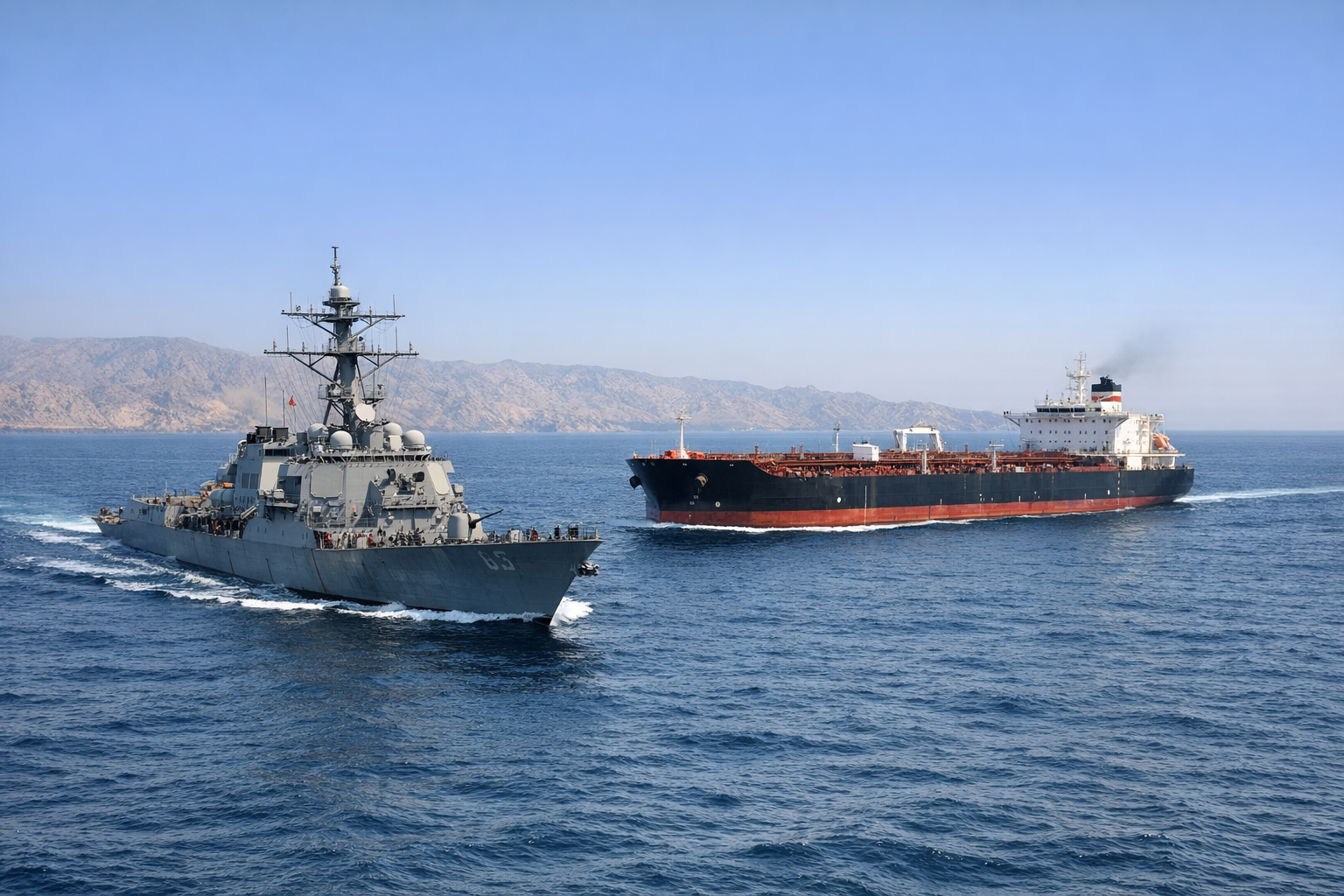
Washington Orders Hormuz Blockade After Talks Collapse, but Allies Hold Back
The United States moved on Monday to begin a naval blockade aimed at Iranian ports after high-stakes talks with Tehran in Islamabad broke down, sharply escalating a crisis in the Strait of Hormuz while exposing early cracks among Washington’s allies.
U.S. Central Command said the operation would target vessels entering or leaving Iranian ports and coastal areas, a step the Trump administration cast as a way to deny Iran control over one of the world’s most vital waterways without completely closing it to international traffic bound elsewhere. President Trump said the United States would prevent Iran from “policing” the strait and profiting from disruptions that have already rattled global shipping and energy markets.
The announcement marked a decisive turn from diplomacy to coercion after a weekend of failed negotiations centered on Iran’s nuclear program and broader American demands. Tehran responded with warnings that no port in the region would be safe if the blockade went ahead, raising fears that a measure described by Washington as limited could quickly widen into a broader confrontation.
The immediate diplomatic fallout underscored how difficult it may be for the United States to build a united front for the next phase of the crisis. Britain said it was not supporting the American blockade. Australia said it had not been asked to participate and called instead for a return to negotiations. France confirmed discussions over a broader multinational approach to restoring safe navigation, but Paris has also drawn a distinction between protecting shipping and joining an offensive operation.
A Narrower Measure in a Dangerous Waterway
The Strait of Hormuz, connecting the Persian Gulf to the Gulf of Oman and the Arabian Sea, remains the world’s most important oil chokepoint. A significant share of globally traded crude and liquefied natural gas passes through its narrow shipping lanes. Even a partial disruption can send shock waves through energy markets, insurance costs and military planning across the Middle East and beyond.
American officials said the blockade would be aimed at Iranian maritime commerce rather than all commercial transit through Hormuz. In practice, however, the distinction may prove difficult to sustain. Shipping companies, insurers and commodity traders often react less to formal legal lines than to the perceived risk of attack, seizure or miscalculation. Oil prices surged after Mr. Trump’s announcement, with U.S. crude rising about 8 percent and Brent roughly 7 percent, according to wire-service market reporting.
That market reaction reflected not only the possibility of supply disruptions, but also the larger question now hanging over the region: whether this is the start of a contained pressure campaign or the prelude to a wider conflict at sea.
Allies Emphasize Navigation, Not Escalation
The British and Australian responses were especially notable because both governments have previously joined maritime security efforts in the Gulf and have condemned Iranian interference with commercial shipping. Their hesitation suggested concern not over the principle of freedom of navigation, but over the form the American operation has taken.
Britain publicly distanced itself from the blockade, even as European leaders acknowledged that multinational consultations were under way. Australia’s prime minister, Anthony Albanese, called for the reopening of the strait and for Washington and Tehran to resume talks, while Australian defense officials said the country’s ships were capable of assisting if the government chose to do so.
That split reflects a distinction that has been taking shape for weeks among U.S. partners: support for securing passage through Hormuz, but deep reluctance to be drawn into a coercive campaign led by Washington against Iran itself.
In March, Britain hosted a joint statement backed by a wide group of countries, including Australia, France and Japan, condemning Iranian interference with shipping and expressing readiness to support appropriate efforts to ensure safe passage. But France has repeatedly signaled that it would not take part in a military operation to forcibly “open” the strait during active hostilities. President Emmanuel Macron has instead favored a later, more traditional escort-style mission once the fighting subsides. French and British officials are now discussing what has been described as a separate peaceful multinational mission to restore navigation.
That leaves Washington with a familiar but difficult problem: how to enforce a high-risk policy in a strategic waterway while key allies stop short of joining the most confrontational element of it.
From Islamabad to Enforcement
The blockade follows the collapse of more than 20 hours of talks in Pakistan that had been seen as one of the last realistic chances to stabilize the U.S.-Iran confrontation before the current cease-fire window expires on April 22. The negotiations reportedly foundered on the same issue that has plagued earlier rounds: Tehran’s refusal to accept American terms on its nuclear program, and Washington’s insistence that pressure would intensify without major concessions.
Mr. Trump coupled the blockade announcement with renewed threats against Iranian infrastructure, including water treatment facilities, power plants and bridges, language that further alarmed diplomats already concerned that the maritime step could outpace efforts at mediation.
Pakistan remains a possible channel for reviving negotiations, but the diplomatic space is shrinking. Once a blockade is in force, even a limited one, each interception at sea carries the risk of confrontation, misidentification or retaliation by Iranian forces or aligned groups.
Why This Matters Now
The crisis did not begin with Monday’s order. During the broader 2026 war, Iran had already disrupted shipping and effectively narrowed safe passage through Hormuz, prompting repeated international calls for freedom of navigation to be restored. But the American decision transforms that long-running struggle into something more direct: a campaign to control maritime access to Iranian ports in the world’s most strategically sensitive energy corridor.
That matters for three reasons.
First, it threatens global commerce. Even if ships bound for non-Iranian ports are formally allowed through, commercial operators may decide the risks are too high, especially if Iran retaliates or lays mines, deploys fast boats or targets regional infrastructure.
Second, it raises the stakes for allied politics. The United States may be able to act militarily on its own, but sustaining pressure, legitimizing interceptions and deterring Iranian countermeasures are all easier with a broad coalition. Early signs suggest that coalition is, at best, incomplete.
Third, it narrows the path back to diplomacy. The cease-fire deadline is approaching, and every day of military enforcement makes it harder for either side to climb down without appearing to yield.
For now, the blockade is described as limited, the allied consultations as exploratory, and the door to talks as still ajar. But in the Gulf, where distance is short and consequences are global, limited actions have a way of becoming larger ones.
Sources
Further reading and reporting used to add context:
- Iran threatens ports in Mideast as US to impose shipping blockade | AP News
- https://apnews.com/article/fafebd0711ab3b2a191ae23d4fe33350
- https://www.axios.com/2026/04/12/oil-prices-surge-trump-iran-blockade
- https://apnews.com/article/4b0b4b1f6df389bf2e17f47e55e13119
- https://apnews.com/article/1ac50d0be7baebeb727cce72be4c9cdc
- https://www.armyrecognition.com/news/navy-news/2026/u-s-orders-naval-blockade-of-iran-ports-to-halt-all-ships-entering-or-leaving
- https://www.theguardian.com/world/2026/apr/12/trump-says-us-will-blockade-strait-of-hormuz-as-iran-peace-talks-fail
- https://www.azernews.az/region/256960.html
- https://www.euronews.com/business/2026/04/03/french-and-south-korean-leaders-say-theyll-work-together-to-reopen-strait-of-hormuz
- https://theqldr.com.au/economy-business-and-finance/2026/04/13/mideast_aust-143/
- https://www.aljazeera.com/amp/news/2026/4/13/us-military-threatens-to-blockade-all-iranian-ports-starting-on-monday
- https://www.yahoo.com/news/articles/macron-france-never-part-operations-200137741.html
- https://www.aljazeera.com/news/2026/4/12/trump-announces-strait-of-hormuz-blockade-after-us-iran-peace-talks-end
- https://www.fxstreet.com/news/us-centcom-forces-will-start-blockading-iranian-ports-on-monday-10-am-et-202604122236/
- https://www.azernews.az/region/256956.html
- https://www.maritimegateway.com/us-centcom-enforces-blockade-of-all-iranian-ports-from-april-13/
- https://www.reddit.com/r/NSEbets/comments/1sjz8oh/centcom_update_us_will_not_impede_freedom_of/
- https://en.wikipedia.org/wiki/Naval_blockade_of_Iran
- https://en.wikipedia.org/wiki/2026_Kharg_Island_attack
- https://www.reddit.com/r/IndianStreetBets/comments/1sjyhiy/centcom_scales_back_blockade_now_targeting_only/
- https://www.reddit.com/r/IndianStockMarket/comments/1sjyl1t/centcom_scales_back_blockade_now_targeting_only/
- https://www.thedailybeast.com/trump-humiliated-as-key-us-ally-bails-on-his-new-war-plan/
- https://apnews.com/article/640e644b57df5c762ed9c57ef87b0427
- https://www.theguardian.com/politics/live/2026/apr/13/iran-war-keir-starmer-brexit-trump-strait-hormuz-oil-fuel-southport-latest-news-updates?page=with%3Ablock-69dcacb88f08dd483077527a
- https://www.aa.com.tr/en/asia-pacific/australia-has-not-received-request-to-join-trumps-blockade-of-strait-of-hormuz-albanese/3903294
- https://www.aa.com.tr/en/europe/uk-not-supporting-blockade-on-strait-of-hormuz-british-premier/3903689
- https://www.theguardian.com/world/live/2026/apr/13/iran-war-live-news-ceasefire-peace-talks-us-trump-strait-hormuz-blockade-middle-east-crisis-latest-updates?page=with%3Ablock-69dca6dc8f08ff62487f83f4
- https://www.euronews.com/2026/03/17/macron-says-france-could-join-hormuz-ship-escorts-once-situation-calmer
- https://www.theguardian.com/australia-news/live/2026/apr/13/australia-news-live-anthony-albanese-prime-minister-fuel-supply-diesel-oil-cost-of-living-inflation-budget-ntwnfb?filterKeyEvents=false&page=with%3Ablock-69dc0a508f08ff62487f80d5
- https://www.dawn.com/news/1976395/us-forces-to-begin-implementing-blockade-of-maritime-traffic-entering-exiting-iranian-ports-on-april-13-at-10am-et
- https://gtvnewshd.com/world/2026/04/13/australia-refuses-to-join-us-hormuz-blockade-plan-says-pm-albanese/
- https://www.aljazeera.com/news/2026/3/9/france-preparing-to-escort-ships-in-strait-of-hormuz-when-war-calms-macron
- https://www.elysee.fr/en/emmanuel-macron/2026/03/17/national-defence-and-security-council-on-the-situation-in-iran-and-the-middle-east
- https://en.wikipedia.org/wiki/United_Nations_Security_Council_Resolution_2817
- https://en.wikipedia.org/wiki/2026_Strait_of_Hormuz_campaign
- https://en.wikipedia.org/wiki/2026_Strait_of_Hormuz_crisis
- https://apnews.com/article/5c49b81c89bc694207db8e07ceba70ea
- https://www.bssnews.net/international/377388
- https://www.theguardian.com/world/live/2026/apr/02/middle-east-crisis-live-trump-prime-time-address-white-house-iran-war-israel-strait-hormuz?page=with%3Ablock-69ce931c8f08764b987c8f18
- https://www.independent.co.uk/bulletin/news/macron-trump-strait-hormuz-iran-war-b2951298.html
- https://www.thenationalnews.com/news/europe/2026/03/03/frances-macron-says-military-operation-to-reopen-strait-of-hormuz-is-on-table/
- https://news.cgtn.com/news/2026-04-13/US-to-enforce-maritime-blockade-on-Iranian-ports-as-talks-fail-1MiPSqFTfd6/p.html
- https://www.yahoo.com/news/articles/france-holds-back-hormuz-intervention-105932160.html
- https://houseofsaud.com/trump-blockade-coalition-does-not-exist/
- https://www.washingtonpost.com/world/2026/04/09/iran-europe-eu-hormuz-lebanon-macron-meloni-merz/46be8610-3429-11f1-b85b-2cd751275c1d_story.html
- https://www.rigzone.com/news/wire/uk_holds_strait_of_hormuz_meeting_with_40_countries-03-apr-2026-183369-article/
- Joint statement from the leaders of the United Kingdom, France, Germany, Italy, the Netherlands, Japan, Canada and others on the Strait of Hormuz: 19 March 2026 – GOV.UK
- https://www.gov.uk/government/news/statement-on-the-conflict-in-the-middle-east-20-march-2026
- https://x.com/burarimachi/status/2029551333662204349
- https://x.com/tcsnoticias/status/2028144263096058047
- https://find-and-update.company-information.service.gov.uk/company/13221172/persons-with-significant-control
- https://www.gov.uk/government/speeches/foreign-secretary-statement-on-the-middle-east-conflict-17-march
- https://www.centcom.mil/Portals/6/Documents/Publications/260306EpicFuryFactSheet7Days.pdf
- https://www.centcom.mil/MEDIA/PRESS-RELEASES/Press-Release-View/Article/4332632/iranian-forces-illegally-seize-commercial-tanker-in-international-waters/
- https://assets.publishing.service.gov.uk/media/5f9c1e99e90e07041bfdbd8f/Iran_Toponymic_Factfile-quick_update_Jan2020.pdf
- https://assets.publishing.service.gov.uk/media/650462d86771b9000dfdab6d/PCGN_Toponymic_Factfile-UAE.pdf
- https://www.gov.uk/government/publications/strait-of-hormuz-incident-uk-government-letter-to-un-security-council-president/letter-to-the-united-nations-security-council-president-about-the-strait-of-hormuz-incident
- https://x.com/CENTCOM/status/2039145115470430588
- https://www.gov.uk/government/news/uk-joins-international-maritime-security-mission-in-the-gulf
- https://marketing.x.com/content/dam/marketing-twitter/apac/ja/collections/moment-calendar/q32025/20250326_Japan-Moment-Calendar-25Q3.pdf
- https://www.gov.uk/government/publications/g7-foreign-ministers-meeting-communiques-april-2024/g7-foreign-ministers-meeting-communique-capri-19-april-2024-situation-in-the-middle-east
- https://x.com/IranIntl_En/status/2034607498557083775
- https://assets.publishing.service.gov.uk/government/uploads/system/uploads/attachment_data/file/1100525/national-strategy-for-maritime-security-web-version.pdf
- https://www.centcom.mil/Portals/6/Documents/Transcripts/HASCVotel20180227.pdf