
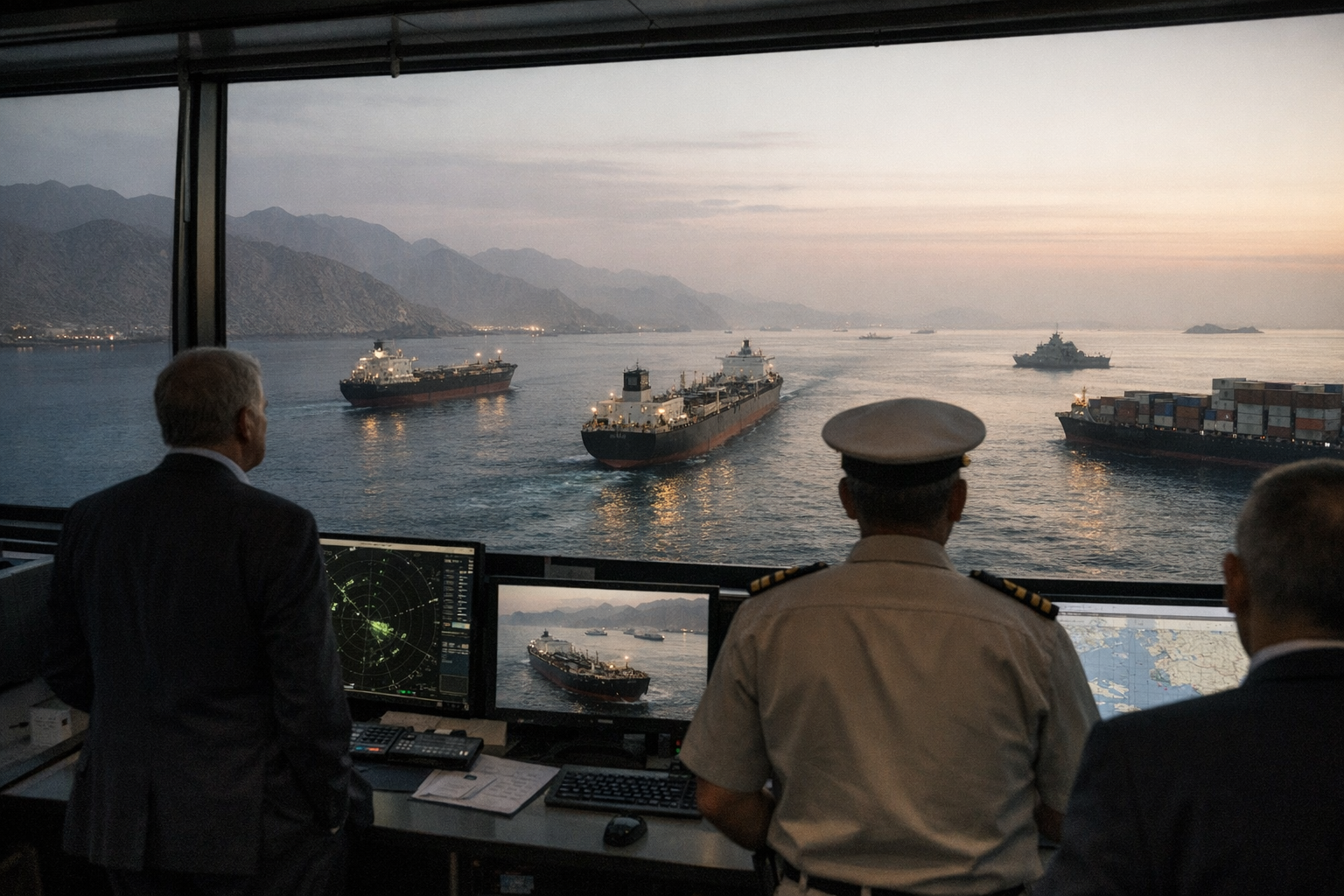
Talks Break Down as Strait of Hormuz Crisis Ripples Far Beyond the Gulf
The highest-level direct talks between the United States and Iran in decades ended in Islamabad on Saturday without a deal, dimming hopes that a fragile ceasefire could be turned into a broader settlement and leaving one of the world’s most important energy chokepoints dangerously unresolved.
After a marathon 21-hour negotiating session in Pakistan’s capital, the two sides emerged divided over conditions that had been visible even before the meeting began: Iran’s insistence on movement toward a ceasefire in Lebanon, the release of frozen Iranian assets, and disputed terms over control and transit through the Strait of Hormuz, where shipping remains heavily disrupted.
The talks had begun under the shadow of a two-week ceasefire that took effect on April 7 after weeks of war. But with no agreement in hand and little public clarity about what follows when that ceasefire expires on April 22, diplomats and governments are now racing to prevent the conflict from sliding back into open escalation.
What made the breakdown especially consequential was not only the symbolism of the meeting itself — American and Iranian officials sitting face to face at such a senior level for the first time since the 1979 revolution — but the stakes attached to it. The Strait of Hormuz, a narrow passage linking the Persian Gulf to the open ocean, normally carries about a fifth of the world’s traded oil and gas. Continued disruption there has already pushed up pressure on fuel markets, shipping routes and household costs far from the battlefield.
A Ceasefire With No Clear Path Forward
The failure in Islamabad leaves a basic question unanswered: whether the ceasefire is merely a pause or the beginning of a political process.
American officials said Iran had declined to accept U.S. terms, including demands tied to its nuclear program. Iranian officials, for their part, had made clear in advance that negotiations could not proceed on Washington’s preferred timeline or terms alone. Tehran’s leadership linked any meaningful diplomacy to developments in Lebanon and to the release of blocked funds, underscoring how the war has fused multiple regional fronts into a single negotiating arena.
That complexity has made even limited progress elusive. The war has already caused heavy casualties and extensive infrastructure damage across Iran, Lebanon, Israel and parts of the Gulf. The Islamabad meetings were meant to stabilize at least one part of that widening crisis. Instead, they exposed how far apart the sides remain on the core question of what a postwar order would look like — and who would get to set the rules in Hormuz.
Iran has floated ideas that would effectively formalize a larger role for itself in regulating passage through the strait, including transit fees, a proposal that has alarmed maritime powers and importing nations alike. British officials are now preparing a multinational meeting next week focused on restoring freedom of navigation and opposing any Iranian toll regime.
Allies Urge Diplomacy, Brace for Economic Fallout
The collapse of the talks prompted swift expressions of concern from American allies, many of which have been trying to prevent a regional war from hardening into a prolonged global economic shock.
In Australia, Foreign Minister Penny Wong called the failed diplomacy “disappointing” and urged the two sides to return quickly to negotiations, saying the priority must be to preserve the ceasefire. The Albanese government has also been weighing additional relief for households and businesses as higher fuel costs feed into broader cost-of-living pressures. Australian officials have warned that even if shipping through Hormuz begins to normalize, the effects on prices and supply chains could linger.
In Britain, the political reaction mixed criticism of Washington’s rhetoric with concern about the consequences of diplomatic failure. Wes Streeting, the health secretary, described President Trump’s language on Iran as inflammatory and said renewed negotiations were in everyone’s interest. At the same time, the war has sharpened debate in Britain over the role of U.S. military facilities on British soil, drawing fresh attention to the extent of American operational reach from bases across the country.
Those concerns are not abstract. In Britain, the conflict’s aftershocks have been felt in rising borrowing costs and weakening confidence, with estate agents and homeowners reporting a chill in the housing market as financial nerves spread from energy prices into mortgage rates and consumer sentiment.
The Global Effects Spread Unevenly
The economic reverberations of the war have reached well beyond oil-importing countries. Coverage of the conflict’s financial fallout has shown how investors, unnerved by volatility in traditional safe havens, have searched for stability in unexpected places. Chinese assets, for instance, have benefited in part from Beijing’s yearslong effort to build resilience against an energy shock, offering a contrast to more exposed economies now grappling with fuel and shipping disruptions.
In the Middle East itself, attention has also turned to the war’s less immediate but potentially lasting damage to the region’s technology sector. Investors and founders are confronting reputational risk, supply chain complications and doubts about whether international capital will remain as willing to back startups in a region now seen as more volatile. Even with a ceasefire in place, many executives are preparing for a period of hesitation rather than recovery.
That may prove to be one of the conflict’s defining features: even if missile fire subsides, the economic and political consequences are likely to persist.
Why the Next Few Days Matter
With the ceasefire set to expire on April 22, the absence of a deal in Islamabad has made the coming days unusually important. Diplomats will be watching for signs of back-channel contact, any movement on frozen assets or Lebanon, and whether maritime traffic in Hormuz can be partially restored without a formal settlement.
But the larger uncertainty is whether either side now sees advantage in compromise.
For Washington, the talks were a chance to translate military pressure into diplomatic terms. For Tehran, they were an opportunity to use the leverage created by Hormuz and the wider regional conflict to secure concessions it has long sought. The fact that both came away empty-handed suggests that the ceasefire, while real, may still be too thin to bear the weight placed on it.
And so the world is left in a familiar but increasingly dangerous position: war paused, commerce constricted, diplomacy unfinished, and the narrow waterway at the center of it all still unsettled.
Sources
Further reading and reporting used to add context:
- https://apnews.com/article/a8a0d22918fc3fb30bc3abf1cd5c5a13
- https://apnews.com/article/da12451198d54f63926d06983b262f98
- https://apnews.com/article/2be904aee3f804892336730279e054b9
- https://apnews.com/article/00bf6d9a8f19565dbcd437bc6bf09ea0
- https://apnews.com/article/87b62d531d3290fde5255077179bd3b5
- https://www.theguardian.com/australia-news/2026/apr/12/penny-wong-calls-failed-peace-talks-between-us-and-iran-disappointing-and-urges-resumption
- https://www.theguardian.com/australia-news/live/2026/apr/12/petrol-prices-save-fuel-government-ad-campaign-anthony-albanese-singapore-labor-coalition-ntwnfb?filterKeyEvents=false&page=with%3Ablock-69dad0b18f08dd48307747e5
- https://www.straitstimes.com/world/middle-east/iran-speaker-demands-lebanon-truce-release-of-assets-before-negotiations
- https://en.wikipedia.org/wiki/Islamabad_Talks
- https://www.aljazeera.com/news/2026/4/1/uk-to-host-meeting-of-35-countries-on-reopening-strait-of-hormuz
- https://www.aljazeera.com/news/2026/4/10/will-israel-and-lebanon-start-ceasefire-talks
- https://theqldr.com.au/politics/2026/03/04/mideast_aust-126/
- https://www.investing.com/news/world-news/iran-wants-lebanon-included-in-any-ceasefire-sources-say-4580856
- https://en.wikipedia.org/wiki/2026_Iran_war_ceasefire
- https://www.latimes.com/politics/story/2026-04-09/iran-ceasefire-trump-lebanon
- https://en.wikipedia.org/wiki/2025%E2%80%932026_Iran%E2%80%93United_States_negotiations
- https://en.wikipedia.org/wiki/2026_Iran_war
- https://www.afr.com/politics/federal/iran-embassy-evacuation-driven-by-reprisal-fears-says-wong-20250623-p5m9gk
- https://www.theweek.in/wire-updates/international/2026/04/07/uk-hosts-strait-of-hormuz-military-planning-conference.amp.html
- https://www.theguardian.com/world/live/2026/apr/11/middle-east-crisis-live-iranian-officials-arrive-in-islamabad-for-conditional-peace-talks-with-us?page=with%3Ablock-69dacd7d8f08a86a0e56400c
- https://apnews.com/article/3ef5dcd907122922db714d318c35317e
- https://apnews.com/article/54306933e129bf9a03ae620f87f5cde0
- https://apnews.com/article/640e644b57df5c762ed9c57ef87b0427
- https://apnews.com/article/4b464b08aaf7220899526c0c6da4317d
- https://apnews.com/article/5c49b81c89bc694207db8e07ceba70ea
- https://apnews.com/article/421ee64fdc9a5c26460df8119c7d1b3f
- https://en.wikipedia.org/wiki/2026_Iran_war_fuel_crisis
- https://en.wikipedia.org/wiki/Economic_impact_of_the_2026_Iran_war
- https://en.wikipedia.org/wiki/2026_Kharg_Island_attack
- https://en.wikipedia.org/wiki/2026_Strait_of_Hormuz_crisis
- https://en.wikipedia.org/wiki/2026_South_Pars_field_attack
- https://en.wikipedia.org/wiki/2026_Philippine_energy_crisis
- https://www.washingtonpost.com/business/2026/03/13/china-winner-iran-energy-oil/
- https://www.washingtonpost.com/world/2026/04/06/iran-war-china-renewable-energy//
- https://www.cbsnews.com/amp/news/china-economic-impact-iran-war-oil/
- https://techstartups.com/2026/04/06/top-tech-news-today-april-6-2026/
- https://www.cio.com/article/3632028/top-tech-trends-powering-the-middle-easts-digital-evolution-by-2025.html
- https://www.marsh.com/en/industries/technology/insights/tech-risk-study.html
- https://www.china-briefing.com/china-outbound-news/middle-east-tech-2026-5-non-ai-trends-businesses
- https://www.csmonitor.com/World/Asia-Pacific/2026/0403/China-Iran-green-energy-oil-crisis
- https://www.cnbc.com/2025/04/21/dropshipping-businesses-china-under-pressure-trumps-tariffs.html
- https://status.technologyreview.com/811204/2026/04
- https://www.cnbc.com/2025/02/21/cnbc-daily-open-alibaba-shares-jump-amazons-revenue-beats-walmart.html
- https://www.cnbc.com/2019/10/02/35-billion-private-equity-firm-is-bullish-on-china-despite-trade-war.html
- https://forms.technologyreview.com/leadership-summit/
- https://www.cnbc.com/2022/03/27/hoping-to-attract-chinese-investment-taliban-now-preserve-buddhas.html
- https://www.cnbc.com/2015/07/17/the-worlds-biggest-sovereign-wealth-funds.html
- https://fm.cnbc.com/applications/cnbc.com/resources/editorialfiles/2025/04/21/fullsurveyliesmanhere.pdf
- https://www.cnbc.com/2025/08/29/investing-in-space-made-in-russia.html
- https://www.cnbc.com/2019/05/30/a-single-oil-tanker-could-become-a-factor-in-both-the-china-trade-war-and-iran-tensions.html
- https://www.cnbc.com/2020/02/25/coronavirus-wipes-out-1point7-trillion-in-us-stock-market-value-in-two-days.html
- https://www.cnbc.com/2022/03/30/chinas-wealthy-moving-money-to-singapore-amid-common-prosperity-push.html
- https://www.cnbc.com/2013/11/11/saudi-arabia-chases-closer-ties-with-china-amid-us-tension.html
- https://fm.cnbc.com/applications/cnbc.com/resources/editorialfiles/2025/03/26/USTR_SUBMISSION.pdf
- https://fm.cnbc.com/applications/cnbc.com/resources/editorialfiles/2025/04/07/2024_NTE_Report_1.pdf
- https://fm.cnbc.com/applications/cnbc.com/resources/editorialfiles/2013/03/11/GE_AR12_Letter.pdf
- https://fm.cnbc.com/applications/cnbc.com/resources/editorialfiles/2013/04/05/CNBC%20ETF%20Advisory%20Council%20–%20Investment%20Guidelines%20Statement.pdf
- https://fm.cnbc.com/applications/cnbc.com/resources/editorialfiles/2023/07/20/cnbceconomicsurvey.pdf
- US and Iran end ceasefire talks without agreement and blaming each other
- The Latest: US Vice President JD Vance says talks with Iran ended without an agreement
- US and Iran end 21-hour ceasefire talks without agreement before Vance departs Pakistan