
China Steps Into the Iran Crisis, Quietly, as Hormuz Security Becomes a Global Priority
As President Trump and President Xi Jinping emerged from a closely watched summit in Beijing, the sharpest public disagreements centered on Taiwan and strategic rivalry. But behind the scenes, a different issue appeared to gain unusual prominence: the war involving Iran and the fate of the Strait of Hormuz.
American officials said after the talks that China had agreed to work quietly to help reopen the vital waterway and to restrain support for Tehran, suggesting that Beijing may be assuming a more consequential diplomatic role in one of the world’s most dangerous crises.
The account offered by Washington was notable not only for what it said about the summit itself, but for what it implied about China’s shifting place in the conflict. For months, the Trump administration has pressed Beijing to use its economic and political ties with Iran to reduce the risk of a wider war. Now, U.S. officials are presenting China as one of the few outside powers with enough influence in Tehran to matter.
Treasury Secretary Scott Bessent said China would work behind the scenes to help restore access through Hormuz, while other U.S. officials described Beijing as prepared to play a quiet but constructive part in limiting escalation. Mr. Trump said Xi had also pledged “strongly” not to send weapons to Iran, though that assertion was not publicly confirmed by Beijing.
China’s own public statements were more restrained. Its Foreign Ministry said the conflict should end quickly and that China would play a “constructive role,” language consistent with Beijing’s recent calls for a cease-fire, political dialogue and secure shipping lanes. But Chinese readouts stopped short of endorsing the more specific claims made by the White House.
A Chokepoint With Global Consequences
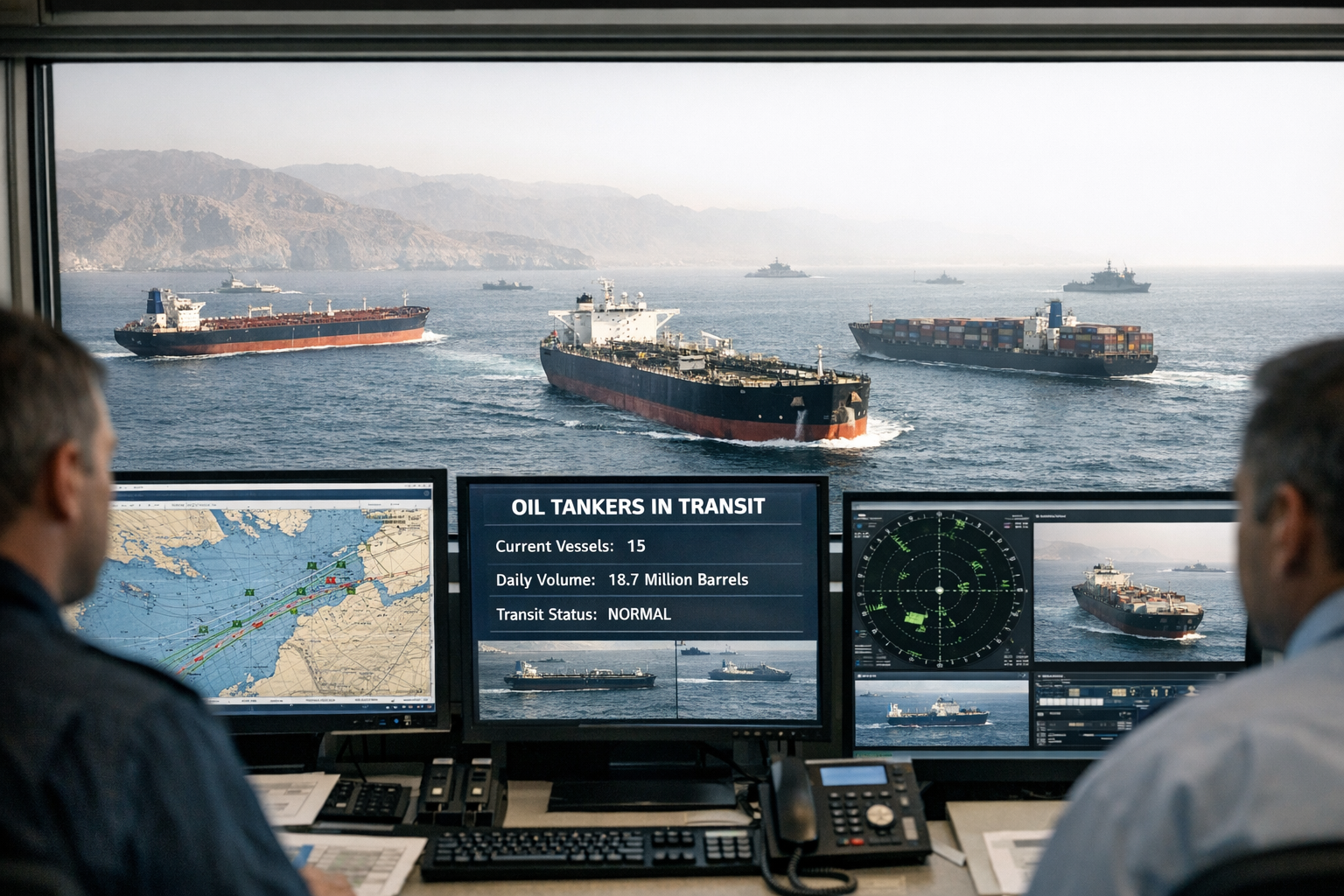
The Strait of Hormuz has long been one of the world’s most sensitive maritime bottlenecks, carrying a large share of globally traded oil and liquefied natural gas. Any prolonged disruption there reverberates quickly through energy prices, shipping insurance, supply chains and inflation.
For China, the stakes are especially high. It is one of the world’s largest energy importers and has a direct interest in preventing the strait from becoming a zone of chronic insecurity, whether through military confrontation, harassment of shipping or new tolls and restrictions. A prolonged closure or even intermittent disruption would hit Asian importers first and could deepen global economic strains at a moment when major economies are already navigating trade frictions and slowing growth.
That is one reason the summit’s Middle East dimension stood out. While U.S.-China meetings are usually dominated by tariffs, technology controls and military tension in the Indo-Pacific, Hormuz offered a rare issue on which both capitals have overlapping interests. Washington wants to isolate Iran and stabilize energy markets; Beijing wants to protect commerce and avoid a regional shock that could threaten its own economy.
China’s Leverage — and Its Limits
China’s ties with Iran have often been described in the West as giving Beijing unique leverage. China is an important buyer of Iranian oil and has maintained relations with Tehran even as the United States sought to tighten pressure. American officials have increasingly argued that, because of those ties, Beijing is among the few governments capable of delivering messages Iran cannot easily ignore.
Yet how much leverage China is willing to use — and to what end — remains unclear.
Beijing has tried to balance several interests at once: preserving its relationship with Iran, presenting itself as a force for stability, and avoiding a rupture with Gulf Arab states that are also critical economic partners. It has generally favored broad calls for de-escalation over public pressure campaigns. That approach allows China to preserve diplomatic flexibility, but it also makes its commitments hard to measure.
There is, at least for now, no detailed public agreement laying out what China promised at the summit or how any cooperation over Iran would work in practice. Nor is it clear whether Beijing’s role will be limited to private messages urging restraint, or whether it could evolve into something more ambitious, such as mediation connected to cease-fire efforts or even renewed nuclear diplomacy.
A Pragmatic Opening in a Fraught Relationship
The summit underscored how compartmentalized the U.S.-China relationship has become. Even as Xi warned of “clashes and even conflicts” over Taiwan — a reminder of the depth of the rivalry — both sides appeared willing to carve out space for limited cooperation where their interests converge.
That does not amount to a strategic thaw. The dispute over Taiwan remains the most combustible issue in the bilateral relationship, and distrust runs deeply across trade, security and technology. But the Iran crisis has created a pragmatic opening: the United States needs channels into Tehran, and China needs the sea lanes open.
If Beijing follows through, even discreetly, it could help reduce pressure on global energy markets and provide Washington with an indirect means of influencing Iranian calculations. If it does not, the episode may instead highlight the limits of China’s willingness to convert economic ties into geopolitical pressure.
For now, the significance of the summit lies less in any announced breakthrough than in the acknowledgment, by both sides in different ways, that China can no longer be treated as a bystander in the Middle East crisis. As the fighting has expanded and Hormuz has become a symbol of wider economic vulnerability, Beijing’s role has moved closer to the center of the diplomacy.
Sources
Further reading and reporting used to add context:
- https://www.axios.com/2026/05/15/trump-xi-china-summit
- https://apnews.com/article/7a10166d870327085b0ca4a06080c824
- https://www.theatlantic.com/national-security/2026/05/china-trump-summit-xi/687166/?utm_source=apple_news
- https://apnews.com/article/e7a3cdf161c608de152ac1c6e5755452
- https://www.thedailybeast.com/hot-mic-captures-awkward-f-bomb-clash-at-trumps-summit/
- https://apnews.com/article/5d26e536240b881b06c26cd2be9ba632
- https://www.theguardian.com/world/2026/may/14/trump-xi-jinping-meet-beijing-ahead-of-summit-trade-iran-war-ai-talks
- https://www.bloomberg.com/news/articles/2026-04-15/trump-says-he-exchanged-letters-with-xi-over-iran-war
- https://www.investing.com/news/commodities-news/trump-says-he-and-chinas-xi-agree-iran-cannot-have-nuclear-weapons-4691149
- https://www.aljazeera.com/news/2026/5/14/trump-xi-discuss-strait-of-hormuz-as-chinese-vessels-transit-key-waterway
- https://www.scmp.com/news/us/article/3352414/us-bessent-urges-china-help-open-strait-hormuz
- https://www.theguardian.com/us-news/2026/may/14/trump-news-at-a-glance-latest-updates-today
- https://www.theguardian.com/world/2026/may/15/trump-china-visit-iran-agreement-xi-jinping-elusive
- https://www.investing.com/news/commodities-news/trump-says-he-asked-chinas-xi-not-to-give-iran-weapons-4614865
- https://en.sedaily.com/international/2026/05/15/china-calls-for-hormuz-reopening-in-first-mention-after-xi
- https://www.cbsnews.com/news/trump-xi-jinping-meeting-china-beijing-trade-tariffs-taiwan-iran/
- https://www.abc.net.au/news/2026-05-15/donald-trump-xi-jinping-meeting-china-beijing-live-blog/106683246
- https://koreajoongangdaily.joins.com/news/2026-05-14/world/world/Trump-Xi-agree-on-open-Hormuz-and-nonnuclear-Iran-discuss-North-Korea/2592615
- https://en.wikipedia.org/wiki/2026_Strait_of_Hormuz_crisis
- https://en.wikipedia.org/wiki/2026_Strait_of_Hormuz_campaign
- https://en.wikipedia.org/wiki/2026_state_visit_by_Donald_Trump_to_China
- https://en.wikipedia.org/wiki/Strait_of_Hormuz
- https://www.mfa.gov.cn/eng/xw/fyrbt/202605/t20260515_11910984.html
- https://www.mfa.gov.cn/mfa_eng/xw/fyrbt/202604/t20260415_11892477.html
- https://www.mfa.gov.cn/eng/xw/fyrbt/202605/t20260515_11910982.html
- https://www.mfa.gov.cn/esp/zxxx/202605/t20260514_11910657.html
- https://www.mfa.gov.cn/mfa_eng/xw/wsrc/202605/t20260511_11908077.html
- https://www.mfa.gov.cn/mfa_eng/wjbzhd/202605/t20260507_11905849.html
- https://www.mfa.gov.cn/mfa_eng/xw/zyxw/202602/t20260205_11851262.html
- https://www.mfa.gov.cn/web/wjdt_674879/zcjd/202605/t20260515_11910972.shtml
- https://www.mfa.gov.cn/eng/xw/fyrbt/lxjzh/202605/t20260514_11910614.html
- https://www.mfa.gov.cn/eng/xw/fyrbt/202604/t20260414_11891740.html
- https://www.mfa.gov.cn/eng/xw/zyxw/202509/t20250902_11700835.html
- https://www.mfa.gov.cn/eng/xw/fyrbt/202604/t20260413_11891047.html
- https://www.mfa.gov.cn/mfa_eng/zy/gb/202512/P020251206007573144502.pdf
- https://www.mfa.gov.cn/mfa_eng/xw/zyxw/202512/P020251206009356439484.pdf
- https://www.mfa.gov.cn/eng/wjb/wjbz/jh/202405/P020240527566254002483.pdf
- https://www.mfa.gov.cn/eng/xw/zyjh/202405/P020240530531094372225.pdf
- https://www.mfa.gov.cn/eng/wjb/wjbz/jh/202405/P020240527566221658161.pdf
- https://apnews.com/article/48b0ca751712ce473ffcd207997928af
- https://apnews.com/article/df55982886341af1d0645a3287d65abe
- https://www.tbsnews.net/world/china-will-do-what-it-can-reopen-strait-hormuz-bessent-says-1439316
- https://www.al-monitor.com/originals/2026/05/china-will-do-what-it-can-reopen-strait-hormuz-bessent-says
- https://www.internazionale.it/ultime-notizie-reuters/2026/05/15/china-wants-strait-of-hormuz-open-without-restrictions-ustr-greer-tells-bloomberg-news
- https://927thevan.com/2026/05/14/china-wants-strait-of-hormuz-open-without-restrictions-ustr-greer-tells-bloomberg-news/
- https://english.aaj.tv/news/330458971/china-will-do-what-it-can-to-reopen-strait-of-hormuz-bessent-says
- https://www.internazionale.it/ultime-notizie-reuters/2026/05/14/china-will-do-what-it-can-to-reopen-strait-of-hormuz-bessent-says
- https://www.streetinsider.com/Reuters/China%2Bwill%2Bdo%2Bwhat%2Bit%2Bcan%2Bto%2Breopen%2BStrait%2Bof%2BHormuz%2C%2BBessent%2Bsays/26489443.html
- https://www.investing.com/news/commodities-news/trump-says-chinas-xi-is-very-happy-about-strait-of-hormuz-reopening-4622093
- https://www.marketscreener.com/news/china-wants-strait-of-hormuz-open-without-restrictions-ustr-greer-tells-bloomberg-news-ce7f5bd2db8bf020
- https://www.marketscreener.com/news/china-wants-strait-of-hormuz-open-free-of-curbs-ustr-greer-tells-bloomberg-news-ce7f5bd2db80f022
- https://www.aol.com/articles/china-reopen-strait-hormuz-bessent-102844000.html
- https://www.axios.com/2026/03/16/trump-iran-war-financial-times-oil-iran-china-strait-hormuz
- https://www.lemonde.fr/en/international/article/2026/05/13/xi-set-to-welcome-trump-from-a-position-of-strength_6753387_4.html
- https://www.reddit.com/r/PlanetNewsPulse/comments/1td9aix/china_will_work_behind_the_scenes_to_help_reopen/
- https://www.worldoil.com/news/2026/5/12/eia-launches-new-oil-lng-chokepoint-datasets-amid-hormuz-crisis/
- https://www.iea.org/about/oil-security-and-emergency-response/strait-of-hormuz?ftag=YHF4eb9d17
- https://www.visualcapitalist.com/mapped-where-china-gets-its-oil/
- https://www.iranintl.com/en/202604302326
- https://www.eia.gov/outlooks/steo/report/energysecurity/article.php
- https://www.eia.gov/todayinenergy/detail.php?id=61002&os=f
- https://www.aa.com.tr/en/us-israel-iran-war/oil-flows-through-strait-of-hormuz-fall-nearly-30-in-first-quarter-eia/3936619
- https://www.china-briefing.com/news/hormuz-disruptions-china-energy-security-supply-chain/
- https://www.visualcapitalist.com/charted-oil-trade-through-the-strait-of-hormuz-by-country/
- https://www.lemonde.fr/en/economy/article/2026/03/03/asian-oil-imports-threatened-as-traffic-halts-in-the-strait-of-hormuz_6751055_19.html
- https://theworlddata.com/strait-of-hormuz-statistics/
- https://factcheck.afp.com/doc.afp.com.A4C83ZQ
- https://www.axios.com/2026/04/23/china-oil-stockpile-iran-war
- https://www.davemanuel.com/2026/03/28/oil-flows-strait-of-hormuz/
- https://www.lemonde.fr/en/international/article/2026/03/02/middle-east-turmoil-constrains-china-a-crucial-backer-of-iran-and-major-buyer-of-its-oil_6751021_4.html
- https://en.wikipedia.org/wiki/China_in_the_2026_Iran_war
- https://www.lemonde.fr/en/international/article/2026/03/08/china-tries-to-unblock-its-shipping-in-the-strait-of-hormuz_6751215_4.html
- https://apnews.com/article/82a9acb473837f1bf7a821d0c3f95205
- https://www.stifel.com/Newsletters/AdGraphics/InSight/Economic-Insight/2026/EI_032326.pdf
- The Latest: US-China summit ends with Xi and Trump claiming progress but differences remain
- China wants Strait of Hormuz open free of curbs, USTR Greer tells Bloomberg News | MarketScreener
- Trump downplays differences with China's Xi over Iran as he heads to Beijing for high-stakes summit