
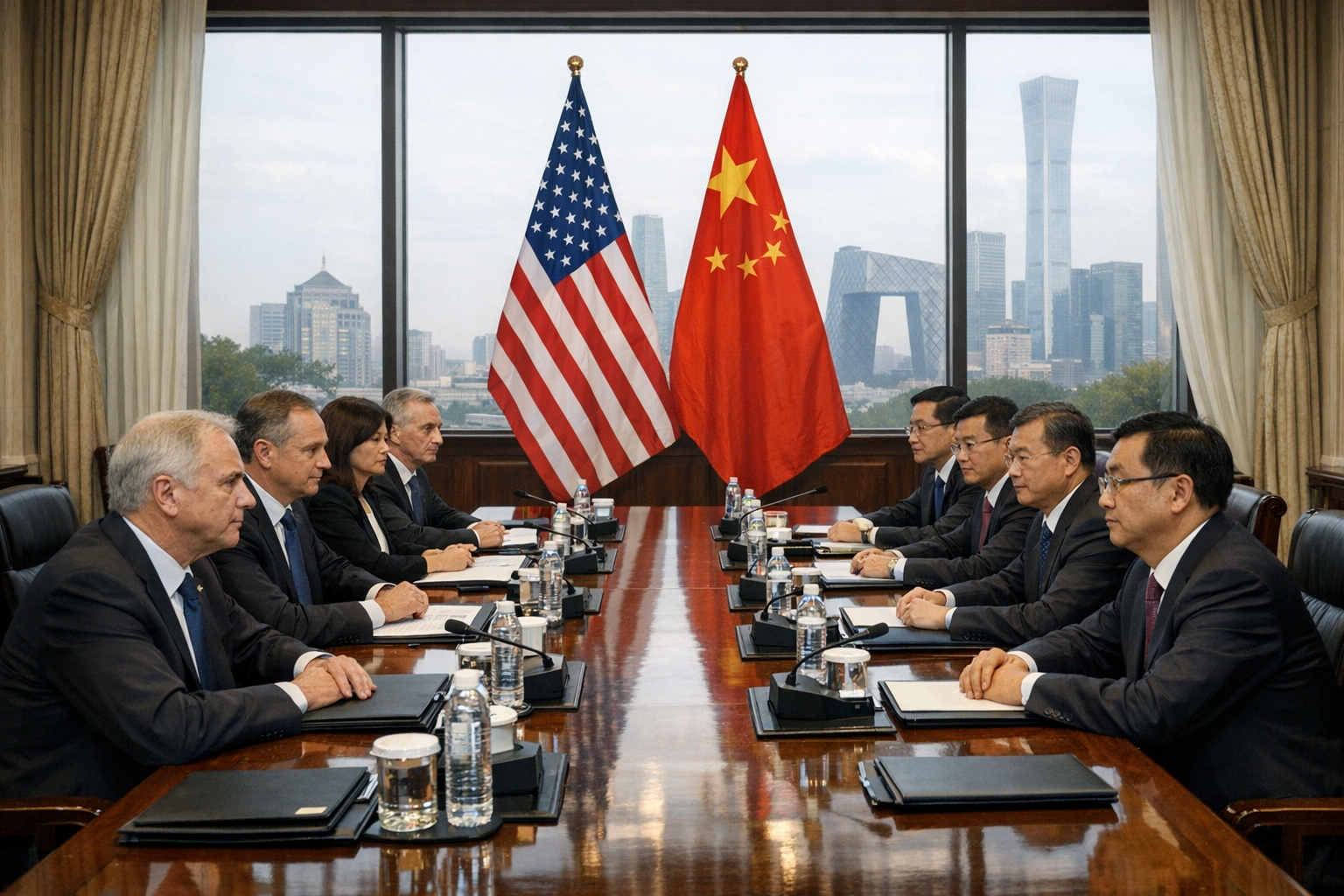
Trump Leaves Beijing Claiming Big Wins, but the Hardest Issues Remain
President Trump departed Beijing on Friday after a two-day summit with China’s leader, Xi Jinping, declaring that the two sides had struck “fantastic” trade understandings, including Chinese purchases of American crude oil and an order for 200 Boeing aircraft.
The visit, wrapped in ceremonial warmth and optimistic language from both governments, offered a temporary lowering of the temperature in one of the world’s most consequential and volatile relationships. Yet by the end of the summit, the central questions that have driven years of friction between Washington and Beijing — over Taiwan, technology restrictions, tariffs and regional security — remained largely unsettled.
Mr. Trump cast the meetings as a breakthrough. He said China would buy U.S. oil to help satisfy what he called its “insatiable appetite” for energy, and he said Beijing had agreed to order 200 Boeing jets. Oil prices rose after his remarks, reflecting market hopes that renewed Chinese demand for American crude could offer support to exporters and ease some pressure in energy markets already shaken by the war involving Iran and fears over shipping through the Strait of Hormuz.
But China’s official account of the summit was notably more restrained. Beijing said the two sides had achieved broadly positive trade results and adopted a new framework of “constructive strategic stability,” language suggesting a mutual desire to keep rivalry from spiraling. It did not publicly confirm the oil and Boeing commitments in the same detailed terms described by Mr. Trump.
That gap between presidential claims and official documentation underscored the main uncertainty hanging over the summit: whether the commercial promises amount to enforceable agreements or are instead aspirational political statements intended to show momentum.
Markets Hear Relief, Even if Details Are Sparse
Even tentative follow-through would be meaningful. For Boeing, a large Chinese aircraft order would represent a major vote of confidence at a time when access to the Chinese market remains strategically important for the American aerospace industry. For U.S. energy producers, a new stream of Chinese crude purchases would offer another outlet for exports as global oil flows are being rerouted by conflict in the Middle East.
Investors appeared to take the summit as modestly reassuring, at least in the short run. The prospect of fresh trade deals suggested that Washington and Beijing may be seeking to prevent economic tensions from worsening further after a year of renewed trade strain.
American officials also pointed to possible commitments involving agriculture, energy and other purchases, though the White House had not released full terms by the time Mr. Trump left Beijing. That absence of detail has become familiar in U.S.-China diplomacy, where headline numbers often arrive well before the terms, timing and enforcement mechanisms needed to judge their significance.
Taiwan Again Emerges as the Sharpest Divide
If trade supplied the summit’s most marketable announcements, Taiwan remained its most sensitive issue.
Chinese officials made clear that Beijing still sees Taiwan as the central fault line in the relationship. Xi warned that mishandling the issue could lead to “clashes and even conflicts,” a pointed reminder that even during a summit designed to project stability, the two powers remain far apart on the question most likely to trigger a major crisis.
For Washington, managing that tension without appearing to concede ground has become increasingly difficult. Mr. Trump’s public comments after the talks emphasized economic gains and broader goodwill rather than Taiwan, a silence that some analysts interpreted less as resolution than as an effort to avoid inflaming the issue at a delicate moment.
The divergence was telling. Beijing used the summit to reinforce its red lines. Washington used it to highlight deals. Neither side suggested that the underlying dispute had narrowed.
Iran and Hormuz Add Urgency
The summit unfolded against the backdrop of the Iran war, which has rattled energy markets and sharpened concerns about the security of the Strait of Hormuz, one of the world’s most important oil chokepoints.
Mr. Trump pressed Mr. Xi on keeping Hormuz open and on Iran’s nuclear issue, according to the research and public comments surrounding the trip. Both U.S. and Chinese accounts indicated support for uninterrupted passage through the strait. For China, which depends heavily on imported energy, freedom of navigation there is a matter of economic necessity. For the United States, it is a strategic priority with immediate consequences for global oil prices and inflation.
Still, another unresolved question is how far Beijing is willing to go beyond general statements of support. U.S. officials suggested they hoped China would use its ties with Tehran to discourage material support for escalation. Whether Beijing will exert meaningful pressure on Iran, rather than simply advocate stability in principle, remains unclear.
A Thaw, Not a Settlement
The Beijing summit appears to have achieved something real, if limited: it lowered the immediate risk of a new downward spiral in U.S.-China relations. After months of strain, both governments had reason to project calm. Mr. Trump wanted tangible economic wins. Mr. Xi wanted to show that China could manage competition with Washington without appearing weak.
But the summit did not resolve the structural disputes that define the relationship. Tariffs remain a source of friction. U.S. semiconductor export controls — especially on advanced artificial intelligence chips — were not meaningfully addressed in the leaders’ talks, according to American officials. Taiwan remains deeply contentious. And the broader strategic rivalry between the two countries has only intensified.
For now, the significance of the Beijing meeting lies less in any one announced purchase than in the possibility of a pause: a chance to stabilize ties, reassure markets and create room for further negotiation. Whether that pause develops into something more durable will depend on what happens after the pageantry ends — whether promised purchases are actually made, whether military and political tensions are contained, and whether either side is prepared to compromise on the disputes that matter most.
Until then, the summit’s biggest achievements may be its optics: warm handshakes, hopeful language and claims of major deals, set against a relationship whose deepest problems remain very much in place.
Sources
Further reading and reporting used to add context:
- https://apnews.com/article/e7a3cdf161c608de152ac1c6e5755452
- https://apnews.com/article/7a10166d870327085b0ca4a06080c824
- https://www.foxnews.com/video/6395548740112
- https://www.foxbusiness.com/fox-news-world/trump-announces-china-buy-200-boeing-jets-after-xi-talks-a-lot-jobs.amp
- https://www.geo.tv/latest/664459-trump-says-china-will-order-200-boeing-jets
- https://en.thairath.co.th/news/foreign/2932857
- https://finance.yahoo.com/markets/stocks/articles/trump-china-buy-200-boeing-204405602.html
- https://en.apa.az/america/trump-leaves-china-after-talks-dominated-by-trade-oil-and-taiwan-505987
- https://avbrief.com/boeing-china-order-disappoints-stock-falls/
- https://www.cbsnews.com/news/trump-wraps-up-visit-with-xi-in-china/?intcid=CNI-00-10aaa3a
- https://www.foxnews.com/live-news/trump-heads-to-beijing-for-high-stakes-xi-summit-as-taiwan-tensions-trade-disputes-test-us-strength
- https://thediplomat.com/2026/05/trump-xi-summit-leaves-south-korea-navigating-familiar-pressures/
- https://www.dynamitenews.com/international/trump-arrives-in-china-for-high-stakes-summit-with-xi-jinping-trade-negotiations-in-agenda
- https://news.abplive.com/news/world/200-boeing-jets-for-china-trump-hails-mega-aviation-deal-during-beijing-visit-1843689
- https://en.wikipedia.org/wiki/2026%E2%80%932028_world_oil_market_chronology
- https://en.wikipedia.org/wiki/2026_United_States_intervention_in_Venezuela
- https://www.swp-berlin.org/publications/products/WebMonitore/SWP_WebMonitor_Nordamerika_260417.pdf
- https://oig.usaid.gov/sites/default/files/2026-02/OAR_Q1Dec25_Final.pdf
- https://www.piie.com/sites/default/files/2026-03/wp26-5.pdf
- https://www.reddit.com/r/u_minimarketuk/comments/1t4sb9w/global_news_summary_5_may_2026/
- https://www.reddit.com/r/NewsSource/comments/1tcooxk/chaos_unleashed_trump_and_xis_meeting_turns_into/
- https://www.piie.com/sites/default/files/2026-04/piieb26-2.pdf
- https://www.imbankgroup.com/ke/wp-content/uploads/sites/2/2026/04/IM-Capital-Morning-Note-15-Apr-2026.pdf
- https://www.reddit.com/r/worldnews/comments/1rrjpwq/oil_price_jumps_despite_deal_to_release_record/
- https://www.reddit.com/r/news/comments/1rxc8am/oil_prices_jump_5_after_iran_threatens_to_attack/
- https://www.reddit.com/r/StockMarket/comments/1safv71/oil_prices_soar_10_as_trumps_iran_war_speech/
- https://www.axios.com/2026/05/15/trump-xi-china-summit
- https://www.theatlantic.com/national-security/2026/05/china-trump-summit-xi/687166/?utm_source=apple_news
- https://apnews.com/article/7a29502a1b592d3fbe0ede548421ba58
- https://www.bloomberg.com/news/articles/2026-05-14/boeing-wins-200-jet-plane-order-from-china-trump-says
- https://www.foxnews.com/politics/trump-touts-fantastic-trade-deals-final-xi-meeting-amid-tariff-standoff.amp
- https://www.investing.com/news/stock-market-news/china-has-agreedto-buy-200-boeing-jets-trump-says-4689429
- https://www.semafor.com/article/05/14/2026/trump-announces-boeing-deal-in-china
- https://finance.yahoo.com/markets/stocks/articles/china-agrees-order-200-boeing-163856094.html
- https://www.bloomberg.com/news/videos/2026-05-14/trump-says-boeing-wins-200-jet-plane-order-from-china-video
- https://www.capitalbrief.com/briefing/boeing-shares-fall-as-trumps-china-jet-order-undershoots-expectations-6228992b-4528-4d90-b866-29eefd0cd50f/
- https://m.economictimes.com/news/international/world-news/trump-announces-major-boeing-deal-with-china-200-jets-commitment-during-xi-talks/amp_articleshow/131099403.cms
- https://omniekonomi.se/trump-kina-koper-200-boeing-plan-farre-an-vantat/a/d4v0PA
- https://en.wikipedia.org/wiki/2026_state_visit_by_Donald_Trump_to_China
- https://www.lemonde.fr/en/international/article/2026/05/15/donald-trump-welcomed-in-beijing-with-pomp-and-a-stern-warning_6753467_4.html
- https://elpais.com/internacional/2026-05-12/la-cumbre-entre-xi-jinping-y-donald-trump-en-cinco-puntos-clave-de-taiwan-a-la-ia-pasando-por-las-tierras-raras.html
- https://www.reddit.com/r/RWATimes/comments/1td7rq9/china_will_order_200_boeing_jets_trump_tells_fox/
- https://www.reddit.com/r/TradeVerseNetwork/comments/1td3a3p/trump_reveals_china_agreed_to_buy_200_boeing/
- https://www.reddit.com/r/boeing/comments/1td4rm5/china_has_agreed_to_buy_200_boeing_jets_trump_says/
- https://www.reddit.com/r/StockMarket/comments/1td68h7/china_will_order_200_boeing_jets_trump_tells_fox/
- https://www.reddit.com/r/worldnews/comments/1td3ldg/china_has_agreed_to_buy_200_boeing_jets_trump_says/
- https://www.reddit.com/r/politics/comments/1tdaz87/china_to_buy_200_boeing_jets_trump_says_fewer/
- https://www.reddit.com/r/politics/comments/1tdn8zv/oil_prices_jump_after_trump_says_china_agreed_to/
- https://en.wikipedia.org/wiki/United_States_sanctions_against_China
- https://www.reddit.com/r/WhatTrumpHasDone/comments/1tdqna0/china_to_buy_us_oil_to_feed_its_insatiable/
- https://www.reddit.com/r/StockMarket/comments/1tdir3p/china_to_buy_us_oil_to_feed_its_insatiable/
- https://www.grc.net/documents/6a00481edfb75TrumpXiBeijingSummitCrisisManagementHormuzLimitsChineseLeveragecompressed.pdf
- https://www.reddit.com/r/MarketPulseReport/comments/1td5hyy/new_president_trump_says_china_agreed_to_buy_200/
- https://www.reddit.com/r/UUUU_Stock/comments/1tcvfs4/all_eyes_on_trump_and_xi_meeting/
- https://www.reddit.com/r/petrodollarSIM/comments/1tasrua/trump_sold_out_american_consumers_again_this_time/
- https://en.wikipedia.org/wiki/China%E2%80%93United_States_relations
- https://apnews.com/article/5d26e536240b881b06c26cd2be9ba632
- https://www.thedailybeast.com/fox-reporter-peter-doocy-reveals-physical-disputes-at-china-summit-with-trump/
- https://www.thedailybeast.com/trump-brags-how-he-turned-summit-meeting-in-china-into-chaos/
- https://www.thedailybeast.com/hot-mic-captures-awkward-f-bomb-clash-at-trumps-summit/
- https://www.csis.org/programs/trump-xi-2026-summit
- https://english.www.gov.cn/news/202605/15/content_WS6a06b69bc6d00ca5f9a0afb0.html
- https://www.aljazeera.com/news/2026/5/14/chinas-xi-warns-trump-about-taiwan-at-beijing-summit
- https://www.cfr.org/articles/trump-xi-talks-are-underway-in-beijing
- https://www.csis.org/analysis/trump-xi-summit-beijing-managing-worlds-most-important-relationship
- https://en.sedaily.com/international/2026/05/15/china-calls-for-hormuz-reopening-in-first-mention-after-xi
- https://www.theguardian.com/world/2026/may/14/trump-xi-jinping-meet-beijing-ahead-of-summit-trade-iran-war-ai-talks
- https://www.cbsnews.com/news/trump-xi-jinping-meeting-china-beijing-trade-tariffs-taiwan-iran/
- https://www.aljazeera.com/news/2026/5/14/trump-xi-discuss-strait-of-hormuz-as-chinese-vessels-transit-key-waterway
- https://www.washingtonpost.com/politics/2026/05/14/trump-chinas-xi-hold-opening-session-two-day-summit/
- https://www.investing.com/news/commodities-news/trump-says-he-and-chinas-xi-agree-iran-cannot-have-nuclear-weapons-4691149
- https://www.abc.net.au/news/2026-05-15/donald-trump-xi-jinping-meeting-china-beijing-live-blog/106683246
- https://www.reddit.com/r/Wing_Kong_Exchange/comments/1tdgfua/the_xitrump_summit_was_stranger_than_it_looked/
- https://en.wikipedia.org/wiki/China_in_the_2026_Iran_war
- https://www.reddit.com/r/MarketPulseReport/comments/1td9mah/president_trump_and_chinese_president_xi_jinping/
- https://www.reddit.com/r/StocksTool/comments/1tdmku7/highstakes_summit_trump_xi_in_beijing_what_it/
- https://www.reddit.com/r/Wing_Kong_Exchange/comments/1tdgb8l/trump_meets_xi_sharp_divide_emerges_on_taiwan/
- https://www.reddit.com/r/IRstudies/comments/1tdi4t3/is_it_just_me_or_does_anyone_else_think_this/
- https://www.reddit.com/r/RWATimes/comments/1td60i3/trumpxi_beijing_summit_ends_with_modest_trade/
- https://www.reddit.com/r/WhatTrumpHasDone/comments/1tcunbr/chinas_xi_warns_trump_about_conflicts_if_taiwan/
- https://en.wikipedia.org/wiki/2026_Strait_of_Hormuz_campaign
- https://www.reddit.com/r/WhatTrumpHasDone/comments/1tcznxw/china_and_us_agree_hormuz_should_not_be/
- https://www.reddit.com/r/China/comments/1t9gcn6/trump_thinks_hes_flying_to_beijing_with_leverage/
- https://en.wikipedia.org/wiki/2026_G20_Miami_summit
- https://www.mfa.gov.cn/mfa_eng/xw/zyxw/202605/t20260514_11910682.html
- https://www.mfa.gov.cn/fra/zxxx/202605/t20260514_11910654.html
- https://www.mfa.gov.cn/esp/zxxx/202605/t20260514_11910657.html
- https://www.mfa.gov.cn/rus/zxxx/202605/t20260514_11910681.html
- https://www.mfa.gov.cn/zyxw/202605/t20260515_11911080.shtml
- https://www.whitehouse.gov/fostering-the-future-together/
- https://www.mfa.gov.cn/web/wjdt_674879/gjldrhd_674881/202605/t20260514_11910264.shtml
- https://www.whitehouse.gov/videos/president-trump-lands-for-a-landmark-summit-with-china/
- https://www.state.gov/releases/office-of-the-spokesperson/2026/02/secretary-of-state-marco-rubio-remarks-to-press-5
- https://www.whitehouse.gov/articles/2025/05/art-of-the-deal-u-s-china-ink-initial-trade-deal/
- https://www.mfa.gov.cn/fra/xwfw/fyrth/lxjzzdh/202605/t20260512_11909327.html
- https://www.mfa.gov.cn/wjdt_674879/wsrc_674883/202605/t20260511_11908075.shtml
- https://www.whitehouse.gov/wp-content/uploads/2026/04/2026-Economic-Report-of-the-President-1.pdf
- https://travel.state.gov/content/dam/visas/Bulletins/visabulletin_May2026.pdf
- https://www.mfa.gov.cn/wjb_673085/zfxxgk_674865/gknrlb/jytz/202501/P020250124377729082517.pdf
- https://travel.state.gov/content/dam/visas/Statistics/Non-Immigrant-Statistics/MonthlyNIVIssuances/MAY%202025%20-%20NIV%20Issuances%20by%20Post%20and%20Visa%20Class.pdf
- https://apnews.com/article/a1d63a711a037472f5c1c330c2120bd5
- https://uk.investing.com/news/economy-news/trump-says-china-agreed-to-buy-us-oil-after-talks-with-xi-fox-interview-4680679
- https://www.foxnews.com/politics/trump-reveals-xis-stance-arming-iran-hormuz-tensions-rattle-markets/
- https://au.investing.com/news/economy-news/imf-says-constructive-uschina-dialogue-reduced-tensions-good-for-world-economy-4436096
- https://uk.marketscreener.com/news/oil-rises-more-than-1-after-trump-flags-china-s-interest-in-us-supplies-ce7f5bd2db8ef024
- https://www.marketscreener.com/news/trump-and-xi-set-for-second-day-of-talks-after-taiwan-warning-ce7f5bd2d888ff21
- https://www.marketscreener.com/news/trump-says-he-and-china-s-xi-agree-iran-cannot-have-nuclear-weapons-ce7f5bd2da80f720
- https://finance.yahoo.com/news/u-officials-flag-prospect-chinese-111712382.html
- https://in.investing.com/news/commodities-news/oil-set-for-weekly-surge-as-hormuz-risks-persist-trumpxi-talks-in-focus-5408606
- https://www.foxnews.com/politics/chinas-iran-ties-complicate-trump-xi-summit-tensions-test-us-leverage.amp
- https://pluang.com/en/news-feed/harga-minyak-naik-setelah-trump-klaim-china-setuju-beli-minyak-as
- https://www.axios.com/2026/04/12/trump-blockade-us-oil-exports-strait-hormuz-iran
- https://ca.marketscreener.com/news/trump-xi-is-all-business-and-wants-iran-deal-on-strait-opening-ce7f5bd2dd89f723
- https://finance.yahoo.com/news/oil-edges-investors-focus-trump-071835984.html
- https://www.arlis.org/docs/vol2/Oil_GasNB/2025/May_15_2025.pdf
- https://www.reddit.com/r/energy/comments/1td2pwq/china_will_work_behind_the_scenes_to_help_reopen/
- https://www.reddit.com/r/petrodollarSIM/comments/1suq92g/trumps_drill_baby_drill_hits_a_wall_us_oil/
- https://www.spragueenergy.com/wp-content/uploads/2025/06/Sprague-Oil-MarketWatch-06.06.25.pdf
- https://www.arlis.org/docs/vol2/Oil_GasNB/2025/Apr_24_2025.pdf
- https://www.reddit.com/r/OilPrices/comments/1tcew24/rubio_us_wants_china_to_press_iran_to_change/
- https://www.reddit.com/r/EconomyCharts/comments/1ta4lvw/china_is_quietly_reshaping_the_global_oil_market/
- The Latest: US-China summit ends with Xi and Trump claiming progress but differences remain
- Oil rises more than 1% after Trump flags China's interest in US supplies | MarketScreener UK
- Trump says he and China’s Xi agree Iran cannot have nuclear weapons By Reuters