
U.S.-Iran Talks Press On After Fresh Strikes, With Hormuz Still at Center of Crisis
Negotiations between the United States and Iran continued on Wednesday even after American forces carried out what Washington described as “self-defense” strikes in southern Iran, a sign of how diplomacy and military confrontation have become entwined in a conflict whose most consequential pressure point remains the Strait of Hormuz.
The latest American attacks targeted missile launch sites and Iranian boats that officials said were attempting to lay mines, according to U.S. accounts. Iran denounced the strikes as a violation of the ceasefire and an act of bad faith, but stopped short of abandoning the talks, which are being mediated with regional involvement and have entered what both sides have suggested is a decisive phase.
The result is a precarious moment: the war has not fully resumed, peace has not been secured, and one of the world’s most important energy chokepoints remains under threat.
President Trump, who has been pressing for an agreement, was expected to meet with his cabinet on Wednesday as negotiations remained unresolved. The White House has cast the military action as limited and defensive, intended to prevent further threats to shipping and U.S. interests rather than derail the diplomacy. Tehran has presented the same episode as proof that Washington is negotiating under coercion.
That tension — bargaining at the table while fighting continues around it — now defines the state of the conflict.
A Narrow Waterway With Outsized Power
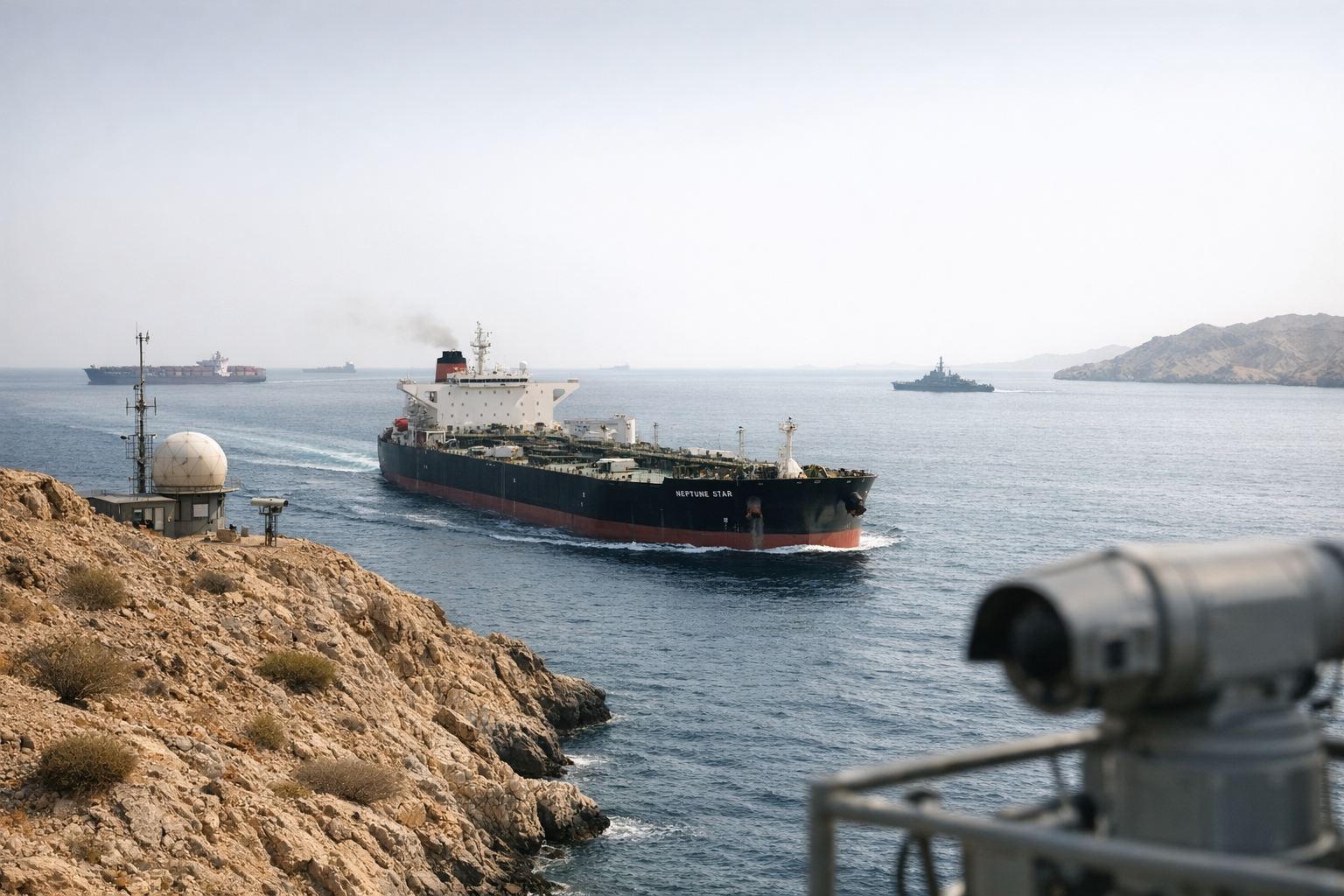
The central issue is no longer only whether the two sides can preserve a ceasefire, but whether traffic through the Strait of Hormuz can be stabilized. The narrow passage between Iran and Oman links the Persian Gulf to open seas and is among the most important transit routes in the world for oil and gas.
Before the war, roughly a fifth of the world’s crude oil and liquefied natural gas moved through the strait, according to widely cited estimates. The International Energy Agency said about 34 percent of global crude oil trade passed through Hormuz in 2025. That means even a limited disruption can ripple quickly through energy markets, shipping rates, insurance costs and supply chains far from the Gulf.
Those fears have kept traders and governments on edge throughout the latest round of talks. Investors in Asia weighed the renewed U.S. strikes against the possibility of a negotiated settlement, while oil market analysts warned that any prolonged impairment of shipping through Hormuz could send crude prices sharply higher in the coming months.
The anxiety is no longer confined to oil executives and geopolitical strategists. Manufacturers and importers, including companies far removed from the energy sector, have begun warning that volatility in transport and fuel costs is complicating planning and squeezing margins. For businesses dependent on raw materials crossing multiple oceans, uncertainty in Hormuz has become a practical problem, not an abstract one.
Iran’s Leverage, Washington’s Demand
Since the fighting began, control over Hormuz has emerged as Tehran’s most potent leverage. Iran has sought to use the waterway not simply as a military threat but as a bargaining tool in the wider negotiations. Shipping through the strait has already been constrained during the war, with transit restricted and commercial operators facing heightened risks and costs. Iranian officials have also resisted suggestions that any final arrangement over the waterway has already been settled.
For Washington, restoring predictable passage through Hormuz is a central objective. The United States has argued that global commerce cannot remain hostage to intermittent military threats, mining activity or informal restrictions. Iran, for its part, has sought relief from the U.S. military pressure that has hemmed in its ports and shipping access, making the strait part of a broader negotiation over sanctions, security guarantees and regional force posture.
That helps explain why even a seemingly tactical military episode — an American strike on missile batteries or mine-laying boats — carries strategic weight. Each side is trying to shape the terms of maritime access while avoiding responsibility for collapsing the talks outright.
Shipping Risks Persist Despite Diplomacy
Evidence that commercial navigation remains vulnerable surfaced again on Wednesday, when South Korea said an investigation into a May 4 attack on a cargo ship operated by the shipping firm HMM had assessed that the vessel was likely struck by an Iranian anti-ship missile in the strait. The incident caused a fire and injured one crew member, according to South Korean authorities, though the investigation has not conclusively established responsibility or intent.
The episode underscored a broader reality: even if negotiators inch toward a framework, merchant shipping is still operating in an environment where miscalculation, proxy attacks or disputed military actions can quickly unsettle trade.
It is that gap between diplomatic progress and operational safety that has left markets so sensitive to every new report from the Gulf. A formal ceasefire means little to insurers, shipowners and energy buyers if vessels can still be hit, harassed or delayed.
A Ceasefire Under Strain
Iranian officials have accused the United States of breaching the truce with the latest strikes, while issuing warnings that American bases and partners in the region should not assume immunity if the conflict intensifies again. Yet Tehran’s decision to remain in the negotiations suggests that, at least for now, it sees more advantage in pressing its case at the bargaining table than in retaliating immediately.
That restraint may be tactical. It remains unclear whether Iran intends to answer the strikes directly at a time and place of its choosing, or whether it will instead try to convert the episode into leverage in the talks. Just as uncertain is whether the Trump administration believes limited military pressure can continue without shattering the fragile process it says it wants to preserve.
The diplomacy has also unfolded against a broader regional backdrop that remains combustible, with related tensions across the Middle East threatening to spill into the U.S.-Iran track. That has increased concern among diplomats that even if Washington and Tehran move closer to an understanding, the conflict’s surrounding fronts could still derail it.
What Comes Next
For now, the negotiations are alive, but so are the dangers that prompted them. The key unresolved questions are whether the two sides can translate this moment into a durable ceasefire framework; whether shipping through Hormuz will be fully normalized or remain subject to Iranian pressure; and whether either side will take further military action that forces the other to walk away.
Those questions matter far beyond the Gulf. The future of Hormuz will help determine not only whether this war winds down, but also whether the world faces a renewed energy shock at a time when inflation, freight costs and geopolitical risk are already running high.
In that sense, the talks are about much more than the wording of a ceasefire. They are about who controls access through a narrow stretch of water that has once again become one of the world’s most dangerous and economically significant fault lines.
Sources
Further reading and reporting used to add context:
- Iran condemns US strikes as a show of 'bad faith' | AP News
- https://apnews.com/article/af77d581873bfeec32d7342b56841244
- https://apnews.com/article/183cec1109442e17c84b403091381f97
- US military says it carried out 'self-defense' strikes in Iran | AP News
- https://www.axios.com/2026/05/22/trump-iran-meeting-resume-war-deal
- https://www.theguardian.com/world/2026/may/26/iran-peace-deal-talks-us-bombing-ceasefire-strait-hormuz
- https://www.bloomberg.com/news/articles/2026-05-01/strait-of-hormuz-why-vital-oil-route-has-become-a-weapon-of-war
- https://www.pbs.org/newshour/amp/world/u-s-says-it-carried-out-self-defense-strikes-in-iran-including-missile-sites-and-boats-placing-mines
- https://www.cnbc.com/2025/06/22/threat-to-commercial-shipping-around-arabian-peninsula-is-rising-largest-global-shipowners-organization-warns.html
- https://www.marketscreener.com/news/us-military-strikes-iranian-boats-missile-launch-sites-centcom-ce7f5addda88f027
- https://en.wikipedia.org/wiki/May_2026_United_States_strikes_on_Iran
- https://www.theguardian.com/world/2026/may/19/trump-iran-analysis
- https://www.investing.com/news/world-news/trump-says-more-iran-talks-expected-on-friday-4532409
- https://edition-prod-cf.sitemirror.cnn.com/2026/04/12/business/oil-prices-iran-war
- https://www.investing.com/news/world-news/middle-east-truce-in-doubt-as-us-and-iran-fight-for-control-of-strait-of-hormuz-4657885
- https://www.marketscreener.com/news/u-s-forces-hit-targets-including-missile-launch-sites-and-iranian-boats-attempting-to-emplace-mines-ce7f5addda88f521
- https://www.cbsnews.com/amp/news/iran-strait-of-hormuz-bab-el-mandeb-yemen-houthis/
- https://www.bloomberg.com/news/articles/2026-03-31/oil-could-spike-to-200-if-hormuz-remains-shut-fesharaki-warns?srnd=phx-industries
- https://en.wikipedia.org/wiki/2026_Strait_of_Hormuz_crisis
- https://en.wikipedia.org/wiki/Strait_of_Hormuz
- https://www.cnbc.com/2025/06/23/us-iran-crisis-shipping-groups-seen-avoiding-the-strait-of-hormuz.html
- https://www.cnbc.com/2025/06/23/irans-parliament-approves-blocking-strait-of-hormuz.html
- https://www.cnbc.com/2019/04/23/iran-oil-sanctions-strait-of-hormuz-in-focus-as-oil-prices-rise.html
- https://www.cnbc.com/2025/06/23/us-joins-iran-israel-war-stoking-worries-about-oil-volatility-.html
- https://www.cnbc.com/2025/06/17/cnbc-daily-open-irans-desire-for-ceasefire-lifts-markets-may-be-one-sided.html
- https://www.cnbc.com/2025/06/24/asia-pacific-markets-live-trump-iran-israel-ceasefire.html
- https://www.cnbc.com/2025/05/13/asia-markets-live-stocks-set-to-mostly-climb.html
- https://www.cnbc.com/2025/06/12/oil-prices-surge-after-israel-launches-airstrikes-against-iran.html
- https://www.cnbc.com/video/2025/06/18/iran-tensions-raise-oil-market-risks-as-strait-of-hormuz-threat-looms.html
- https://www.cnbc.com/2018/12/04/iranian-president-hassan-rouhani-threatens-to-close-strait-of-hormuz.html
- https://www.cnbc.com/2025/03/12/asia-markets-live-stocks-set-to-fall.html
- https://www.cnbc.com/2025/05/06/asia-stocks-live-updates.html
- https://fm.cnbc.com/applications/cnbc.com/resources/editorialfiles/2026/04/23/Toplines_260142_CNBC_AAES_Q1_2026_Topline.pdf
- https://fm.cnbc.com/applications/cnbc.com/resources/editorialfiles/2012/05/03/2226650_goldman_sachs_superspike.pdf
- https://fm.cnbc.com/applications/cnbc.com/resources/editorialfiles/2024/06/13/YEM_Houthi-Attacks-Pressuring-International-Trade.pdf
- https://fm.cnbc.com/applications/cnbc.com/resources/editorialfiles/2020/10/06/investigation_of_competition_in_digital_markets_majority_staff_report_and_recommendations.pdf
- https://fm.cnbc.com/applications/cnbc.com/resources/editorialfiles/2022/03/31/Joint_Statement_of_the_Russian_Federation_and_the_Peoples_Republic_of_China_on_the_International_Relations_Entering_a_New_Era_and_the_Global_Sustainable_Development__President_of_Russia.pdf
- https://www.internazionale.it/ultime-notizie-reuters/2026/05/27/south-korea-says-attack-on-ship-in-strait-of-hormuz-likely-involved-an-iranian-missile-2
- https://www.arabnews.com/node/2645095/world
- https://www.eia.gov/todayinenergy/detail.php?id=61002&os=f
- https://ca.marketscreener.com/news/south-korea-says-attack-on-ship-in-strait-of-hormuz-likely-involved-an-iranian-missile-ce7f5ad2d18bf323
- https://www.eia.gov/international/analysis/special-topics/World_Oil_Transit_Chokepoints
- https://www.eia.gov/todayinenergy/detail.php?id=39932&os=frefapp
- https://www.internazionale.it/ultime-notizie-reuters/2026/05/14/south-korea-official-says-unlikely-anyone-but-iran-behind-hormuz-ship-attack-yonhap-reports
- https://www.marketscreener.com/news/south-korea-official-says-unlikely-anyone-but-iran-behind-hormuz-ship-attack-yonhap-reports-ce7f5bdcd08fff2c
- https://www.iea.org/about/oil-security-and-emergency-response/strait-of-hormuz?ftag=YHF4eb9d17
- https://www.eia.gov/todayinenergy/detail.php?id=65504+
- https://www.marketscreener.com/news/south-korea-says-attack-on-ship-in-strait-of-hormuz-likely-involved-an-iranian-missile-ce7f5ad2d18bf323
- https://www.japantimes.co.jp/news/2026/05/05/world/south-korean-vessel-hormuz/
- https://www.axios.com/2026/05/04/strait-hormuz-us-merchant-ships-cross
- https://apnews.com/article/03228f42ac32c0bfce3bab744a77d199
- https://apnews.com/article/efb53c39ee6334733e1cb22ca4a6c279
- https://apnews.com/article/a4857f28d9b47e0170b65ced19451a25
- https://apnews.com/article/6490db55a65880a61a6233eff7acc68b
- https://www.axios.com/2026/04/17/hormuz-iran-oil-prices
- https://en.wikipedia.org/wiki/List_of_ships_attacked_during_the_2026_Iran_war