
Russia moved on Tuesday to deepen its wartime footing at home and sharpen its threats abroad, as Britain’s top cyberintelligence official warned that Western allies were running short on time to respond to the combined pressures posed by Moscow and Beijing.
In Moscow, the State Duma approved legislation that would allow the Russian central bank and certain other financial institutions to deploy anti-drone defenses and arm employees without relying on specialized state security units, according to Russian lawmakers and state media. The bill, which still requires approval by the upper house and President Vladimir Putin’s signature, would extend to the financial system a set of emergency powers that have steadily expanded since Ukrainian drone attacks began reaching deeper into Russian territory.
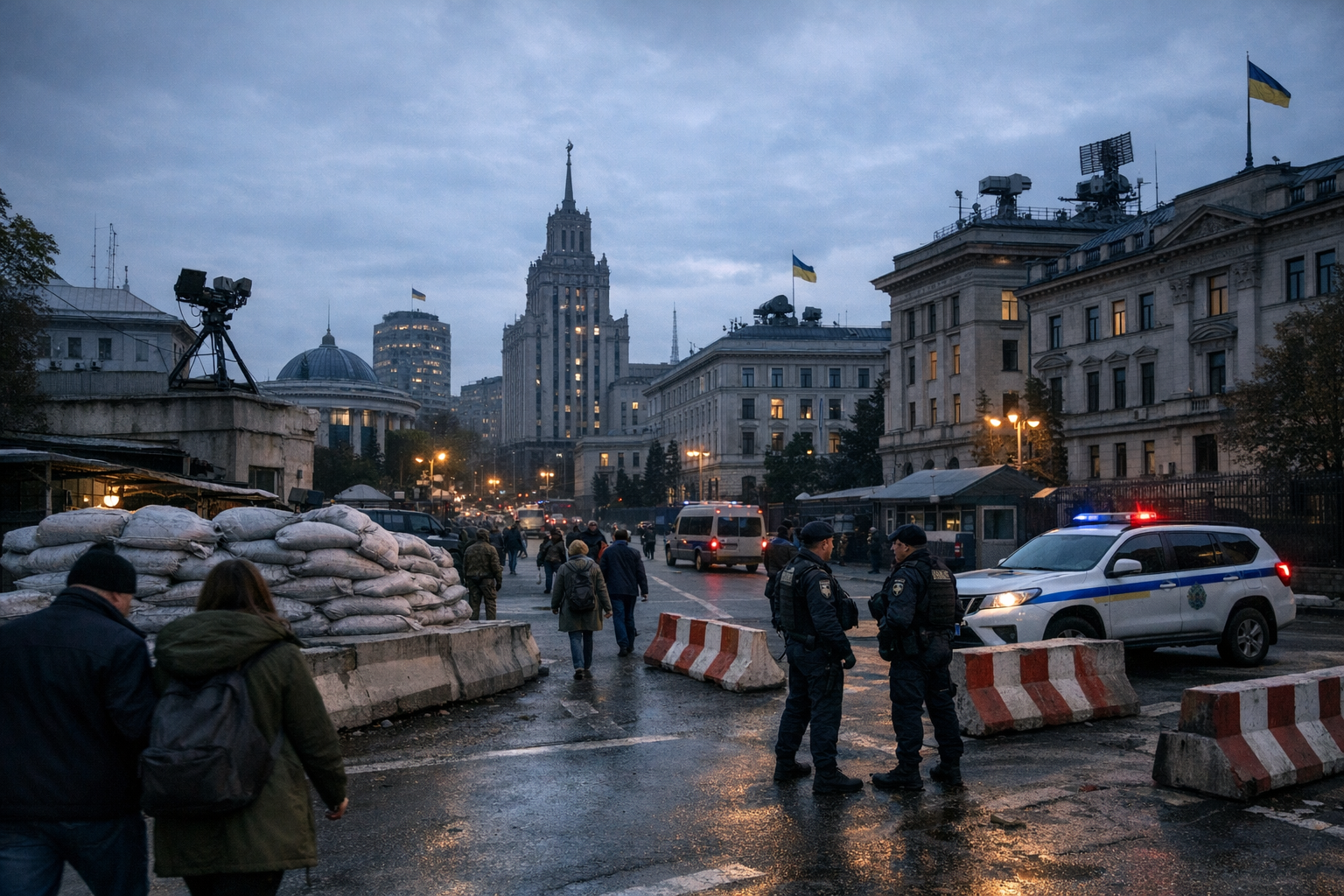
On the same day, Russian officials signaled a more aggressive phase in the war against Ukraine’s capital. Moscow said it would begin “systematic and consistent” strikes on military-related targets and what it called “decision-making centers” in Kyiv. In a call with Secretary of State Marco Rubio, Foreign Minister Sergey Lavrov urged American diplomats and citizens to leave the city, a warning that immediately raised the stakes for foreign missions and civilians in the Ukrainian capital.
The developments, while distinct, pointed in the same direction: a Russian state increasingly organized around wartime adaptation, willing to militarize civilian institutions at home while using public threats abroad to project escalation and test Western resolve.
A wider wartime state
The anti-drone measure reflects the way the war has altered Russia’s domestic landscape far from the front lines. Repeated Ukrainian strikes on oil depots, airfields, infrastructure and other sites inside Russia have exposed gaps in local air defenses and forced the Kremlin to disperse security responsibilities beyond the military and intelligence services.
Under the proposed law, financial institutions judged to be critical would be expected to provide for part of their own protection, folding counter-drone systems into the daily operation of civilian infrastructure. The move suggests that in Russia, the boundary between civilian administration and wartime security is becoming thinner still.
That matters not only because of the practical burden placed on banks and state-linked institutions, but because it underscores how the Kremlin is normalizing a long war. Instead of treating drone attacks as exceptional disruptions, the state is building them into the assumptions of governance, commerce and public security.
It remains unclear how quickly the measure will clear the Federation Council or how broadly it would be used in practice. But its passage in the lower house fits a broader pattern: powers once reserved for security organs are being distributed across the state and economy as Moscow braces for a conflict it increasingly presents as prolonged and existential.
Kyiv under renewed threat
Russia’s warning on Kyiv came after recent large-scale aerial assaults and appeared designed to serve several purposes at once: to intimidate Ukraine’s leadership, unsettle foreign embassies and signal to Washington that Moscow is prepared to intensify pressure despite continued diplomatic contact.
The language about “decision-making centers” has long been part of the Kremlin’s rhetorical arsenal, often used to imply that government buildings or senior officials could be in the cross hairs. European officials have rejected such threats as escalatory and unacceptable. Whether the latest warning marks the start of a sustained new strike campaign or is intended primarily as coercive messaging remains uncertain.
But the immediate effect was to sharpen concerns for those still working in Kyiv. The capital has lived under the threat of missile and drone attack throughout much of the war, yet explicit Russian appeals for foreign citizens to leave add another layer of pressure, especially when delivered through a high-level conversation with Washington.
For the United States and its allies, the episode is also a reminder that even when diplomatic channels remain open, they can become vehicles for intimidation as much as for de-escalation.
Britain’s warning on Russia and China
In London, Anne Keast-Butler, the head of GCHQ, placed the Russian moves in a broader strategic frame. She said Britain and its allies faced a “moment of consequence,” arguing that Russia was relentlessly targeting critical infrastructure, democratic systems and public trust across Britain and Europe, while China’s rapid technological advance was narrowing the West’s window to maintain an edge.
Her remarks reflected a view taking firmer hold among Western intelligence and security officials: that cyberattacks, sabotage, disinformation, pressure on supply chains and technological competition can no longer be treated as separate policy problems. Instead, they are increasingly seen as parts of a single contest over resilience, deterrence and strategic advantage.
British officials have grown more public in recent years about what they describe as Russian hybrid operations in Europe and the risks posed by Chinese cybercapabilities and industrial power. Keast-Butler’s warning suggested an urgency that goes beyond the immediate battlefield in Ukraine. The challenge, in this view, is not only to help Ukraine withstand Russian attacks, but also to harden Western societies against the kinds of disruption that can weaken alliances from within.
Why this matters now
Taken together, the moves in Moscow and the warning from London capture a security environment growing more intertwined and more severe.
Russia’s internal measures show how the war is reshaping the machinery of the state, drawing banks and other civilian actors into defense roles once considered extraordinary. Its threats against Kyiv suggest a willingness to combine military force with psychological pressure directed at civilians and foreign governments. And Britain’s message highlights how Western capitals increasingly see Russia and China not as isolated challenges, but as overlapping tests of whether democracies can protect infrastructure, maintain technological leadership and sustain public confidence under pressure.
The unanswered questions are significant. It is not yet clear how far Russia will carry its new domestic security model, whether embassies in Kyiv will alter their posture, or whether allied governments can move quickly enough to bolster cyberdefenses and critical infrastructure while competing with China’s technological rise.
But the trajectory is becoming harder to miss. On the battlefield, in state institutions and in the contest over technology and resilience, the lines between war, deterrence and domestic security are continuing to blur.
Sources
Further reading and reporting used to add context:
- https://apnews.com/article/d454c58bff93e60189c8816ccf3d41da
- https://www.thedailybeast.com/russia-calls-rubio-to-issue-dark-warning-to-americans-to-leave-ukraine-now/
- https://apnews.com/article/2abde640e27e7b320715d74358ba28f3
- https://www.theguardian.com/uk-news/2026/may/27/russia-targeting-uk-infrastructure-democracy-gchq-head-anne-keast-butler
- https://www.japantimes.co.jp/news/2026/05/26/world/politics/lavrov-rubio-us-diplomats-kyiv/
- https://www.euronews.com/my-europe/2026/05/25/russia-urges-foreign-residents-and-diplomats-to-leave-kyiv-as-it-threatens-more-strikes
- https://news.sky.com/story/russia-relentlessly-targeting-uk-infrastructure-spy-chief-warns-13548309
- https://www.itv.com/news/2026-05-27/russia-relentlessly-targeting-uk-infrastructure-and-democracy-warns-gchq-boss
- https://www.jpost.com/international/internationalrussia-ukraine-war/article-897357
- https://economictimes.indiatimes.com/news/defence/russia-to-launch-systematic-strikes-on-kyiv-military-linked-sites-foreign-minister-lavrov-tells-rubio/articleshow/131320107.cms
- https://www.rferl.org/a/russia-ukraine-lavrov-rubio-kyiv-attacks-threats/33765072.html
- https://www.rt.com/russia/640560-lavrov-notifies-rubio-of-impending-strikes-kiev/
- https://www.pravda.com.ua/eng/news/2026/05/25/8036378/index.amp
- https://www.scmp.com/news/world/europe/article/3354873/russia-tells-us-pull-its-diplomats-and-citizens-ukraine-capital
- https://www.marketscreener.com/news/lavrov-tells-rubio-of-russian-decision-to-strike-kyiv-sites-linked-to-military-ce7f5adddb8dff24
- https://apnews.com/article/53807fa519d601404a552198de00d425
- https://apnews.com/article/059287f382482fdd3dc4b3ddd3c6ceb6
- https://www.internazionale.it/ultime-notizie-reuters/2026/05/27/russia-allows-central-bank-top-bank-sberbank-to-directly-down-drones
- https://www.streetinsider.com/Reuters/Russia%2Ballows%2Bcentral%2Bbank%2C%2Btop%2Bbank%2BSberbank%2Bto%2Bdirectly%2Bdown%2Bdrones/26551892.html
- https://www.thestar.com.my/news/world/2026/05/27/russia-allows-central-bank-top-bank-sberbank-to-directly-down-drones
- https://wkzo.com/2026/05/26/russia-allows-central-bank-top-bank-sberbank-to-directly-down-drones/
- https://www.marketscreener.com/news/russia-allows-central-bank-top-bank-sberbank-to-directly-down-drones-ce7f5ad2dc8bf523
- https://www.zonebourse.com/actualite-bourse/la-russie-autorise-la-banque-centrale-et-sberbank-a-abattre-directement-des-drones-ce7f5ad2dc8bf523
- https://www.globalbankingandfinance.com/russia-allows-central-bank-top-bank-sberbank-directly-down/
- https://noticias.uol.com.br/ultimas-noticias/reuters/2026/05/26/russia-autoriza-que-banco-central-e-banco-sberbank-derrubem-drones-diretamente.htm?uol_app=uolnoticias
- https://www.devdiscourse.com/article/law-order/3922965-russias-banks-arm-themselves-against-drone-threats
- https://noticias.uol.com.br/ultimas-noticias/reuters/2026/05/26/russia-autoriza-que-banco-central-e-banco-sberbank-derrubem-drones-diretamente.htm
- https://world.infonasional.com/russia-mandates-banks-shoot-down-drones
- https://hotnews.ro/rusia-a-aprobat-o-lege-care-da-voie-bancilor-sa-se-apere-singure-de-dronele-ucrainene-2256384
- https://www.themoscowtimes.com/2026/03/23/russia-allows-private-security-firms-to-use-firearms-to-counter-drone-attacks-a92313/pdf
- https://en.wikipedia.org/wiki/Unmanned_Systems_Forces_%28Russia%29
- https://www.reddit.com/r/worldnews/comments/1tow4y4/russia_has_passed_a_law_allowing_its_central_bank/
- https://csis-website-prod.s3.amazonaws.com/s3fs-public/2026-04/260413_Bondar_Russia_Drone.pdf?VersionId=po8ciEm5hTl_KvzVNc_OexC2X73N4Yol
- https://www.gchq.gov.uk/news/director-gchq-joins-cyber-industry-experts-to-kick-off-cyberuk-2026
- https://www.gchq.gov.uk/news/ncsc-annual-review-2025
- https://www.gchq.gov.uk/news/new-director
- https://www.gchq.gov.uk/section/governance/leadership
- https://www.gchq.gov.uk/news/cyberuk-2024
- https://www.gchq.gov.uk/news/director-gchq-confirms-new-chief-scientific-adviser
- https://www.gchq.gov.uk/news/look-up-the-sky-at-night-examines-jodrell-banks-cold-war-role
- https://www.gchq.gov.uk/news/gchq-christmas-challenge-2025
- https://www.gchq.gov.uk/news/rusi-asl
- https://www.gchq.gov.uk/news/national-language-competition-2025-winners-visit-gchq
- https://www.gchq.gov.uk/information/intelligence-and-security-committee
- https://www.gchq.gov.uk/information/national-security-council
- https://www.gchq.gov.uk/sites/default/files/pdfs/news/gchq-releases-messages-between-spies-revealing-the-end-of-the-second-world-war.pdf
- https://www.gchq.gov.uk/sites/default/files/pdfs/news/new-director.pdf
- https://www.gchq.gov.uk/sites/default/files/documents/GCHQ%20gender%20and%20ethnicity%20pay%20gap%20report%202023.pdf
- https://www.gchq.gov.uk/sites/default/files/pdfs/news/cyberuk-2024.pdf
- https://www.gchq.gov.uk/sites/default/files/pdfs/news/ncsc-annual-review-2025.pdf
- https://www.gchq.gov.uk/sites/default/files/pdfs/news/gchq-christmas-challenge-2025.pdf
- https://www.itv.com/news/2026-05-26/spy-chief-to-warn-of-relentless-russian-cyber-attacks-on-uk-and-europe
- https://uk.marketscreener.com/news/britain-faces-moment-of-consequence-as-threats-from-adversaries-mount-spy-chief-says-ce7f5ad2dc88f72d
- https://www.internazionale.it/ultime-notizie-reuters/2026/05/27/britain-faces-moment-of-consequence-as-threats-from-adversaries-mount-spy-chief-says
- https://www.lbc.co.uk/article/e95441394a8c45ae83d4fc548d61f174-5HjdZgZ_2/
- https://news.stv.tv/world/spy-chief-to-warn-of-relentless-russian-cyber-attacks-on-uk-and-europe
- https://www.coastfm.co.uk/news/uk/russia-relentlessly-targeting-uk-infrastructure
- https://ground.news/article/spy-chief-to-warn-of-relentless-russian-cyber-attacks-on-uk-and-europe_392367
- https://www.asatunews.co.id/en/gchq-warns-russia-china-cyber-threats
- https://srnnews.com/britain-faces-moment-of-consequence-as-threats-from-adversaries-mount-spy-chief-says/
- https://en.wikipedia.org/wiki/Anne_Keast-Butler
- https://www.reddit.com/r/China/comments/1torlv6/uk_spy_chief_warns_china_is_closing_cyber_gap/
- https://assets.publishing.service.gov.uk/media/696f6bc4011505255b2d420b/DG_MI5_and_Director_GCHQ_open_letter_to_the_Home_and_Foreign_Secretaries_on_China_Embassy.pdf
- https://business.cch.com/CybersecurityPrivacy/ncscannualreport.pdf
- https://kuwaittimes.com/uploads/pdf/2026/04/27/kt_pdf-20260427-1.pdf?ts=221807
- https://isc.independent.gov.uk/wp-content/uploads/2025/12/ISC-Annual-Report-2023%E2%80%932025-Web-Accessible.pdf
- https://assets.swoogo.com/uploads/3930215-66437571c10df.pdf
- https://researchbriefings.files.parliament.uk/documents/CBP-10029/CBP-10029.pdf
- Russia allows central bank, top bank Sberbank to directly down drones
- Russian lawmakers want banks and their staff to help fight Ukrainian drones