
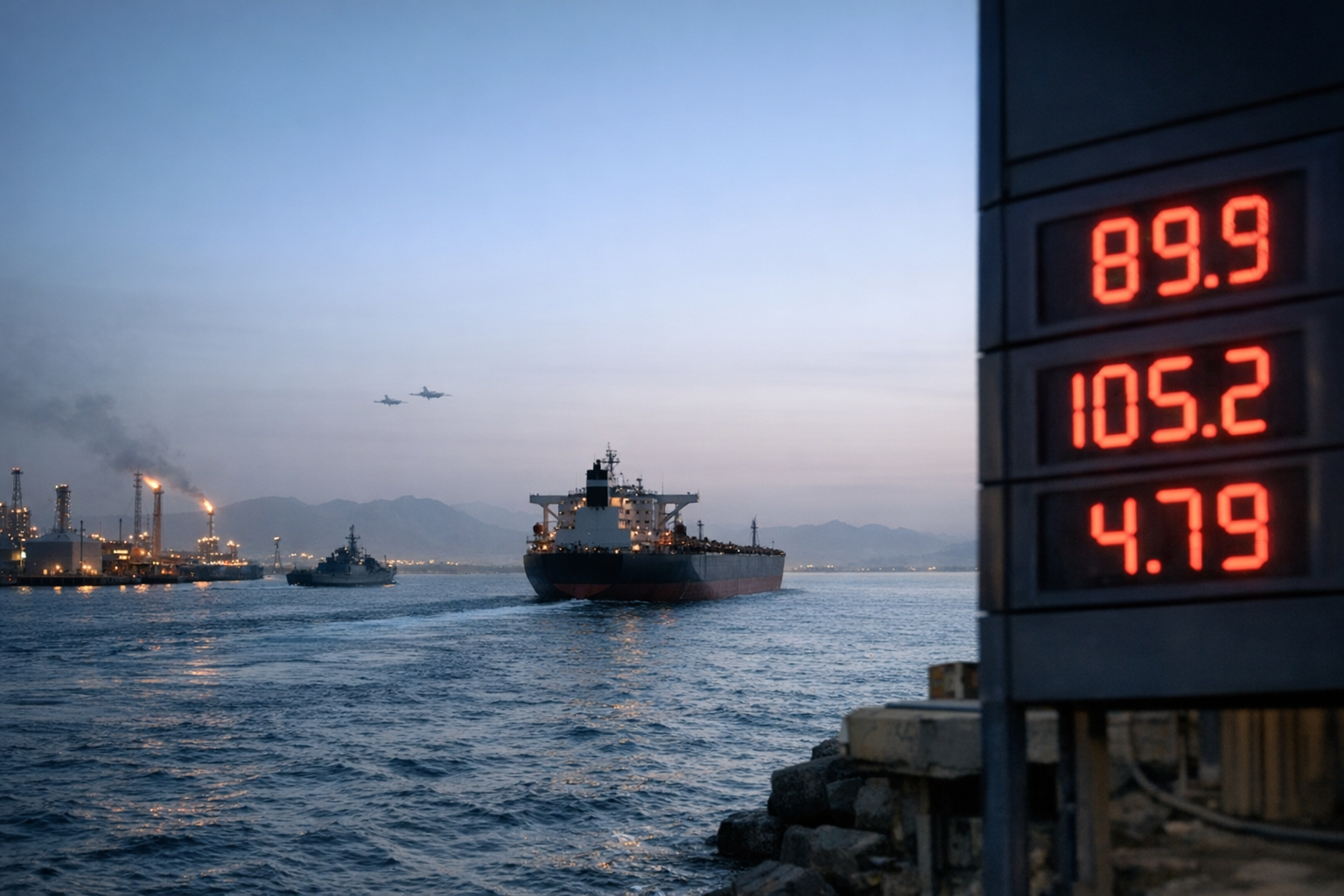
The United States carried out an 11th consecutive night of strikes on Iran on Wednesday, deepening a conflict that is now rattling global energy markets, driving up the Pentagon’s projected costs and raising the prospect of a new assault on a shadowy underground nuclear site that President Trump said could be hit “very heavily.”
The latest round of attacks came as hopes for even a short pause in the fighting appeared to dim. Regional mediators have floated a 10-day cease-fire proposal, but American officials said Tehran was not yet engaging seriously, and the renewed bombardment suggested that both sides were still seeking leverage rather than an exit.
Secretary of State Marco Rubio warned that Iranian threats around the Strait of Hormuz risked consequences far beyond the battlefield. The narrow waterway, through which a significant share of the world’s oil and liquefied natural gas passes, has become a central pressure point in the war. At the same time, Yemen’s Houthi militia has threatened shipping tied to Saudi ports on the Red Sea, widening fears that two of the world’s most important maritime corridors could be simultaneously imperiled.
The market reaction was swift. Oil prices rose sharply, with crude climbing above $92 a barrel and some benchmarks gaining roughly 4 percent as traders bet that any prolonged disruption in Gulf shipping would tighten supplies. In the United States, gasoline prices have risen to around $4 a gallon, reviving inflation concerns that had only recently begun to ease.
A Wider and Costlier War
The war’s price is climbing in other ways as well. Defense Secretary Pete Hegseth said the cost of the military campaign had risen to about $37.5 billion, a figure that underscores how quickly what began as a concentrated operation has broadened into a costly regional confrontation.
American casualties have also mounted. The U.S. military said a third service member was believed to have died after an Iranian attack on a base in Jordan, bringing the number of U.S. troops killed since the war began to 18. Iran has also continued attacks linked to regional partners and infrastructure, including in Bahrain, Jordan and Kuwait, according to U.S. and regional accounts.
Tehran said it had attacked Amazon-linked infrastructure in Bahrain, an assertion that pointed to a growing cyber and economic dimension to the conflict. Even where battlefield lines remain geographically concentrated, the struggle is increasingly spilling into shipping lanes, communications networks and commercial infrastructure across the Gulf.
Trump’s Threat and the Mystery of Pickaxe Mountain
The newest flashpoint is Pickaxe Mountain, an underground facility near Natanz that has long occupied an ambiguous place in debates over Iran’s nuclear program. Mr. Trump said the United States could soon strike the area around the site, elevating a target whose exact purpose remains uncertain even to outside monitors.
That uncertainty is part of what makes the threat so consequential. Pickaxe Mountain is believed to be deeply buried and has never been accessed by inspectors from the International Atomic Energy Agency. Analysts have said the site’s depth and fortification could make it difficult to destroy, while also increasing the risk that a strike would be read in Tehran as an attempt not merely to degrade capacity but to escalate toward a broader war.
The facility’s proximity to Natanz, one of the best-known centers of Iran’s nuclear activity, has intensified speculation that it could serve as a protected repository or backup element of the program. But because inspectors have never been inside, key questions remain unresolved: how developed the site is, what materials or equipment it may hold and whether a strike there would significantly alter Iran’s nuclear capabilities.
Diplomacy Falters
The conflict has unfolded against the collapse of an earlier interim cease-fire effort. Mr. Trump declared that truce over 10 days ago, and since then the bombing campaign has resumed with the stated aim of forcing Iran to restore normal shipping through Hormuz and curb attacks across the region.
But the persistence of nightly strikes has highlighted a central uncertainty: whether air power alone can compel Tehran to back down. Iran has continued to signal that it can threaten commercial transit and regional infrastructure even under sustained attack, suggesting that the campaign may be hardening, rather than softening, the logic of retaliation.
Iran’s foreign minister, Abbas Araghchi, added a stark personal account of the war’s opening phase this week, describing how he was pulled from the rubble of a leadership compound after the U.S.-Israeli strike that killed Iran’s supreme leader, Ali Khamenei, on the first day of the war. He said he had since remained on the move around Tehran, an indication of how profoundly the conflict has shaken Iran’s political leadership and security establishment.
Why This Moment Matters
The fighting now matters not only because of the military exchanges themselves, but because it is testing the resilience of the global economy and the limits of regional deterrence at the same time.
The Strait of Hormuz has long been one of the world’s most sensitive energy chokepoints. If traffic there were seriously disrupted, the effects would reverberate quickly through oil prices, shipping insurance, consumer fuel costs and inflation. A simultaneous threat in the Red Sea would compound those risks, potentially squeezing trade routes linking Asia, Europe and the Middle East.
For Washington, the stakes are growing more complicated by the day. The administration is balancing a campaign meant to restore deterrence with the danger that another high-profile strike — especially on a target as symbolically and strategically loaded as Pickaxe Mountain — could trigger a broader regional war. For Tehran, the calculation is whether continued pressure on shipping and allied infrastructure can impose enough economic and political pain to force concessions without inviting an even more destructive response.
For now, neither side appears ready to yield. And with oil rising, casualties mounting and diplomacy struggling to gain traction, the war is entering a more volatile phase — one in which the next target, or the next disruption at sea, could carry consequences far beyond the Gulf.
Sources
Further reading and reporting used to add context:
- https://apnews.com/article/2df2cbdbab7e21ba26e41cacdfa84e7c
- https://apnews.com/article/08d075c3d9cd01653b99149a8dd51adb
- Iranian official meets mediators in Pakistan as Iran-US attacks rage | AP News
- https://apnews.com/article/8c42c6ddc0c32d53ce452ace92a62b9a
- https://apnews.com/article/2ad0cfe592eb258cb15a9eb04411d58a
- https://apnews.com/article/476de0b0c341ead38126e617234d0939
- https://www.theguardian.com/world/2026/jul/15/trump-iran-power-plants-strike-threat-strait-of-hormuz
- https://www.theguardian.com/world/2026/jul/20/us-strikes-iran-strait-of-hormuz-oil-prices
- https://www.theguardian.com/world/2026/jul/17/us-launches-seventh-night-of-iran-strikes-as-hormuz-conflict-escalates
- https://www.theguardian.com/us-news/us-military
- https://www.theguardian.com/world/2026/jun/11/iran-ceasefire-us-attacks-strikes-deal
- https://www.theguardian.com/world/us-israel-war-on-iran
- https://www.theguardian.com/world/live/2026/jun/11/iran-war-news-us-strikes-donald-trump-stalled-peace-talks-middle-east-crisis?page=with%3Ablock-6a2aaa868f0841a194f902ec
- https://www.theguardian.com/world/2026/jul/16/us-attacks-oil-tanker-strait-of-hormuz-iran-tehran-strikes
- https://www.theguardian.com/world/live/2026/jun/11/iran-war-news-us-strikes-donald-trump-stalled-peace-talks-middle-east-crisis?page=with%3Ablock-6a2a39bc8f08b7f4c0727497
- https://www.theguardian.com/us-news/trump-administration/2026/jul/07/all
- https://www.theguardian.com/world/iran
- https://www.theguardian.com/world/live/2026/jul/19/middle-east-crisis-live-us-launches-new-round-of-airstrikes-to-swiftly-punish-iran-after-american-troops-killed?page=with%3Ablock-6a5c81088f085b8e22af4bb1
- Iran mediators push new ceasefire as Trump eyes all-out war
- https://www.thenationalnews.com/news/mena/2026/07/21/mediators-seek-to-salvage-us-iran-ceasefire-with-10-day-truce-proposal/
- https://iranwire.com/en/news/155223-tehran-receives-qatari-pakistani-mediation-offers/
- https://freerepublic.com/focus/f-news/4388877/posts
- https://www.thebahraintimes.com/executive-report
- https://www.hindustantimes.com/world-news/us-iran-war-10-day-ceasefire-proposal-consider-trump-prepares-military-escalation-warns-israel-tehran-talks-pakistan-101784615831721.html/
- https://www.hurriyetdailynews.com/mediators-race-to-ease-iran-us-tensions-with-10-day-truce-proposal-224623
- https://english.aaj.tv/news/amp/330464370
- https://www.business-standard.com/markets/commodities/oil-prices-jump-3-after-us-iran-escalate-strikes-threaten-hormuz-flows-126071300025_1.html
- https://polymarket.com/event/israel-x-iran-ceasefire-continues-throughptptpt-20260716224448963?marketSlug=israel-x-iran-ceasefire-continues-through-july-22-20260716224448966&outcomeIndex=0
- https://www.jpost.com/middle-east/iran-news/article-903074
- https://armenpress.am/en/article/1255999
- https://en.wikipedia.org/wiki/2026_Iran_war
- https://cdn-4.timesofoman.com/article/174683-iran-strikes-multiple-us-linked-assets-across-the-gulf-region
- https://en.wikipedia.org/wiki/2025%E2%80%932026_Iran%E2%80%93United_States_negotiations
- https://www.reddit.com/r/NewIran/comments/1v2d19v/iran_presented_us_with_proposal_for/
- https://www.dailyindependent.com.pk/wp-content/uploads/2026/04/Daily-Ind-Quetta-20.04.2026.pdf
- https://en.wikipedia.org/wiki/2026_Israel%E2%80%93Lebanon_ceasefire
- https://fm.cnbc.com/applications/cnbc.com/resources/editorialfiles/2026/04/23/Toplines_260142_CNBC_AAES_Q1_2026_Topline.pdf
- https://www.cnbc.com/2018/07/30/direct-warfare-with-the-us-is-out-of-the-question-for-iran-analysts.html
- https://www.cnbc.com/2025/06/13/iran-launches-100-drones-at-israel-in-response-to-missile-attack.html?s=09
- https://www.cnbc.com/2025/04/10/amazon-ceo-andy-jassy-says-he-believes-sellers-will-pass-increased-tariff-costs-on-to-consumers.html?msockid=0dd2ab98943e6e901adfbdf795fa6ff1
- https://www.cnbc.com/2025/06/17/trump-iran-israel-khamenei.html?msockid=35ba3383d58d6f131e7826bcd4ec6e3e
- https://www.cnbc.com/2025/07/29/trump-china-trade-tariffs-bessent.html?msockid=06c2f1d2c636640a2deee7eec72365bf
- https://www.cnbc.com/2015/07/07/despite-recent-oil-rout-dont-expect-cuts-analyst.html
- https://link.cnbc.com/public/40468378
- https://www.cnbc.com/2025/09/19/walmart-marketplace-fakes-scams-investigation.html?msockid=1ce18c07829e6b1104be9a6883076ad2
- https://fm.cnbc.com/applications/cnbc.com/resources/editorialfiles/2020/10/06/investigation_of_competition_in_digital_markets_majority_staff_report_and_recommendations.pdf
- https://www.cnbc.com/2025/09/07/red-sea-cables-cut-disrupting-internet-access-in-asia-and-the-mideast.html?msockid=2cac66ec9cf96939271670839d1a68a9
- https://link.cnbc.com/public/36718853
- https://www.cnbc.com/todd-schoenberger/
- https://fm.cnbc.com/applications/cnbc.com/resources/editorialfiles/2012/06/14/the%20small%20business%20economy.pdf
- https://www.cnbc.com/2025/09/02/sap-to-invest-over-20-billion-euros-in-sovereign-cloud-in-europe.html?msockid=35acf64f30f162302a18e020314763d9
- https://apnews.com/article/63996576847424ab5f22887f38037ce8
- https://apnews.com/article/f98ff56554de2336f0e85bb5fdcae769
- https://apnews.com/article/179973cfe1fb3fa1b7ea7b816648ad9c
- https://apnews.com/article/8b37952906cbec6351fdcc47a0fa6297
- https://www.euronews.com/2026/07/21/irans-irgc-claims-attack-on-amazons-main-data-hub-in-bahrain
- https://www.indiatoday.in/technology/news/story/amazon-aws-data-centre-in-bahrain-hit-with-cruise-missiles-says-iran-2952805-2026-07-21
- https://www.tasnimnews.ir/en/news/2026/07/21/3652558/amazon-data-infrastructure-in-bahrain-targeted-in-irgc-missile-attack
- https://en.apa.az/asia/irgc-claims-attack-on-amazon-data-infrastructure-in-bahrain-517021
- https://fr.euronews.com/2026/07/21/iran-les-gardiens-revendiquent-lattaque-du-data-center-damazon-a-bahrein
- https://es.euronews.com/2026/07/21/la-guardia-revolucionaria-de-iran-asegura-haber-atacado-un-centro-de-datos-de-amazon-en-ba
- https://it.euronews.com/2026/07/21/iran-i-pasdaran-rivendicano-un-attacco-al-principale-data-center-di-amazon-in-bahrein
- https://www.dawn.com/news/2017218/irans-revolutionary-guards-say-they-targeted-amazon-infrastructure-in-bahrain
- https://www.fidelity.com/news/article/company-news/202607210146RTRSNEWSCOMBINED_S8N422065_1
- https://www.europapress.es/internacional/noticia-guerra-estados-unidos-iran-directo-ultima-hora-situacion-oriente-proximo-20260715074451.html
- https://www.europapress.es/internacional/noticia-iran-anuncia-ataques-instalaciones-eeuu-kuwait-centro-datos-amazon-bahrein-vincula-centcom-20260722075747.html
- https://de.euronews.com/2026/07/21/irans-revolutionsgarden-beanspruchen-angriff-auf-amazon-rechenzentrum-in-bahrain
- https://www.reddit.com/r/geopolitics/comments/1v2p8y3/iran_says_it_attacked_amazon_infrastructure_in/
- https://www.reddit.com/r/worldnews/comments/1v2fuqs/iran_says_it_attacked_amazon_infrastructure_in/
- https://apnews.com/article/5ec21d4f12fbdee658ec15ed8d3750ee
- https://apnews.com/article/42ff3de8d135ad72ff3ba4d94cc0921d
- https://apnews.com/article/8a79b27e10cedd202596d57f743ca569
- https://www.thedailybeast.com/trump-called-out-for-belittling-troop-deaths-in-iran-war-in-wild-truth-social-post/
- https://www.thedailybeast.com/trump-allies-freak-out-after-deadly-iran-war-escalation/
- https://www.thedailybeast.com/trump-80-melts-down-with-bonkers-war-dead-comparison/
- https://www.axios.com/newsletters/axios-am-48b77175-e575-4b3c-adfa-435d055e44be
- https://theweek.com/world-news/iran-war-escalate-us-troop-deaths
- https://baynews9.com/fl/tampa/ap-top-news/2026/07/21/us-military-identifies-3rd-service-member-believed-to-have-been-killed-in-iranian-attack
- https://wtop.com/national/2026/07/us-military-identifies-soldier-killed-disarming-a-drone-in-iraq-as-a-30-year-old-from-north-carolina/
- https://www.axios.com/2026/07/18/iran-jordan-us-deaths-military-two-dead
- https://www.wcax.com/2026/07/21/us-military-identifies-3rd-service-member-believed-have-been-killed-iranian-attack/
- https://www.theguardian.com/world/2026/jul/20/service-members-killed-jordan
- https://www.upi.com/Top_News/World-News/2026/07/21/jordan-Pentagon-identifies-missing-soldier/5771784684358/
- https://www.local10.com/news/world/2026/07/18/us-military-says-2-troops-are-dead-and-1-is-missing-after-iran-attacks-a-base-in-jordan/
- https://www.washingtonpost.com/world/2026/07/18/iran-us-strikes-widen-fighting-hits-critical-infrastructure/