
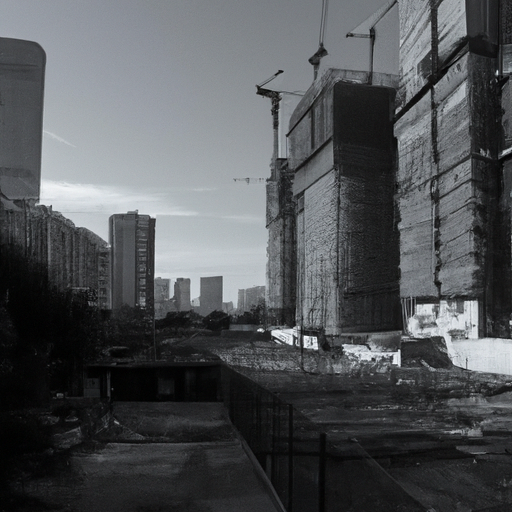
Chinese property developer Evergrande has recently revealed its long overdue earnings report, and the numbers are staggering. The company disclosed a combined loss of a staggering $81 billion over the past two years, sending shockwaves throughout the real estate industry in China and beyond.
The long-standing financial struggles of Evergrande have been closely monitored by analysts and investors alike. It is considered one of China’s largest real estate developers, with a ubiquitous presence in more than 280 cities across the country. However, its inability to overcome mounting debts and financial mismanagement has now come to a head.
The $81 billion loss recorded by Evergrande is a dire indication of the company’s deteriorating financial health. Such a substantial loss is unprecedented in the Chinese real estate market and raises serious concerns over the stability and future of the company. Moreover, this revelation has ignited fears of a potential contagion effect that could impact the broader Chinese economy.
Evergrande’s financial woes can be traced back to its aggressive expansion strategy. In an attempt to diversify its business and establish a presence in various sectors, the company ventured into industries such as electric vehicles, soccer, and theme parks. This highly ambitious approach, however, proved detrimental when combined with mounting debts and a highly leveraged balance sheet.
The consequences of Evergrande’s financial turmoil extend far beyond its own corporate walls. The company owes massive amounts to an extensive network of suppliers, contractors, and lenders, sparking concerns over a domino effect that could ripple through the Chinese economy. Furthermore, experts are worried about the potential impact on the country’s real estate market, as falling property prices could hinder economic growth and pose a threat to financial stability.
The Chinese government is closely monitoring the situation, fully cognizant of the potential risks that Evergrande’s collapse could pose to the broader economy. The authorities have made it clear that they will not rescue the company, as they aim to curb excessive speculation and leverage in the real estate sector. Evergrande’s dire predicament serves as a stark reminder of the challenges that arise from the Chinese government’s efforts to rein in debt-fueled growth.
The repercussions of Evergrande’s massive loss reach beyond China, as international investors and creditors also face potential losses. Its bonds are held by numerous global financial institutions, which has led to concerns about the spillover effect on overseas markets. This situation has drawn comparisons to the collapse of Lehman Brothers in the United States in 2008, though the scale and scope of Evergrande’s impact remain uncertain.
Evergrande’s announcement has been met with mixed reactions from investors and analysts. Some view this as a much-needed wake-up call for China’s real estate industry, emphasizing the urgency for tighter regulations and a more sustainable approach to growth. Others, however, worry that the fallout from Evergrande could exacerbate an already fragile global economic recovery, with potential reverberations across international financial markets.
As the story of Evergrande continues to unfold, it serves as a cautionary tale for companies pursuing aggressive expansion, unchecked leverage, and risky business ventures. It also highlights the broader risks associated with China’s real estate sector and its influence on the global economy. All eyes are now on the Chinese government and its ability to effectively manage the fallout from Evergrande’s colossal losses, as the implications of this financial shockwave could reverberate for years to come.