
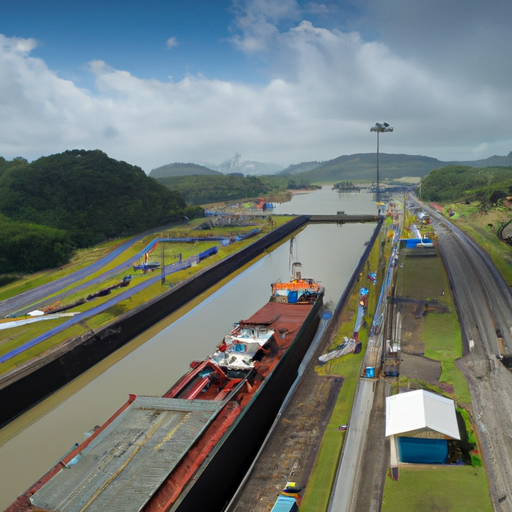
In a year marked by unpredictable upheavals and setbacks, the universe does not seem to be running short of examples to illustrate the harsh realities of climate change. The global trade landscape is currently facing a crucial stress test in the form of an extreme drought that has led to significant congestion at the Panama Canal, a key global trade hub.
The ongoing drought and lower water levels in the Canal, proving detrimental to the usual stream of international shipping passing through, have resulted in a staggering pileup of 154 vessels. “This is going to get worse before it gets better,” warns local authorities, echoing the reality facing maritime stakeholders and directing the world’s attention to our global catastrophe.
The Panama Canal, an artificial 82 km waterway in Panama, stands as a major conduit for international maritime trade. This channel connecting the Atlantic and Pacific oceans, has now transformed into a daunting logjam of waiting ships, featuring everything from colossal container vessels, oil tankers to small, compact cargo ships.
The drought, likely attributable to climate change, significantly lowered the water levels in the Canal, thereby causing this once free-flowing artery to congest and disrupt the systematic orchestration of global trade. The resulting scenario has proven to be far from the typical flow of business, with traffic at the Canal slowed to a virtual standstill.
The consequences of this congestion and slow movement of ships will undoubtedly be felt across the globe, impacting various sectors. Whether it be the auto industry relying on the timely delivery of parts, or coffee lovers waiting for their favorite beans, all will likely feel a ripple effect due to this bottleneck at the canal.
Food supplies could also be impacted. A significant amount of grain travels from the United States to Asia via the Canal, and delays could affect the prices and availability of such staples in various parts of the world. Similarly, oil industries worldwide could experience a significant impact as the movement of tankers gets stalled.
These jarring queues of ships highlight the significant level of global interconnection and interdependence that exist today. It underscores the complex and wide-reaching implications of climate change that can resonate across borders, affecting not only the environment and biodiversity, but also human lives and economies.
Nevertheless, authorities and Canal administrators are taking proactive steps to ease the congestion, even as they grapple with the deeper issue – the relentless drought. Canal managers have proposed several measures, including drafting shallower vessels, and maintaining emergency water supplies. While such steps display a proactive approach, they offer only a temporary relief to the escalating crisis.
As we confront the realities of climate change, the newfound chaos at the Panama Canal serves as a sobering reminder that mitigation must be more than just a buzzword. In the broader context, it nudges nations to reimagine their responsibilities pertaining to climate change policies, consequences, and future responses.
As authorities struggle to manage the situation, the world watches keenly –the Canal’s pileup, while an unsettling sight, is proving to be a potent symbol of the impending, complex challenges that a changing world climate is set to bring. With the Canal expected to take on an increasingly pivotal role in global trade in the years to come, the stakes couldn’t be higher.