
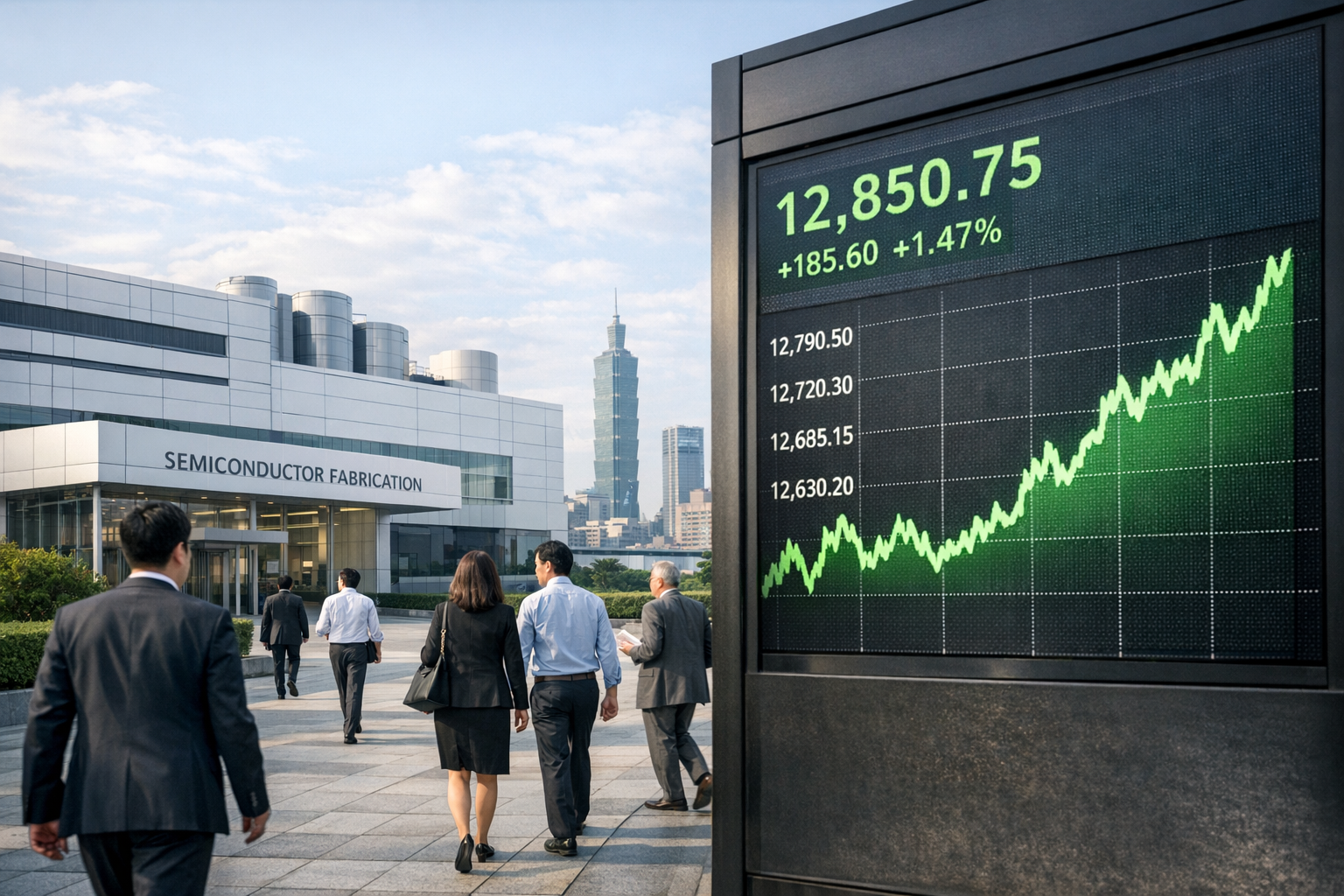
Taiwan Semiconductor Manufacturing Company climbed to a fresh record on Friday, propelled not only by another burst of optimism over artificial intelligence, but also by a regulatory change at home that could channel more domestic fund money into the world’s most important chipmaker.
The rally offered a vivid reminder of where investors continue to place their bets in the A.I. race: not just on the companies designing the most coveted processors, but on the manufacturers capable of producing them at the most advanced scale. For many investors, that makes TSMC a central beneficiary of the global scramble to build the hardware behind A.I. systems.
Taiwan’s financial regulator recently loosened long-standing rules that had limited how much domestic equity funds and active exchange-traded funds could hold in a single qualifying company. The ceiling was raised from 10 percent of net asset value to as much as 25 percent, giving portfolio managers far more room to increase positions in market heavyweights.
In theory, the rule applies broadly. In practice, investors immediately focused on TSMC.
A policy shift with one obvious beneficiary
The regulator said the change was meant to give funds greater flexibility in a market increasingly dominated by a handful of large technology companies. Taiwan’s stock market has become more concentrated as the island’s semiconductor champions have grown in size and strategic importance.
No company looms larger than TSMC. It is by far the most consequential stock in Taiwan’s market and a critical supplier to global technology groups including Nvidia and Apple. That combination has made the company uniquely exposed to the surge in demand for advanced chips used in A.I. training and deployment.
The easing of concentration limits therefore landed as more than a technical rule revision. It signaled that local institutional investors may now have greater scope to own more of the company, reinforcing an already powerful market narrative around A.I. infrastructure.
That narrative had been strengthened days earlier, when TSMC reported first-quarter net profit of NT$572.5 billion, up 58 percent from a year earlier. The results exceeded the already lofty expectations surrounding the company and underscored how deeply the A.I. boom has reshaped the semiconductor industry’s pecking order.
The market’s A.I. hierarchy
For much of the past two years, investor enthusiasm around artificial intelligence has revolved around chip designers, especially Nvidia. But TSMC’s rise highlights a broader understanding now taking hold in markets: the winners in A.I. are not confined to software developers or chip architects.
They also include the companies that fabricate the advanced semiconductors required to run increasingly complex models and cloud services. As the dominant producer of leading-edge chips, TSMC sits at the center of that supply chain.
Its management has pointed to continued A.I.-related demand as a driver of growth and has forecast another strong quarter, helping reassure investors that spending on A.I. hardware remains robust even as some analysts warn that valuations across the sector have become stretched.
The company’s latest surge in market value reflects that confidence. Investors have treated TSMC as a comparatively direct way to gain exposure to the expansion of A.I. computing capacity — the factories, tools and advanced packaging needed to turn design blueprints into finished processors.
Why this matters now
The timing of the policy change is significant. It arrives at a moment when global markets are trying to determine whether the A.I. trade still has room to run or whether it has become too crowded and expensive.
TSMC’s earnings offered one answer: demand for the most advanced chips remains strong enough to produce rapid profit growth. Taiwan’s regulatory move offered another: local financial rules are now adapting to a market in which a few technology leaders have become too large to ignore.
That combination gave investors a fresh reason to push the stock higher.
Still, some important questions remain. It is not yet clear how quickly domestic fund managers will use the new headroom or how much incremental buying the rule change will generate in practice. Nor is it certain that the extraordinary demand for A.I.-related semiconductors will continue to outrun concerns about pricing, overcapacity or inflated expectations.
TSMC itself has acknowledged broader risks, including geopolitical tensions and cost pressures tied to instability in the Middle East, even as it has suggested that near-term operations remain sound.
For now, however, the message from the market is unmistakable. As investors search for the most durable beneficiaries of the A.I. build-out, they are still rewarding the companies that make the technology possible — and few embody that more than TSMC.
Sources
Further reading and reporting used to add context:
- https://www.tomshardware.com/tech-industry/semiconductors/tsmc-ups-revenue-guidance-and-capex-buoyed-by-multiyear-ai-megatrend-warns-middle-east-conflict-may-impact-profitability-as-costs-increase
- https://investor.tsmc.com/english/encrypt/files/encrypt_file/qr/phase4_reports/2026-04/bd8eb0403902fdea59a2f5e390e48d010b50edc9/1Q26%20EarningsRelease_WoG.pdf
- https://www.trendforce.com/news/2026/04/16/news-tsmc-1q26-net-income-soars-58-yoy-to-nt572-5b-record-eps-nt22-08-gross-margin-beats-forecast-at-66-2/
- https://www.investing.com/news/stock-market-news/tsmc-shares-fall-amid-profittaking-after-record-q1-earnings-4619716
- https://www.streetinsider.com/Reuters/TSMC%2Bquarterly%2Bprofit%2Bleaps%2B58%25%2Bto%2Brecord%2C%2Bbeats%2Bexpectations/26319740.html
- https://www.alphapilot.tech/discover/tsmc-q1-earnings-surge-58-as-ai-demand-drives-record-profits-and-raised-2026-outlook
- https://api.finexus.net/api/news/events/08ee7e73-612a-4037-b6d1-26475069737d/html
- https://tradingeconomics.com/taiwan/stock-market/news/543358
- https://www.tipranks.com/news/company-announcements/tsmc-posts-58-profit-surge-on-advanced-node-demand-in-q1-2026
- https://www.supplychainbrain.com/articles/43874-tsmc-sees-58-boost-to-profits-in-q1-of-2026
- https://www.scmp.com/tech/big-tech/article/3350346/tsmc-targets-over-30-revenue-surge-2026-ramps-capex-amid-booming-ai-demand?module=china_future_tech&pgtype=homepage
- https://www.taiwannews.com.tw/en/news/6339339
- https://www.objectwire.org/tech/news/tsmc-asml-record-earnings-q1-2026-ai-chip-demand
- https://www.technerdo.com/post/tsmc-q1-2026-record-profit-ai-demand
- https://www.tomshardware.com/tech-industry/semiconductors/tsmc-posts-record-quarter-results-as-skyrocketing-ai-and-hpc-demand-drives-two-thirds-of-revenue-company-pulls-in-usd33-1-billion
- https://pr.tsmc.com/system/files/newspdf/attachment/584a7d7884e29a43f4584ffe6355e5005c536fd0/Apr%202025%20%28E%29_final_wmn.pdf
- https://apnews.com/article/624137ae5b2a5bfe9ca2ccfc648b5dc1
- https://expert-zoom.com/us/news/tsmc-stock-q1-2026-earnings-chip-stocks-portfolio
- https://www.tomshardware.com/tech-industry/semiconductors/tsmc-considers-an-additional-usd100-billion-investment-into-arizona-fabs-to-bolster-american-chipmaking-efforts-move-would-help-tsmcs-chips-avoid-tariffs-due-to-local-production
- https://www.tomshardware.com/tech-industry/u-s-slashes-taiwan-tariffs-in-new-semiconductor-trade-deal-washington-to-reduce-tariffs-to-15-percent-in-exchange-for-usd500-billion-stateside-manufacturing-investment
- https://www.pcgamer.com/hardware/taiwan-signs-deal-to-invest-usd250-billion-into-us-tech-industry-and-slash-tariffs-on-its-exports/
- https://www.fsc.gov.tw/en/home.jsp?dataserno=202505070001&dtable=Bulletin&id=74&mcustomize=multimessage_view.jsp&parentpath=0%2C2
- https://www.fsc.gov.tw/en/home.jsp?dataserno=202202140003&dtable=Bulletin&id=74&mcustomize=multimessage_view.jsp&parentpath=0
- https://law.fsc.gov.tw/EngLawContent.aspx?id=1583&lan=E&media=print
- https://law.fsc.gov.tw/EngLawContent.aspx?id=2739&lan=E
- https://law.fsc.gov.tw/EngLawContent.aspx?id=1373&lan=E
- https://law.fsc.gov.tw/EngLawContent.aspx?id=2746&lan=E
- https://law.fsc.gov.tw/LawContent.aspx?id=GL000266&media=print
- https://law.fsc.gov.tw/EngLawContent.aspx?id=1924&lan=E
- https://law.fsc.gov.tw/EngLawContent.aspx?id=2571&lan=E
- https://law.fsc.gov.tw/EngLawContent.aspx?id=1755&lan=E
- https://law.fsc.gov.tw/EngLawContent.aspx?id=1427&lan=E
- https://law.fsc.gov.tw/EngLawContent.aspx?id=1443&lan=E
- https://www.fsc.gov.tw/userfiles/file/9_%20Q%26A%20regarding%20Incentive%20Measures%20for%20Securities%20Investment%20Trust%20Enterprises%20%28Incentive%20Policy%20for%20Onshore%20Fund%29.pdf
- https://law.fsc.gov.tw/EngLawContent.aspx?id=1583&lan=E&media=downloadPDF
- https://law.fsc.gov.tw/EngLawContent.aspx?id=1373&lan=E&media=downloadPDF
- https://law.fsc.gov.tw/EngLawContent.aspx?id=2630&lan=E&media=downloadPDF
- https://law.fsc.gov.tw/EngLawContent.aspx?id=2728&lan=E&media=downloadPDF
- https://www.techbuzz.ai/articles/tsmc-hits-record-high-as-taiwan-lifts-fund-investment-caps
- https://english.cw.com.tw/article/article.action?id=4715
- https://www.investing.com/news/economy-news/taiwan-confident-in-economic-growth-but-guarded-on-risks-central-bank-minutes-show-4472138
- https://www.tipranks.com/news/why-tsmc-stock-hit-a-record-all-time-high-today-4-24-26
- https://www.bloomberg.com/news/articles/2025-02-21/taiwan-considers-lifting-weighting-cap-on-etfs-as-tsmc-surges
- https://focustaiwan.tw/business/202512310018
- https://ca.marketscreener.com/news/tsmc-shares-rise-after-taiwan-eases-limits-on-funds-investments-ce7f59ded18df021
- https://www.taipeitimes.com/News/front/archives/2026/02/26/2003852900
- https://longbridge.com/news/283931756
- https://en.wikipedia.org/wiki/TSMC
- https://moneyweek.com/investments/stock-markets/taiwan-profit-from-rise-of-asia-silicon-valley
- https://apnews.com/article/95de4082d5e36a3c0a0b00f613a5df39
- https://www.kgi.com.hk/en/-/media/files/kgishk/research-reports/investment-perspectives/2026/kgis-global-markets-weekly-kickstart_20260420.pdf
- https://investor.tsmc.com/static/annualReports/2024/english/pdf/2024_tsmc_ar_e_ch4.pdf
- https://www.fsc.gov.tw/en/home.jsp?id=606&parentpath=0%2C4%2C273
- https://www.fsc.gov.tw/en/home.jsp?dataserno=202505290001&dtable=News&id=54&mcustomize=multimessage_view.jsp&parentpath=0%2C2
- https://www.fsc.gov.tw/en/home.jsp?aplistdn=ou%3Dnews%2Cou%3Dmultisite%2Cou%3Denglish%2Cou%3Dap_root%2Co%3Dfsc%2Cc%3Dtw&dataserno=202505220003&dtable=News&id=54&mcustomize=multimessage_view.jsp&parentpath=0%2C2
- https://law.fsc.gov.tw/EngLawContent.aspx?id=1433&lan=E&media=print
- https://www.fsc.gov.tw/en/home.jsp?aplistdn=ou%3Dbulletin%2Cou%3Dmultisite%2Cou%3Denglish%2Cou%3Dap_root%2Co%3Dfsc%2Cc%3Dtw&dataserno=201909180002&dtable=Bulletin&id=74&mcustomize=multimessage_view.jsp&parentpath=0
- https://law.fsc.gov.tw/EngLawContent.aspx?id=1252&lan=E&media=downloadPDF
- https://law.fsc.gov.tw/EngLawContent.aspx?id=2746&lan=E&media=print
- https://law.fsc.gov.tw/EngLawContent.aspx?id=2368&lan=E&media=print
- https://law.fsc.gov.tw/EngLawContent.aspx?id=1252&lan=E
- https://law.fsc.gov.tw/EngLawContent.aspx?id=2631&lan=E&media=downloadPDF
- https://law.fsc.gov.tw/EngLawContent.aspx?id=2534&lan=E
- https://www.fsc.gov.tw/en/home.jsp?aplistdn=ou%3Dnewlaw%2Cou%3Denlaw%2Cou%3Dap_root%2Co%3Dfsc%2Cc%3Dtw&dataserno=201402250002&dtable=Law&id=95&mcustomize=lawnew_view.jsp&parentpath=0
- https://www.fsc.gov.tw/en/home.jsp?aplistdn=ou%3Dnews%2Cou%3Dmultisite%2Cou%3Denglish%2Cou%3Dap_root%2Co%3Dfsc%2Cc%3Dtw&dataserno=202005110001&dtable=News&id=54&mcustomize=multimessage_view.jsp&parentpath=0
- https://www.fsc.gov.tw/en/home.jsp?dataserno=202508070001&dtable=News&id=54&mcustomize=multimessage_view.jsp&parentpath=0
- https://law.fsc.gov.tw/EngLawContent.aspx?id=1433&lan=E&media=downloadPDF
- https://law.fsc.gov.tw/EngLawContent.aspx?id=2609&lan=E&media=downloadPDF
- https://law.fsc.gov.tw/EngLawContent.aspx?id=1253&lan=E&media=downloadPDF
- https://law.fsc.gov.tw/EngLawContent.aspx?id=2803&lan=E&media=downloadPDF
- https://udn.com/news/story/123006/9461430?from=udn-relatednews_ch2
- https://news.tvbs.com.tw/money/3186146?from=pulldownmenu_content_%E5%8F%B0%E8%82%A1%E8%A6%81%E8%81%9E_
- https://money.udn.com/money/amp/story/5613/9461070
- https://tw.news.yahoo.com/%E9%87%91%E7%AE%A1%E6%9C%83%E6%94%BE%E5%AF%AC%E5%8F%B0%E8%82%A1%E5%9F%BA%E9%87%91-%E4%B8%BB%E5%8B%95%E5%BC%8Fetf%E5%96%AE-%E6%8C%81%E8%82%A1%E9%99%90%E5%88%B6-%E4%B8%8A%E9%99%90%E6%8B%89%E9%AB%98%E5%88%B025-102329726.html
- https://udn.com/news/story/12806/9461634
- https://uanalyze.com.tw/articles/6798351213
- https://www.mexc.com/zh-TW/news/1049226
- https://tw.news.yahoo.com/4%E8%90%AC%E9%BB%9E%E4%B8%8D%E9%81%A0%E4%BA%86-etf-10-%E9%99%90%E8%B3%BC%E4%BB%A4%E5%8F%96%E6%B6%88-2000%E5%84%84%E6%B4%BB%E6%B0%B4%E7%81%8C%E7%A5%9E%E5%B1%B1-145600384.html
- https://www.cna.com.tw/news/afe/202512160315.aspx
- https://www.banking.gov.tw/en/home.jsp?dataserno=202507070001&dtable=News&id=87&mcustomize=multimessage_view.jsp&parentpath=0
- https://www.securitiesfinancetimes.com/securitieslendingnews/regulationarticle.php?article_id=227817
- https://www.tsholdings.com.tw/tsh/relations/files/2025-3Q-consolidated-financial-statements_e.pdf
- https://zh.wikipedia.org/wiki/%E4%BF%9D%E8%AF%81%E9%87%91_%28%E9%87%91%E8%9E%8D%E5%AD%A6%29
- https://www.fsc.gov.tw/fckdowndoc?file=%2F92%E5%B9%B412%E6%9C%88%E8%AD%89%E7%AE%A1%E9%9B%9C%E8%AA%8C%E5%B0%88%E9%A1%8C%E4%B8%89.pdf&flag=doc
- https://www.taiwannews.com.tw/news/6212433
- https://www.investing.com/news/stock-market-news/tsmc-shares-hit-record-high-after-bumper-aifueled-earnings-4451005
- https://www.cnbc.com/2024/02/15/tsmc-shares-hit-record-high-after-morgan-stanley-upgrades-nvidia.html
- https://www.investing.com/news/stock-market-news/tsmc-stock-hits-new-high-after-posting-forecastbeating-earnings-3670064
- https://www.taiwannews.com.tw/news/6201953
- https://www.investing.com/news/stock-market-news/ai-frenzy-takes-taiwans-tsmc-to-record-peak-puts-it-in-trillion-dollar-club-3514880
- https://longbridge.com/news/283944091
- https://www.pcgamer.com/hardware/tsmc-needs-to-work-very-hard-this-year-because-i-need-a-lot-of-wafers-says-nvidia-ceo-jensen-huang-outside-a-trillion-dollar-dinner-for-top-tech-manufacturers-in-taiwan/
- https://www.tomshardware.com/tech-industry/semiconductors/still-youre-paying-for-dinner-nvidia-ceo-shoots-back-after-tsmc-ceo-jokes-about-his-billionaire-status
- https://investor.tsmc.com/sites/ir/annual-report/2021/2021%20Annual%20Report_E.pdf
- https://www.twse.com.tw/staticFiles/news/news/tsecnews/8a8216d6937afbb90193b52ee6850146.pdf
- 金管會放寬台股基金、主動式ETF單一持股限制 上限拉高到25%
- TSMC Reports First Quarter
- Financial Supervisory Commission -Content
- 4萬點不遠了!ETF 10%限購令取消 2000億活水灌神山!