
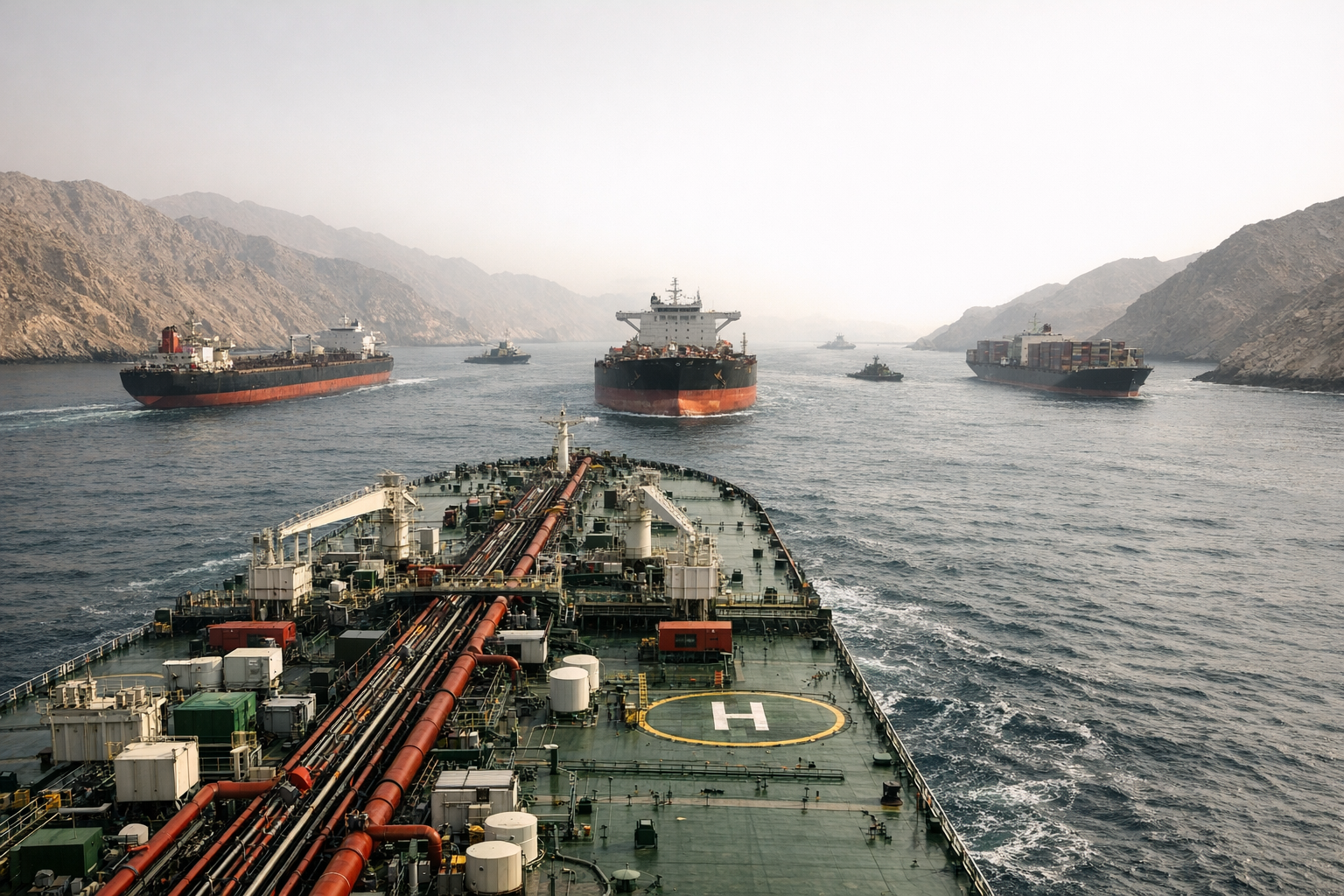
Diplomacy Falters Again as Oil Jumps on Fresh Fears Over Hormuz
The uneasy calm that followed this month’s ceasefire between the United States and Iran is giving way to a familiar pattern: stalled diplomacy, mixed signals from both governments and a fresh jolt to global energy markets.
Over the weekend, hopes for a broader diplomatic opening faded after President Donald Trump canceled a planned trip to Islamabad by his envoys, Steve Witkoff and Jared Kushner, saying Iran’s offer fell short. By Monday, new reports suggested that Tehran had floated a narrower proposal centered on the Strait of Hormuz — seeking an arrangement to reopen shipping and end the American blockade while putting off the far more contentious question of Iran’s nuclear program.
That partial opening was enough to temper some of the market panic, but not before Brent crude surged above $107 a barrel, briefly touching its highest level since the April 7 ceasefire. The move underscored how quickly traders return to the same conclusion whenever negotiations stumble: the greatest immediate danger is not only war itself, but the threat that the conflict could choke one of the world’s most critical energy corridors.
A Narrower Offer, and a Wider Impasse
The latest maneuver appears to have sharpened, rather than resolved, the basic dispute separating Washington and Tehran.
The Trump administration has insisted that any durable settlement must address Iran’s nuclear program. Iran, according to the latest reports, is instead pursuing a sequencing approach: first secure relief tied to shipping access and the Hormuz passage, then leave the nuclear issue for later negotiations.
That gap has haunted mediation efforts for weeks. Since the April ceasefire, Pakistan has sought to preserve a path toward a broader settlement, hosting regional contacts and trying to keep communication alive. But by Sunday, there were no formal negotiations scheduled, and neither side showed signs of softening its public position.
The result is a diplomatic landscape that is not entirely closed, but not meaningfully advancing either. Tehran appears to be testing whether a limited maritime arrangement could buy breathing room. Washington, so far, seems unwilling to treat that as enough.
Why Hormuz Still Moves the World
The focus on the Strait of Hormuz is not incidental. It is the pressure point that links Middle East diplomacy directly to household fuel prices, shipping costs and investor sentiment around the world.
The narrow waterway between Iran and Oman is one of the world’s most important energy chokepoints. The International Energy Agency has warned that any serious disruption there would create a major oil and liquefied natural gas supply shock. The U.S. Energy Information Administration has said that about 20 percent of global LNG trade passed through the strait in 2024.
That helps explain why oil reacted so sharply even when other financial markets did not move in lockstep. For crude traders, the risk is immediate and mechanical: if transit through Hormuz is threatened, even briefly, supply expectations tighten and prices jump.
Whether that risk becomes reality is another matter. But in energy markets, the possibility alone can be enough.
Markets Split on the Meaning of the Stalemate
The response across global markets on Monday revealed a more complicated investor mood than the oil spike alone would suggest.
European stocks opened mixed, with traders weighing the renewed diplomatic deadlock against the possibility that Iran’s reported shipping-focused proposal might yet offer a limited path away from escalation. In Asia, however, investors were more willing to look through the impasse. Stocks in Japan and South Korea climbed to record highs, suggesting that for many equity buyers, the immediate appeal of technology shares and broader optimism about growth still outweighed Middle East anxiety.
That divergence has become a defining feature of the current episode. Oil is reacting directly to supply risk, while equities are being tugged by a wider set of forces — including enthusiasm around artificial intelligence, expectations for central-bank moves and the belief that any regional disruption may remain contained.
Still, the disconnect may prove fragile. If shipping disruptions in Hormuz intensify or if the diplomatic channel closes further, energy prices could begin to weigh more heavily on stocks, particularly in import-dependent economies.
The Ceasefire Holds, but the Settlement Does Not
The ceasefire reached on April 7 ended a dangerous phase of open confrontation, but it did not settle the dispute at the heart of the conflict. That now matters more with each passing day.
Ceasefires can freeze military action; they do not automatically produce political compromise. In this case, the underlying disagreement — whether maritime de-escalation can be separated from the nuclear file — has become the central obstacle to any next step.
For Iran, a Hormuz-first approach may be an attempt to win immediate economic and strategic relief while avoiding concessions on a program it considers fundamental to national leverage. For the United States, accepting such sequencing could risk easing pressure without securing the broader commitments it says are essential.
That leaves the world in a precarious middle ground: less violence than before, but little sign of a durable framework.
What Comes Next
The immediate question is whether Washington sees enough value in Iran’s reported offer to reopen a channel, however narrow, or whether it dismisses the proposal as an effort to sidestep the nuclear issue.
A second question is whether any agreement focused only on shipping could be trusted to last. Even if vessels move more freely through Hormuz, markets may remain uneasy if the broader conflict remains unresolved. Temporary relief would not necessarily erase the fear of sudden disruption.
For now, oil traders are pricing in that uncertainty more aggressively than stock investors are. But the lesson of the past several weeks is that diplomacy and markets are moving together again, and that even a modest headline from Islamabad, Tehran or Washington can ripple quickly from the Gulf to trading floors in London, Seoul and New York.
The world’s attention has returned, once more, to a narrow stretch of water — and to talks that remain stuck on the far shore.
Sources
Further reading and reporting used to add context:
- https://www.axios.com/2026/04/27/iran-us-hormuz-strait-nuclear-talks-proposal-pakistan
- https://apnews.com/article/374d81d1aac6d8f19c21e1d1e10ab103
- https://apnews.com/article/21480b8ab2dae75935a5efc4d25e8e36
- https://www.axios.com/2026/04/20/shortfalls-will-soon-start-to-appear
- https://www.theguardian.com/world/2026/apr/26/no-headway-in-middle-east-peace-efforts-as-us-and-iran-refuse-to-yield
- https://www.bloomberg.com/news/articles/2026-04-26/latest-oil-market-news-and-analysis-for-april-27
- https://www.bloomberg.com/news/videos/2026-04-27/daybreak-europe-4-27-2026-video
- https://www.global-political-spotlight.com/articles/polymarket/briefs/us-iran-meeting-odds-collapse-before-apr-27-deadline-amid-stalled-talks-and-us-blockade-stance-20260426-1311
- https://houseofsaud.com/iran-hormuz-bifurcation-2026-04-27/
- https://www.icis.com/explore/resources/news/2026/04/23/11200551/oil-gains-on-stalled-us-iran-peace-talks-brent-crude-at-102-bbl
- https://www.axios.com/2026/04/13/the-logic-behind-the-us-blockade
- https://www.usbank.com/investing/financial-perspectives/market-news/us-stock-market-volatility-continues.html
- https://en.wikipedia.org/wiki/2026_United_States_naval_blockade_of_Iran
- https://www.theguardian.com/world/live/2026/apr/12/middle-east-crisis-live-us-iran-pakistan-peace-talks-jd-vance-delegation-leaves-without-a-deal?filterKeyEvents=false&page=with%3Ablock-69db60c08f08dd4830774a12
- https://oilprice.com/Energy/Crude-Oil/Brent-Surges-Past-110-on-Iran-Rejection.amp.html
- https://en.wikipedia.org/wiki/2026_Strait_of_Hormuz_crisis
- https://fortune.com/2026/04/12/stock-futures-oil-prices-navy-blockade-iran-exports-strait-of-hormuz/
- https://en.wikipedia.org/wiki/2026_Strait_of_Hormuz_campaign
- https://en.wikipedia.org/wiki/Strait_of_Hormuz
- https://www.grand-review.com/article/hormuz-opens-iran-declares-strait-completely-open-as-oil-prices-plunge-mo34evjg
- https://www.cnbc.com/2025/06/27/oil-set-for-weekly-loss-on-fading-mideast-supply-risks.html
- https://www.cnbc.com/2025/06/25/oil-prices-today-israel-iran-trump-ceasefire.html
- https://www.cnbc.com/2025/04/21/oil-prices-fall-as-progress-in-us-iran-talks-eases-supply-concerns.html
- https://www.cnbc.com/2025/06/17/cnbc-daily-open-irans-desire-for-ceasefire-lifts-markets-may-be-one-sided.html
- https://www.cnbc.com/2025/06/25/oil-prices-edge-higher-as-investors-assess-iran-israel-ceasefire.html
- https://www.cnbc.com/2025/06/20/brent-futures-down-nearly-2-after-us-delays-decision-on-direct-iran-involvement.html
- https://www.cnbc.com/2025/06/22/oil-prices-jump-after-us-strikes-on-iran-raise-fears-of-supply-disruption.html
- https://www.cnbc.com/2025/03/20/oil-prices-rise-on-us-data-middle-east-tensions.html
- https://www.cnbc.com/2025/06/22/oil-to-open-higher-as-us-strikes-on-iran-boost-supply-risk-premium.html
- https://www.cnbc.com/2025/04/22/oil-prices-rise-with-equities-but-tariff-worries-persist.html
- https://www.cnbc.com/2025/06/20/oil-prices-brent-wti-iran-israel-trump.html
- https://www.cnbc.com/2025/06/18/oil-prices-extend-rise-as-iran-israel-conflict-enters-sixth-day.html
- https://fm.cnbc.com/applications/cnbc.com/resources/editorialfiles/2026/04/23/Toplines_260142_CNBC_AAES_Q1_2026_Topline.pdf
- https://fm.cnbc.com/applications/cnbc.com/resources/editorialfiles/2012/07/03/2012-02-27%20Ask%20Warren%20Transcript.pdf
- https://fm.cnbc.com/applications/cnbc.com/resources/editorialfiles/2026/01/12/warrenletter.pdf
- https://fm.cnbc.com/applications/cnbc.com/resources/editorialfiles/2020/10/06/investigation_of_competition_in_digital_markets_majority_staff_report_and_recommendations.pdf
- https://fm.cnbc.com/applications/cnbc.com/resources/editorialfiles/2024/06/13/YEM_Houthi-Attacks-Pressuring-International-Trade.pdf
- https://www.axios.com/2026/04/23/iran-strait-hormuz-mines-trump
- https://www.iea.org/about/oil-security-and-emergency-response/strait-of-hormuz
- https://www.eia.gov/todayinenergy/detail.cfm?id=7830
- https://www.eia.gov/todayinenergy/detail.php?id=65584
- https://www.iea.org/news/middle-east-crisis-disrupts-international-natural-gas-markets-and-delays-global-lng-supply-wave
- https://www.eia.gov/pressroom/releases/press586.php
- https://www.politifact.com/article/2026/mar/11/hormuz-strategic-petroleum-reserve-iran-war/
- https://www.iea.org/news/iea-closely-monitoring-strait-of-hormuz-situation-stands-ready-to-act-if-needed
- https://www.icis.com/explore/resources/news/2026/03/18/11189904/crude-summary-oil-prices-rise-as-iran-war-continues/?news_id=11197729
- https://www.politifact.com/article/2026/apr/06/strait-hormuz-commodities-helium-aluminum-fertiliz/
- https://www.iea.org/data-and-statistics/charts/share-of-strait-of-hormuz-flows-in-the-global-lng-balance-2021-2025
- https://www.theglobalstatistics.com/strait-of-hormuz-importance-statistics/
- https://oilprice.com/Latest-Energy-News/World-News/IEA-Strait-of-Hormuz-Has-Lost-Its-Status-as-Reliable-Energy-Route.html
- https://www.lemonde.fr/en/economy/article/2026/03/20/closure-of-strait-of-hormuz-is-greatest-global-energy-security-threat-in-history-warns-iea-chief_6751653_19.html
- https://www.lemonde.fr/en/economy/article/2026/03/12/iea-s-release-of-400-million-barrels-is-unprecedented-but-its-effectiveness-is-debated_6751361_19.html
- https://www.axios.com/2026/04/01/oil-prices-200-barrel-strait-hormuz
- https://www.axios.com/2026/03/13/iran-war-trump-officials-ship-escorts-hormuz-strait
- https://www.mufgamericas.com/sites/default/files/document/mufgamericas_com/2026-03/Chart_of_the_Day_3_2_The_Strait_of_Hormuz.pdf
- https://en.wikipedia.org/wiki/European_Maritime_Awareness_in_the_Strait_of_Hormuz
- https://www.eia.gov/international/content/analysis/special_topics/world_oil_transit_chokepoints/wotc.pdf
- https://www.axios.com/2026/04/25/trump-iran-pakistan-talks
- https://apnews.com/article/313e19ff213738620abe31c96eb38368
- https://www.theguardian.com/world/live/2026/apr/25/middle-east-crisis-live-witkoff-and-kushner-head-to-pakistan-for-iran-negotiations?page=with%3Ablock-69ed4e238f089bd0e8b206be
- https://www.theguardian.com/world/live/2026/apr/25/middle-east-crisis-live-witkoff-and-kushner-head-to-pakistan-for-iran-negotiations
- https://www.theguardian.com/world/live/2026/apr/25/middle-east-crisis-live-witkoff-and-kushner-head-to-pakistan-for-iran-negotiations?filterKeyEvents=false&page=with%3Ablock-69ed10268f089bd0e8b205a7
- https://www.theguardian.com/world/live/2026/apr/25/middle-east-crisis-live-witkoff-and-kushner-head-to-pakistan-for-iran-negotiations?page=with%3Ablock-69ed60058f08f6bc6f72fcf9
- https://www.military.com/daily-news/2026/04/24/trump-dispatches-witkoff-and-kushner-pakistan-new-talks-irans-foreign-minister.html
- https://www.theguardian.com/world/2026/apr/25/trump-cancels-envoys-pakistan-trip-iran-talks
- https://www.cbsnews.com/news/trump-canceled-kushner-witkoff-trip-pakistan-iran-talks/
- https://www.latimes.com/world-nation/story/2026-04-24/trump-dispatches-witkoff-kushner-to-pakistan-for-new-talks-with-irans-foreign-minister
- https://www.theguardian.com/world/live/2026/apr/25/middle-east-crisis-live-witkoff-and-kushner-head-to-pakistan-for-iran-negotiations?page=with%3Ablock-69ed2b0f8f089bd0e8b20648
- https://www.wbap.com/2026/04/25/trump-no-longer-sending-witkoff-and-kushner-to-pakistan-for-iran-talks/
- https://www.theguardian.com/world/live/2026/apr/25/middle-east-crisis-live-witkoff-and-kushner-head-to-pakistan-for-iran-negotiations?page=with%3Ablock-69ed1e5c8f08d9ffbf2f7091
- https://www.opb.org/article/2026/04/24/trump-dispatches-witkoff-and-kushner-to-pakistan-for-new-talks-with-iran-s-foreign-minister/
- https://elpais.com/expres/2026-04-26/la-segunda-ronda-que-no-fue-trump-cancela-el-viaje-de-sus-enviados-a-islamabad-y-culpa-a-iran-del-bloqueo.html
- https://en.wikipedia.org/wiki/2026_Iran_war_ceasefire
- https://en.wikipedia.org/wiki/2025%E2%80%932026_Iran%E2%80%93United_States_negotiations
- https://en.wikipedia.org/wiki/Islamabad_Talks
- https://apnews.com/article/3e4d531c5ffa6b2ea91eb8a3c84b5822
- https://www.investing.com/news/stock-market-news/asia-stocks-nikkei-kospi-hit-record-highs-tracking-wall-st-iran-tensions-remain-4637582
- https://www.ndtvprofit.com/markets/asian-stocks-markets-today-april-27-nikkei-kospi-hit-record-high-as-asian-markets-shrug-off-stalled-us-iran-talks-11413368
- https://www.tbsnews.net/world/global-economy/chips-carry-stocks-higher-oil-jumps-stalled-peace-talks-1422416
- https://koreajoongangdaily.joins.com/news/2026-04-21/business/finance/Kospi-reaches-new-record-high-on-hopes-of-second-round-of-USIran-peace-talks-tech-rally/2574300
- https://en.yna.co.kr/view/AEN20260423008400320
- https://www.investing.com/news/stock-market-news/european-shares-gain-on-hopes-of-potential-usiran-peace-talks-4611893
- https://za.investing.com/news/stock-market-news/wall-st-futures-slip-as-investors-pause-for-clarity-on-usiran-war-4227593
- https://www.theguardian.com/business/live/2026/apr/27/oil-prices-high-us-iran-peace-talks-stock-markets-house-prices-latest-news-updates
- https://krro.com/2026/04/23/asia-shares-mixed-oil-advances-on-us-iran-deadlock/
- https://www.reutersconnect.com/item/stocks-plunge-in-south-korea-amid-us-iran-war/dGFnOnJldXRlcnMuY29tLDIwMjY6bmV3c21sX01UMVpVTUEwMDA0R1pYVUQ
- https://www.reutersconnect.com/item/analyst-sees-tipping-point-as-asian-shares-slide-on-failed-us-iran-talks/dGFnOnJldXRlcnMuY29tLDIwMjY6bmV3c21sX1ZBMTk0NzEzMDQyMDI2UlAx
- https://www.lgt.com/global-en/market-assessments/market-view/stocks-mixed-as-iran-ceasefire-extension-clouds-outlook-341812
- https://en.wikipedia.org/wiki/Prelude_to_the_2026_Iran_war
- https://alrajhi-capital.sa/-/media/Feature/AlRajhiCapital/ResearchListing/Daily-Reports/2026/april/DMR-English—21-April-2026.pdf
- https://en.wikipedia.org/wiki/2026_Israel%E2%80%93Lebanon_ceasefire
- https://en.wikipedia.org/wiki/Economic_impact_of_the_2026_Iran_war
- Iran offers to end chokehold on Strait of Hormuz and asks US to end blockade, officials say
- Strait of Hormuz – About – IEA
- Iran offers U.S. deal to reopen strait but postpone nuclear talks