
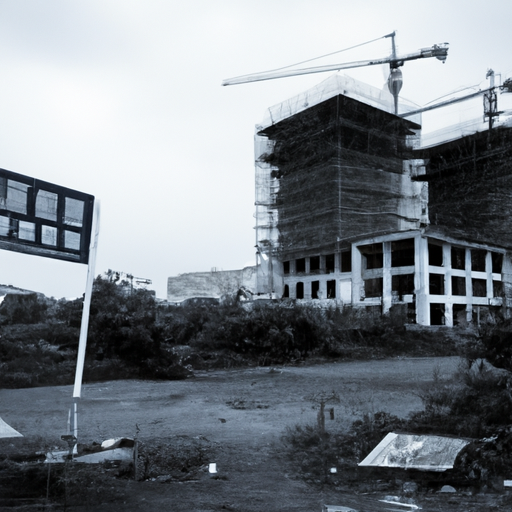
In a nation where real estate has long been a bulwark of economic growth and stability, China’s undeterred property woes have sent unsettling ripples through its financial ecosystem. Urgent appeals for far-reaching policy assistance are multiplying, as the difficulties gripping the property sector refuse to abate.
Prospective homebuyers are not biting, instead deferring purchases and leaving an industry perilously laden with weak sales. Housing sales fell for a third straight month in September, dropping 16.9% from a year earlier, a telling sign of the dour market sentiment. The weak demand has sounded a loud and clear clarion call for policymakers to ramp up their support for the teetering industry.
The tremors felt in the real estate market matter not just to China, but the world. China’s property industry accounts for a considerable segment of the global economy. A failure there would be felt worldwide, shaking confidence and potentially influencing global interest rates, commodity prices, and company sales. It would add to existing disturbances caused by a global supply chain crisis, escalating energy prices, and hopes of post-pandemic economic recovery.
The reluctance of homeowners to invest in the uncertain real estate market has resulted in an increased demand for bolder and more progressive policies to shore up faith in the industry. Implicit in this growing call for government intervention is a hope that emboldening policy could stem the tide of slipping property sales, helping to regain the confidence of potential buyers and mitigate the overall economic fallout.
The Chinese government recently began imposing regulations aimed at curbing runaway home prices and reducing the head-spinning levels of debt in the property sector. However, these measures may need to be complemented by extensive financial relief, subsidies and policy changes to meet the severity of the crisis.
Yet escalating the scale of state intervention is fraught with its own perils. China’s leaders must strike a fine and delicate balance: enough of a boost to stabilize the industry, but not so much that it ignites moral hazard, encouraging reckless behavior amongst property developers. Strains in this sector can hardly be isolated and hence, a well-navigated, coordinated response from policymakers is indeed critical in reaction to an issue that carries significant economic implications.
The escalating property woes are, in truth, morphing into a stern test for the Chinese government’s policy prowess, cautioning how closely in step China’s economic policy, property market, and overall financial health dance with each other. They also underscore how the tremors from this staid industry shake not just China, but the global economy, crystallizing the notion that in our interconnected world, when China sneezes, we all risk catching a cold.
As China’s property troubles show no signs of ebbing, the chorus of voices calling for amplified policy measures grows louder. Only time will reveal whether China’s policymakers are capable of conducting a symphony of ingenious solutions that won’t just prop up the property sector, but also protect its own economy, and in effect, the global market.