
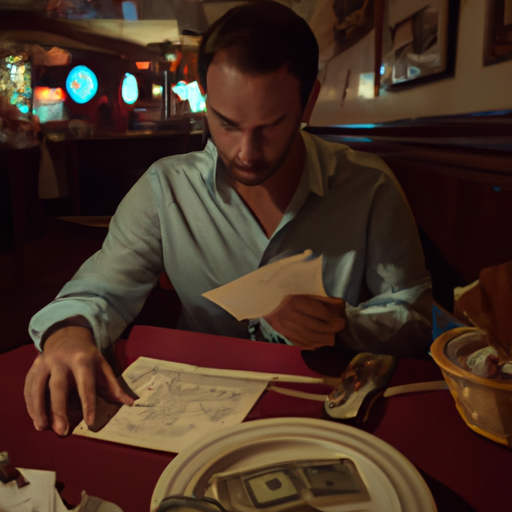
In the labyrinthine world of modern dating, navigating conversations of money is fraught with as much tension as deciphering the enigmatic language of the heart itself. A particularly poignant story currently piquing public interest revolves around an enrapturing age-old custom turned upside-down: a man, who, after paying for a first date, asked for his money back when the woman declined a second rendezvous.
This incident has ensued igniting a heated dialogue, moderating expectations, etiquette, and ultimately about values ingrained in society. The encounter, coursing through the veins of social platforms, has evoked startled gasps, empathetic cringes, and myriad reflections on the intricate entanglement of romance and finance.
The normative expectation for men to foot the bill on a first date has been a persistent part of courtship culture in much of the West, rooted in a time when women didn’t have the same financial independence as they do today. However, as the socio-economic environment has evolved, so have the standards of dating. Women are now significantly more empowered and independent, leading to a shift toward shared responsibilities and costs. Yet, while progress has undeniably taken place, some antiquated notions seemingly continue to hold sway.
What makes this particular narrative both ludicrous and somewhat tragic is that within its subplot resides the tale of a man reduced down to the transactional value of a date, overshadowing any grand gestures of bonding. There underlying belief that the cost of the date somehow bound the woman to a subsequent date reveals an astonishing lack of understanding of the interpersonal dynamics that should inspire such rendezvous.
Assuredly, embarking on a romantic journey is not underwritten by guarantees. Drawing explicit financial contracts in the world of courtship inadvertently reduces the magic of affections down to mere economics of transaction. It is, rather, an exploration of shared interests, chemistry, and compatibility, elements that cannot be bought or refunded.
Furthermore, women have continually found themselves having to defend their intentions and actions while dating. This narrative points out a regrettably prevalent idea that if a man spends money on a date, the woman is indebted to him in some form, painting an unflattering portrait of gender dynamics still present in society today.
Many men and women alike have argued that if a man offers to pay for a date, it should be seen as just that: an offer, not an investment with an expected return. As we continue to push for gender equality, discussions around these dating norms must continue in earnest. The criterion for a second date must be established not based on any financial expenditure but mutual interest, attraction and respect.
Syrupy-sweet fantasies of romance are often laced with traces of realism, but it is unusual for them to be intricately intertwined with stark monetary terms. One wonders whether such incidents are only a deviation or perhaps a signal of greater changes to come in dating culture’s etiquette and practices. One thing remains for certain; the evolutionary specter of love and dating continues to be as unpredictable as it is confronting.