
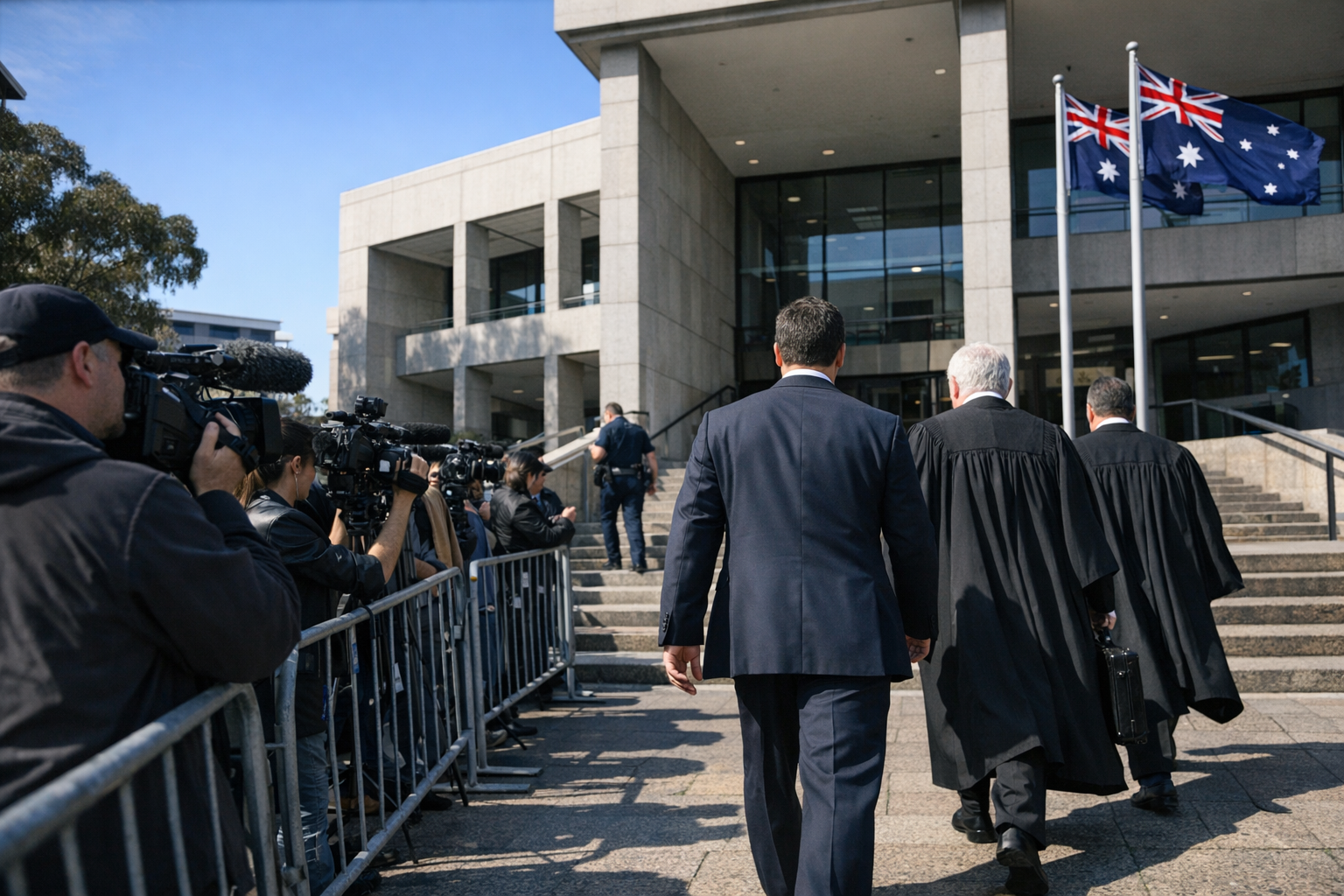
Australia’s most prominent war-crimes case moves into a new phase
Ben Roberts-Smith, the former Australian special forces soldier once celebrated as a national hero, was released on bail on Friday after being charged with five counts of war-crime murder, as newly surfaced court documents set out in stark detail allegations that unarmed Afghan civilians were detained, questioned and then executed during Australian operations in Afghanistan.
The former SAS corporal, a Victoria Cross recipient, was charged on April 7 over the alleged killings of five Afghan nationals in Uruzgan province in 2009 and 2012. Prosecutors say each count carries a potential life sentence. He has not entered a plea, and the allegations have not been tested in a criminal trial.
His release marks a procedural turning point in one of the most consequential prosecutions to emerge from Australia’s long reckoning over conduct by its elite troops in Afghanistan. With bail granted under strict conditions, the case now moves toward the slow and contested pretrial stages of disclosure, evidence challenges and committal proceedings that could take months, if not years.
Allegations of detainees shot after being restrained
According to prosecution facts tendered in a New South Wales court, Afghan men who were unarmed were allegedly handcuffed, detained and questioned before being killed in circumstances where Australian forces had control of the area and were not in active combat with enemy fighters.
The documents allege that weapons or other items were planted on or falsely associated with the dead to make the killings appear lawful under the rules of engagement. In one episode, prosecutors allege, Roberts-Smith forced a detainee onto his knees and ordered a subordinate soldier to shoot him.
The court papers also indicate that some of the evidence will come from Roberts-Smith’s former comrades, who told investigators they either carried out shootings at his direction or were complicit in the aftermath. Such testimony is likely to become central to the prosecution’s case — and to the defense effort to challenge credibility, motive and memory after so many years.
The allegations are especially grave because prosecutors say the victims were killed not in the confusion of battle, but after they had been taken into custody and while Australian forces had effective control of the surroundings.
Bail granted with tight restrictions
The court allowed Roberts-Smith to remain in the community while awaiting further proceedings, accepting that concerns about flight or interference could be managed with stringent conditions. Those conditions include regular police reporting, surrender of his passport, restrictions on travel and communication devices, and a 250,000 Australian dollar surety.
The brief of evidence is due by May 24, and the matter is scheduled to return to court for a committal mention on June 4.
For prosecutors and defense lawyers alike, the bail decision shifts the center of gravity from the drama of arrest to the harder task ahead: whether the Commonwealth can convert years of investigation into a criminal case capable of meeting the far higher standard of proof required at trial.
A test of Australia’s accountability drive
The prosecution is among the most significant cases brought by Australia’s Office of the Special Investigator, which was created to examine allegations of war crimes committed during the Afghanistan conflict. The office’s work followed a landmark 2020 military inquiry that found credible information that Australian special forces had unlawfully killed 39 Afghan prisoners, farmers and other noncombatants.
The Roberts-Smith matter is widely seen as a test of whether those findings can lead to criminal accountability in court. Investigators have spent years assembling evidence in cases complicated by distance, the passage of time, the destruction or absence of battlefield evidence and the difficulty of securing testimony about events in remote parts of Afghanistan more than a decade ago.
Those obstacles are likely to loom large. Prosecutors may have to rely heavily on soldier witnesses, including some who could face searching questions about their own roles and any indemnities or protections offered to them. National security restrictions, secrecy claims and the intense publicity surrounding the case could also shape how — and when — any trial proceeds.
The shadow of an earlier legal battle
The criminal case arrives after Roberts-Smith’s long and bruising defamation fight against Australian newspapers ended in a devastating defeat for him. In that civil proceeding, a judge found that key allegations that he was involved in unlawful killings in Afghanistan were substantially true, a ruling later left undisturbed when Australia’s High Court declined to hear a further appeal in 2025.
That outcome, however, does not determine the criminal charges now before the court. Civil findings are made on the balance of probabilities; criminal guilt must be proved beyond reasonable doubt.
That distinction is likely to define the next chapter of the case. Roberts-Smith’s public fall — from decorated soldier and symbol of military valor to defendant in a war-crimes prosecution — has already transformed Australia’s debate over the Afghanistan war. What comes next will determine whether the country’s promised reckoning can withstand the demands of a criminal courtroom.
Sources
Further reading and reporting used to add context:
- Victoria Cross recipient Ben Roberts-Smith charged with war crimes, taken into custody – ABC News
- https://www.theguardian.com/australia-news/2026/apr/10/war-memorial-amends-ben-roberts-smith-display-after-former-soldier-charged-with-war-crimes
- Attorney-General (Cth) v Benjamin Roberts-Smith | Commonwealth Director of Public Prosecutions
- https://www.theguardian.com/australia-news/2026/apr/07/ben-roberts-smith-arrested-brs-australian-soldier-sas-alleged-war-crimes-ntwnfb
- https://www.theguardian.com/australia-news/2026/apr/09/ben-roberts-smith-presumption-innocence-andrew-law-hastie-ntwnfb
- https://www.theguardian.com/australia-news/2026/apr/08/ben-roberts-smith-court-news-war-crimes-charges-silverwater-jail-ntwnfb
- https://www.theguardian.com/australia-news/2026/apr/08/ben-roberts-smith-brs-gina-rinehart-alleged-war-crimes-arrest-ntwnfb
- https://www.theguardian.com/australia-news/2026/apr/11/ben-roberts-smith-arrest-war-hero-australian-psyche-ntwnfb
- https://www.theguardian.com/australia-news/2026/apr/08/ben-roberts-smith-brs-war-crimes-allegations-difference-defamation-criminal-trial-ntwnfb
- https://www.theguardian.com/australia-news/2026/apr/07/ben-roberts-smith-alleged-war-crimes-analysis-ntwnfb
- https://www.abc.net.au/news/2026-04-07/war-memorial-review-ben-roberts-smith-display-war-crimes-charges/106539330
- https://www.abc.net.au/news/2026-04-07/ben-roberts-smith-charged-war-crimes/106539678
- https://www.abc.net.au/reslib/201308/r1152857_14461752.pdf
- https://lpab.nsw.gov.au/content/dam/dcj/ctsd/supreme-court/documents/daily-court-list/Daily_Court_List_for_30_January_2026.pdf
- https://www.abc.net.au/dat/news/elections/nt/2016/guide/maps/fong.pdf
- https://www.parliament.nsw.gov.au/hp/housepaper/29405/D230914.23.pdf
- https://supremecourt.nsw.gov.au/content/dam/dcj/ctsd/supreme-court/documents/daily-court-list/Daily_Court_List_for_22_April_2025.pdf
- https://www.abc.net.au/tv/credits/War_On_Waste_ProgramCredits.pdf
- https://apnews.com/article/a64ad62169be971b96bdd0c3b44c9262
- https://abcnews.com/International/wireStory/decorated-australian-veteran-remains-bars-afghan-war-crime-131825638
- https://www.cdpp.gov.au/prosecution-naveed-akram/court-updates
- https://www.abc.net.au/news/2026-04-08/naus_brscourtnc_0804/106541244
- https://www.independent.co.uk/bulletin/news/ben-roberts-smith-war-crime-soldier-sydney-b2953554.html
- https://www.cbsnews.com/news/ben-roberts-smith-australia-soldier-war-crime-murders-afghanistan/
- https://www.thehour.com/news/world/article/australia-s-most-decorated-veteran-granted-bail-22211410.php
- https://en.wikipedia.org/wiki/Roberts-Smith_v_Fairfax_Media_Publications_Pty_Limited
- https://www.abc.net.au/news/2025-09-04/nsw-ben-roberts-smith-special-leave-application-rejected-court/105733410
- https://www.kyfreepress.com.au/national/bailed-neo-nazis-call-to-free-accused-war-criminal/
- https://www.theguardian.com/australia-news/live/2026/apr/08/ben-roberts-smith-court-anthony-albanese-labor-angus-taylor-matt-canavan-liberal-national-coalition-fuel-prices-oil-crisis-iran-war-ntwnfb?filterKeyEvents=false
- https://en.wikipedia.org/wiki/Ben_Roberts-Smith
- https://www.reddit.com/r/aussie/comments/1snnx4v/ben_robertssmith_released_on_bail/
- https://www.reddit.com/r/australia/comments/1sno01m/former_soldier_ben_robertssmith_granted_bail_over/
- https://www.reddit.com/r/auslaw/comments/1snoi7w/former_soldier_ben_robertssmith_granted_bail_over/
- https://www.reddit.com/r/auslaw/comments/1smzajz/brs_seeks_public_funding_for_defence/
- https://www.reddit.com/r/australia/comments/1sfcug7/ben_robertssmith_does_not_apply_for_bail_in_first/
- https://www.reddit.com/r/australian/comments/1snscv2/ben_robertssmith_australias_most_decorated_living/
- https://www.reddit.com/r/auslaw/comments/1sfd2o2/ben_robertssmith_does_not_apply_for_bail_in_first/
- https://kuwaittimes.com/uploads/pdf/2026/04/08/kt_pdf-20260408-1.pdf
- https://help.abc.net.au/hc/en-us/articles/6197007429647-Where-can-I-listen-to-live-sport-on-ABC-Radio
- https://www.abc.net.au/news/2023-06-01/ben-roberts-smith-war-crimes-established-in-federal-court/102422952
- https://www.abc.net.au/news/2025-05-17/nsw-ben-roberts-smith-appeal-dismissal-high-court/105301964
- https://www.abc.net.au/news/2021-06-17/ben-roberts-smith-gives-evidence-for-fifth-day-defamation-trial/100221992
- https://www.abc.net.au/news/2025-06-18/ben-robert-smith-takes-legal-battle-to-the-high-court/105429954
- https://www.abc.net.au/news/2023-06-02/ben-roberts-smith-fall-from-grace-explained/102425484
- https://www.abc.net.au/news/2025-09-24/war-memorial-updates-ben-roberts-smith-exhibit-again/105813004
- https://www.abc.net.au/news/2025-05-20/ben-roberts-smith-federal-court-release-reasons-appeal-dismissal/105314354
- https://www.abc.net.au/news/2021-05-25/ben-roberts-smith-wiped-contents-of-laptop-court-told/100164094
- https://www.abc.net.au/tv/credits/Ms_Represented_Program_Credits.pdf
- https://www.abc.net.au/tv/credits/WTWISO_Credits_FINAL.pdf
- https://www.abc.net.au/dat/news/elections/wa/2021/guide/WA2017-ElectionResults.pdf
- https://www.abc.net.au/tv/credits/Queerstralia_Episode_3_Credits.pdf
- https://apnews.com/article/4ae665c30f06fd959f39cc7f1336ef32
- https://www.theguardian.com/australia-news/2021/jun/18/ben-roberts-smith-tells-court-afghan-man-killed-in-australian-raid-was-not-handcuffed
- https://www.theguardian.com/australia-news/2022/mar/31/ben-roberts-smith-ordered-sas-comrade-to-mock-execute-another-australian-soldier-court-hears
- https://www.abc.net.au/news/2022-02-05/ben-roberts-smith-ex-sas-mates-drop-bombshells-defamation-trial/100805646
- https://psnews.com.au/ben-roberts-smith-accused-of-murdering-or-directing-others-to-kill-unarmed-detainees/176779/
- https://www.theguardian.com/australia-news/2022/feb/02/ben-roberts-smith-ordered-australian-soldier-to-execute-unarmed-afghan-man-court-hears
- https://aapnews.aap.com.au/news/high-court-scuttles-roberts-smith-final-appeal-bid
- https://www.theguardian.com/australia-news/2022/feb/28/former-sas-soldier-tells-court-he-saw-ben-roberts-smith-kick-handcuffed-man-off-a-cliff-before-he-was-shot-dead
- https://www.aljazeera.com/news/2023/6/6/australian-soldier-ben-roberts-smith-complicit-in-murder-judge
- https://time.news/ben-roberts-smith-arrested-alleged-war-crimes-and-murders-in-afghanistan/
- https://www.theguardian.com/australia-news/2024/feb/12/ben-roberts-smith-hard-to-understand-how-afghan-man-died-other-than-by-unlawful-execution-judge-says
- Ben Roberts-Smith’s comrades say he ordered them to execute unarmed civilians, court documents show | Ben Roberts-Smith | The Guardian
- Ben Roberts-Smith released from prison on bail after being charged with five counts of war crime murder | Ben Roberts-Smith | The Guardian
- Ben Roberts-Smith loses final legal bid to overturn defamation ruling – ABC News