
A Fragile Truce in Lebanon Opens a Narrow Path to Wider Calm
A 10-day cease-fire between Israel and Hezbollah took effect on Thursday, raising cautious hopes that one of the most volatile fronts in the Middle East crisis might, at least briefly, be contained — and that the pause could create an opening for broader diplomacy tied to the conflict with Iran.
The truce, brokered by the United States and announced by President Trump after talks with Prime Minister Benjamin Netanyahu of Israel and President Joseph Aoun of Lebanon, appeared by early Friday to be largely holding. But even as international officials welcomed the agreement, the warnings from the ground underscored how precarious it remained.
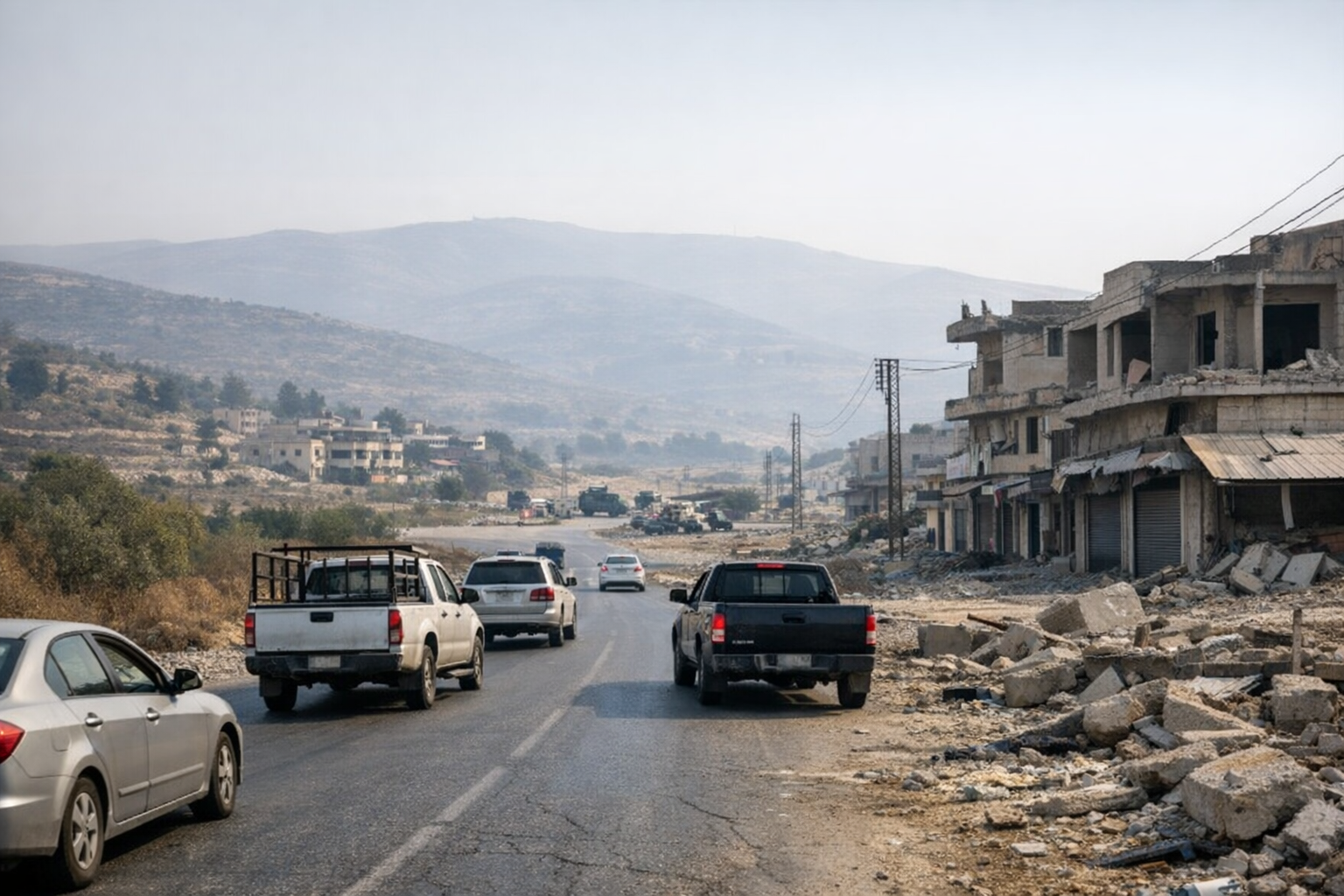
The Israeli military told residents not to return to areas south of the Litani River despite the cease-fire. Lebanese authorities, too, warned displaced civilians against rushing home after reports of intermittent shelling around the start of the pause. Some Lebanese families nevertheless began heading back toward the south, testing whether the lull would prove real enough to risk the journey.
For now, the agreement amounts less to a settlement than to a high-stakes suspension of a war that has widened for weeks alongside the confrontation involving Iran.
A Pause With Regional Stakes
The cease-fire’s significance lies not only in Lebanon itself, but in what diplomats and markets believe it could signal for the broader region.
Fighting along the Israel-Lebanon border had become one of the most immediate dangers of a wider escalation, complicating efforts to preserve and extend a separate Iran-related cease-fire window. By easing pressure on that front, the Lebanon deal is being cast by Washington and by international officials as a possible bridge to larger negotiations.
Mr. Trump said the war with Iran was going “swimmingly” and suggested it “should be ending pretty soon,” comments that came as the Lebanon truce took hold. Senior American officials, including Vice President JD Vance, Secretary of State Marco Rubio and Gen. Dan Caine, the chairman of the Joint Chiefs of Staff, are expected to remain involved in follow-up diplomacy with both sides.
The United Nations secretary general, António Guterres, called for the cease-fire to be fully respected and said he hoped it would pave the way for negotiations. The United Nations has also renewed calls for implementation of Security Council Resolution 1701, the long-standing framework meant to keep southern Lebanon free of unauthorized armed forces and reduce the risk of direct confrontation across the border.
Whether that framework can be revived in practice is far from clear.
First Direct Talks in Decades
The truce follows a notable diplomatic moment: earlier this week, Israeli and Lebanese officials held direct talks in Washington, their first such diplomacy in decades. That alone reflected how sharply the crisis had altered old taboos.
The current round of fighting began after Hezbollah opened a new front on March 2, linking its campaign to the wider regional conflict. Israel responded with escalating military operations in Lebanon. Since then, the war has exacted a devastating humanitarian toll, displacing hundreds of thousands of people and, by some estimates, more than a million. Lebanese casualty figures have risen into the thousands, and entire communities in the south have been emptied or damaged.
That destruction has given urgency to any pause, even a short one. But it has also made the politics of enforcement much harder. Israel has signaled that it does not intend to abandon its security concerns in southern Lebanon, while Hezbollah has maintained that it reserves the right to respond if the truce is violated.
Those positions leave considerable room for the agreement to fray.
Why Markets Are Paying Attention
Energy markets responded quickly to the possibility that the latest cease-fire could help prevent a broader regional blowup. Oil prices fell after the announcement, as traders reassessed the near-term risk of a supply shock in the Middle East.
That reaction reflected more than confidence in the Lebanon deal itself. It was also a measure of relief that the crisis had, at least for the moment, not expanded into a more direct threat to major energy routes or infrastructure. Investors have been searching for signs that the region’s overlapping conflicts might be contained before they trigger a more disruptive phase.
The truce offered one such sign — though only tentatively.
The Questions That Will Decide What Comes Next
The coming days are likely to determine whether this is merely a tactical pause or the start of something more durable.
Among the central questions are whether Israel will curb operations in southern Lebanon beyond the formal cease-fire terms; whether Hezbollah will accept tighter constraints on its movement and military activity; whether monitoring and enforcement mechanisms can be established with enough credibility to prevent renewed clashes; and whether civilians can return safely to their homes.
Above all hangs the larger diplomatic test: whether progress in Lebanon can translate into broader de-escalation involving Iran before the current cease-fire window closes next week.
For a region that has lurched from one emergency to the next, a 10-day pause is a slender achievement. Still, after weeks in which each front seemed only to feed the next, even a fragile silence on the Israel-Lebanon border is being treated as a rare chance to interrupt the momentum of war.
Sources
Further reading and reporting used to add context:
- https://apnews.com/article/e0412bb734d09aef492051c1730b5821
- https://apnews.com/article/4bd5a29af608ecbd72356559b3c55d67
- https://apnews.com/article/f27b531b7ff32e75a261b62603379a69
- https://apnews.com/article/50e10bf2aa9b0b658c51e17db3eb3b13
- https://www.axios.com/2026/04/16/lebanon-ceasefire-trump-aoun-israel-netanyahu
- https://apnews.com/article/80f5a0a27bb28d9fe4236b961b60ab21
- https://english.alarabiya.net/News/middle-east/2025/01/17/un-chief-urges-end-to-israel-occupation-operations-in-south-lebanon
- https://www.aa.com.tr/en/world/un-chief-welcomes-10-day-ceasefire-announcement-between-lebanon-israel/3908351
- https://www.washingtonpost.com/world/2026/04/16/trump-iran-israel-lebanon-ceasefire-talks/
- https://www.theguardian.com/world/2026/apr/08/middle-east-ceasefire-doubt-israel-lebanon-iran-oil-tankers/
- https://www.investing.com/news/commodities-news/us-crude-oil-futures-fall-over-3-as-trump-announces-israeliran-ceasefire-4106850
- https://www.aljazeera.com/news/2026/3/14/un-chief-guterres-says-no-military-solution-only-diplomacy-for-lebanon
- https://finance.yahoo.com/markets/commodities/articles/oil-price-slides-4-ceasefire-110443201.html
- https://www.aljazeera.com/news/2025/8/28/un-security-council-renews-unifil-mission-in-lebanon-until-end-of-2026
- https://www.jpost.com/middle-east/article-893106
- https://www.washingtonpost.com/business/2026/04/14/oil-prices-stock-markets-trump-iran-ceasefire/6b8e0d00-37bf-11f1-90c4-9772c7fabc03_story.html
- https://www.aljazeera.com/news/2026/4/10/will-israel-and-lebanon-start-ceasefire-talks
- https://www.aljazeera.com/news/2026/4/11/israel-rejects-ceasefire-with-hezbollah-ahead-of-lebanon-talks-next-week
- https://en.wikipedia.org/wiki/2026_Kharg_Island_attack
- https://unifil.unmissions.org/en/press-releases/unifil-statement-04-march-2026
- https://www.un.org/sg/en/content/highlight/2026-04-09.html
- https://www.un.org/sg/en/content/sg/press-events/2026-03-13/secretary-generals-press-stakeout-after-meeting-speaker-of-the-lebanese-house-of-parliament-of-nabih-berri
- https://www.whitehouse.gov/briefings-statements/2025/01/white-house-statement-on-agreement-extension-between-lebanon-and-israel/?query-11-page=22
- https://www.un.org/sg/en/content/highlight/2026-04-01.html
- https://www.un.org/sg/en/node/402241
- https://www.un.org/sg/en/content/highlight/2026-04-10.html
- https://www.whitehouse.gov/releases/2026/04/peace-through-strength-operation-epic-fury-crushes-iranian-threat-as-ceasefire-takes-hold/
- https://www.un.org/sg/en/content/highlight/2026-03-09.html
- https://www.un.org/sg/en/content/highlight/2026-04-14.html
- https://lebanon.un.org/en/node/98642
- https://press.un.org/en/2024/sgsm22481.doc.htm
- https://peacemaker.un.org/sites/default/files/document/files/2024/05/il20lb960426israel-lebanon20ceasefire20understanding.pdf
- https://www.whitehouse.gov/wp-content/uploads/2026/01/OSTP-Intern-2026-Guidance.pdf
- https://travel.state.gov/content/dam/visas/Bulletins/visabulletin_April2026.pdf
- https://unispal.un.org/pdfs/741D0A26BF64FFE485257B59004A9341.pdf
- https://travel.state.gov/content/dam/visas/Statistics/Immigrant-Statistics/MonthlyIVIssuances/APRIL%202025%20-%20IV%20Issuances%20by%20FSC%20or%20Place%20of%20Birth%20and%20Visa%20Class.pdf
- https://estatements.un.org/estatements/11.0020/20251112100000000/alugVQBs/RmPketIwt_nyc_m.pdf
- https://apnews.com/article/d94b334566c4e8650be76981b6dff174
- https://apnews.com/article/e85410b6f404ddd45a9da0a09f1c285f
- https://www.aljazeera.com/news/2026/4/16/trump-says-israel-and-lebanon-agree-to-temporary-ceasefire
- https://www.theguardian.com/world/2025/jan/24/israel-trump-delay-withdrawal-troops-lebanon-deadline-ceasefire-pact
- https://www.theguardian.com/world/live/2026/apr/16/middle-east-crisis-live-iran-war-news-us-trump-ceasefire-deal-lebanon-israel-oil-sanctions-latest-updates?filterKeyEvents=false&page=with%3Ablock-69e118438f0802e30ef2d916
- https://www.cnbc.com/2025/06/24/oil-prices-fall-to-over-one-week-lows-as-trump-announces-israel-iran-ceasefire-.html
- https://www.washingtonpost.com/world/2025/02/17/israel-lebanon-hezbollah-ceasefire/
- https://fortune.com/2026/04/16/trump-israel-and-lebanon-agree-to-cease-fire/
- https://www.theguardian.com/world/2026/apr/08/oil-prices-stock-today-futures-crude-donald-trump-iran-ceasefire
- https://en.wikipedia.org/wiki/2026_Israel%E2%80%93Lebanon_peace_talks
- https://www.forbes.com/sites/zacharyfolk/2026/04/16/trump-announces-israel-lebanon-10-day-ceasefire//
- https://www.aljazeera.com/news/2025/2/18/israel-refuses-to-fully-withdraw-from-lebanon-heres-what-to-know
- https://www.aljazeera.com/news/2025/1/24/israel-steps-up-attacks-in-lebanons-south-as-ceasefire-deadline-looms
- https://www.washingtonpost.com/business/2026/04/09/stock-markets-trump-iran-ceasefire-oil/c5d8f20a-33cf-11f1-b85b-2cd751275c1d_story.html
- https://en.wikipedia.org/wiki/Twelve-Day_War_ceasefire
- https://apnews.com/article/297a8d2bb94add26e503a4ef3a5d1151
- https://apnews.com/article/28b207b800de1804d8c2ab5242237542
- https://theweek.com/world-news/israel-lebanon-rare-talks-fighting-war
- https://www.mercycorps.org/press-room/releases/lebanon-war-displacement-humanitarian-aid-funding
- https://www.un.org/en/nearly-700000-displaced-lebanon-middle-east-crisis-escalates
- https://www.unfpa.org/resources/situation-report-humanitarian-crisis-lebanon-10-17-march-2026
- https://www.unrefugees.org/news/2026/3/unhcr-almost-700-000-displaced-in-a-week-across-lebanon-as-crisis-deepens/
- https://www.forbes.com/sites/unicefusa/2026/04/03/more-than-a-million-displaced-by-conflict-in-lebanon/
- https://en.wikipedia.org/wiki/2026_Lebanon_war
- https://www.unognewsroom.org/story/en/3084/un-
- https://www.aljazeera.com/news/2026/3/11/un-warns-of-widening-crisis-as-israeli-attacks-displace-750000-in-lebanon
- https://en.wikipedia.org/wiki/8_April_2026_Lebanon_attacks
- https://english.elpais.com/international/2026-03-11/nearly-800000-people-displaced-by-war-against-iran-and-lebanon.html%3FoutputType%3Damp
- https://www.thenationalnews.com/news/2026/03/25/lebanons-displaced-million-scale-and-speed-of-crisis-outstrips-previous-conflict/
- https://en.wikipedia.org/wiki/Hezbollah%E2%80%93Israel_conflict_%282023%E2%80%93present%29
- https://lebanon.un.org/en/node/23804
- A 10-day ceasefire in Lebanon goes into effect
- The Latest: A 10-day Lebanon ceasefire appears to hold as European leaders to meet over Strait
- Lebanon and Israel hold first direct diplomatic talks in decades in Washington