
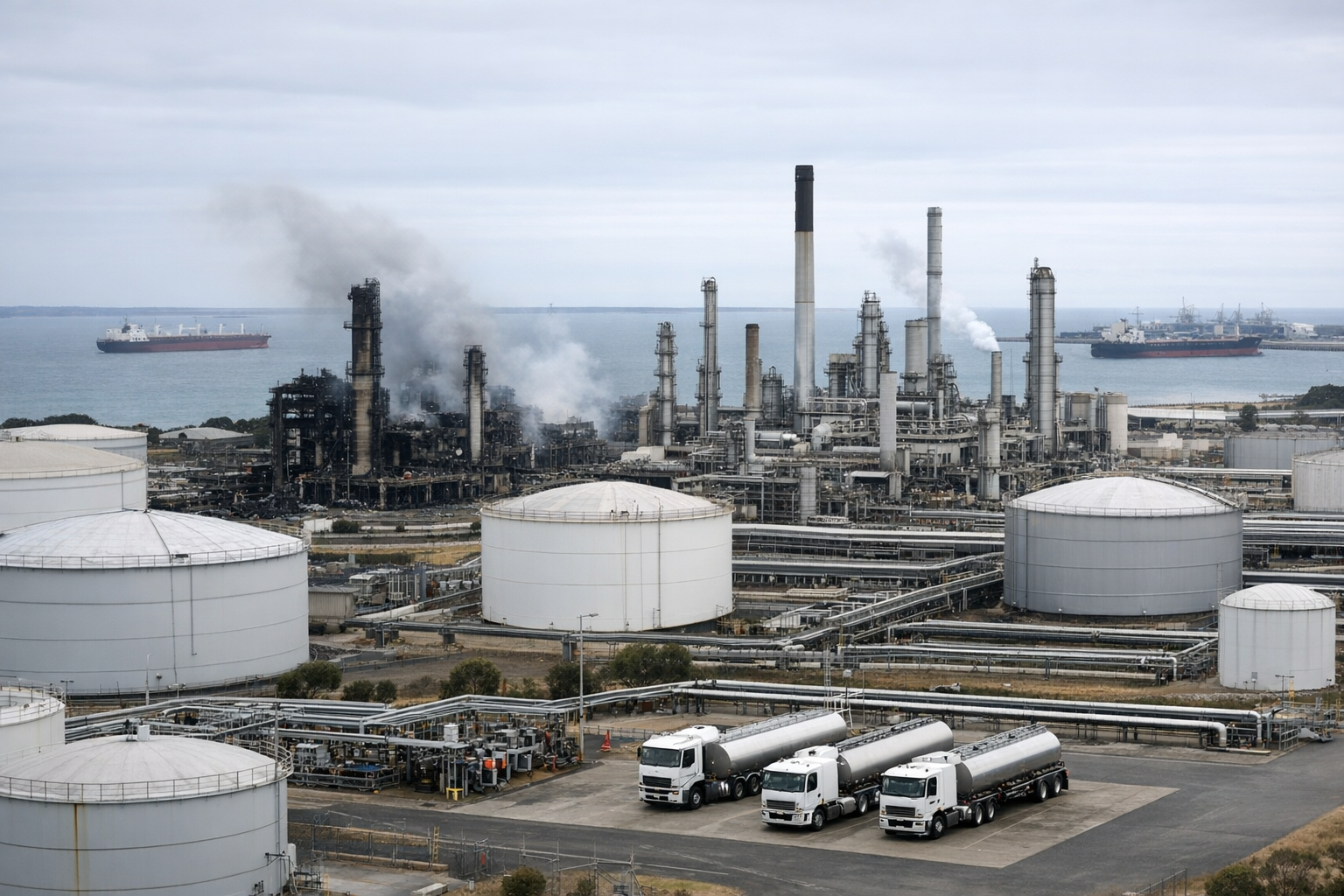
Australia moved on Friday to steady fuel supplies after a fire knocked out a large share of gasoline production at the Geelong refinery, sharpening concern over the country’s dependence on overseas energy supplies at a moment of broader turmoil in global shipping routes.
Prime Minister Anthony Albanese said output of petrol at the refinery, operated by Viva Energy, had fallen by about 40 percent since the blaze on April 15, though diesel and aviation fuel were still being produced at reduced rates. Even so, he said the government did not expect to impose formal “stage 3” fuel restrictions, an emergency step that would amount to rationing and tighter controls over distribution.
Instead, Canberra is trying to contain the disruption through a mix of emergency imports, diplomatic outreach and market intervention, underscoring how a single industrial accident can reverberate across a country with only two remaining refineries.
“The advice that we have received today is that 80% of diesel production is continuing, 80% of aviation fuel is continuing,” Albanese said, adding that petrol production was proceeding at about 60 percent.
A test of a thin fuel system
The Geelong refinery is one of Australia’s last two operating refineries, along with Ampol’s Lytton plant in Queensland. Together they meet only about one-fifth of the nation’s fuel needs. Geelong alone accounts for roughly 10 percent of national fuel output and about half of Victoria’s fuel supply, making any sustained impairment there especially sensitive.
That vulnerability has become more acute because the refinery fire has coincided with disruption linked to the effective closure of the Strait of Hormuz, a crucial maritime chokepoint for oil and fuel flows. Australia, already highly reliant on imported refined fuels, has been scrambling to secure replacement cargoes before regional shortages deepen.
Albanese said the government had secured about 100 million liters of additional diesel using new strategic reserve powers, with shipments expected from Brunei and South Korea. He also joined international talks aimed at reopening Hormuz, signaling that Australia sees the refinery outage not as an isolated domestic problem but as part of a wider supply shock washing across Asia.
For now, retail prices have not surged as some analysts feared. Petrol prices in many cities slipped below 2.10 Australian dollars a liter, while diesel fell below 3 dollars a liter, suggesting that traders and importers have so far been able to cushion the immediate blow.
Diplomacy abroad, pressure at home
In recent days, Albanese has recast overseas visits to Southeast Asia as an exercise in fuel and fertilizer diplomacy, seeking supplies from key regional partners while projecting control at home. He cut short a trip to return to Australia and inspect the damage at Geelong, a move intended to show urgency as opposition critics pressed the government over supply security.
The episode has thrown a harsh light on a longstanding weakness in Australia’s energy system. For years, the country’s domestic refining capacity has shrunk as older plants closed under commercial pressure, leaving the economy more exposed to disruptions in shipping, regional refining bottlenecks and geopolitical shocks.
Canberra has already been subsidizing the two remaining refineries to keep them operating. It has also eased diesel fuel specifications temporarily to broaden the pool of usable imports and used financing and underwriting tools to encourage more cargoes into the country. The latest steps build on those measures but also suggest the government is moving deeper into active management of fuel supply.
Why the stakes are rising
The central question now is whether the Geelong plant’s gasoline-producing units can be restored quickly enough to prevent tighter supply in coming weeks. If repairs drag on, Australia may be forced to rely more heavily on imports just as competition for fuel in Asian markets intensifies.
Another uncertainty is how quickly shipping through Hormuz can normalize. Even if Australia can line up substitute cargoes, prolonged disruption in that corridor could keep pressure on regional fuel prices and freight availability, complicating efforts to replenish stocks.
The political implications may outlast the immediate disruption. The refinery fire has strengthened calls in Canberra for a broader resilience agenda, one that could include bigger fuel reserves, stronger support for domestic refining and a more muscular supply-security policy in the next budget.
For now, the government is betting that emergency shipments and continued partial operations at Geelong will be enough to avoid rationing. But the scramble has exposed how narrow Australia’s margin for error has become: one refinery fire, one blocked shipping route, and the country is pushed into urgent fuel diplomacy abroad and crisis management at home.
Sources
Further reading and reporting used to add context:
- https://apnews.com/article/10518e69aecbb986c9118ff42ab0ca02
- https://apnews.com/article/2595edb52849560135f352ca5746ed85
- https://apnews.com/article/da12451198d54f63926d06983b262f98
- https://apnews.com/article/6e67fafd493861b3858de5548aa77703
- https://www.theguardian.com/world/2026/apr/13/australia-pm-albanese-us-iran-peace-talks-reopen-strait-of-hormuz
- Federal politics: Government to continue subsidising Australia's two remaining oil refineries — as it happened – ABC News
- https://apnews.com/article/5889671a3f2bf3806a5d585c01322ccd
- https://apnews.com/article/ca2c6af551df98c81a39f2137e417856
- https://www.abc.net.au/news/2026-04-03/what-lowering-diesel-standard-means-for-refineries/106512346
- https://apnews.com/article/3ef5dcd907122922db714d318c35317e
- https://www.synergyfreight.com.au/strait-of-hormuz-crisis/
- https://www.ibtimes.com.au/australias-diesel-dependency-strait-hormuz-hits-50-amid-2026-oil-crisis-1865860
- https://www.theguardian.com/australia-news/live/2026/apr/16/anthony-albanese-brunei-visit-fuel-crisis-labor-richard-marles-coalition-immigration-plan-angus-taylor-employment-figures-ntwnfb?filterKeyEvents=false&page=with%3Ablock-69e0707e8f08259d939626ff
- https://www.spectator.com.au/2026/04/no-fuel-rationing-for-april-as-albanese-heads-to-singapore/
- https://www.abc.net.au/news/2026-03-21/middle-east-fuel-prices-australia-petrol-supply-expaliner/106478122
- https://www.abc.net.au/news/2026-04-03/strait-of-hormuz-virtual-summit/106529136
- https://www.theguardian.com/australia-news/live/2026/apr/06/anthony-albanese-fuel-crisis-angus-taylor-middle-east-labor-liberals-moira-deeming-ntwnfb?page=with%3Ablock-69d2d9f68f080da25b48ba23
- https://www.reddit.com/r/u_HealthyMindHappyLife/comments/1sk47wa/wa_current_situation_summary_13_april_2026/
- https://www.investing.com/news/stock-market-news/fire-breaks-out-at-major-australian-refinery-geelong-fuel-production-hit-4616979
- https://www.abc.net.au/news/2026-04-02/global-meeting-australia-34-countries-strait-of-hormuz/106525100
- https://en.wikipedia.org/wiki/2026_Iran_war_fuel_crisis
- https://www.pm.gov.au/media/first-fuel-shipments-secured-under-new-strategic-reserve-powers
- https://www.minister.industry.gov.au/ministers/king/media-releases/securing-australian-domestic-gas-supply
- https://www.minister.industry.gov.au/ministers/taylor/media-releases/expanding-australias-diesel-storage-boost-long-term-fuel-security
- https://www.minister.industry.gov.au/ministers/taylor/media-releases/australia-monitoring-global-energy-markets-over-russia-ukraine-hostilities
- https://www.industry.gov.au/news/government-announces-extra-gas-supply-avoid-shortfall-forecast
- https://www.minister.industry.gov.au/ministers/taylor/media-releases/locking-australias-fuel-security
- https://www.minister.industry.gov.au/ministers/taylor/media-releases/australia-boost-fuel-security-and-establish-national-oil-reserve
- https://www.minister.industry.gov.au/ministers/taylor/media-releases/first-fuel-security-payment-finalised-lock-local-refineries
- https://www.minister.industry.gov.au/ministers/king/media-releases/affordable-gas-australian-homes-and-businesses
- https://www.minister.industry.gov.au/ministers/king/media-releases/new-guaranteed-supply-gas-australias-domestic-market
- https://www.industry.gov.au/major-projects-and-procurement/australian-industry-participation/major-projects-establish-or-upgrade-australian-facilities/major-project-aip-plan-summaries
- https://www.minister.industry.gov.au/ministers/taylor/media-releases/australia-strengthens-fuel-security-new-us-arrangement
- https://www.industry.gov.au/sites/default/files/aip/2026-03/surat-basin-natural-gas-development-approved-replacement-aip-plan-executive-summary.pdf
- https://www.industry.gov.au/sites/default/files/2025-03/resources-and-energy-quarterly-march-2025.pdf
- https://www.industry.gov.au/sites/default/files/2024-05/future-gas-strategy.pdf
- https://www.industry.gov.au/sites/default/files/2025-09/disr-resources-sector-plan.pdf
- https://www.industry.gov.au/sites/default/files/July%202018/document/pdf/review_of_the_disability_access_to_premises-buildings_standards_2010_report.pdf
- https://www.theguardian.com/australia-news/2026/apr/16/viva-oil-refinery-fire-corio-geelong-victoria-fuel-prices
- https://www.abc.net.au/news/2026-03-30/four-step-fuel-supply-plan-national-cabinet-fuel-crisis/106512706
- https://www.aa.com.tr/en/world/major-fire-breaks-out-at-australian-oil-refinery/3907260
- https://www.the-independent.com/bulletin/news/geelong-oil-refinery-fire-fuel-b2958692.html
- https://www.theguardian.com/australia-news/2026/apr/16/australian-oil-refinery-fire-geelong-cause-what-we-know-so-far
- https://www.geelongmanufacturingcouncil.com.au/2026/04/geelong-refinery-incident
- https://www.the-independent.com/news/world/australasia/geelong-oil-refinery-fire-australia-petrol-supply-b2958662.html
- https://news.sky.com/story/setback-in-australias-fuel-crisis-as-fire-breaks-out-at-oil-refinery-13532352
- https://discoveryalert.com.au/geelong-oil-refinery-fire-response-australia-2026/
- https://www.abc.net.au/news/2026-03-18/fuel-shipments-safe-april-complicated/106464430
- https://www.reddit.com/r/u_HealthyMindHappyLife/comments/1snqg71/wa_current_situation_summary_17_april_2026/
- https://www.reddit.com/r/oil/comments/1snw4t1/geelong_outage_tightens_fuel_supply/
- https://www.reddit.com/r/u_kpler_com/comments/1snw4ly/geelong_outage_tightens_fuel_supply/
- https://en.wikipedia.org/wiki/Geelong_Oil_Refinery
- https://en.wikipedia.org/wiki/2026_South_Pars_field_attack
- https://www.accc.gov.au/system/files/public-registers/documents/Application%20Received%20-%2018.03.26%20-%20PR%20-%20AA1000717%20AIP.pdf
- https://impact-on-sustainable-aviation.org/shared-files/2730/%3FAustralia_Deloitte_Resilience%2520through%2520low%2520carbon%2520liquid%2520fuels.pdf%26download%3D1
- https://www.pm.gov.au/media/press-conference-lytton-queensland
- https://www.pm.gov.au/media/address-national-press-club-1
- https://www.pm.gov.au/media/press-conference-parliament-house-canberra-47
- https://www.pm.gov.au/media/press-conference-hobart
- https://www.pm.gov.au/media/press-conference-parliament-house-canberra-49
- https://www.pm.gov.au/media/press-conference-whyalla
- https://www.pm.gov.au/media/press-conference-parliament-house-canberra-46
- https://www.pm.gov.au/media/question-and-answer-national-press-club-canberra-020420206
- https://www.pm.gov.au/media/press-conference-parliament-house-canberra-45
- https://www.pm.gov.au/media/press-conference-osborne-sa
- https://www.pm.gov.au/media/press-conference-sydney-29
- https://www.pm.gov.au/media/press-conference-sydney-23
- https://www.pm.gov.au/sites/default/files/resource/download/srebrenica-memorial-2025_0.pdf
- https://www.pm.gov.au/sites/default/files/resource/download/attendee-bios-state-funeral-for-her-majesty-elizabeth-ii.pdf
- https://www.pm.gov.au/media/visit-brunei-and-malaysia
- https://www.pm.gov.au/media/joint-declaration-prime-ministers-australia-and-singapore-comprehensive-strategic-partnership
- https://www.pm.gov.au/media/press-conference-bandar-seri-begawan-brunei-darussalam
- https://www.pm.gov.au/media/new-investments-build-progress-closing-gap
- https://www.pm.gov.au/media/press-conference-jakarta-indonesia
- https://www.pm.gov.au/media/joint-declaration-establishing-parseria-foun-ba-era-foun-new-partnership-new-era
- https://www.pm.gov.au/media/joint-statement-8th-singapore-australia-annual-leaders-meeting
- https://www.pm.gov.au/media/joint-statement-leaders-australia-india-japan-and-united-states
- https://www.pm.gov.au/media/woodford-folk-festival
- https://www.theguardian.com/australia-news/2026/apr/16/victoria-fuel-prices-geelong-viva-oil-refinery-fire
- https://www.accc.gov.au/system/files/weekly-fuel-price-monitoring-report-2-april-2026.pdf
- https://www.abc.net.au/news/2026-03-19/petrol-price-gouging-cost-of-living-pressure-oil-prices-iran-war/106467554
- https://www.ibtimes.com.au/australia-fuel-prices-ease-slightly-240-l-after-excise-cuts-diesel-soars-amid-iran-war-fallout-1865668
- https://www.abc.net.au/news/2026-03-21/middle-east-fuel-prices-australia-petrol-supply-explainer/106478122
- https://www.ibtimes.com.au/australia-petrol-prices-hit-203-l-amid-oil-market-volatility-what-drivers-face-today-2026-1866716
- https://fuelradar.com.au/blog/weekly-fuel-report-2026-04-09
- https://www.abc.net.au/news/2026-03-27/fuel-shortages-price-hike-businesses-consumers-inflation/106497260
- https://www.corgibreedergippsland.com.au/fuel-prices-drop-16%C2%A2-overnight-aussies-finally-get-relief-in-april-2026/
- https://www.abc.net.au/news/2026-03-13/fuel-panic-is-spreading-australia-emergency-supplies/106448176
- Geelong fire: blaze at one of Australia’s two oil refineries extinguished after 13 hours as fuel supply fears remain | Geelong | The Guardian
- The Latest: Iran threatens to disrupt Gulf trade in response to US naval blockade