
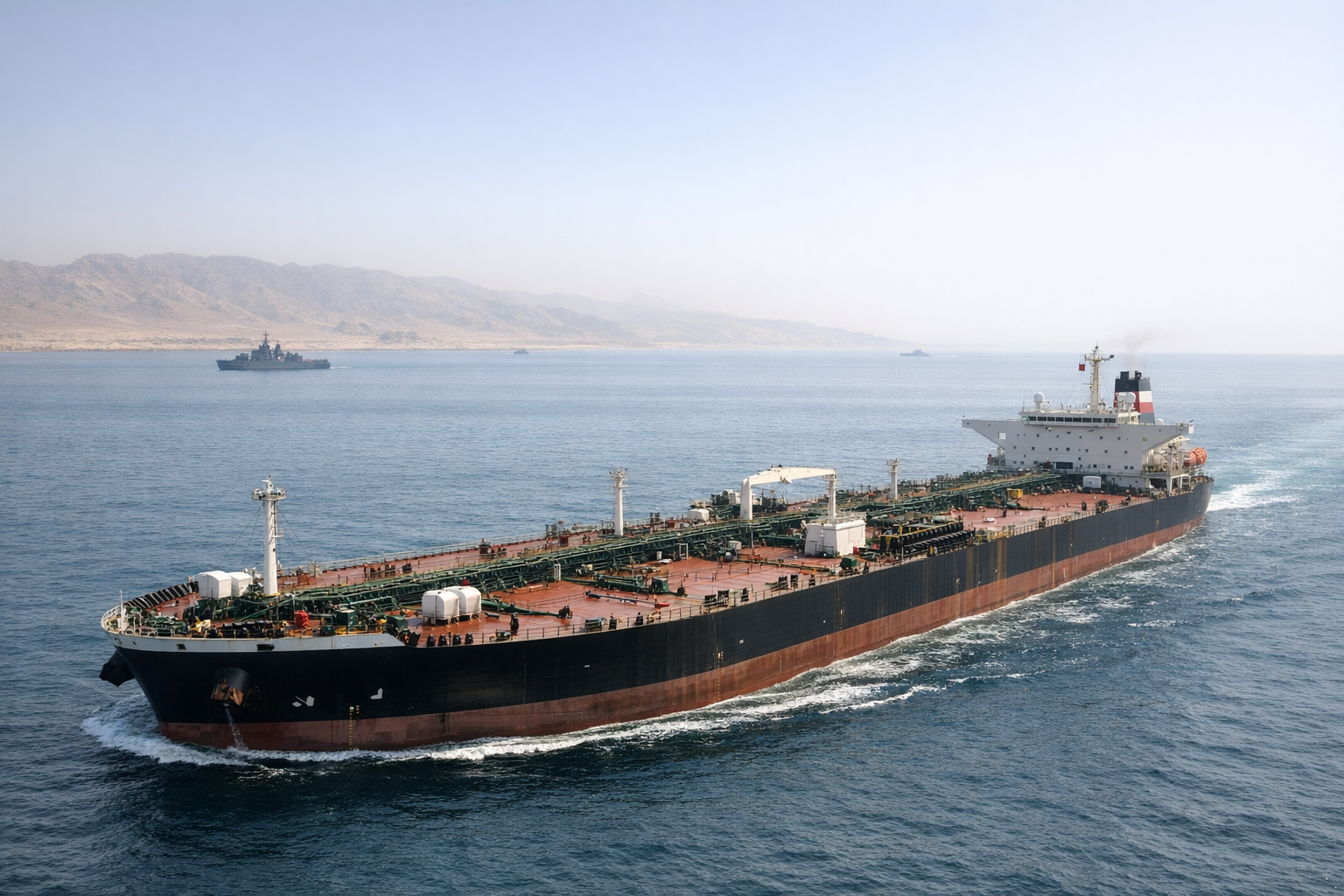
Oil surges as Gulf tensions rattle investors again
Oil prices climbed sharply on Monday and stock markets lost ground after a weekend escalation around the Strait of Hormuz revived fears that one of the world’s most important energy arteries could remain disrupted far longer than investors had hoped.
Brent crude, the international benchmark, briefly traded in the mid-$90s a barrel, while U.S. crude also rose strongly, reversing much of the relief-driven decline that followed tentative signs late last week that shipping conditions in the Gulf might be stabilizing. European equities fell in early trading, and although Asian markets were mixed, the broader mood was one of caution as traders reassessed whether a fragile de-escalation narrative had already begun to unravel.
The shift was set off by a new round of confrontation involving the United States and Iran, including the seizure of an Iranian-flagged cargo vessel and reports of attacks or interference affecting commercial ships near Hormuz. The developments injected fresh uncertainty into energy markets already strained by days of contradictory signals over whether the strait had genuinely reopened to normal traffic.
What had looked, briefly, like the beginning of a reprieve now appeared to many investors more like a pause in a still-dangerous standoff.
A chokepoint with global consequences
The intensity of the market reaction reflected the outsized role of the Strait of Hormuz in the world economy. Roughly a fifth of global oil supplies pass through the narrow waterway, along with substantial volumes of liquefied natural gas, making it a critical transit corridor for energy exporters in the Gulf and for importers across Europe and Asia.
Any threat to shipping there tends to ripple quickly through crude prices, gas markets, tanker rates, insurance costs and inflation expectations. Even partial disruption can have effects well beyond the region, particularly at a moment when central banks and governments remain sensitive to any renewed energy shock that could complicate efforts to stabilize growth and bring down prices.
That vulnerability helps explain why financial markets reacted so abruptly. The concern was not only that fewer cargoes might move in the immediate term, but that the cost and risk of moving them had risen again. For traders, refiners and shipping companies, the question is no longer simply whether the strait is technically open, but whether commercial passage can resume safely, consistently and at scale.
Relief rally gives way to renewed anxiety
Only days ago, markets had been moving in the opposite direction. Late last week, optimism had grown after Iranian officials suggested that commercial transit could resume, prompting a sell-off in oil and a rally in risk assets. That rebound rested on the assumption that the worst of the immediate crisis might be passing.
But the latest confrontation has undercut that view.
Traffic through Hormuz appears to remain uneven and constrained. Some vessels have continued to move, but tanker flows are still reported to be well below normal levels, and shipping routes remain highly exposed to further military action, seizures or reprisals. In that environment, traders are increasingly pricing in the possibility of prolonged delays rather than a quick return to normal.
That change in expectations was evident across markets on Monday. European indexes slid as higher oil and gas prices weighed on sentiment, while investors retreated from last week’s more optimistic positioning. In Britain, energy-linked concerns also pushed up gas prices, reinforcing worries that a sustained Gulf disruption could feed directly into household and industrial costs.
Why this matters now
The renewed volatility comes at a delicate moment for the global economy. Energy prices had eased from earlier peaks, giving policymakers some room to hope that inflation pressures would continue to cool. A lasting disruption in Gulf shipping could threaten that progress.
Higher crude prices tend to work their way through supply chains, transport costs and consumer fuel bills. If natural gas markets are also affected, the pressure can spread further, especially in import-dependent economies. For Europe, still sensitive to energy security after years of market disruption, a prolonged Hormuz crisis would represent another unwelcome test. For Asia, where many economies rely heavily on Gulf imports, it would raise immediate concerns over supply reliability and costs.
Investors are now weighing whether this is a temporary spike driven by headline risk or the start of a more durable energy squeeze. Much depends on whether the confrontation between Washington and Tehran widens, whether naval escorts or other security measures can protect shipping, and whether governments intervene with emergency measures such as strategic reserve releases.
For now, the market’s verdict is clear: last week’s optimism has given way to a renewed geopolitical risk premium.
What markets are watching
In the coming days, traders will focus less on rhetoric than on physical flows. The central question is whether tankers can transit the strait without fresh incidents, and whether insurers, shipowners and charterers are willing to operate at anything close to normal levels despite the heightened danger.
If shipping remains patchy, the impact could persist even without a formal closure of the waterway. Elevated freight rates, war-risk premiums and route disruptions can tighten supplies and keep prices high long before any official embargo or blockade emerges.
That is why the latest moves in oil and equities matter beyond a single trading session. They are a sign that markets are once again treating the Hormuz crisis not as a passing scare, but as a live threat to energy supplies, inflation and global growth.
Sources
Further reading and reporting used to add context:
- https://apnews.com/article/6786cc283bc5b7cb78a3a9b7b5c2b1ac
- https://apnews.com/article/4de9058b58ed944a4113dfb2cf6369c8
- https://www.axios.com/2026/04/19/oil-prices-us-iran-war-strait-hormuz-ship-seized
- https://apnews.com/article/a3ddc59230ae7de719a9ff9e7595e375
- https://www.axios.com/2026/04/19/trump-us-iran-flagged-ship-custody-gulf-oman
- https://www.axios.com/2026/04/20/shortfalls-will-soon-start-to-appear
- https://www.investing.com/news/commodities-news/oil-falls-as-us-and-allies-look-to-boost-supply-unchoke-strait-of-hormuz-4572221
- https://www.theguardian.com/business/2026/apr/20/oil-prices-rise-markets-fall-us-iran-ftse-100-gas-strait-of-hormuz
- https://www.ndtvprofit.com/markets/brent-crude-oil-prices-today-april-20-jumps-over-6-percent-as-us-seizure-of-iranian-ship-sparks-strait-tensions-11381118
- https://finance.yahoo.com/sectors/energy/articles/oil-prices-jump-amid-renewed-225327114.html
- https://krro.com/2026/04/19/oil-jumps-and-stock-futures-slip-as-iran-tensions-unsettle-markets/
- https://uk.finance.yahoo.com/news/oil-prices-drop-sharply-global-142122745.html
- https://sg.finance.yahoo.com/news/us-futures-fall-oil-jumps-144614328.html
- https://krro.com/2026/04/19/oil-prices-rebound-7-as-strait-of-hormuz-is-closed-again/
- https://www.investing.com/news/commodities-news/oil-extends-gains-as-middle-east-conflict-threatens-export-facilities-4561602
- https://www.investing.com/news/commodities-news/oil-jumps-as-usiran-conflict-escalates-disrupts-shipping-4533568
- https://en.wikipedia.org/wiki/2026_Iran_war_fuel_crisis
- https://gccbusinesswatch.com/news/oil-prices-surge-amid-middle-east-conflict-and-strait-of-hormuz-tensions/
- https://www.thenationalnews.com/business/energy/2026/04/09/oil-prices-rise-on-concerns-about-resumption-of-flows-through-strait-of-hormuz//
- https://en.wikipedia.org/wiki/2026_Kharg_Island_attack
- https://apnews.com/article/9df061160b3b8f377996564fdc5baf05
- https://globecapital.com/research-reports/daily-market-update-20th-april-2026/
- https://www.theguardian.com/business/live/2026/apr/20/oil-price-stock-markets-us-iran-ceasefire-strait-of-hormuz-open-closed-live-updates?filterKeyEvents=false&page=with%3Ablock-69e5df588f082ddf12731f0c
- https://www.theguardian.com/business/2026/mar/01/oil-price-surge-iran-us-israel-strikes-markets
- https://finance.yahoo.com/sectors/energy/articles/oil-prices-jump-6-above-163457480.html
- https://www.washingtonpost.com/business/2026/04/12/iran-oil-prices/346bcc06-36be-11f1-90c4-9772c7fabc03_story.html
- https://www.investing.com/news/commodities-news/oil-prices-jump-over-6-on-reports-of-tankers-being-attacked-near-iraq-4555904
- https://finance.yahoo.com/sectors/energy/articles/oil-prices-jump-us-plans-083701382.html
- Oil prices rise anew after a US-Iran standoff in the Strait of Hormuz strands tankers
- Oil prices jump 4% on US blockade of Iran after peace talks collapse
- Oil prices jump and stocks are mixed as the US-Iran standoff keeps the Strait of Hormuz in limbo
- The Latest: US Navy seizure of Iranian ship casts doubt on fresh talks in Pakistan