
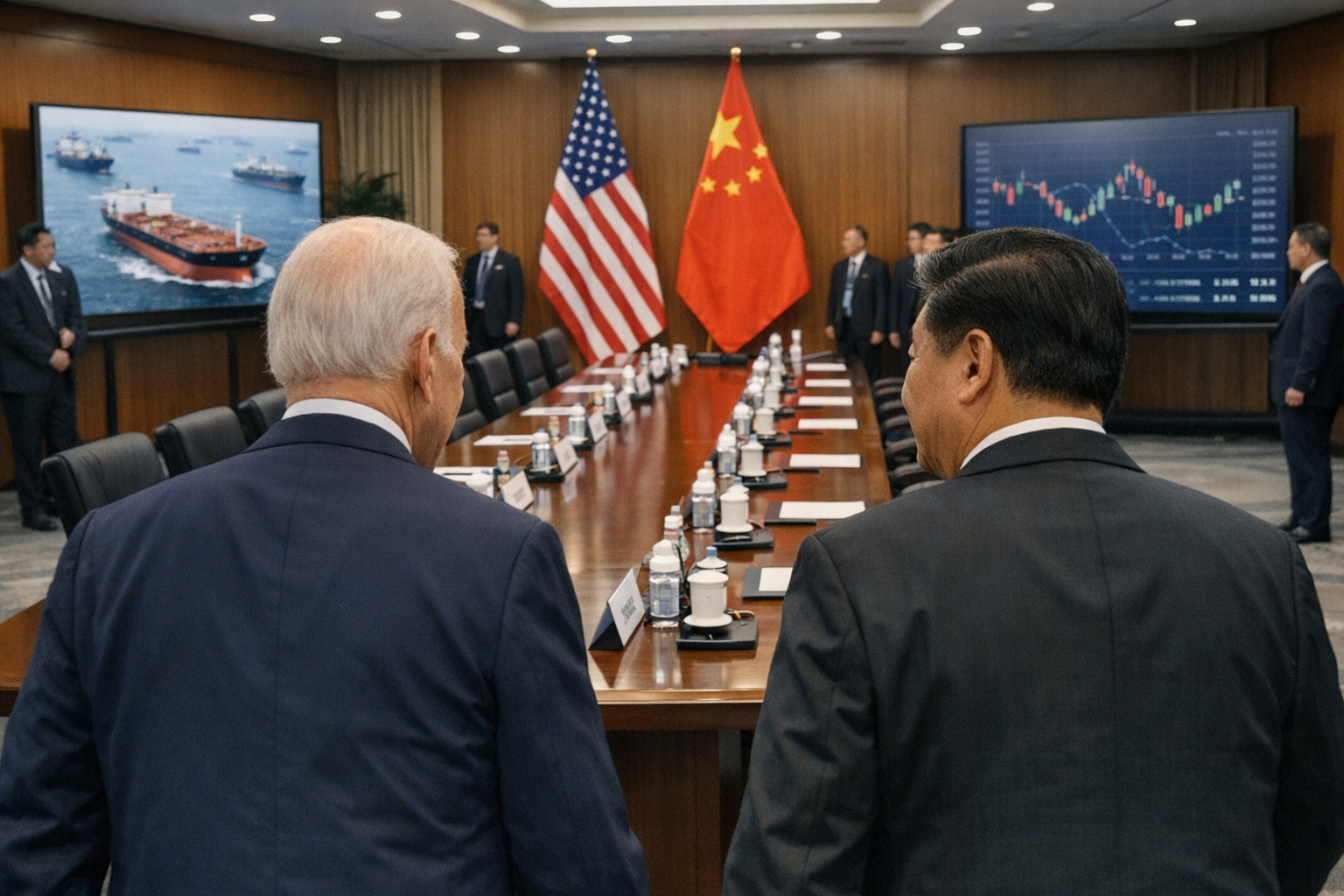
A summit reshaped by war
When President Trump arrives in Beijing this week for two days of talks with Xi Jinping, he will carry with him what was once billed as a chance to stabilize the world’s most consequential bilateral relationship. Instead, the meeting is opening under the shadow of war in Iran, a widening energy shock and fresh doubts about whether Washington and Beijing can do much more than manage the crisis in front of them.
The summit, scheduled for May 14 and 15, had already been delayed because of the conflict. Now the fighting has reordered the agenda itself. Officials and analysts in Washington, Beijing and allied capitals increasingly see the encounter less as a venue for a clean trade reset than as a high-stakes test of whether the United States and China can coordinate, or at least avoid further collision, during a geopolitical emergency.
That shift has lowered expectations for dramatic breakthroughs on the issues American companies had hoped would dominate the talks: tariffs, rare-earth exports and the supply-chain bottlenecks that have become central to the global economy. More modest outcomes — an extension of the existing trade truce, selected Chinese purchase commitments, or narrowly framed business deals in agriculture, energy or aviation — are now viewed as more plausible than any broad settlement.
Iran and the price of leverage
The war in Iran has forced both governments to confront a reality larger than their usual trade disputes. China is one of the world’s biggest importers of Gulf energy, and any disruption to shipping through the Strait of Hormuz threatens not only Asian economies but global oil markets. The United States, while less directly dependent on Gulf crude than in decades past, remains central to the security architecture of the region and to any effort to keep maritime routes open.
That has given energy security an outsized place in the summit. Washington is expected to press Beijing to use its ties with Tehran in ways that could reduce escalation or preserve commercial shipping lanes. Beijing, for its part, has reasons of its own to seek stability: a prolonged disruption in Gulf supplies would hit Chinese industry, increase inflationary pressure and complicate an already fragile global recovery.
The result is a meeting in which crude oil, shipping insurance and strategic reserves may matter as much as tariffs and export licenses.
In the run-up to the summit, both sides have also been maneuvering to strengthen their hands. The United States has sought restoration of rare-earth and critical-mineral shipments vital to manufacturers and defense industries. China has continued to press for relief from American restrictions on advanced semiconductors and other high-end technologies. Each side enters the talks with tools of pressure it is reluctant to surrender lightly.
Trade still matters, but it may have to wait
That does not mean the underlying trade conflict has gone away. It has merely been crowded out by a more immediate crisis.
American businesses have spent months lobbying for progress on Chinese controls over rare-earth materials and processing, which Beijing dominates globally. Those materials are essential for electric vehicles, wind turbines, electronics and military systems. For many companies, the issue is no longer simply cost but continuity: whether they can count on stable access to the inputs that keep factories running.
At the same time, Chinese officials want changes in a different choke point — U.S. restrictions on advanced chips and related technology. Beijing has argued that those controls are not ordinary trade measures but a long-term strategy of containment. Washington has treated them as a national security necessity.
The clash helps explain why expectations are low. Even before the Iran war, the agenda was burdened by disputes over trade, technology, sanctions linked to Iranian oil and the future of Taiwan. The crisis in the Middle East has made it harder, not easier, to strike compromises on those older disagreements.
For that reason, any announcement emerging from Beijing may lean heavily on symbolism and transactions that can be presented as wins without requiring either side to concede core strategic interests. Deals involving farm goods, energy purchases or aircraft orders would fit that pattern. They would offer political cover and market reassurance, even if they left the deeper structure of U.S.-China rivalry largely intact.
Taiwan remains the most sensitive fault line
Hovering over all of this is Taiwan, the issue most capable of turning a difficult summit into a destabilizing one.
Beijing has long sought stronger language from Washington opposing Taiwanese independence, while the United States has tried to preserve its own carefully calibrated posture: support for the status quo, opposition to unilateral changes by either side and strategic ambiguity about the extent of an American response in a crisis. Even subtle changes in wording can be read by allies and adversaries as signals of a broader shift.
That is why governments from Singapore to Brussels are watching closely. For Asian allies, any hint that Washington softens its language to secure Chinese cooperation elsewhere could affect confidence in U.S. commitments across the region. For European governments already dealing with war on the continent and instability in energy markets, the summit is another measure of whether great-power competition is becoming more transactional and less predictable.
Mr. Trump enters the meeting from a vulnerable position in some respects. The Iran conflict has narrowed his room to maneuver and heightened the need for Chinese cooperation at the very moment the two sides remain locked in strategic distrust. Yet it also gives him an opening to recast the summit as one of crisis diplomacy rather than failed trade diplomacy, lowering the bar for what can be declared a success.
Why the world is watching
The significance of the meeting lies in how many global fault lines now run through it at once. Energy security, sanctions enforcement, freedom of navigation, industrial supply chains, semiconductor controls and the future of Taiwan all intersect in the U.S.-China relationship. There is no other bilateral channel where so many of the world’s current risks converge so directly.
If the summit produces even limited coordination on Iran or shipping in the Gulf, markets and allies may take that as evidence that Washington and Beijing can still compartmentalize competition during a crisis. If it yields only vague statements and photo opportunities, concerns are likely to deepen that the two powers are losing the capacity to manage shocks together.
For now, the most likely outcome appears to be a carefully staged display of engagement, accompanied by narrow deliverables and large unresolved questions. But even that would matter. At a moment when wars and trade barriers are feeding one another, the absence of a breakdown between the American president and China’s leader may itself be treated, in capitals around the world, as a fragile kind of progress.
Sources
Further reading and reporting used to add context:
- https://apnews.com/article/5c6aed1f1628fee0d381ecbb1ff73d10
- https://apnews.com/article/75a27d595cfa5882b1e5bef917385309
- Iran, China and AI collide in Trump's legacy-defining week
- https://www.theguardian.com/news/ng-interactive/2026/may/10/tehran-taiwan-trade-donald-trump-xi-jinping-us-china-summit
- https://www.theguardian.com/world/china/2026/may/10/all
- https://www.theguardian.com/news/series/the-sunday-read/2026/may/10/all
- https://www.theguardian.com/world/asia-pacific/2026/may/10/all
- https://www.theguardian.com/us-news/donaldtrump/2026/may/10/all
- https://www.scmp.com/news/china/diplomacy/article/3352674/trump-xi-summit-hides-simmering-trade-tensions-under-surface-industry-experts-say?module=top_story&pgtype=section
- https://apnews.com/article/441425004d3d695df87f3f7c0b62492e
- https://www.theguardian.com/commentisfree/2026/may/10/donald-trump-xi-jinping-beijing-summit-iran-taiwan
- https://apnews.com/article/bc17f99065400233c3dadd7bb4c6521b
- https://www.chathamhouse.org/2026/05/trump-xi-summit-can-progress-be-made-iran
- https://www.fdd.org/analysis/2026/05/07/previewing-the-trump-xi-summit/
- https://www.pbs.org/newshour/politics/watch-trump-announces-plan-for-rare-earth-elements-strategic-reserve
- https://www.military.com/daily-news/2026/02/04/trump-and-xi-discuss-iran-wide-ranging-call-us-presses-china-and-others-break-tehran.html
- https://www.washingtonpost.com/national-security/2026/05/07/trump-xi-us-china-summit-iran//
- https://en.wikipedia.org/wiki/Shield_of_the_Americas_Summit
- https://en.wikipedia.org/wiki/2026_state_visit_by_Donald_Trump_to_China
- https://en.wikipedia.org/wiki/2026_in_the_United_States
- https://en.wikipedia.org/wiki/China_in_the_2026_Iran_war
- https://en.wikipedia.org/wiki/China%E2%80%93United_States_relations
- https://en.wikipedia.org/wiki/2025%E2%80%932026_Iran%E2%80%93United_States_negotiations
- https://marketwiredaily.com/article/2026-05-08-iran-focus-at-trump-xi-summit-may-delay-
- https://goldseek.com/article/iran-focus-trump-xi-summit-may-delay-progress-tariffs-rare-earths
- https://eng.pressbee.net/show4677025.html?title=from-singapore-to-brussels-world-leaders-eye-trump-xi-summit-from
- https://www.onenewspage.com/n/India/1ztfis3l1x/Iran-focus-at-Trump-Xi-summit-may-delay.htm
- https://www.indiavision.com/business/iran-focus-at-trump-xi-summit-may-delay-progress-on-tariffs-rare-earths/602477/
- https://cashwalklabs.io/news/iran-focus-at-trump-xi-summit-may-delay-progress-on-tariffs-rare-earths
- https://www.hfcas.org/
- https://muckrack.com/media-outlet/cnbc
- https://stsignals.com/
- https://patientcpa.com/
- https://mcalvany.com/
- https://napp.uz/oz/pages/statistics-and-analysis-for-im
- Factbox-What’s at stake at the Trump-Xi summit | WSAU News/Talk 550 AM · 99.9 FM | Wausau, Stevens Point
- https://www.tradingview.com/news/reuters.com%2C2026%3Anewsml_L4N41J0HG%3A0-what-s-at-stake-at-the-trump-xi-summit/
- https://www.csis.org/programs/middle-east-program/events
- https://www.evelyn.com/
- https://www.investing.com/news/world-news/ustr-greer-says-economic-relationship-with-china-is-stable-4600962
- https://www.zerohedge.com/geopolitical/trump-xi-summit-preview-whats-stake
- https://economictimes.indiatimes.com/topic/summit-meeting/ampnews
- https://m.economictimes.com/news/international/world-news/worlds-most-important-bromance-revived-as-donald-trump-heads-to-china-xi-jinping-bilateral-meeting-trade/amp_articleshow/130945960.cms
- https://www.limesonline.com/en/asia-and-pacific-rim/trump-xi-summit-what-s-at-stake-14720810/
- https://sundayguardianlive.com/world/trump-china-visit-2026-trumpxi-meeting-moved-to-may-after-iran-military-operation-postponed-march-summit-beijing-summit-dates-iran-war-impact-whats-at-stake-for-trade-179171/
- https://www.bloomberg.com/news/videos/2026-05-08/china-anxiety-grows-over-iran-ahead-of-trump-xi-summit-video?srnd=phx-economics-v2
- https://www.theolympian.com/news/page%3D7/
- https://en.wikipedia.org/wiki/List_of_presidential_trips_made_by_Donald_Trump_%282026%29
- https://www.reddit.com/r/China_Debate/comments/1t7wcqq/us_president_donald_trump_heads_for_xi_summit/
- https://www.reddit.com/r/newswall/comments/1t7wqd7/trumpxi_summit_tackles_iran_taiwan_and_trade/
- https://www.cnbc.com/2025/06/06/trump-xi-call-isnt-enough-to-resolve-critical-mineral-shortage.html
- https://www.cnbc.com/2025/06/06/trump-says-chinas-xi-agreed-to-let-rare-earth-minerals-flow-to-us.html
- https://www.cnbc.com/2025/06/04/trump-says-extremely-hard-to-make-a-deal-with-china-president-xi-.html
- https://www.cnbc.com/2025/05/30/us-china-talks-bit-stalled-and-need-trump-and-xi-to-weigh-in-treasury-secretary-bessent-says.html
- https://www.cnbc.com/2025/01/22/cnbc-daily-open-trumps-tariff-delay-spurs-markets.html
- https://www.cnbc.com/2025/06/11/trump-says-china-will-supply-rare-earths-in-done-deal.html
- https://www.cnbc.com/2025/07/24/eu-china-summit-xi-courts-eu-while-brussels-demands-trade-rebalance.html
- https://www.cnbc.com/2025/04/03/commerce-secretary-lutnick-says-trumps-reciprocal-tariffs-will-spur-countries-to-examine-their-trade-policies.html
- https://www.cnbc.com/2024/06/28/specter-of-putin-casts-a-shadow-over-the-trump-biden-debate.html
- https://www.cnbc.com/2025/05/01/oil-prices-take-breather-after-prospect-of-increased-supply-triggered-selloff.html
- https://www.cnbc.com/2025/04/07/cnbc-daily-open-trump-tariffs-decimate-stocks-on-trade-war-woes.html
- https://www.cnbc.com/brussels/
- https://fm.cnbc.com/applications/cnbc.com/resources/editorialfiles/2026/04/23/Toplines_260142_CNBC_AAES_Q1_2026_Topline.pdf
- https://fm.cnbc.com/applications/cnbc.com/resources/editorialfiles/2026/02/26/Motion_of_Immediate_Issuance_Federal_Circuit_of_Appeals.pdf
- https://www.bloomberg.com/news/articles/2026-04-17/xi-welcomes-slew-of-world-leaders-as-trump-fights-with-allies
- https://www.bloomberg.com/news/articles/2026-05-04/trump-says-he-looks-forward-to-xi-summit-even-as-tensions-mount
- https://www.bloomberg.com/news/articles/2026-05-07/trump-s-summit-with-xi-is-on-despite-china-s-iran-concerns
- https://www.bloomberg.com/news/articles/2026-04-17/xi-welcomes-slew-of-world-leaders-as-trump-fights-with-allies?srnd=homepage-americas
- https://www.bloomberg.com/news/articles/2026-05-04/trump-says-he-looks-forward-to-xi-summit-even-as-tensions-mount?srnd=phx-politics
- https://www.weforum.org/stories/2026/05/what-to-expect-trump-xi-summit-china-us/
- https://www.csis.org/programs/trump-xi-2026-summit
- https://www.csis.org/analysis/press-briefing-previewing-trump-xi-summit
- https://apnews.com/article/401c4c33a01b2acce72e96eb8058f8cc
- https://www.bloomberg.com/news/articles/2026-05-07/trump-s-summit-with-xi-is-on-despite-china-s-iran-concerns?srnd=homepage-americas
- https://www.bloomberg.com/news/articles/2026-05-07/trump-s-summit-with-xi-is-on-despite-china-s-iran-concerns?srnd=phx-politics
- https://www.investing.com/news/world-news/china-may-try-manoeuvring-over-taiwan-issue-at-trump-meeting-official-says-4666157
- https://en.wikipedia.org/wiki/2026_G20_Miami_summit
- https://en.wikipedia.org/wiki/Shield_of_the_Americas
- https://www.reddit.com/r/InBitcoinWeTrust/comments/1t9tgig/from_singapore_to_brussels_world_leaders_eye/
- https://en.wikipedia.org/wiki/2026_in_China
- https://www.reddit.com/r/worldnews/comments/1t9r4nc/from_singapore_to_brussels_world_leaders_eye/
- https://www.reddit.com/r/FutureWhatIf/comments/1t1zs37/fwi_xi_jinping_calls_off_the_trump_summit_in/
- https://www.chinadailyhk.com/upload/main/pdf/2026/05/06/a5972dcb04e60dad823e57406cdf14e2.pdf
- https://www.reddit.com/r/u_tipstor/comments/1t9ct2p/world_news_update_may_10_may_16_2026/
- Trump will travel to Beijing for rescheduled China trip May 14-15, after delay due to Iran war