
Oil surges as diplomacy falters in Iran conflict
A fresh collapse in efforts to contain the war involving Iran sent oil prices sharply higher on Monday and rippled across global markets, as investors confronted the possibility that a conflict once seen as potentially containable could become a longer and more economically damaging standoff centered on one of the world’s most important energy corridors.
Brent crude briefly climbed above $103 a barrel, extending a renewed rally after President Trump dismissed Iran’s latest response to a U.S. peace proposal as “totally unacceptable.” Tehran answered with defiance. President Masoud Pezeshkian said Iran would “never bow,” while Prime Minister Benjamin Netanyahu declared that the war was “not over,” underscoring how quickly hopes for a diplomatic pause had receded.
The market reaction was immediate and broad. The dollar strengthened, Treasury yields moved higher as bond prices fell, and equity markets in Asia traded unevenly, reflecting a sudden reassessment of how long the confrontation could last and how deeply it might cut into global energy flows. South Korea’s Kospi touched a record, but broader sentiment remained cautious as traders weighed the risk of a prolonged disruption with consequences far beyond the battlefield.
What had been, only days ago, a fragile expectation of renewed negotiations has given way to a darker calculation: that the conflict may be entering a more entrenched phase, with shipping through the Strait of Hormuz still heavily constrained and no obvious off-ramp in sight.
A chokepoint with global consequences
The renewed alarm in markets owes much to geography.
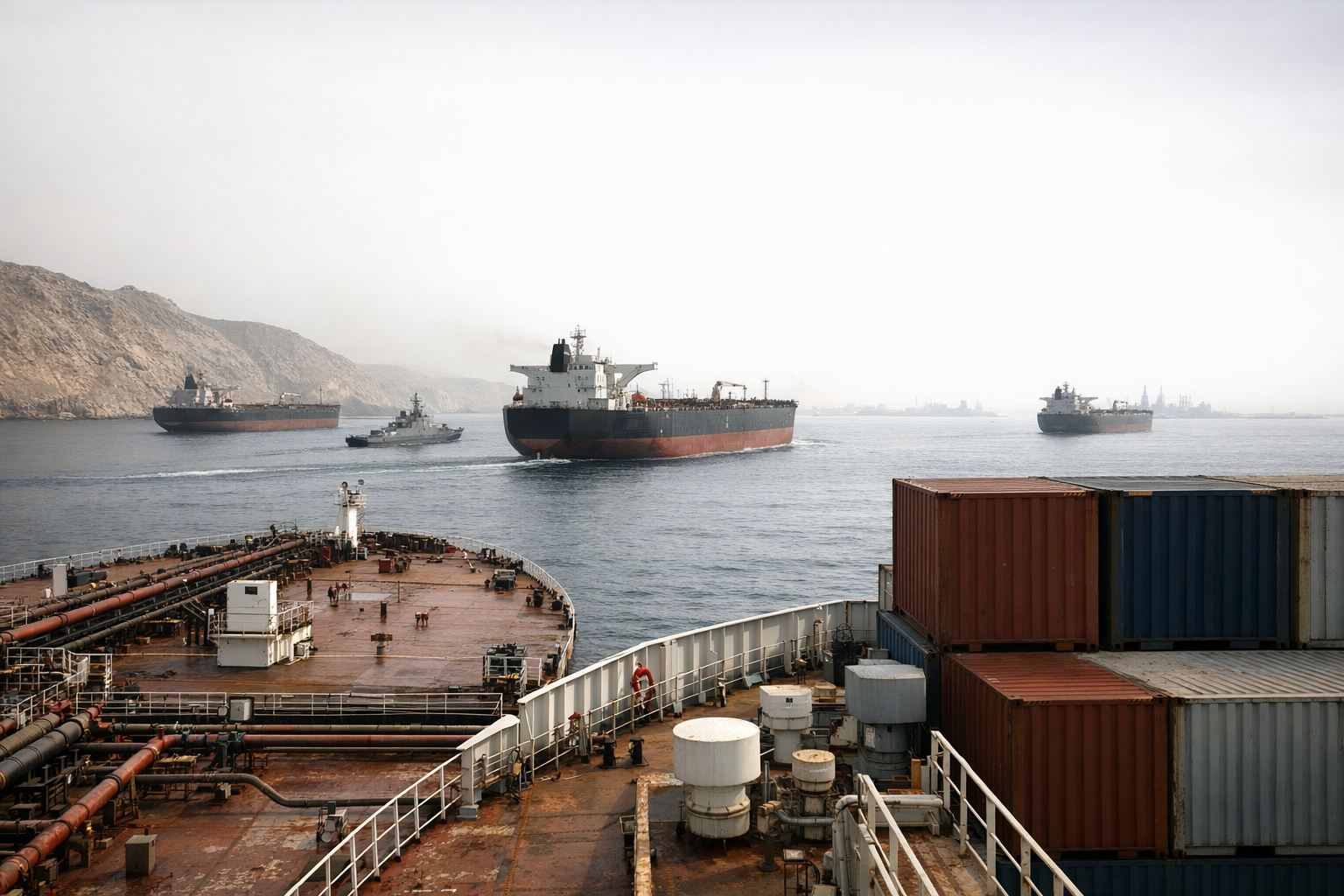
The Strait of Hormuz, which links the Persian Gulf to the Arabian Sea, is among the world’s most critical maritime bottlenecks. The International Energy Agency has said that about a quarter of global seaborne oil trade passed through the strait in 2025. Large volumes of liquefied natural gas also transit the waterway, with Asian economies especially exposed as the principal buyers of Gulf energy exports.
There are only limited alternatives. Pipelines can redirect some crude, but not nearly enough to replace full maritime flows. That means even a partial or intermittent disruption can quickly reverberate through oil and gas markets, raising shipping costs, feeding inflation worries and undermining confidence in risk assets.
The latest rise in crude reflected not simply fears of physical shortages today, but growing concern that the restrictions and threats around Hormuz could persist. Earlier hopes of de-escalation had briefly pushed oil back below $100 a barrel. Those gains unraveled as talks stalled and military warnings multiplied.
Iran’s Revolutionary Guards have warned that any attack on Iranian tankers or commercial vessels would bring retaliation against American sites in the region and enemy ships, widening concerns that the confrontation could expand from state-to-state warfare into a broader campaign against shipping, infrastructure or U.S. assets.
Cease-fire hopes fade
The latest rupture followed an Iranian counterproposal conveyed to Washington through intermediaries. Reports have indicated that Tehran sought terms including sanctions relief, the release of seized assets, sovereignty over Hormuz and reparations — demands the Trump administration was not prepared to accept.
Mr. Trump’s public rejection appeared to close off, at least for now, the most immediate path back to negotiations. The result was to reinforce a view already taking hold in trading rooms that this is no longer a short-lived geopolitical shock, but the latest turn in a war that has stretched for roughly 10 to 11 weeks, alternating between bursts of military escalation and intermittent diplomacy.
Israel’s insistence that the campaign is continuing, combined with Tehran’s refusal to yield, has heightened fears that the conflict could settle into a pattern of recurring attacks and retaliatory threats that keep energy markets on edge even without a full closure of the strait.
That distinction matters. Markets do not require a total stoppage in flows to react sharply. A persistent risk premium — driven by uncertainty over tanker safety, insurance costs, naval deployments and possible strikes on export infrastructure — can be enough to lift prices for weeks or months.
Pressure on inflation and central banks
The implications extend well beyond oil traders.
Higher crude prices threaten to complicate the outlook for inflation just as major central banks have been trying to gauge how quickly price pressures might cool. If energy costs remain elevated, they could feed through to fuel, transport and manufacturing prices in the United States, Europe and Asia, making policymakers more cautious about cutting interest rates.
That helps explain why government bond markets also moved on Monday. Rising Treasury yields suggested investors were revising expectations for growth, inflation and monetary policy in light of a more dangerous Middle East backdrop. Equity investors, meanwhile, were forced to weigh the prospect that pricier energy and weaker confidence could begin to erode corporate earnings.
Asia may be particularly vulnerable. Many of the economies most dependent on imported oil and liquefied natural gas are in the region, and much of that supply passes through Hormuz. For them, the conflict is not merely a diplomatic or military story overseas; it is a direct threat to industrial costs, household energy bills and trade balances.
The role of outside powers
Another question hanging over the crisis is whether outside powers can still help contain it.
Washington has sought to press Beijing to use its leverage with Tehran to encourage de-escalation and a reopening of the strait. But China’s willingness to act as a pressure point remains uncertain. Beijing has major interests in uninterrupted Gulf energy supplies, yet it has often been reluctant to appear aligned with American coercive diplomacy in the region.
That ambiguity leaves markets with a series of unresolved questions: whether any credible negotiating channel remains; whether shipping through Hormuz can normalize or will remain largely restricted; and whether Iran or allied forces will broaden attacks to tankers, Gulf facilities or U.S. positions.
For now, the answers are elusive. What is clearer is that investors are no longer treating the conflict as a contained regional flare-up. With diplomacy faltering and the energy artery at Hormuz still under strain, the war is increasingly being priced as a global economic risk.
Sources
Further reading and reporting used to add context:
- https://www.axios.com/2026/05/10/trump-iran-war-us-peace-plan-tehran-response-inappropriate
- https://apnews.com/article/234022685a51477ea9f72cc5aa170829
- https://www.axios.com/2026/05/06/trump-iran-war-deal-framework-response
- https://www.thedailybeast.com/president-donald-trumps-own-military-intel-says-hes-failing-to-damage-iranian-nuclear-program/
- https://apnews.com/article/f8812db41837336d816efaea7bc1c44a
- https://www.investing.com/news/world-news/israels-netanyahu-expected-to-press-trump-over-iran-diplomacy-4498718
- https://www.gmanetwork.com/news/money/economy/983661/oil-leaps-dollar-firm-and-stocks-wobble-as-us-iran-peace-talks-collapse/story/
- https://www.gmanetwork.com/news/topstories/world/983603/trump-vows-to-blockade-strait-of-hormuz-after-iran-peace-talks-stumble/story/
- https://au.investing.com/news/commodities-news/oil-jumps-as-us-and-iran-fail-to-reach-agreement-on-peace-proposal-4421428
- https://apnews.com/article/b48635e586e2907caae65b58bd03f5b7
- https://www.investing.com/news/world-news/netanyahu-says-usisrael-war-on-iran-not-going-to-take-years-4536812
- https://www.investing.com/news/world-news/iran-offers-strait-deal-trump-dissatisfied-but-prefers-nonmilitary-path-4654784
- https://au.investing.com/news/world-news/trump-rejects-unacceptable-iran-response-to-peace-plan-oil-prices-jump-4421593
- https://www.investing.com/news/world-news/netanyahu-says-war-against-iran-may-take-some-time-but-not-years-4536699
- https://wincountry.com/2026/05/10/share-futures-ease-dollar-gains-as-gulf-talks-teeter/
- https://au.investing.com/news/world-news/trump-calls-irans-response-to-us-peace-proposal-unacceptable-4421427
- https://wincountry.com/2026/05/10/oil-jumps-as-us-and-iran-fail-to-reach-agreement-on-peace-proposal/
- https://www.investing.com/news/world-news/iranian-proposal-rejected-by-trump-would-open-strait-before-nuclear-talks-iran-official-says-4654758
- https://en.wikipedia.org/wiki/2026_Strait_of_Hormuz_crisis
- https://en.wikipedia.org/wiki/2026_Strait_of_Hormuz_campaign
- https://en.wikipedia.org/wiki/2026_United_States_naval_blockade_of_Iran
- https://ng.investing.com/news/stock-market-news/asia-stocks-mixed-amid-iran-uncertainty-kospi-hits-record-high-on-ai-rally-2450532
- https://www.investing.com/news/stock-market-news/shares-steady-oil-turbulence-deeps-as-middle-east-war-roils-markets-4553493
- https://ca.investing.com/news/stock-market-news/asia-markets-hit-records-on-ai-euphoria-iran-peace-hopes-4611610
- https://uk.investing.com/news/stock-market-news/asia-stocks-slide-amid-iran-tensions-mixed-china-pmis-skorea-slumps-11-4539074
- https://www.marketscreener.com/news/asia-markets-hit-records-on-ai-euphoria-iran-peace-hopes-ce7f58dddb80f723
- https://www.nst.com.my/amp/business/corporate/2026/05/1433284/asia-markets-hit-records-ai-euphoria-iran-peace-hopes
- https://www.business-standard.com/amp/markets/news/oil-higher-on-iran-crisis-ai-drives-asian-stocks-to-sparkling-weekly-gains-126050800125_1.html
- https://www.thedailystar.net/business/news/oil-prices-rise-investors-weigh-middle-east-peace-prospects-4169781
- https://gvwire.com/2026/05/07/oil-falls-below-100-a-barrel-on-middle-east-peace-hopes/
- https://economictimes.indiatimes.com/markets/commodities/news/oil-prices-rise-about-1-as-investors-weigh-middle-east-peace-prospects/articleshow/130875736.cms
- https://en.wikipedia.org/wiki/2026_Iran_war_fuel_crisis
- https://www.iea.org/about/oil-security-and-emergency-response/strait-of-hormuz?ftag=YHF4eb9d17
- https://www.eia.gov/todayinenergy/detail.cfm?id=7830
- https://www.iea.org/news/middle-east-crisis-disrupts-international-natural-gas-markets-and-delays-global-lng-supply-wave
- https://www.eia.gov/todayinenergy/detail.php?id=39932&os=frefapp
- https://www.eia.gov/todayinenergy/detail.php?id=65584
- https://www.iea.org/reports/gas-market-report-q2-2026/executive-summary
- https://www.eia.gov/international/content/analysis/special_topics/World_Oil_Transit_Chokepoints/
- https://www.eia.gov/todayinenergy/detail.php?id%5Cu003d64565=
- https://www.eia.gov/todayinenergy/detail.php?id=4430
- https://www.iea.org/topics/the-middle-east-and-global-energy-markets?language=de
- https://www.iea.org/reports/sheltering-from-oil-shocks/summary
- https://www.iea.org/reports/global-methane-tracker-2026/key-findings
- https://www.eia.gov/outlooks/steo/pdf/steo_text.pdf?os=__
- https://www.eia.gov/international/content/analysis/special_topics/World_Oil_Transit_Chokepoints/wotc.pdf
- https://www.eia.gov/beta/international/analysis_includes/special_topics/World_Oil_Transit_Chokepoints/wotc.pdf
- https://www.eia.gov/international/content/analysis/countries_long/Iran/pdf/iran_bkgd.pdf
- Trump rejects ’unacceptable’ Iran response to peace plan, oil prices jump By Reuters
- Strait of Hormuz – About – IEA