
Inspections Move Closer as Oil Traders Look Past Fresh Gulf Violence
The first practical test of the tentative U.S.-Iran accord came into sharper focus on Friday, when the head of the United Nations nuclear watchdog said the agreement would allow inspectors back into Iranian nuclear facilities and that preparations for visits were already underway.
“The technical work has started, and we hope to be there soon,” Rafael Grossi, director general of the International Atomic Energy Agency, said at a news conference in Japan, describing the June 17 memorandum of understanding between Washington and Tehran as providing access to Iran’s nuclear sites.
His comments offered the strongest indication yet that the deal may be moving beyond diplomatic language and toward enforcement. For days, one of the central disputes surrounding the accord had been whether Iran had truly agreed to permit international inspectors to return to sensitive facilities, particularly after Iranian officials suggested that some sites damaged in recent attacks might remain inaccessible until a final agreement and sanctions relief were secured.
Whether inspectors are actually allowed through the gates of key enrichment facilities — and under what terms — is likely to determine whether the agreement can survive the next phase.
A Market Betting on De-Escalation
Even as the diplomatic track advanced, oil markets sent a different, if related, signal: traders appear to believe that the broader risk of a major supply shock is fading.
U.S. crude fell back below $70 a barrel on Friday, resuming its decline after a brief rebound a day earlier that followed reports of an attack on a cargo vessel near Oman as it moved through the Strait of Hormuz. Brent crude, the international benchmark, hovered in the mid-$70s after dropping on Thursday to around levels seen before the latest U.S. and Israeli strikes on Tehran.
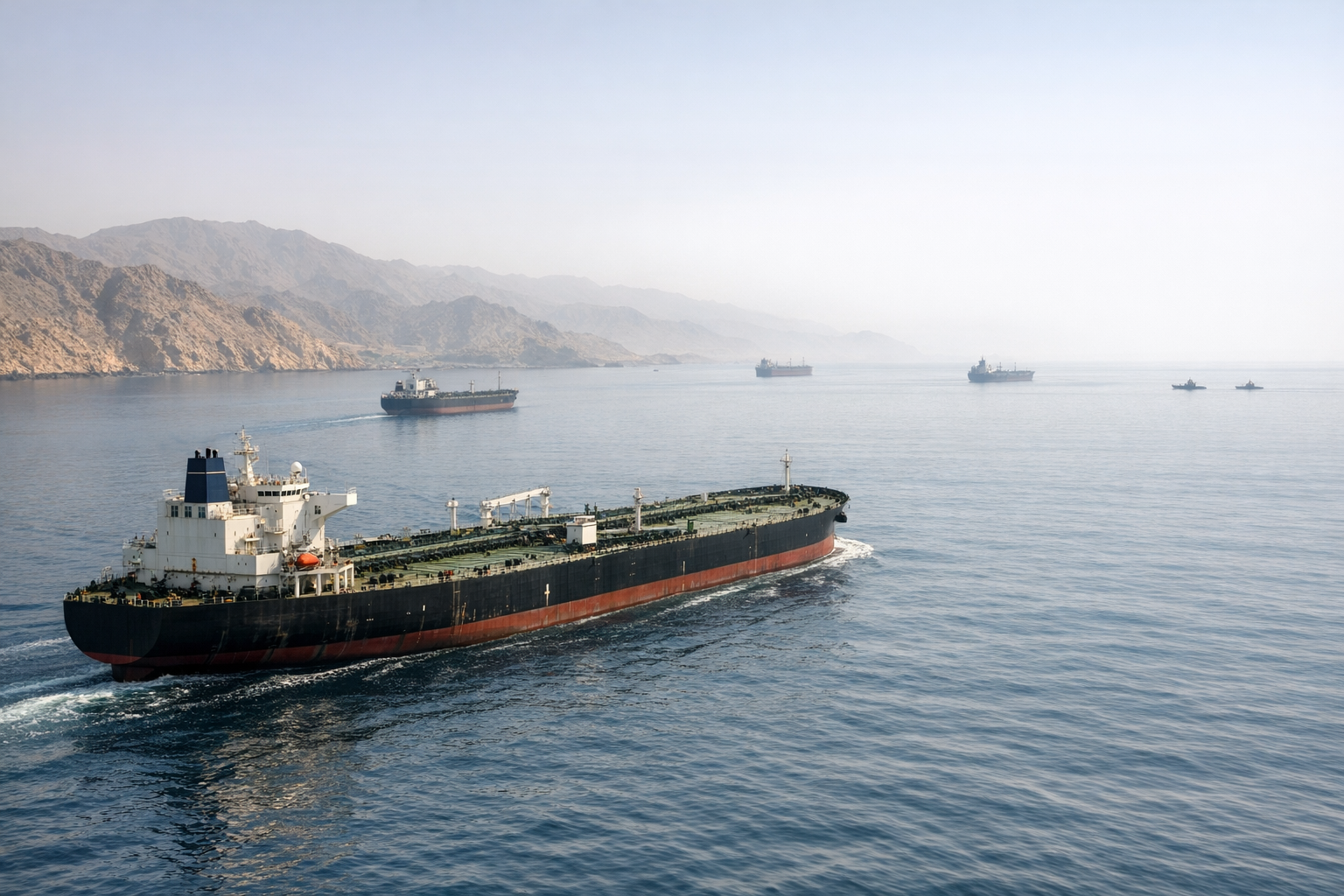
The price action suggested that, for now, investors see recovering tanker traffic through Hormuz and the prospect of de-escalation as more important than isolated new attacks at sea. That is a notable shift. Earlier in the conflict, crude had surged on fears that the waterway — one of the world’s most critical energy chokepoints — could be seriously disrupted, threatening a large share of global oil exports.
Instead, much of that war-risk premium has evaporated. Prices have fallen sharply this month as more tankers resumed passage through the strait and concerns about an immediate supply crunch eased.
A Fragile Calm in the Strait
The calm, however, remains precarious.
The reported vessel attack near Oman underscored how quickly insecurity in and around Hormuz can rattle markets, even if only briefly. Maritime traffic has been recovering from the severe dislocation caused by the 2026 conflict, but shipping conditions are still fragile enough that the International Maritime Organization paused part of its evacuation effort on June 25 after the latest incident.
That tension helps explain the unusual balance now shaping the region: diplomacy is advancing, but on uneven ground; shipping has resumed, but under threat; and oil prices are falling even though the physical risks have not disappeared.
For the White House and for Iran’s leadership, the inspections question is especially consequential. If I.A.E.A. teams are able to enter major nuclear sites soon, it would amount to the clearest operational sign that Tehran is accepting external verification — a step that has often marked the difference between symbolic agreements and ones with a chance of endurance.
What Comes Next
The next questions are practical ones. Inspectors still need to reach the sites, establish the scope of access and determine how intrusive the verification process will be. It is also unclear which facilities Iran may open first, and whether sites hit during the recent conflict will be subject to different restrictions.
In energy markets, the central uncertainty is similar in form if not in subject: are attacks like the one reported near Oman becoming background noise in a gradually stabilizing region, or the start of a pattern that could once again slow tanker traffic and revive fears of disrupted supply?
For now, traders are betting on the former. Diplomats are trying to prove them right.
Sources
Further reading and reporting used to add context:
- https://www.axios.com/2026/06/25/iran-ship-attacked-strait-hormuz-un-sailors-evacuation-paused
- https://apnews.com/article/862164c2aecbdc376dea434198eaf75f
- https://www.axios.com/2026/06/22/iran-un-inspectors-vance
- https://apnews.com/article/e9271996cf8e1e774cbc4ddd7bd4e6b3
- https://apnews.com/article/875ee115cacd1f5923052b70f2be4124
- https://www.japantimes.co.jp/news/2026/06/26/japan/iaea-nuclear-verification-need/
- https://www.euronews.com/2026/06/24/iaea-chief-says-nuclear-inspections-of-irans-enrichment-sites-going-to-happen-despite-tehr
- https://www.jpost.com/middle-east/iran-news/article-900601
- https://www.investing.com/news/world-news/oil-back-to-prewar-levels-as-hormuz-traffic-rebounds-us-tries-to-reassure-gulf-allies-4760411
- https://www.investing.com/news/commodities-news/oil-gains-after-selloff-awaits-progress-on-strait-of-hormuz-flows-4754494
- https://www.washingtonpost.com/world/2026/06/24/iran-us-israel-lebanon-june-24-2026-nuclear-grossi-ceasefire/7c1d41aa-6f8b-11f1-8730-e7fd0e2a6404_story.html
- https://www.bignewsnetwork.com/news/279146037/inspections-of-iran-nuclear-sites-going-to-happen-says-iaea-director-general-rafael-grossi
- https://m.economictimes.com/news/international/world-news/iaea-chief-confirms-iran-nuclear-inspections-will-occur-amid-us-iran-agreement/amp_articleshow/131964381.cms
- https://m.economictimes.com/news/international/world-news/un-watchdog-says-iran-nuclear-inspections-going-to-happen/amp_articleshow/131967011.cms
- https://www.iranintl.com/en/202606248421
- https://au.investing.com/news/commodities-news/oil-hits-preiran-war-lows-as-strait-of-hormuz-flows-normalize-4503704
- https://www.cbsnews.com/live-updates/us-iran-trump-deal-nuclear-inspections-iaea-timing-not-essential/
- https://en.wikipedia.org/wiki/2026_Strait_of_Hormuz_crisis
- https://www.imo.org/en/mediacentre/pressbriefings/pages/statement-on-the-attack-in-strait-of-hormuz-evacuation-plan-pause.aspx
- https://www.imo.org/es/mediacentre/pressbriefings/pages/statement-on-the-attack-in-strait-of-hormuz-evacuation-plan-pause.aspx
- https://www.whitehouse.gov/gallery/president-donald-j-trump-signs-a-memorandum-of-understanding-between-the-islamic-republic-of-iran-and-the-united-states-at-the-palace-of-versailles-france-on-june-17-2026/
- https://www.imo.org/fr/mediacentre/pressbriefings/pages/statement-on-the-attack-in-strait-of-hormuz-evacuation-plan-pause.aspx
- https://www.imo.org/ru/mediacentre/pressbriefings/pages/statement-on-the-attack-in-strait-of-hormuz-evacuation-plan-pause.aspx
- https://www.imo.org/zh/mediacentre/pressbriefings/pages/statement-on-the-attack-in-strait-of-hormuz-evacuation-plan-pause.aspx
- https://www.imo.org/es/mediacentre/pressbriefings/pages/imo-statement-on-settebello-attack.aspx
- https://www.whitehouse.gov/releases/2026/06/president-trumps-iran-agreement-is-america-first-in-action/?query-11-page=3
- https://www.whitehouse.gov/omb/information-resources/guidance/memoranda/
- https://www.imo.org/en/mediacentre/hottopics/pages/middle-east-highlighted-incidents.aspx
- https://www.gov.uk/government/news/uk-forces-intercept-russian-shadow-fleet-vessel-for-the-first-time-in-blow-to-putins-war-chest
- https://www.imo.org/fr/mediacentre/pressbriefings/pages/imo-accounces-evacuation-plan-in-strait-of-hormuz.aspx
- https://www.whitehouse.gov/wp-content/uploads/2026/05/SAP-SJR163.pdf
- https://minutes.belfastcity.gov.uk/documents/g12323/Public%2Breports%2Bpack%2B11th-Jun-2026%2B17.15%2BClimate%2Band%2BCity%2BResilience%2BCommittee.pdf?T=10
- https://assets.publishing.service.gov.uk/media/630880c5e90e0729d9ab15fc/national-strategy-for-maritime-security-web-version.pdf
- https://www.devonandsevernifca.gov.uk/wp-content/uploads/2026/05/Agenda-Item-6b-Netting-Proposal-2.pdf
- https://committeemeetings.flintshire.gov.uk/documents/g5949/Public%20reports%20pack%2017th-Jun-2026%2009.30%20Clwyd%20Pension%20Fund%20Committee.pdf?LLL=0&T=10
- https://wwwcdn.imo.org/localresources/en/MediaCentre/Documents/Red%20Sea%20Incidents%20Report%20for%20Member%20States%2012%2009%202024.pdf
- https://www.business-standard.com/markets/commodities/oil-prices-fall-towards-pre-war-levels-as-tankers-exit-strait-of-hormuz-126062500087_1.html
- https://www.theguardian.com/world/iran/2026/jun/25/all
- https://www.tankeroperator.com/news/oil-price-falls-to-pre-iran-war-levels-as-more-tankers-exit-strait-of-hormuz/15425.aspx
- https://www.internazionale.it/ultime-notizie-reuters/2026/06/25/oil-back-to-pre-war-levels-as-hormuz-traffic-rebounds-us-tries-to-reassure-gulf-allies
- https://www.theguardian.com/world/middleeast/2026/jun/25/all
- https://www.klsescreener.com/v2/news/view/1743221/brent-hits-pre-iran-war-low-as-tankers-leave-hormuz
- https://www.business-standard.com/markets/commodities/oil-edges-lower-as-hormuz-shipments-resume-despite-ship-attack-near-oman-126062600090_1.html
- https://www.investing.com/news/commodities-news/oil-extends-losses-as-hormuz-traffic-recovers-after-iran-peace-talks-4757110
- https://www.theepochtimes.com/world/oil-falls-back-to-pre-war-levels-as-hormuz-shipping-rebounds-6053166
- https://www.investing.com/news/commodities-news/oil-prices-edge-up-on-new-supply-worries-after-cargo-ship-hit-near-oman-4761270
- https://au.investing.com/news/commodities-news/oil-prices-fall-as-tankers-exit-strait-of-hormuz-4503665
- https://www.axios.com/2026/06/14/oil-prices-us-iran-war-hormuz-strait-peace-deal
- https://www.axios.com/2026/05/07/gas-prices-iran-war-peace-deal
- https://www.axios.com/2026/04/30/oil-prices-iran-highest-levels
- https://apnews.com/article/8304cc39c6ebe6f863f6f39ee6ce9768
- https://www.axios.com/2026/06/12/oil-prices-iran-war-hormuz-when-surge
- https://en.wikipedia.org/wiki/2026_Iran_war_fuel_crisis
- https://www.reddit.com/r/Economics/comments/1ufcxz0/oil_prices_erase_wartime_gains_as_more_tankers/
- IAEA says US-Iran deal gives inspectors access to Iran | The Jerusalem Post
- US and Iran dispute whether Tehran has agreed to nuclear inspections
- ‘Very strong’ nuclear verification needed in Iran after war: IAEA head – The Japan Times