
Britain said on Wednesday that it had recently tracked three Russian submarines operating near critical undersea infrastructure in the North Atlantic, a public warning from London that reflects a deepening concern over Moscow’s maritime activity around the British Isles and a sharpened British campaign against Russia’s sanctioned oil trade.
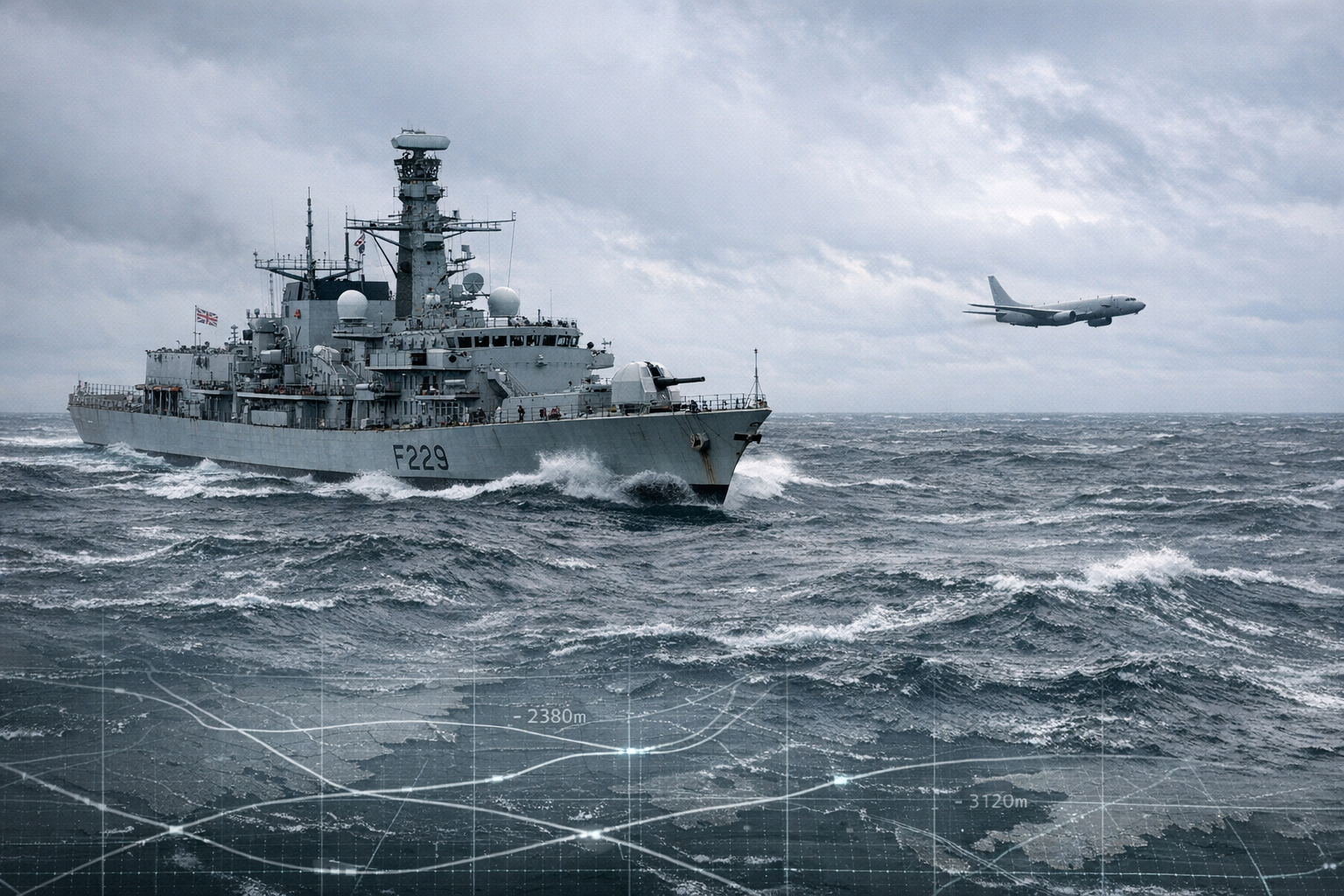
John Healey, the defense secretary, said a Royal Navy frigate, Royal Air Force maritime patrol aircraft and hundreds of personnel took part in a monthlong operation with Norway and other allies to monitor what he described as one Russian attack submarine and two intelligence-gathering submarines north of the United Kingdom. The vessels, he said, were shadowed until they left the area.
British officials portrayed the operation as part deterrent, part signal. Undersea cables and pipelines crossing the North Atlantic are among the West’s most sensitive strategic assets, carrying energy supplies, financial traffic, military communications and much of the data that links Europe and North America. By disclosing the episode, the government appeared intent on showing that it is prepared not only to watch Russian naval movements closely but also to speak more openly about them.
“We track and deter any malign activity,” Healey said, describing what he cast as a broader pattern of increased Russian threats to Britain and Europe.
The British government has not publicly identified the submarines involved or released operational evidence showing how close they came to specific infrastructure. That leaves unresolved the question of intent — whether the vessels were merely signaling presence, gathering intelligence or attempting to map vulnerable sites. But Western governments have increasingly treated such missions as part of a gray-zone campaign in which hostile states probe critical systems below the threshold of open conflict.
The concern is hardly abstract. Since the sabotage of the Nord Stream gas pipelines in 2022 and a series of cable disruptions in northern European waters, NATO governments have grown more alarmed about the vulnerability of seabed infrastructure. In recent years, British, Nordic and Baltic officials have repeatedly warned that Russia possesses the naval capability to locate and potentially interfere with cables and pipelines in ways that are difficult to attribute quickly and costly to repair.
For Britain, the latest episode fits into a broader strategic shift that has accelerated since late last year. London has tightened defense coordination with Norway, with a particular emphasis on hunting Russian submarines and protecting North Atlantic infrastructure. It has also used the Joint Expeditionary Force, a British-led security grouping of northern European nations, to step up monitoring of undersea threats. And it has increasingly publicized Royal Navy missions shadowing Russian warships, intelligence vessels and oil tankers moving through waters near Britain.
Those efforts are unfolding alongside a more confrontational British approach toward Russia’s so-called shadow fleet, the aging and often obscurely owned tankers used to move sanctioned oil. Last month, Britain formally authorized military and law-enforcement teams to board and detain sanctioned shadow-fleet vessels in U.K. waters, a significant escalation in efforts to disrupt Moscow’s sanctions evasion and squeeze a revenue stream that helps finance the war in Ukraine.
Healey suggested on Wednesday that the policy was already affecting Russian behavior. If Moscow now feels compelled to send a warship to escort sanctioned tankers through the English Channel, he said, that would suggest the pressure is beginning to bite.
British ministers stopped short of publicly confirming reports that a Russian naval vessel had recently accompanied two sanctioned ships through the Channel. But officials indicated that Britain had moved beyond warning and monitoring to a posture in which interdiction is now a real option, even if operational decisions remain with the military.
That shift matters not only because it raises the risk of direct friction in some of the world’s busiest sea lanes, but also because it links two fronts of the confrontation with Russia that are often treated separately: the protection of critical seabed infrastructure and the enforcement of oil sanctions. In both cases, Britain is trying to impose costs in a contested maritime space where Russia has relied on ambiguity, legal complexity and the sheer difficulty of policing the sea.
Whether that harder line will translate into regular boardings or seizures remains unclear. So, too, does the extent to which Russia may respond by increasing naval escorts or other displays of force around its commercial traffic. Maritime security officials have long noted that proving hostile intent at sea is notoriously difficult; ships and submarines can linger near infrastructure, collect data or alter course without leaving the kind of evidence that makes attribution straightforward.
Still, Britain’s decision to speak publicly about the recent submarine operation underscored a calculation in London that silence may now carry its own risks. By exposing Russian movements and tying them to a wider pattern of pressure on Europe’s maritime lifelines, the government is trying to signal that what lies on the seabed — and what passes above it — has become a more central front in the standoff with Moscow.
Sources
Further reading and reporting used to add context:
- UK and Norway deter Russian subs in North Atlantic operation | AP News
- https://www.gov.uk/government/news/shadow-fleet-set-to-be-interdicted-in-uk-waters-in-latest-blow-to-russia
- https://defensemirror.com/news/41257
- https://www.navalnews.com/naval-news/2025/06/russian-navy-corvette-escorts-shadow-fleet-tankers-in-the-english-channel/
- https://apnews.com/article/311aa197fb1697bab45b37286ae9fa2c
- https://apnews.com/article/bc3031812f1ffcde8705af80c1cb23fd
- https://armyrecognition.com/news/navy-news/2025/russia-sends-warship-for-the-first-time-to-escort-sanctioned-shadow-fleet-through-english-channel
- https://orbitaltoday.com/2026/04/09/breaking-uk-publishes-satellite-imagery-supporting-defense-of-undersea-cables/
- https://www.tomshardware.com/tech-industry/russian-ship-loitering-near-transatlantic-data-cables-chased-off-by-royal-navy-attack-helicopter-sat-within-three-quarters-of-a-mile-of-five-undersea-data-cables-including-two-linking-britain-to-new-york
- https://united24media.com/latest-news/russia-sends-warship-to-shield-sanctioned-tankers-in-first-ever-escort-through-english-channel-9340
- https://www.royalnavy.mod.uk/news/2025/october/14/20251014-hms-iron-duke-tracks-russian-submarine
- https://news.usni.org/2025/01/22/u-k-ships-track-russian-surveillance-ship-loitering-near-underwater-cables
- https://www.washingtonpost.com/business/2025/12/04/uk-norway-navy-patrols-russia-undersea-cables/2aa673fe-d0f4-11f0-92cb-561ee4e6a771_story.html?itid=agg_ticker
- https://www.theguardian.com/politics/2025/jun/15/uk-woefully-ill-protected-against-chinese-and-russian-undersea-cable-sabotage
- https://www.gbnews.com/news/russian-warship-english-channel-armed-vessel-syria-weapons-putin
- https://www.reddit.com/r/unitedkingdom/comments/1sglnw0/uk_defence_secretary_reveals_monthlong_russian/
- https://www.yahoo.com/news/articles/dozens-sanctioned-russian-tankers-navigate-055807755.html
- https://www.gov.uk/government/speeches/defence-secretary-speech-on-threats-to-the-uk
- https://www.gov.uk/government/news/uk-carrier-strike-group-to-deploy-to-north-atlantic-to-keep-uk-safe
- https://www.gov.uk/government/news/joint-expeditionary-force-activates-uk-led-reaction-system-to-track-threats-to-undersea-infrastructure-and-monitor-russian-shadow-fleet
- UK and Norway to operate together to counter Russian undersea threat through major new defence agreement – GOV.UK
- https://www.gov.uk/government/news/uk-unveils-new-undersea-warfare-technology-to-counter-threat-from-russia
- https://www.find-government-grants.service.gov.uk/grants/great-british-energy-supply-chain-fund-offshore-wind-and-networks-1
- https://www.totnestowncouncil.gov.uk/whats-on/meetings/
- https://www.gov.uk/government/news/uk-and-germany-to-jointly-hunt-russian-submarines-from-lossiemouth-one-year-after-landmark-defence-agreement
- https://www.peterborough.gov.uk/residents/schools-and-education/term-dates
- https://www.gov.uk/government/news/we-must-strengthen-arctic-defences-to-deter-putin-foreign-secretary-says-during-arctic-visit
- https://www.northumberland.gov.uk/cost-living-support/transport-discounts-and-support
- https://www.northumberland.gov.uk/council-tax/council-tax-charges
- https://assets.publishing.service.gov.uk/media/69a9ba122fd1694513b9b226/np_3054_05_March_2026.pdf
- https://assets.publishing.service.gov.uk/media/68d68a8829e2934106866426/Advice_Letter_-_James_Heappey__Senior_Advisor__Helsing_Limited.pdf
- https://assets.publishing.service.gov.uk/government/uploads/system/uploads/attachment_data/file/259641/Rubie_Renee_Environmental_Statement.pdf
- https://assets.publishing.service.gov.uk/media/61e95eb68fa8f505985ef458/RAND_RRA528-1.pdf
- https://assets.publishing.service.gov.uk/government/uploads/system/uploads/attachment_data/file/1063855/The_UK_s_Defence_Contribution_in_the_High_North.pdf
- https://assets.publishing.service.gov.uk/media/682f01c2e9440506ee95398c/20250522-Defence-Nuclear-Enterprise-2025-Annual-Update-to-Parliament-v10.pdf
- https://www.yahoo.com/news/articles/sanctioned-oil-tanker-enters-uk-185418222.html
- https://united24media.com/latest-news/dozens-of-sanctioned-russian-shadow-fleet-ships-slip-past-uk-control-in-channel-15276
- https://www.yahoo.com/news/articles/british-forces-preparing-board-russian-230400698.html
- https://www.yahoo.com/news/articles/russia-may-deploy-warships-escort-021830575.html
- https://www.investing.com/news/commodities-news/uk-authorises-military-to-board-russian-shadow-fleet-tankers-4581238
- https://www.rt.com/russia/636325-russia-slams-uk-tanker-seizure-plan/
- https://www.yahoo.com/news/articles/uk-seize-russian-shadow-fleet-010000018.html
- https://www.seanews.com.tr/article/russian-tankers-sail-channel-defying-uk-ml5nlfv9
- https://www.yahoo.com/news/articles/russian-shadow-fleet-tanker-sails-193926011.html
- https://en.usm.media/dozens-of-sanctioned-tankers-pass-through-english-channel-despite-uk-pledge-to-take-action/
- https://news.usni.org/2026/01/26/royal-navy-shadows-russian-warship-oil-tanker-through-english-channel
- https://en.wikipedia.org/wiki/2026_Strait_of_Hormuz_crisis
- https://sanctions.kse.ua/wp-content/uploads/2025/11/ROT_OCT25.pdf
- https://en.wikipedia.org/wiki/United_States_oil_blockade_during_Operation_Southern_Spear
- https://en.wikipedia.org/wiki/Russian_shadow_fleet
- https://www.themoscowtimes.com/2025/10/06/russian-shadow-fleet-tankers-linked-to-oil-leaks-in-european-waters-politico-a90730/pdf
- https://www.olgn.org/wp-content/uploads/2025/05/The-Maritime-Executive-Finland-Reports-Russia-Has-Begun-Naval-Escorts-for-Shadow-Fleet-Tankers.pdf
- https://energyandcleanair.org/wp/wp-content/uploads/2025/06/CREA_Briefing_How-the-UK-can-lower-Russian-fossil-fuel-earnings_06.2025.pdf
- https://www.reddit.com/r/UkrainianConflict/comments/1s8gtqo/putin_has_eight_shadow_tankers_in_the_english/
- https://www.royalnavy.mod.uk/news/2026/january/23/20260123-royal-navy-intercepts-russian-ships-in-the-english-channel
- https://www.royalnavy.mod.uk/news/2026/march/05/20260305-uk-shadows-russian-vessels-through-the-english-channel
- https://www.royalnavy.mod.uk/news/2025/february/15/250214-royal-navy-monitors-russian-task-group-returning-from-syria
- https://www.royalnavy.mod.uk/news/2025/january/01/20250101-hms-somerset-russians
- https://www.royalnavy.mod.uk/news/2025/november/24/20251124-royal-navy-tracks-russian-ships-including-research-ship-yantar
- https://www.royalnavy.mod.uk/news/2025/january/22/250122-royal-navy-tracks-russian-spy-ship-in-waters-close-to-the-uk
- https://developer.bbc.com/
- https://www.royalnavy.mod.uk/news/2025/march/19/250319-royal-navy-shadow-russian-task-group-returning-from-syria-in-the-channel
- https://www.royalnavy.mod.uk/news/2025/march/03/20250305-royal-navy-shadows-russian-task-group-in-waters-close-to-the-uk
- https://www.royalnavy.mod.uk/news/2026/march/24/20260324-royal-navy-destroyer-arrives-in-eastern-mediterranean
- https://www.royalnavy.mod.uk/news/2023/november/08/231108-hms-richmond-tracks-russian-warship
- https://www.royalnavy.mod.uk/news/2026/march/10/20260310-dragon-departure
- https://cd.royalnavy.mod.uk/-/media/rnweb/navynews/archivepdfs/2020s/2026/navy-news-january-2026.pdf?rev=06c98224c7734613b6b03428641ea4a8
- https://cd.royalnavy.mod.uk/-/media/rnweb/navynews/archivepdfs/2020s/2023/navy-news-december-2023-issue-833.pdf?rev=a45b1399abeb42aeb4fe13860f4ef6fa
- https://cd.royalnavy.mod.uk/-/media/rnweb/navynews/archivepdfs/2020s/2025/march-2025-navy-news-issue.pdf?rev=660c66a3326b4a6b9daeff66ea84db7c
- https://cd.royalnavy.mod.uk/-/media/rnweb/navynews/archivepdfs/2010s/2019/navy-news-august-2019-issue-781.pdf?rev=ebe77ac53a784a9fbb635e93750b83cb
- https://cd.royalnavy.mod.uk/-/media/rnweb/navynews/archivepdfs/2020s/2025/navy-news-june-2025-issue-851.pdf?rev=fea2addfd85d4501a2877b4543612501
- https://cd.royalnavy.mod.uk/-/media/rnweb/navynews/archivepdfs/2020s/2021/navy-news-january-2021-issue-798.pdf?rev=bde4e4077dfe49968fe5b09bfc6887c9