
Two fronts of pressure
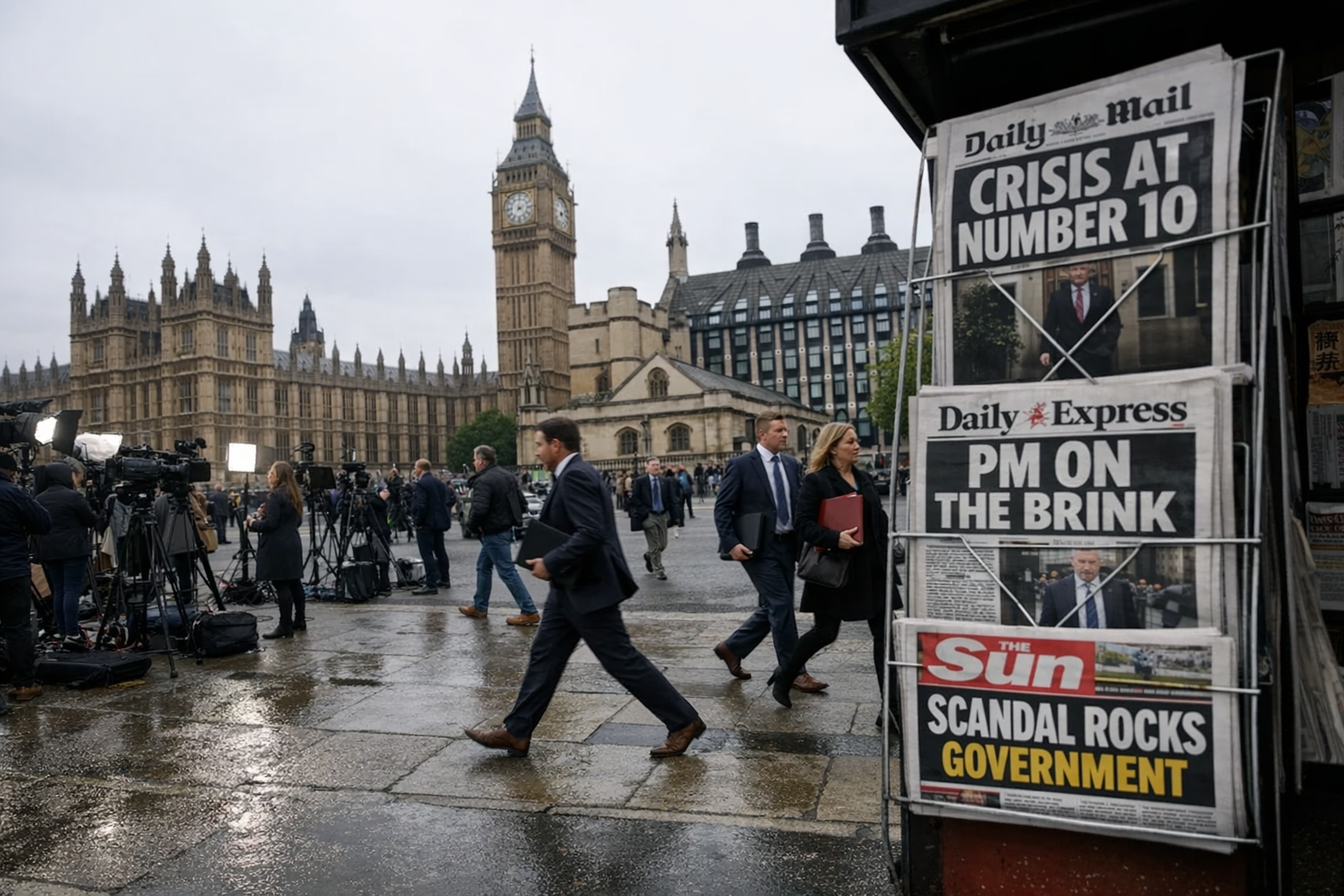
British politics was strained anew on Sunday as two separate controversies — one engulfing Labour at the top of government, the other threatening Reform UK’s insurgent appeal — sharpened questions about competence, probity and political judgment.
For Prime Minister Keir Starmer, the immediate danger remains the deepening fallout from the appointment of Peter Mandelson as Britain’s ambassador to Washington. Ministers have now said Starmer would have stopped the appointment had he known Mandelson had failed security vetting before taking up the post, a revelation that has turned an awkward personnel issue into a larger test of what Downing Street knew and when.
At the same time, Reform UK was forced onto the defensive after fresh allegations that its deputy leader, Richard Tice, failed to pay nearly £100,000 in corporation tax through a series of companies linked to his investment business, money that was reportedly connected to substantial donations to the party.
Together, the disputes have added to a sense of a political system under pressure from both the responsibilities of office and the vulnerabilities of opposition.
Starmer’s Mandelson problem worsens
The Mandelson affair has become more than an argument over one appointment. It now goes to the heart of Starmer’s claim to run a disciplined, professional government.
Ministers have sought to draw a firm line, insisting the prime minister was not told that Mandelson had failed “developed vetting” in January 2025 before being sent to Washington, one of Britain’s most sensitive diplomatic postings. Starmer has said he is “furious” that he was not informed, and senior allies including the foreign secretary, David Lammy, and the work and pensions secretary, Liz Kendall, have publicly reinforced that account.
But that defense has opened another, potentially more damaging, question: how such information was not escalated in the first place.
The case matters because developed vetting is the highest level of security clearance used for the most sensitive roles in government. If a figure as prominent as Mandelson failed that process before being approved for the Washington post, critics say it is hard to believe the matter would not ordinarily have been flagged to the prime minister or his office. Former officials have suggested that even if formal rules did not require direct signoff from No. 10, a case of this delicacy would normally have been raised.
That dispute over process has made the row less about Mandelson personally than about whether normal safeguards were bypassed — and whether the government’s explanation is complete.
The pressure is likely to intensify this week. Olly Robbins, the Foreign Office’s top civil servant, left his post this week and is expected to give evidence to MPs on Tuesday. His testimony is likely to be watched closely for any indication of who knew what inside government and whether established procedure was followed when Mandelson was cleared despite the failed vetting.
For Starmer, whose political brand has been built on seriousness and institutional competence, the episode carries unusual risk. Opponents are trying to recast it as evidence not simply of bureaucratic failure, but of weak grip at the center of government. If further evidence emerges that No. 10 was informed, or should have been informed, the issue could shift from administrative mishandling to a direct challenge to Starmer’s credibility.
Reform UK faces scrutiny over Tice’s tax affairs
If Labour’s difficulty is one of control, Reform UK’s is one of consistency.
The party, which has built much of its appeal on anti-establishment rhetoric and attacks on waste and perceived elite double standards, now faces allegations that one of its most senior figures underpaid tax through corporate structures tied to political donations.
According to reporting that emerged over the weekend, Tice is alleged to have failed to pay almost £100,000 in corporation tax through four shell companies between 2020 and 2022. Those companies are said to have funneled dividends to Tisun Investments, which then transferred roughly £1.113 million to Reform UK.
Tice has not accepted the reported figure. In a statement posted on social media, he said that “a long career with multiple businesses is bound to feature some errors” and that he would be happy to put matters right if numbers needed to be rechecked, “be that more or less.”
That response may limit immediate legal exposure, but politically it leaves Reform with a familiar problem: a party that has thrived by presenting itself as the tribune of ordinary taxpayers now finds itself answering detailed questions about the tax arrangements of its own leadership.
The allegations also do not arise in isolation. Tice’s financial affairs have already drawn scrutiny in recent weeks. In March, reports focused on a real estate investment trust structure said to have reduced large corporation tax liabilities. In April, there were separate allegations involving a company linked to him and the payment of tax on dividends. The newest claims are distinct, centering on corporation tax allegedly unpaid by intermediary companies from 2020 to 2022, but the cumulative effect is to create a pattern of unwelcome attention.
Labour has already urged HMRC to investigate, increasing the pressure and raising the prospect that what began as a newspaper report could become a wider political and regulatory issue. Whether tax authorities act, and whether the sum alleged stands up, remain open questions.
Why both rows matter now
The twin controversies land at a moment when both parties are especially exposed.
For Labour, the Mandelson affair threatens to puncture Starmer’s central argument that his government restored order and integrity after years in which questions of standards and ministerial judgment repeatedly destabilized Westminster. A dispute over a senior diplomatic appointment, particularly one involving Britain’s relationship with Washington, is exactly the sort of issue on which voters expect competence, procedural rigor and candor.
For Reform UK, the Tice allegations touch a different nerve. The party has gained support by channeling public anger over immigration, taxation and trust in mainstream politics. That message can be powerful when directed outward. It becomes harder to sustain when a senior figure is accused of benefiting from disputed corporate tax arrangements while helping finance the party itself.
There is also a broader political significance. Reform has been making inroads in places long seen as resistant terrain, including parts of Scotland and former Conservative strongholds in England. As its support broadens, so too does the scrutiny that comes with being treated as more than a protest vehicle. Financial controversies that might once have remained peripheral now strike more directly at its claim to be a cleaner alternative to the established parties.
The questions ahead
Neither controversy is settled.
In the Mandelson case, the unresolved issues are stark: who inside government knew of the failed vetting, whether proper protocol was followed when he was nevertheless approved, and whether Robbins’ evidence will bolster or undermine No. 10’s version of events. The answers may determine whether the matter fades as a bureaucratic breakdown or develops into something more politically corrosive.
In Tice’s case, the outstanding questions are more technical but no less consequential. It remains unclear whether HMRC will investigate, what any final liability would be, whether the reported £100,000 figure is accurate, and whether the flow of money through the companies involved creates a wider reputational problem for Reform.
For now, the effect is to leave both Labour and Reform UK defending positions at odds with their core political identities: one as the party of competent government, the other as the party of the aggrieved taxpayer. In a political climate already short on trust, that is a dangerous place for either to be.
Sources
Further reading and reporting used to add context:
- Allies back Starmer over appointment of Epstein friend Mandelson | AP News
- https://apnews.com/article/21f1f9290b2116d93a85d92546e1340f
- https://apnews.com/article/6eb6ed59845c9ebac87607a7f6b09829
- https://apnews.com/article/35c2c302e7370efcd0098b5b9419c72e
- Starmer would have blocked Mandelson role over vetting failure, says Lammy | Keir Starmer | The Guardian
- https://www.theguardian.com/politics/live/2026/apr/19/keir-starmer-leadership-prime-minister-labour-party-peter-mandelson-vetting-latest-news
- https://www.theguardian.com/politics/2026/apr/17/keir-starmer-faces-judgment-day-as-mandelson-vetting-debacle-grows
- https://news.bloomberglaw.com/financial-accounting/farage-glosses-over-reform-deputy-tices-uk-tax-technicality
- https://www.reddit.com/r/FuckNigelFarage/comments/1spmbsc/richard_tice_signed_accounts_wrongly_claiming_98k/
- https://www.itv.com/news/2026-04-17/what-is-the-developed-security-vetting-peter-mandelson-reportedly-failed
- https://www.theguardian.com/politics/live/2026/apr/13/iran-war-keir-starmer-brexit-trump-strait-hormuz-oil-fuel-southport-latest-news-updates?page=with%3Ablock-69dcdd188f08aa81602c832d
- https://taxpolicy.org.uk/2026/04/18/richard-tice-quidnet-reit-corporation-tax/
- https://www.theguardian.com/politics/live/2026/apr/17/peter-mandelson-keir-starmer-olly-robbins-vetting-foreign-office-latest-news-updates?page=with%3Ablock-69e1d7568f0802e30ef2de2c
- https://www.socialistparty.org.uk/articles/148871/18-03-2026/reforms-tice-tax-avoider/
- https://www.reddit.com/r/ukpolitics/comments/1spkan2/richard_tice_signed_accounts_wrongly_claiming_98k/
- https://www.gbnews.com/politics/nigel-farage-richard-tice-tax
- https://www.bloomberg.com/news/articles/2026-04-16/uk-government-overrode-mandelson-vetting-advice-guardian-says
- https://www.reddit.com/r/unitedkingdom/comments/1sppc9i/removed/
- https://www.bostonglobe.com/2026/04/17/world/uk-peter-mandelson-appointment-security-checks/
- https://www.reddit.com/r/ukpolitics/comments/1spnemv/reform_dragged_into_tax_row_by_richard_tices/
- https://www.theguardian.com/politics/2026/feb/24/reform-uk-promises-to-scrap-flagship-labour-worker-and-renters-protections
- https://www.theguardian.com/politics/live/2026/mar/17/uk-us-starmer-trump-king-charles-state-visit-iran-war-zelenskyy-ukraine-latest-news-updates?filterKeyEvents=false&page=with%3Ablock-69b932d28f082e70034c2caf
- https://www.theguardian.com/politics/2025/oct/13/eform-uk-abandoning-manifesto-pledge-tax-cuts-deputy-leader-admits
- https://www.theguardian.com/politics/live/2026/mar/16/keir-starmer-donald-trump-iran-nato-oil-cost-of-living-latest-news-updates?page=with%3Ablock-69b81bfe8f08b1d7c2e14552
- https://www.theguardian.com/politics/2025/nov/05/reform-uk-public-sector-pensions-plan-could-costs-billions-extra-prospect-union-warns
- https://www.theguardian.com/politics/article/2024/may/13/reform-uk-richard-tice-loans-party-funding
- https://www.theguardian.com/politics/live/2026/apr/13/iran-war-keir-starmer-brexit-trump-strait-hormuz-oil-fuel-southport-latest-news-updates?page=with%3Ablock-69dcbfe78f080251b73be674
- https://taxpolicy.org.uk/2026/04/11/richard-tice-company-failed-to-pay-120k-tax-dividends/
- https://www.theguardian.com/politics/2025/nov/24/reform-uk-claim-savings-english-councils-fact-checked
- https://taxpolicy.org.uk/2026/04/13/richard-tice-questions-unanswered-120k-tax/
- https://resources.companieshouse.gov.uk/about/policyDocuments/registrarsRules/ewfAUDEXFULL_registrarsRules.pdf
- https://resources.companieshouse.gov.uk/about/policyDocuments/registrarsRules/ewfAA02_registrarsRules.pdf
- https://resources.companieshouse.gov.uk/about/policyDocuments/registrarsRules/registrarsRules.pdf
- https://taxpolicy.org.uk/wp-content/assets/Gofer%20Wealth%20accounts.pdf
- https://resources.companieshouse.gov.uk/about/policyDocuments/registrarsRules/ewfMicro_registrarsRules.pdf
- https://resources.companieshouse.gov.uk/toolsToHelp/pdf/freeDataProductDataset.pdf
- https://www.theguardian.com/uk-news/2026/apr/12/richard-tice-reform-uk-quidnet-reit-tax-dividends
- https://www.theguardian.com/uk-news/2026/mar/16/britons-should-strive-to-pay-minimum-tax-legally-possible-richard-tice-reform
- https://www.theguardian.com/politics/live/2026/apr/13/iran-war-keir-starmer-brexit-trump-strait-hormuz-oil-fuel-southport-latest-news-updates?filterKeyEvents=false&page=with%3Ablock-69dcafec8f08a86a0e564aaf
- https://www.theguardian.com/politics/live/2026/apr/13/iran-war-keir-starmer-brexit-trump-strait-hormuz-oil-fuel-southport-latest-news-updates?page=with%3Ablock-69dccd9c8f080251b73be6d4
- https://www.theguardian.com/politics/live/2026/apr/13/iran-war-keir-starmer-brexit-trump-strait-hormuz-oil-fuel-southport-latest-news-updates?page=with%3Ablock-69dd00dc8f0823a7954da7d7
- https://www.theguardian.com/politics/live/2026/apr/13/iran-war-keir-starmer-brexit-trump-strait-hormuz-oil-fuel-southport-latest-news-updates?filterKeyEvents=false
- https://www.theguardian.com/politics/live/2026/apr/13/iran-war-keir-starmer-brexit-trump-strait-hormuz-oil-fuel-southport-latest-news-updates?page=with%3Ablock-69dd01c58f0823a7954da7e7
- https://www.theguardian.com/politics/live/2026/apr/13/iran-war-keir-starmer-brexit-trump-strait-hormuz-oil-fuel-southport-latest-news-updates?page=with%3Ablock-69dcff878f080251b73be922
- https://www.theguardian.com/politics/live/2026/apr/13/iran-war-keir-starmer-brexit-trump-strait-hormuz-oil-fuel-southport-latest-news-updates?filterKeyEvents=false&page=with%3Ablock-69dcb0c48f08ff62487f843c
- https://www.theguardian.com/politics/live/2026/mar/17/uk-us-starmer-trump-king-charles-state-visit-iran-war-zelenskyy-ukraine-latest-news-updates?filterKeyEvents=false&page=with%3Ablock-69b91ec68f0871bed8f39992
- https://recruiters.theguardian.com/assets/files/inclusive_recruitment/The-Guardian-Jobs-guide-to-inclusive-recruitment.pdf
- https://recruiters.theguardian.com/assets/files/hr_tech/HRTechGuide_GuardianJobs.pdf
- https://advertising.theguardian.com/assets/files/the-guardian-advertising-awards-2025-t%26cs-%281%29.pdf
- https://usadvertising.theguardian.com/assets/files/the-guardian-us–corporate-sustainability_-consumer-sentiments-research-x-script.pdf
- Reform UK’s Richard Tice allegedly failed to pay £100,000 in corporation tax | Richard Tice | The Guardian
- Britons should strive to pay minimum tax legally possible, says Richard Tice | Richard Tice | The Guardian