
The contest to shape artificial intelligence took a more expansive turn this week, as leading companies and governments pushed on several fronts at once: more powerful models, bigger acquisitions, deeper integration into everyday life and sharper accusations of technological theft.
In the span of two days, OpenAI introduced a new flagship model, China’s DeepSeek previewed a long-awaited successor to one of its leading systems, Cohere struck a deal to acquire the German start-up Aleph Alpha, Alibaba moved its Qwen AI further into automobiles, and the White House warned that actors based in China were engaged in what it called “industrial-scale” efforts to siphon off American AI advances.
Taken together, the moves suggest that the AI race is no longer defined only by benchmark scores or chatbot popularity. It is increasingly about who controls the infrastructure, the customers, the data pipelines and, not least, the geopolitical advantage.
New model releases on both sides
OpenAI said on April 23 that its latest model, GPT-5.5, would begin rolling out through ChatGPT and Codex, with improvements in coding, computer use and research tasks. The company has sought to show that it can still deliver steady gains in performance even as competition has intensified and customers have grown more demanding about whether each new release offers a meaningful leap or merely incremental polish.
A day later, DeepSeek released a preview of its V4 large language model, a successor to V3 and one of the most closely watched products to emerge from China’s fast-moving AI sector. The company described the model as adapted for Huawei chip technology, a detail that carries significance beyond technical architecture.
That adaptation points to one of the central dynamics of the current AI era: China’s effort to localize more of the stack, from chips to deployment, as U.S. restrictions have sought to limit Beijing’s access to the most advanced semiconductors. Whether DeepSeek’s V4 proves competitive outside company-selected tests remains uncertain, and the timeline for a full release is still unclear. But even a preview sends a message that Chinese firms intend to keep pace despite mounting pressure.
Europe’s search for an AI foothold
At the same time, the Canadian AI company Cohere agreed to acquire Aleph Alpha, the German start-up that had become one of Europe’s most prominent bids for an indigenous AI champion. As part of the deal, Schwarz Group, a major backer of Aleph Alpha, plans to invest $600 million in Cohere’s coming funding round.
The transaction underscores a persistent European concern: how to avoid becoming merely a customer base for American and Chinese AI giants. For years, policymakers and corporate buyers across Europe have talked about “sovereign AI” — systems developed, hosted and governed in ways more aligned with European regulatory and security priorities.
In that light, the deal is less a simple takeover than a reconfiguration of Europe’s AI ambitions into a broader non-U.S. enterprise alliance. Cohere has focused heavily on business customers and private deployments, areas where European demand for security, compliance and data control can be especially strong. Still, the strategic logic of the deal will have to survive the harder work of integration, product execution and customer adoption.
Alibaba pushes AI into the car
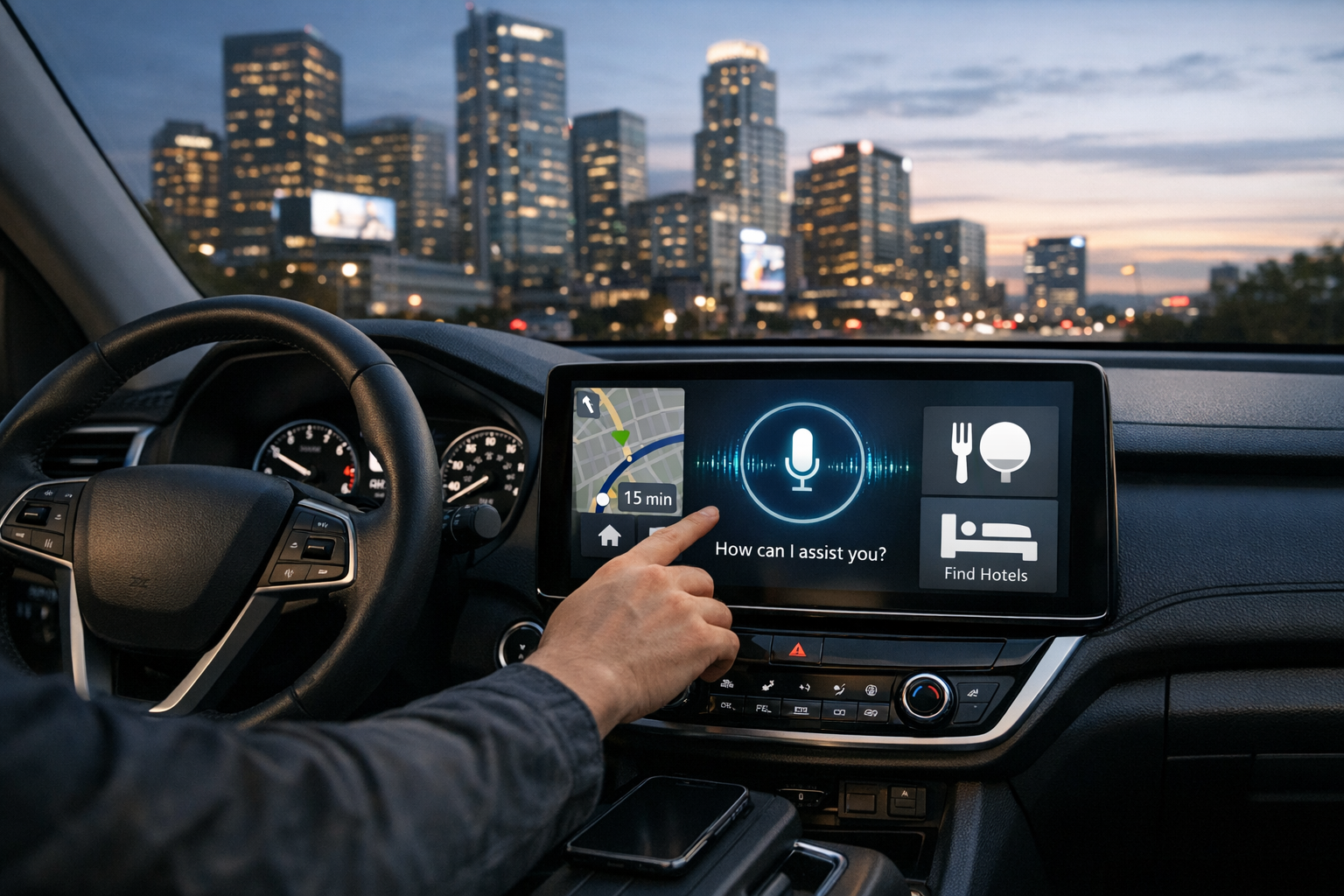
Alibaba, for its part, is trying to show that AI’s future will be measured not only in labs and boardrooms but also in routine consumer behavior. The company is expanding Qwen into cars, allowing drivers to use voice commands for tasks such as ordering food, booking hotels and managing deliveries.
The move builds on Alibaba’s broader push to reposition Qwen from a standalone chatbot into a more “agentic” assistant tied to commerce, payments, maps and travel services. In China, where large technology platforms already operate vast consumer ecosystems, AI is increasingly being embedded as connective tissue across those services rather than offered as a separate novelty.
Automakers have emerged as a particularly attractive distribution channel. Alibaba had previously announced BMW integrations in China for 2026 models, and the latest rollout suggests that in-car AI may become another battleground for platform dominance. Yet the expansion also raises familiar concerns about safety, distraction and data governance — especially when voice assistants begin to handle transactions and personal logistics in real time.
Washington hardens its rhetoric
Hovering over these commercial developments is a more adversarial political backdrop. On April 23, the White House accused entities “principally based in China” of carrying out large-scale efforts to distill U.S. frontier AI systems, effectively casting model theft as a national security challenge rather than simply a matter of corporate intellectual property.
American officials have previously accused China of targeting U.S. technology. But the latest language was notable for its intensity and timing. It reflects a broader push by Washington to preserve American leadership in AI and to prevent rivals from benefiting cheaply from the expensive work of training frontier systems.
The administration has increasingly framed AI as a strategic asset akin to advanced semiconductors or telecommunications infrastructure. That framing could pave the way for tougher enforcement actions or new restrictions, though it remains unclear what immediate penalties or policy measures might follow.
A broader, more complicated race
The clustering of announcements this week revealed how many layers the AI competition now has.
For OpenAI, the challenge is to maintain a perception of technical leadership while turning that lead into products that developers and companies cannot easily replace. For DeepSeek, the imperative is to prove that Chinese labs can continue producing advanced systems despite export controls and compute constraints. For Cohere and Aleph Alpha, success will depend on whether Europe can support an enterprise AI alternative with enough scale to matter. For Alibaba, the goal is to make AI indispensable by weaving it into daily transactions and devices.
And for governments, especially in Washington and Beijing, the stakes increasingly reach beyond commerce. They now include supply chains, industrial policy, military relevance and control over the next generation of digital infrastructure.
That is why this moment matters. The AI race is no longer just about building the smartest model. It is about who can finance it, distribute it, localize it, protect it and make it unavoidable.
Sources
Further reading and reporting used to add context:
- https://www.axios.com/2026/04/23/openai-releases-spud-gpt-model
- https://www.axios.com/2026/04/23/us-china-ai-theft-distillation
- https://apnews.com/article/a5c40346394ef5fa9ae710c5aabdc62c
- Introducing GPT-5.5 | OpenAI
- https://en.wikipedia.org/wiki/GPT-5.5
- https://www.nextgov.com/artificial-intelligence/2026/04/white-house-accuses-china-deliberate-industrial-scale-campaigns-steal-us-ai-models/413083/
- https://www.pymnts.com/artificial-intelligence-2/2026/white-house-accuses-china-of-far-reaching-theft-of-ai-tech/
- https://www.foxbusiness.com/politics/white-house-china-industrial-scale-ai-technology-theft-trump-xi-summit
- https://codersera.com/blog/is-deepseek-v4-released-official-status-specs-alternatives/
- https://tokendock.ai/blog/deepseek-v4-preview-released-tech-specs
- https://help.openai.com/en/articles/9624314-model-release-notes%252525252523.eot
- https://tech.yahoo.com/ai/chatgpt/articles/openai-releases-gpt-5-5-182703026.html/
- https://www.implicator.ai/gpt-5-5-wasnt-a-benchmark-flex-it-was-openais-distribution-doctrine/
- https://www.washingtonpost.com/business/2026/04/24/deepseek-ai-china-gpt-v4/fb981376-3faf-11f1-bb46-ed564688d953_story.html
- https://www.moneycontrol.com/technology/openai-gpt-5-5-leaked-ahead-of-official-announcement-article-13896432.html
- https://www.techbuzz.ai/articles/cohere-acquires-aleph-alpha-in-600m-european-ai-expansion
- https://en.wikipedia.org/wiki/GPT-5
- https://www.tomshardware.com/tech-industry/artificial-intelligence/u-s-house-passes-bill-to-stop-chinese-companies-from-accessing-export-controlled-american-ai-chips-using-offshore-rental-loophole-remote-access-security-access-act-effectively-extends-export-controls-to-the-cloud
- https://en.wikipedia.org/wiki/OpenAI_o4-mini
- https://www.reddit.com/r/politics/comments/1str1um/white_house_warns_of_industrialscale_efforts_in/
- https://en.wikipedia.org/wiki/GPT-5.4
- https://en.wikipedia.org/wiki/GPT-4.5
- China’s AI darling DeepSeek previews new model adapted for Huawei chip technology By Reuters
- https://en.wikipedia.org/wiki/Qwen
- https://www.techbuzz.ai/articles/alibaba-s-qwen-ai-hits-the-road-with-voice-powered-cars
- https://es.marketscreener.com/noticias/la-canadiense-cohere-adquiere-la-alemana-aleph-alpha-ce7f59ded080ff21
- https://letsdatascience.com/news/alibaba-deploys-qwen-ai-across-multiple-automaker-dashboards-f6399eec
- https://www.alibabacloud.com/blog/603022
- https://www.marketscreener.com/news/deepseek-reveals-preview-version-of-deepseek-v4-ce7f59ded188f425
- https://renovateqr.com/blog/chinese-ai-models-april-2026
- https://longbridge.com/news/283931508
- https://en.wikipedia.org/wiki/Aleph_Alpha
- https://podcasts.apple.com/us/podcast/2026-04-10-cohere-and-aleph-alpha-merger-talks-backed/id1850302940?i=1000760773972
- https://www.pcgamer.com/software/ai/deepseek-has-reportedly-denied-nvidia-and-amd-early-access-to-its-new-v4-ai-model-giving-huawei-and-other-chinese-chipmakers-a-head-start/
- https://en.wikipedia.org/wiki/Cohere
- https://www.reddit.com/r/DeepSeek/comments/1su3ogh/deepseek_v4_preview/
- https://en.wikipedia.org/wiki/DeepSeek_%28chatbot%29
- https://www.reddit.com/r/RWATimes/comments/1su6xim/alibabas_qwen_ai_is_coming_to_cars_allowing/
- https://www.reddit.com/r/baba/comments/1sr4l5u/alibaba_drops_qwen_36_max_previewits_most/
- https://en.wikipedia.org/wiki/Z.ai
- https://www.reddit.com/r/DeepSeek/comments/1su5w0e/deepseekv4_preview_is_officially_live_opensourced/
- https://www.reddit.com/r/DeepSeek/comments/1su7rzr/deepseek_v4_dropped_16t_params_and_1m_context/
- https://de.wikipedia.org/wiki/Aleph_Alpha
- https://www.uscc.gov/sites/default/files/2026-04/China_Bulletin_April_2_2026.pdf
- https://www.reddit.com/r/DeepSeek/comments/1sev287/v4_is_live_on_deepseek_backend/
- https://www.cnbc.com/2025/04/29/-alibaba-qwen3-ai-series-chinas-latest-open-source-ai-breakthrough.html
- https://www.alibabagroup.com/document-1960233590314762240
- https://docs.cohere.com/v2/changelog
- https://www.cnbc.com/2025/05/02/chinas-xpeng-delivered-over-30000-vehicles-for-sixth-straight-month.html
- https://www.cnbc.com/2025/08/14/ai-startup-cohere-valued-at-6point8-billion-in-latest-fundraise-appoints-new-executives.html
- https://www.alibabagroup.com/document-1948497434959151104
- https://status.cohere.com/
- https://cohere.com/aya
- https://www.cnbc.com/2024/05/09/alibaba-rolls-out-latest-version-of-its-large-language-model.html
- https://www.alibabagroup.com/ir-filings-sec
- https://www.cnbc.com/2025/01/09/cohere-sees-big-ai-opportunity-in-enterprise-away-from-chatgpt.html
- https://www.cnbc.com/2025/09/26/nvidias-investment-portfolio.html
- https://fm.cnbc.com/applications/cnbc.com/resources/editorialfiles/2026/02/26/Proposed_Order_to_CIT.pdf
- https://fm.cnbc.com/applications/cnbc.com/resources/editorialfiles/2025/01/14/MUSK_SEC_COMPLAINT.pdf
- https://fm.cnbc.com/applications/cnbc.com/resources/editorialfiles/2013/05/02/DA%20Agenda%20July%2010.pdf
- https://fm.cnbc.com/applications/cnbc.com/resources/editorialfiles/2017/08/14/DELIVERING%20ALPHA%202017%20Agenda.pdf
- https://fm.cnbc.com/applications/cnbc.com/resources/editorialfiles/2026/01/12/warrenletter.pdf
- https://www.alibabagroup.com/document-1973816100088971264
- https://www.alibabagroup.com/document-1971445322303406080
- https://www.alibabagroup.com/document-1938724620211322880
- https://www.alibabagroup.com/document-1871720871488389120
- https://www.alibabagroup.com/document-1951072900597415936
- https://www.alibabagroup.com/document-1841616313521274880
- https://www.alibabagroup.com/document-1928528945544691712
- https://www.alibabagroup.com/document-1930116148192346112
- https://www.alibabagroup.com/document-1859811057615241216
- https://www.alibabagroup.com/en-US/about-alibaba?form=MG0AV3
- https://static.alibabagroup.com/manual-upload/Alibaba-Al-for-Good-Action-Report-2025.pdf
- https://sustainability.alibabagroup.com/download/Alibaba%20Group%20Carbon%20Neutrality%20Action%20Report_20211217_ENG_Final_single%20page.pdf
- https://sustainability.alibabagroup.com/download/Alibaba%20Group%20Carbon%20Neutrality%20Action%20Report_20211217_SC_Final_single%20page.pdf
- https://www.whitehouse.gov/releases/2026/02/u-s-promotes-ai-adoption-sovereignty-and-exports-at-india-ai-impact-summit/
- https://www.whitehouse.gov/releases/2025/11/president-trump-launches-the-genesis-mission-to-accelerate-ai-for-scientific-discovery/
- https://www.whitehouse.gov/articles/2025/04/american-public-submits-over-10000-comments-on-white-houses-ai-action-plan/
- https://www.whitehouse.gov/presidential-actions/2026/04/presidential-determination-pursuant-to-section-303-of-the-defense-production-act-of-1950-as-amended-on-grid-infrastructure-equipment-and-supply-chain-capacity/
- https://www.whitehouse.gov/releases/2026/03/president-donald-j-trump-unveils-national-ai-legislative-framework/
- https://www.whitehouse.gov/articles/2025/09/major-organizations-commit-to-supporting-ai-education/
- https://www.whitehouse.gov/releases/2026/04/president-trumps-clear-and-unchanging-objectives-drive-decisive-success-against-iranian-regime/
- https://www.whitehouse.gov/releases/2025/03/ostp-press-release/
- https://www.whitehouse.gov/presidential-actions/2026/03/commitment-to-countering-cartel-criminal-activity/
- https://www.whitehouse.gov/releases/2025/09/president-trump-signs-technology-prosperity-deal-with-united-kingdom/
- https://www.whitehouse.gov/ostp/information-resources/
- https://www.whitehouse.gov/releases/2025/06/60-organizations-sign-white-house-pledge-to-support-americas-youth-and-invest-in-ai-education/
- https://www.whitehouse.gov/wp-content/uploads/2026/01/WHOSTP-2025-Wins.pdf
- https://www.whitehouse.gov/omb/information-for-agencies/memoranda/
- https://www.whitehouse.gov/fact-sheets/2025/04/fact-sheet-president-donald-j-trump-advances-ai-education-for-american-youth/
- https://www.whitehouse.gov/presidential-actions/2025/04/advancing-artificial-intelligence-education-for-american-youth/
- https://www.whitehouse.gov/wp-content/uploads/2026/04/ERP-2026-5.-The-Revolution-of-Artificial-Intelligence.pdf
- https://www.whitehouse.gov/briefings-statements/2026/03/first-lady-melania-trump-addresses-u-n-security-council-championing-peace-through-education/
- https://www.whitehouse.gov/fact-sheets/2025/11/fact-sheet-president-donald-j-trump-unveils-the-genesis-missionto-accelerate-ai-for-scientific-discovery/
- https://www.whitehouse.gov/fact-sheets/2025/07/fact-sheet-president-donald-j-trump-prevents-woke-ai-in-the-federal-government/
- https://www.whitehouse.gov/releases/2025/04/white-house-releases-new-policies-on-federal-agency-ai-use-and-procurement/
- https://www.whitehouse.gov/articles/2025/03/icymi-president-trump-outlines-ostps-goals-and-priorities/
- https://www.whitehouse.gov/presidential-actions/2025/07/promoting-the-export-of-the-american-ai-technology-stack/
- https://www.whitehouse.gov/articles/2025/06/ostp-issues-agency-guidance-for-gold-standard-science/
- https://www.whitehouse.gov/wp-content/uploads/2026/04/lab_fy2027.pdf
- https://www.cnbc.com/2025/09/26/anthropic-global-ai-hiring-spree.html
- https://www.cbinsights.com/company/aleph-alpha/financials
- https://www.cnbc.com/2025/09/30/ai-chip-company-cerebras-raises-1-billion-in-pre-ipo-funding-round.html
- https://link.cnbc.com/public/32146090
- https://www.cnbc.com/2025/06/26/ubs-gives-3-key-ai-stocks-to-own-from-here.html
- https://www.cnbc.com/2025/09/28/a-new-buzzword-is-hanging-over-businesses-as-they-rush-into-ai.html
- https://european.cloud/2026/02/schwarz-group-aleph-alpha/
- https://gruppe.schwarz/en/press/archive/2025/the-companies-of-schwarz-group-are-planning-to-increase-their-investment-in-aleph-alpha
- https://www.cnbc.com/2025/06/10/wall-street-analyst-now-ai-ceo-on-why-stock-pickers-wont-go-extinct.html
- https://www.fiduciaryvoices.com/uploads/1/0/6/6/10668420/a_multi-dimensional_peer_analysis_of_anthropic_-_research_from_syntax_data_and_pm_insights.pdf
- https://ftpartners.com/eecwih1bhiad/2d3EOR2198JZqyUabHApUE/8564ea94774d559987416fb2e48ff5c3/FT_Partners_FinTech_April_2026.pdf
- https://s22.q4cdn.com/670299758/files/doc_news/2026/Jan/30/Press-Release-Alpha-Announces-Preliminary-4Q25-Results-1-30-26.pdf
- https://www.raiseliguria.it/wp-content/uploads/2025/04/RAISE-Observatory-Chronicles-of-Artificial-Intelligence-Investments.pdf
- https://www.reddit.com/r/EverHint/comments/1s9ppmf/everhint_stock_market_news_april_1_2026_last_12/
- https://af.net/wp-content/uploads/North-America_AI_Investment_Report_2026.pdf
- https://www.reddit.com/r/stocknear/comments/1sqiv3g/premarket_news_report_april_20_2026/
- https://www.channelnewsasia.com/business/canadas-ai-startup-cohere-buys-germanys-aleph-alpha-expand-in-europe-6078246
- https://www.zschimmer-schwarz.com/fileadmin/Relaunch_Media/Corporate/02_Corporate_Unternehmen/02m_Unternehmen_Pressemeldungen/02m1_Pressemeldungen_Texte/2026-04-14_Press_Release_Zschimmer-Schwarz_SBTi_Commitment_Letter_EN.pdf
- https://versustool.com/news/2026/april
- https://lowdown.today/t/european-tech-sovereignty/1/
- https://dayahimour.org/en/blog/cohere
- https://intellectia.ai/news/stock/cohere-plans-to-acquire-aleph-alpha-to-expand-in-europe
- https://d18rn0p25nwr6d.cloudfront.net/CIK-0001803599/45e9e9ed-4670-4781-b321-d03fbadd3adb.pdf
- https://futurumgroup.com/insights/coheres-multilingual-sovereign-ai-moat-ahead-of-a-2026-ipo/
- https://batenetec.com/wp-content/uploads/2026/03/PM_Batene_5Mio_Schwarz_2026-03-11_EN.pdf
- https://www.dds.finance/p/the-crossover-how-anthropic-quietly
- https://gruppe.schwarz/en/how-we-act
- https://www.pminsights.com/insights/coheres-short-term-returns-turn-positive-at-2-07-as-saab-partnership-breaks-into-aerospace
- https://pdf.secdatabase.com/1580/0001104659-25-087467.pdf
- https://sophiccapital.com/april-04-2026-some-improvement-in-headlines-dominated-market/
- https://www.reddit.com/r/amd_fundamentals/comments/1s9rhif/openai_closes_silicon_valleys_largestever_funding/
- https://www.reddit.com/r/u_enoumen/comments/1saqidb/ai_daily_news_rundown_the_end_of_middle/
- https://www.reddit.com/r/Anthropic/comments/1slv76k/7_years_agosounds_familiar/
- https://www.newsminimalist.com/articles/alibabas-qwen-ai-powers-voice-activated-car-services-for-food-ordering-and-hotel-booking-b7394bce
- https://www.tomshardware.com/tech-industry/semiconductors/chinas-top-ai-firms-shift-model-training-overseas-to-access-nvidia-gpus
- https://streamlinefeed.co.ke/news/alibaba-integrates-qwen-ai-into-global-auto-fleet-at-beijing-show
- https://www.investing.com/news/stock-market-news/alibaba-upgrades-qwen-app-to-order-food-book-travel-4448555
- https://www.alibaba.com/product-insights/2026-s-top-selling-cars-market-breakdown-alibaba-trends-future-predictions.html
- https://autos.yahoo.com/auto-shows/articles/chinese-evs-geared-dominate-worlds-004511049.html
- https://www.chinaretailnews.com/2026/02/12/19112-alibaba-emerges-victorious-with-120-million-orders-from-qwen-in-6-day-shopping-frenzy/
- https://www.alibaba.com/product-insights/new-chinese-cars-2026-shopping-online-ilovechina-alibaba-com.html
- https://www.alibaba.com/product-insights/top-chinese-made-cars-2026-best-models-brands-market-trends.html
- https://www.reddit.com/r/baba/comments/1su3skb/10_leading_mainland_automakers_integrate_qwen/
- https://www.reddit.com/r/Alibaba/comments/1re9tic/why_are_alibaba_cars_so_cheap_in_2026/
- https://links.sgx.com/FileOpen/SG%20Issuer_DLCs_Long_SLD_5x_Alibaba_260408_cleanwithAppendices.ashx?App=Prospectus&FileID=69223
- Canada's AI startup Cohere buys Germany's Aleph Alpha to expand in Europe – CNA