
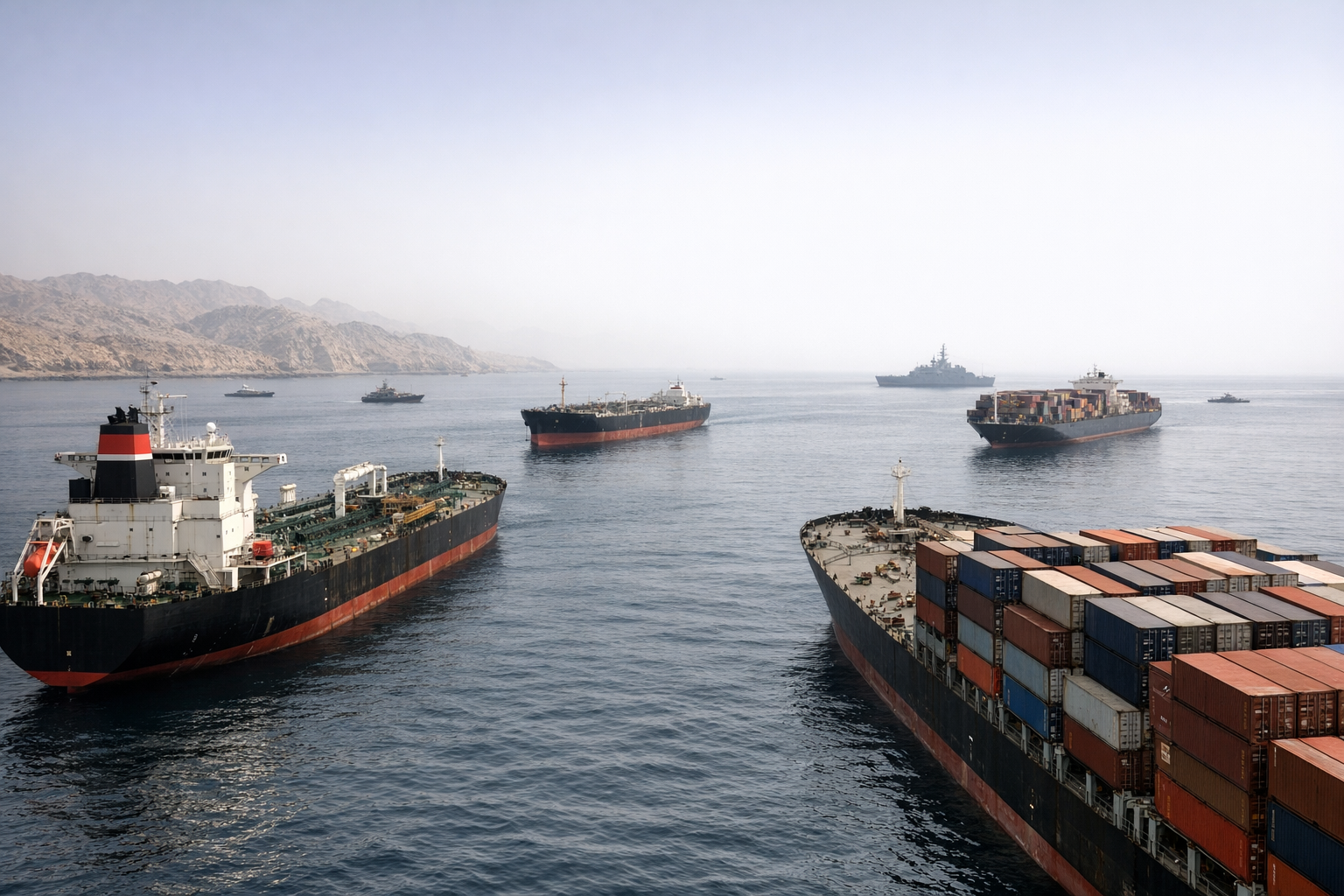
A Ceasefire on Land, but a Chokepoint at Sea
The three-week extension of the ceasefire between Israel and Lebanon, announced after White House talks on Wednesday, was meant to signal a measure of stabilization in a region shaken by war. Instead, it underscored how little calm has returned to the global economy.
Investors, energy traders and allied governments are now fixated less on the truce along the Israel-Hezbollah front than on the far more consequential confrontation in the Strait of Hormuz, where commercial shipping remains effectively paralyzed and the risk of a wider clash between the United States and Iran continues to rise.
Oil prices climbed again on Thursday, with crude moving back above $100 a barrel, as markets concluded that the extension in Lebanon did little to address the deeper disruption. The strait — the narrow waterway between Iran and Oman through which a vast share of the world’s oil and liquefied natural gas normally passes — has become the central pressure point of the crisis.
President Trump sharpened that confrontation this week, ordering the Navy to “shoot and kill” any boat laying mines in Hormuz. The directive came as Iran was reported to have seized two container ships in the waterway, a reminder that even as Washington insists it is asserting control, Tehran retains the ability to disrupt one of the world’s most important maritime corridors.
Markets No Longer Need a Regional War to Panic
The mismatch between the diplomatic headline and the market reaction reflected a harsher reality: the land truce in Lebanon does not extend to the maritime standoff with Iran, which is now driving energy prices, inflation fears and military planning across several capitals.
Asia-Pacific markets traded unevenly after the ceasefire extension, with investors showing little sign of relief. Traders have instead focused on what some analysts have described as a “double blockade” in Hormuz, with neither Iran nor the United States allowing normal vessel traffic to resume.
Before the war, about 20 million barrels of oil a day moved through the strait. By March, according to the International Energy Agency, flows had fallen to just over 2 million barrels a day. The agency has described the turmoil as the largest supply disruption in the history of the global oil market. Under ordinary conditions, roughly a quarter of global seaborne oil trade and nearly one-fifth of global LNG trade transit Hormuz, and alternative routes are limited.
That helps explain why the extension of a ceasefire in Lebanon — significant in its own right for civilians and for the risk of renewed fighting on Israel’s northern border — has done little to reassure markets. The economic shock is being generated elsewhere.
The Costs Are Spreading Beyond Oil Traders
The fallout is no longer confined to energy desks and shipping insurers.
In Japan, core inflation accelerated to 1.8 percent in March, a sign that the strain on energy supplies is feeding into consumer prices in one of the world’s largest import-dependent economies. In Britain, official data showed retail sales rose as motorists rushed to fill their tanks amid sharply rising fuel prices, pushing fuel purchases to their highest level in years.
Those are early indications of the kind of secondary effects policymakers fear most: not only higher crude prices, but transport costs, consumer inflation and precautionary behavior that can compound volatility. For governments already wrestling with fragile growth, the closure of Hormuz threatens to become an economic event as much as a military one.
Fatih Birol, the head of the I.E.A., called the situation the biggest energy security threat in history, a striking assessment that reflects both the scale of the disruption and the scarcity of easy substitutes. Pipeline bypasses around the Gulf can absorb only a fraction of the lost flow. LNG markets, too, are under pressure, raising the risk that countries far from the Middle East will feel the strain through electricity and heating costs.
Washington Projects Force, but the Endgame Is Unclear
The Trump administration has paired aggressive rhetoric with stepped-up military measures, including efforts to deter further mine-laying and to accelerate demining activity. But the gap between tactical action and strategic clarity remains wide.
Mr. Trump said the United States had “total control” over the strait, yet the continued seizure of commercial ships by Iranian forces and the persistence of the blockade have cast doubt on how quickly safe passage can be restored. Reports that mine clearance could take months — even as officials dispute the longest estimates — have deepened the sense that there is no settled timetable for reopening the waterway.
That uncertainty is critical. Markets can absorb bad news more easily than they can absorb indeterminate risk. If traders knew the disruption would last days, or even several weeks, prices could adjust accordingly. What they are confronting instead is a conflict in which diplomacy is incomplete, military deterrence is imperfect and the duration of the shipping crisis is impossible to calculate with confidence.
The administration has also signaled little urgency about a diplomatic breakthrough with Tehran. European officials, while pressing for negotiations, have warned that any renewed talks would need to include technical nuclear expertise if they are to produce something durable rather than a weaker, politically improvised accord.
Allies Are Already Planning for What Comes After
Even before the fighting is resolved, allied governments are beginning to prepare for a postwar security mission in Hormuz, a sign that many do not expect the waterway simply to snap back to normal once active hostilities subside.
Britain has discussed joining a multinational effort to secure the strait, including the possible deployment of Royal Air Force Typhoon jets from Qatar, along with mine-hunting drones and specialist divers. The proposal has been part of talks involving about 30 countries, according to officials familiar with the discussions. The planning suggests that Western governments increasingly see the current crisis not as a short-lived interruption but as a structural threat to maritime security in the Gulf.
What remains unresolved is who would lead such a mission, how burdens would be shared and what role the United States would ultimately want to play. Those questions matter not only for military planners but also for energy markets, which are searching for any credible pathway to restored shipping.
For now, the extension of the Israel-Lebanon ceasefire offers a narrow form of respite in one corner of the conflict. But the artery that carries so much of the world’s energy remains constricted, and until that changes, the sense of emergency is likely to persist — in trading rooms, in central banks and at gas stations far from the Gulf.
Sources
Further reading and reporting used to add context:
- https://www.axios.com/2026/04/23/trump-israel-lebanon-ceasefire-extended-talks-us-iran-war
- Trump says Israel and Lebanon agree to extend ceasefire by 3 weeks | AP News
- Trump issues 'shoot and kill' order against Iranian small boats in Strait of Hormuz | AP News
- https://apnews.com/article/6ffd7391c4235dda48f76a03c4a4d909
- https://apnews.com/article/d88a46b2e17cf7ef732af2b2836ca501
- https://en.wikipedia.org/wiki/2026_Israel%E2%80%93Lebanon_ceasefire
- https://www.investing.com/news/economy-news/japans-core-inflation-likely-ticked-up-in-march-fuelled-by-energy-costs-reuters-poll-4619736
- https://www.theguardian.com/world/live/2026/apr/23/middle-east-crisis-live-news-us-iran-ceasefire-strait-of-hormuz-blockade-ships-latest-updates?page=with%3Ablock-69eaad5c8f0881eff50e728c
- https://www.lemonde.fr/en/economy/article/2026/03/20/closure-of-strait-of-hormuz-is-greatest-global-energy-security-threat-in-history-warns-iea-chief_6751653_19.html
- https://cryptobriefing.com/japan-core-inflation-rises-as-iran-war-impacts-energy-prices
- https://www.cnbc.com/2025/06/24/oil-sheds-xxxx-as-iran-israel-ceasefire-eases-concerns-strait-of-hormuz-closure.html
- https://www.argusmedia.com/news-and-insights/latest-market-news/2818400-lebanon-ceasefire-extended-by-3-weeks-trump
- https://www.theguardian.com/world/live/2026/apr/23/middle-east-crisis-live-news-us-iran-ceasefire-strait-of-hormuz-blockade-ships-latest-updates?page=with%3Ablock-69ea868f8f08f369fc0bda99
- https://investinglive.com/news/japan-core-inflation-holds-at-18-but-energy-shock-threatens-renewed-surge-20260424/
- https://www.bostonglobe.com/2026/04/23/nation/us-iran-war-updates/
- https://en.wikipedia.org/wiki/2026_Strait_of_Hormuz_crisis
- https://www.reddit.com/r/GUARDIANauto/comments/1stqtb4/world_uk_prepared_to_deploy_raf_typhoons_to_keep/
- https://theaivue.com/articles/top-oil-traders-say-billion-barrel-shock-to-echo-long-after–f2a90e
- https://www.cnbc.com/2025/06/24/cnbc-daily-open-the-strange-times-of-missiles-led-peace-.html
- https://www.cnbc.com/2016/05/01/iea-chief-birol-oil-prices-may-have-hit-bottom-but-watch-the-economy.html
- https://www.cnbc.com/2020/04/25/op-ed-how-the-us-could-use-the-covid-19-crisis-to-reimagine-energy.html
- https://www.cnbc.com/2025/03/25/cnbc-daily-open-trump-hints-at-softer-tariffs-rallying-markets.html
- https://www.cnbc.com/2025/06/17/oil-prices-rise-as-iran-israel-conflict-fans-supply-worries.html
- https://www.cnbc.com/2016/11/03/china-us-critical-for-the-future-of-renewables-iea-chief.html
- https://www.cnbc.com/2025/06/24/asia-pacific-markets-live-trump-iran-israel-ceasefire.html
- https://www.cnbc.com/2019/06/24/oil-prices-us-iran-tensions-keep-energy-markets-on-edge.html
- https://www.cnbc.com/2025/06/18/oil-prices-extend-rise-as-iran-israel-conflict-enters-sixth-day.html
- https://www.cnbc.com/2025/03/03/cnbc-daily-open-trumps-diplomatic-conflict-and-economic-assault.html
- https://www.cnbc.com/2025/06/23/us-joins-iran-israel-war-stoking-worries-about-oil-volatility-.html
- https://fm.cnbc.com/applications/cnbc.com/resources/editorialfiles/2020/10/06/investigation_of_competition_in_digital_markets_majority_staff_report_and_recommendations.pdf
- https://fm.cnbc.com/applications/cnbc.com/resources/editorialfiles/2024/04/30/8_Newspapers_OpenAI.pdf
- https://fm.cnbc.com/applications/cnbc.com/resources/editorialfiles/2026/01/12/warrenletter.pdf
- https://fm.cnbc.com/applications/cnbc.com/resources/editorialfiles/2016/09/21/Cambridge%20Cyber%20Summit%20Agenda%202016.pdf
- https://fm.cnbc.com/applications/cnbc.com/resources/editorialfiles/2024/06/13/YEM_Houthi-Attacks-Pressuring-International-Trade.pdf
- https://fm.cnbc.com/applications/cnbc.com/resources/editorialfiles/2025/04/21/fullsurveyliesmanhere.pdf
- https://www.axios.com/2026/04/23/iran-strait-hormuz-mines-trump
- https://www.axios.com/2026/04/23/china-oil-stockpile-iran-war
- https://www.thedailybeast.com/trump-orders-navy-to-break-his-own-ceasefire-amid-oil-fears/
- https://apnews.com/article/267230f7f32b436822484479313840f7
- https://moneyweek.com/personal-finance/will-petrol-prices-rise
- https://www.theguardian.com/uk-news/2026/apr/23/uk-raf-typhoons-strait-of-hormuz-iran-war
- https://www.aljazeera.com/news/2026/4/23/how-iran-raised-hormuz-stakes-by-capturing-ships
- https://www.investing.com/news/economy-news/morning-bid-iran-flaunts-its-grip-investors-cower-4634551
- https://www.al-monitor.com/originals/2026/04/iran-seizes-two-cargo-ships-hormuz-after-trump-extends-ceasefire
- https://www.geo.tv/latest/661222-world-stocks-end-higher-on-ceasefire-relief-oil-gains-as-truce-is-tested
- https://www.washingtonpost.com/world/2026/04/22/hormuz-strait-us-iran-talks-war/
- https://www.foxnews.com/politics/iran-seizes-ships-hormuz-us-talks-falter-after-ceasefire-extension/
- https://www.investing.com/news/commodities-news/oil-gains-over-2-as-market-weighs-iran-war-supply-risks-4564406
- https://www.wvia.org/news/2026-04-23/the-u-s-seizes-another-oil-tanker-as-peace-talks-with-iran-remain-in-limbo
- https://amp.dw.com/en/iran-seizes-two-container-ships/video-76916175
- https://www.investing.com/news/stock-market-news/wall-st-futures-fall-as-usiran-tensions-persist-despite-ceasefire-extension-4631120
- https://www.kaohooninternational.com/markets/581503
- https://en.wikipedia.org/wiki/2026_Iran_war_fuel_crisis
- https://www.theguardian.com/business/2026/apr/24/retail-sales-rise-british-motorists-petrol-diesel
- https://tradingeconomics.com/united-states/retail-sales/news/543532
- https://www.aa.com.tr/en/economy/japan-core-inflation-accelerates-for-1st-time-in-5-months-as-energy-worries-mount-amid-iran-war/3916367
- https://www.hurriyetdailynews.com/japan-inflation-heats-up-in-march-energy-prices-fall-221414
- https://www.investing.com/news/economic-indicators/japan-cpi-picks-up-in-march-core-inflation-remains-below-boj-target-4634482
- https://think.ing.com/snaps/japanese-inflation-growth-quickened-in-march/
- https://www.japantimes.co.jp/business/2026/03/24/economy/consumer-prices-february-inflation/
- https://ycharts.com/indicators/japan_core_inflation_rate
- https://www.actionforex.com/live-comments/638120-uk-retail-sales-rise-0-7-as-fuel-stockpiling-drives-march-rebound/
- https://www.stat.go.jp/english/data/cpi/1582.htm
- https://www.investing.com/news/economic-indicators/us-retail-sales-surge-in-march-on-higher-gasoline-prices-4626182
- https://www.oecd.org/content/dam/oecd/en/data/insights/statistical-releases/2026/4/consumer-prices-oecd-04-2026.pdf
- https://img1.wsimg.com/blobby/go/4fa3e4f4-7940-4353-bf99-371d87cbfd10/downloads/f4078214-b452-4bee-b250-72cc24c537bb/em202506.pdf?ver=1750410186356
- https://www.spglobal.com/content/dam/spglobal/mi/en/documents/news-insights/research/2026/03/6192277_6192265_0.1.pdf
- https://www.reddit.com/r/RWATimes/comments/1su8944/uk_retail_sales_rebound_as_drivers_stock_up_on/
- https://www.census.gov/retail/marts/www/marts_current.pdf
- https://backup.ons.gov.uk/wp-content/uploads/sites/3/2026/03/Retail-sales-Great-Britain-February-2026.pdf
- https://www.reddit.com/r/ukpolitics/comments/1s4y6q8/the_quantity_of_goods_bought_volume_in_retail/
- https://www.reddit.com/r/NordFX/comments/1su73gs/morning_update_april_24_2026/
- https://www.reddit.com/r/retail/comments/1sruysm/us_retail_sales_rise_post_their_biggest_jump_in_a/
- https://www.stat.go.jp/english/data/kouri/doukou/15i6.htm
- https://www.stat.go.jp/data/cpi/index.html
- https://www.stat.go.jp/data/cpi/1.htm?guid=ON
- https://www.stat.go.jp/english/whatsnew/index.html
- https://www.stat.go.jp/english/data/roudou/1543.htm
- https://www.stat.go.jp/english/data/cpi/158c.html
- https://www.stat.go.jp/english/data/cpi/index.html
- https://www.stat.go.jp/data/cpi/sokuhou/tsuki/index-z.html?mod=article_inline
- https://www.stat.go.jp/english/info/news/20260330.html
- https://www.stat.go.jp/english/data/cpi/1585.htm
- https://www.stat.go.jp/english/data/cpi/1584.html
- https://www.stat.go.jp/english/data/roudou/pdf/resamplerr.pdf
- https://www.stat.go.jp/english/info/meetings/og2015/pdf/t2s5room.pdf
- https://www.stat.go.jp/english/data/cpi/pdf/2020base6.pdf
- https://www.investing.com/news/commodities-news/iea-chief-says-hormuz-blockade-worst-energy-crisis-in-history-4599794
- https://www.iea.org/about/oil-security-and-emergency-response/strait-of-hormuz
- https://www.dawn.com/news/1994346
- https://www.iea.org/reports/state-of-energy-policy-2026/executive-summary
- https://www.iea.org/topics/energy-security
- https://efe.com/english/economy/2026-04-21/even-if-hormuz-reopens-tomorrow-it-will-take-a-long-time-to-return-to-normal-iea/
- The Middle East and Global Energy Markets – Topics – IEA
- https://news.cgtn.com/news/2026-04-19/IEA-chief-warns-of-biggest-energy-crisis-calls-for-Hormuz-reopening-by-end-of-May-1MsXcxw82fS/p.html
- https://fortune.com/2026/04/23/iea-fatih-birol-energy-crisis-iran-war-strait-hormuz-oil-barrels//
- https://aa.com.tr/en/economy/iea-chief-warns-of-biggest-energy-security-threat-in-history-amid-hormuz-blockade/3915566
- https://en.wikipedia.org/wiki/Fatih_Birol
- https://finance.yahoo.com/sectors/energy/articles/largest-energy-security-threat-history-071023782.html
- https://www.atlanticcouncil.org/commentary/event-recap/the-ieas-fatih-birol-oil-prices-will-soon-begin-reflecting-the-severity-of-the-energy-crisis/
- https://elpais.com/economia/2026-04-08/fatih-birol-aie-al-principio-los-gobiernos-subestimaron-la-magnitud-de-la-crisis-energetica.html
- https://www.lemonde.fr/en/economy/article/2026/04/02/in-one-month-of-war-oil-production-has-plunged_6752059_19.html
- https://www.axios.com/2026/04/10/oil-iran-war-trump
- https://en.wikipedia.org/wiki/Strait_of_Hormuz
- https://apnews.com/article/ab475cb979825b956a10d60103026b37
- https://www.business-standard.com/blueprint-defence-magazine/reports/us-efforts-to-clear-mines-in-strait-of-hormuz-can-take-six-months-pentagon-126042301163_1.html
- https://www.fool.com/investing/2026/04/23/the-pentagon-says-it-could-take-6-months-to-clear/
- https://www.allsides.com/news/2026-04-23-0700/middle-east-pentagon-denies-report-clearing-iranian-mines-strait-hormuz-could-take-6-months
- https://www.dawn.com/news/1994425/pentagon-dismisses-reports-of-six-month-mine-clearing-timeline-for-strait-of-hormuz-report
- https://www.straitstimes.com/world/united-states/clearing-hormuz-strait-mines-could-take-six-months-report/
- https://www.dawn.com/news/1994425/pentagon-dismisses-reports-of-six-month-mine-clearing-timeline-for-strait-report
- https://www.gulf-times.com/article/724486/international/uslatin-america/clearing-hormuz-strait-mines-could-take-six-months-report/amp
- https://english.news.cn/20260423/0028007855f445bfa4eae1fa787c27ec/c.html
- https://www.newsmax.com/politics/pentagon-hormuz-6-months/2026/04/23/id/1253905/
- https://en.bd-pratidin.com/international/2026/04/23/61238
- https://www.iranintl.com/en/202604231796
- https://www.tpimediagroup.org/news/national/clearing-hormuz-strait-mines-could-take-six-months-report/article_12b4e816-8bf9-5b30-81ca-7fcf05327d55.html
- https://apnews.com/article/5b60e82ef2fc68e2b43aa570a32404dd
- https://www.axios.com/2026/04/11/us-iran-navy-strait-of-hormuz
- https://apnews.com/article/d76ca28d645e258765b118204f6aebfe
- https://en.wikipedia.org/wiki/2026_Strait_of_Hormuz_campaign
- https://en.wikipedia.org/wiki/2026_United_States_naval_blockade_of_Iran
- https://www.reddit.com/r/energy/comments/1stxhql/pentagon_says_hormuz_mine_clearing_takes_6_months/
- https://www.reddit.com/r/geopolitics/comments/1st2si9/clearing_strait_of_hormuz_of_mines_could_take_6/