
From Partner to Adversary
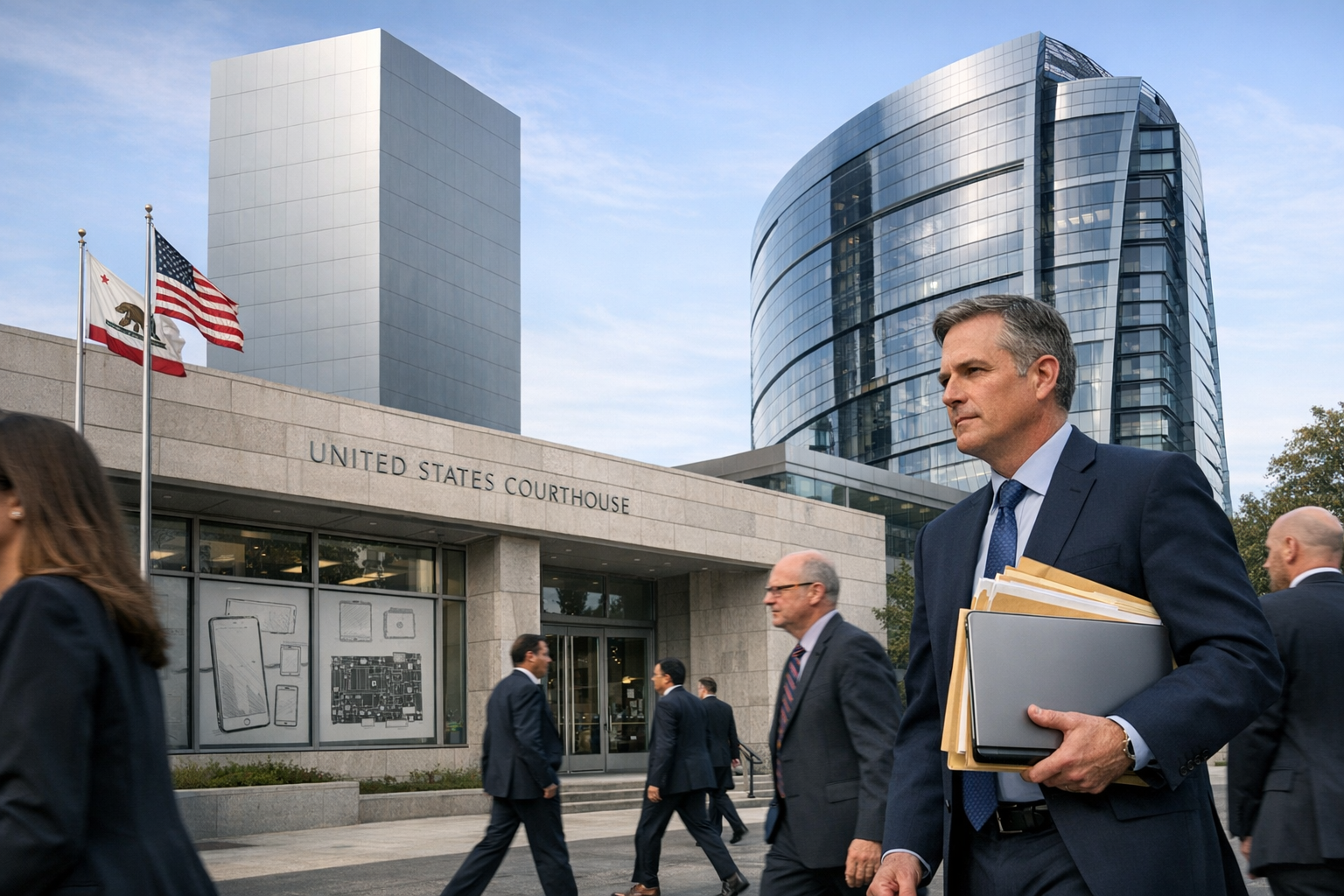
Apple sued OpenAI on Thursday, accusing the artificial intelligence company and several current and former employees of orchestrating a broad effort to obtain Apple’s trade secrets as OpenAI pushed deeper into consumer hardware — a striking rupture between two companies that only recently presented themselves as partners in the race to bring A.I. to mainstream devices.
The lawsuit, filed in federal court in Northern California, names OpenAI, its hardware chief Tang Tan, former Apple engineer Chang Liu and io Products. Apple alleges trade-secret misappropriation and breach of contract, arguing that confidential information involving hardware design, suppliers and manufacturing was taken to aid OpenAI’s device ambitions.
OpenAI said it was reviewing the complaint and had “no interest in other companies’ trade secrets.”
The filing marks a sharp turn in Silicon Valley’s intensifying contest over who will control the next generation of A.I.-powered consumer products. What had been a strategic alliance — Apple integrated ChatGPT into parts of its software ecosystem in 2024, including Siri and writing tools — has now become a courtroom fight with potentially far-reaching consequences for OpenAI’s hardware plans.
Apple’s Allegations
In its complaint, Apple portrays the conduct as systematic, saying the alleged scheme operated “at every level.” The company contends that former employees retained laptops, downloaded confidential files and improperly used internal knowledge related to product development and supply chains. Apple also alleges that some job candidates were asked to bring Apple components to interviews, suggesting an effort to gather sensitive information not through legitimate hiring but through the transfer of proprietary materials.
The case goes beyond a standard employee-departure dispute because of who is involved and what is at stake. Tang Tan, a prominent former Apple executive, has been central to OpenAI’s hardware push. The lawsuit also touches io Products, the hardware company that became part of OpenAI’s expanding device effort.
Apple is seeking damages, the return of materials and injunctions that could restrict the use of any disputed information. If a judge grants early relief, OpenAI’s consumer-hardware work could face delays or restructuring even before the core claims are resolved.
A Public Feud Ignites
The legal fight quickly escaped the confines of the courthouse and spilled onto X, where Elon Musk and Sam Altman revived their long-running antagonism.
Musk mocked Altman after news of the lawsuit became public. Altman, in response, suggested that Musk remained preoccupied with OpenAI, particularly after the company’s recent model release earlier this week. The exchange added a familiar layer of personality-driven spectacle to what is otherwise a consequential legal dispute over trade secrets, recruiting and corporate strategy.
The social media sparring offered little clarity about the facts of Apple’s claims. But it underscored how battles in the A.I. industry are now fought simultaneously in court, in product announcements and in public forums where rivals seek to shape perception as much as legal outcome.
Why the Case Matters
The lawsuit highlights a broader shift in the A.I. competition. For much of the past few years, the industry’s central questions revolved around who had the most capable models and the widest software reach. Increasingly, however, the struggle is moving toward hardware: which companies will build the devices through which people actually interact with A.I., and which ecosystems will own that relationship.
That makes Apple’s case particularly significant. Apple has long defined itself through the tight integration of hardware, software and supply-chain control. OpenAI, by contrast, rose to prominence through software and model development, but has lately signaled ambitions to shape the physical products that may serve as the next major interface for A.I.
Those ambitions have helped strain the relationship between the two companies. Their partnership was announced publicly on June 10, 2024, when Apple embraced ChatGPT integration as part of its broader A.I. rollout. But as OpenAI expanded into devices — including through the acquisition of io and the recruitment of former Apple employees — cooperation appears to have given way to suspicion.
What Apple Must Prove
The central legal question may not be whether former employees possessed sensitive information. In trade-secret cases, that is often the easiest part to establish. The harder question is whether Apple can show that the alleged misconduct was knowingly directed, encouraged or meaningfully used by OpenAI as an institution, rather than being limited to the actions of individuals.
That distinction could prove critical. If Apple can persuade the court that OpenAI’s hardware effort benefited from a coordinated effort to gather proprietary Apple information, the case would become a major test of how aggressively fast-growing A.I. companies can recruit from established technology rivals while building new product lines. If not, the dispute may narrow into a more conventional employment and confidentiality case.
Other uncertainties remain. It is not yet clear whether any allegedly misappropriated information materially shaped OpenAI’s unreleased devices, whether Apple can secure immediate injunctive relief, or how much damage this rupture will do to the companies’ still-existing software relationship.
For now, the lawsuit signals that the contest for A.I.’s future is entering a more combative phase. The fight is no longer only about chatbots and model benchmarks. It is about engineers, suppliers, factories, devices — and who gets to define the hardware through which artificial intelligence reaches consumers.
Sources
Further reading and reporting used to add context:
- Apple files lawsuit accusing OpenAI of stealing trade secrets | AP News
- https://www.tomshardware.com/tech-industry/big-tech/apple-sues-openai-over-alleged-theft-of-trade-secrets-claims-company-mentored-incoming-employees-on-bringing-confidential-information
- https://techcrunch.com/2026/07/10/apple-sues-openai-over-alleged-trade-secret-theft/
- https://www.washingtonpost.com/technology/2026/07/10/apple-sues-openai-alleging-ai-company-stole-trade-secrets/
- https://www.washingtonpost.com/business/2026/07/10/apple-openai-lawsuit-trade-secrets-theft/9c386668-7ca1-11f1-b194-f872dd4ec5aa_story.html
- https://www.semafor.com/article/07/10/2026/apple-sues-open-ai-accusing-it-of-stealing-trade-secrets
- https://www.investing.com/news/stock-market-news/apple-sues-openai-two-former-employees-for-trade-secrets-theft-4786894
- https://www.macrumors.com/2026/07/10/apple-sues-openai/
- https://www.marketscreener.com/news/apple-sues-openai-two-former-employees-for-trade-secrets-theft-ce7f5edfdb8ff32c
- https://www.tomsguide.com/ai/the-4-biggest-allegations-in-apples-lawsuit-against-openai
- https://www.wired.com/story/apple-sues-openai-allegedly-stealing-ip-hardware/
- https://9to5mac.com/2026/07/10/apple-sues-openai-trade-secret-theft/?extended-comments=1
- https://www.axios.com/2026/07/10/apple-sues-openai-trade-secret-theft
- https://au.investing.com/news/stock-market-news/apple-sues-openai-two-former-employees-for-trade-secrets-theft-4528408
- https://www.reddit.com/r/technology/comments/1uszp4y/apple_sues_openai_two_former_employees_for_trade/
- https://www.reddit.com/r/OpenAI/comments/1uszpba/apple_is_suing_openai_for_allegedly_stealing/
- https://www.reddit.com/r/apple/comments/1usz9d9/apple_sues_openai_accuses_exemployees_of_stealing/
- https://www.reddit.com/r/atrioc/comments/1ut1qd9/apple_sues_openai_alleging_trade_secret_theft/
- https://www.reddit.com/r/LocalLLaMA/comments/1uus189/apple_sues_openai_alleging_trade_secret_theft/
- https://www.reddit.com/r/wallstreetbets/comments/1uszpy6/apple_sues_openai_alleging_trade_secret_theft/
- https://www.reddit.com/r/Mag7shares/comments/1ut1160/apple_sues_openai_alleging_trade_secret_theft/
- https://www.theguardian.com/technology/2025/aug/12/elon-musk-apple-openai-sam-altman
- https://www.investing.com/news/stock-market-news/elon-musks-xai-sues-apple-and-openai-over-ai-competition-app-store-rankings-4209268
- https://www.investing.com/news/stock-market-news/apple-openai-ask-us-judge-to-dismiss-musks-suit-over-ai-competition-app-store-rankings-4265384
- https://techcrunch.com/2025/08/25/elon-musks-xai-sues-apple-and-openai-alleging-anticompetitive-collusion/
- https://www.tradingview.com/news/reuters.com%2C2025%3Anewsml_L2N3VI09W%3A0-apple-openai-ask-us-judge-to-dismiss-musk-s-suit-over-competition-claims/
- https://www.marketscreener.com/news/apple-and-openai-must-face-x-corp-s-lawsuit-for-now-us-judge-rules-ce7d5fddda8ef425
- https://m.investing.com/news/stock-market-news/musk-accuses-apple-of-antitrust-violation-says-xai-will-take-legal-action-4184056?ampMode=1
- https://m.investing.com/news/stock-market-news/apple-openai-ask-us-judge-to-dismiss-musks-suit-over-ai-competition-app-store-rankings-4265384?ampMode=1
- https://cdn.openai.com/pdf/20260202-court-filing.pdf
- https://en.wikipedia.org/wiki/Musk_v._Altman
- https://cdn.arstechnica.net/wp-content/uploads/2025/10/xAI-v-OpenAI-Apple-Motion-to-Dismiss-9-30-25.pdf
- https://www.reddit.com/r/technology/comments/1tgwi1b/all_claims_in_lawsuit_against_openai_rejected_in/
- https://www.reddit.com/r/ArtificialInteligence/comments/1mzu6r7
- https://www.reddit.com/r/artificial/comments/1utkdha/apple_just_sued_openai_and_the_details_are_wild/
- https://www.reddit.com/r/apple/comments/1utnjtl/openai_engineers_lol_moment_set_stage_for_legal/
- https://www.reddit.com/r/ArtificialInteligence/comments/1uszhfm/apple_sues_openai_two_former_employees_for_trade/
- https://www.macrumors.com/2026/07/11/openai-responds-after-apple-lawsuit/
- https://9to5mac.com/2026/07/10/openai-responds-to-apples-trade-secret-theft-lawsuit/
- https://fortune.com/2026/07/10/apple-openai-lawsuit-trade-secrets-theft-allegations/
- https://www.thenationalnews.com/future/2026/07/10/why-apple-sued-openai-iphone/
- https://www.euronews.com/next/2026/07/11/apple-sues-openai-over-alleged-theft-of-trade-secrets-heres-what-to-know
- https://www.reddit.com/r/degoogle/comments/1utpe74/apple_is_suing_openai_accusing_it_of_a_monthslong/
- https://www.reddit.com/r/AIDangers/comments/1uuk4o0/apple_is_suing_openai_apple_says_that_openai/
- https://beincrypto.com/musk-altman-x-clash-openai-lawsuit/
- https://news.bloomberglaw.com/ip-law/musk-to-disclose-some-spacex-tesla-emails-in-iphone-openai-row
- https://economia.uol.com.br/noticias/estadao-conteudo/2026/07/11/musk-ironiza-sam-altman-apos-apple-acusar-openai-de-roubo-de-segredo-industrial.htm
- https://www.theinformation.com/briefings/elon-musk-withdraws-lawsuit-against-openai-sam-altman
- https://www.axios.com/2024/06/11/elon-musk-lawsuit-openai-sam-altman
- https://www.tomshardware.com/tech-industry/artificial-intelligence/elon-musk-drops-lawsuit-against-openai-sam-altman-one-day-after-criticizing-apple-for-using-chatgpt
- https://x.com/i/trending/2076007273256890440
- https://en.wikipedia.org/wiki/OpenAI
- https://arstechnica.com/tech-policy/2026/05/openai-feels-burned-by-apples-crappy-chatgpt-integration-insiders-say/
- https://timesofindia.indiatimes.com/technology/tech-news/elon-musk-responds-to-apple-accusing-openai-of-stealing-trade-secrets-says-sam-altman-takes-scamming-to-a-whole-new-/articleshow/132340808.cms
- https://www.washingtonpost.com/technology/2024/11/21/elon-musk-openai-lawsuit-emails-sam-altman/
- https://www.reddit.com/r/RWATimes/comments/1uuv0rq/elon_musk_sides_with_apple_in_openai_suit_trades/
- https://www.reddit.com/r/RWATimes/comments/1uuub90/elon_musk_sides_with_apple_in_openai_suit_trades/
- https://www.reddit.com/r/RWATimes/comments/1uurro4/elon_musk_sides_with_apple_in_openai_suit_trades/
- https://techxplore.com/news/2025-08-musk-xai-sues-apple-openai.pdf
- https://en.wikipedia.org/wiki/Sam_Altman
- https://www.reddit.com/r/RWATimes/comments/1uusvkv/elon_musk_sides_with_apple_in_openai_suit_trades/
- https://www.reddit.com/r/ItaliaBox/comments/1uuoii6/elon_musk_and_sam_altman_spar_on_x_after_apple/
- https://www.reddit.com/r/u_OccultScience_lawyer/comments/1n5g1l6/elon_musk_lawsuit_against_openai_and_apple/
- https://www.reddit.com/r/NowInTech/comments/1uu5dim/elon_musk_sides_with_apple_in_openai_suit_trades/
- https://bsmedia.business-standard.com/_media/bs/data/announcements/bse/26082025/66936ee4-476c-4dab-80af-944d12607cb6.pdf
- https://en.wikipedia.org/wiki/Removal_of_Sam_Altman_from_OpenAI
- https://s3images.coroflot.com/user_files/individual_files/original_pdf_221275_xnkrcoa9qi4mibfczdz2qowpl.pdf
- https://openai.com/index/openai-and-apple-announce-partnership/
- https://openai.com/index/openai-launches-the-deployment-company/
- https://openai.com/index/openai-to-acquire-ona/
- https://developer.apple.com/videos/play/wwdc2024/101/?time=797
- https://www.apple.com/ca/newsroom/2024/06/introducing-apple-intelligence-for-iphone-ipad-and-mac/
- https://openai.com/jv-ID/index/openai-and-apple-announce-partnership/
- https://openai.com/ka-GE/index/openai-and-apple-announce-partnership/
- https://openai.com/ja-JP/index/openai-and-apple-announce-partnership/
- https://developer.apple.com/apple-intelligence/
- https://openai.com/so-DJ/index/openai-and-apple-announce-partnership/
- https://support.apple.com/en-lamr/guide/iphone/iph00fd3c8c2/ios
- https://openai.com/index/news-corp-and-openai-sign-landmark-multi-year-global-partnership/
- https://www.apple.com/os/pdf/All_New_Features_iOS_26_Sept_2025.pdf?pubDate=20250929
- https://devimages-cdn.apple.com/wwdc-services/images/C03E6E6D-A32A-41D0-9E50-C3C6059820AA/guides-76105412-ED4C-4D9D-AAA5-E039F7FE142B/WWDC24-iOS-and-iPadOS.pdf
- https://www.apple.com/id/os/pdf/All_New_Features_iOS_26_Sept_2025.pdf
- https://dockets.justia.com/docket/california/candce/5%3A2026cv07078/474095
- https://www.tbsnews.net/worldbiz/usa/apple-sues-openai-two-former-employees-trade-secrets-theft-1485071
- https://www.techtimes.com/articles/320168/20260711/apple-sues-openai-hardware-chief-ran-parts-smuggling-scheme-build-ai-device.htm
- https://www.clickondetroit.com/business/2026/07/10/apple-files-lawsuit-accusing-chatgpt-maker-openai-of-stealing-trade-secrets/
- https://news.bloomberglaw.com/litigation/apple-sues-openai-for-trade-secret-theft-in-blockbuster-case
- https://9to5mac.com/wp-content/uploads/sites/6/2026/05/gov.uscourts.txnd_.408471.274.0.pdf
- https://www.supremecourt.gov/DocketPDF/25/25-1311/409561/20260526163506450_2026-05-26%20Apple-Epic%20–%20Cert%20Petition%20and%20Appendix.pdf
- https://cdn.openai.com/pdf/20260122-court-order.pdf
- https://www.reddit.com/r/law/comments/1utlmph/openai_engineers_lol_moment_set_stage_for_legal/
- https://www.reddit.com/r/apple/comments/1u25pb8/apple_has_submitted_final_reply_to_epics_response/
- https://www.reddit.com/r/law/comments/1uszd1x/apple_sues_openai_for_trade_secret_theft_in/
- Apple Inc. v. Liu et al 5:2026cv07078 | U.S. District Court for the Northern District of California | Justia
- Apple sues OpenAI over alleged trade secret theft | TechCrunch
- OpenAI and Apple announce partnership | OpenAI