
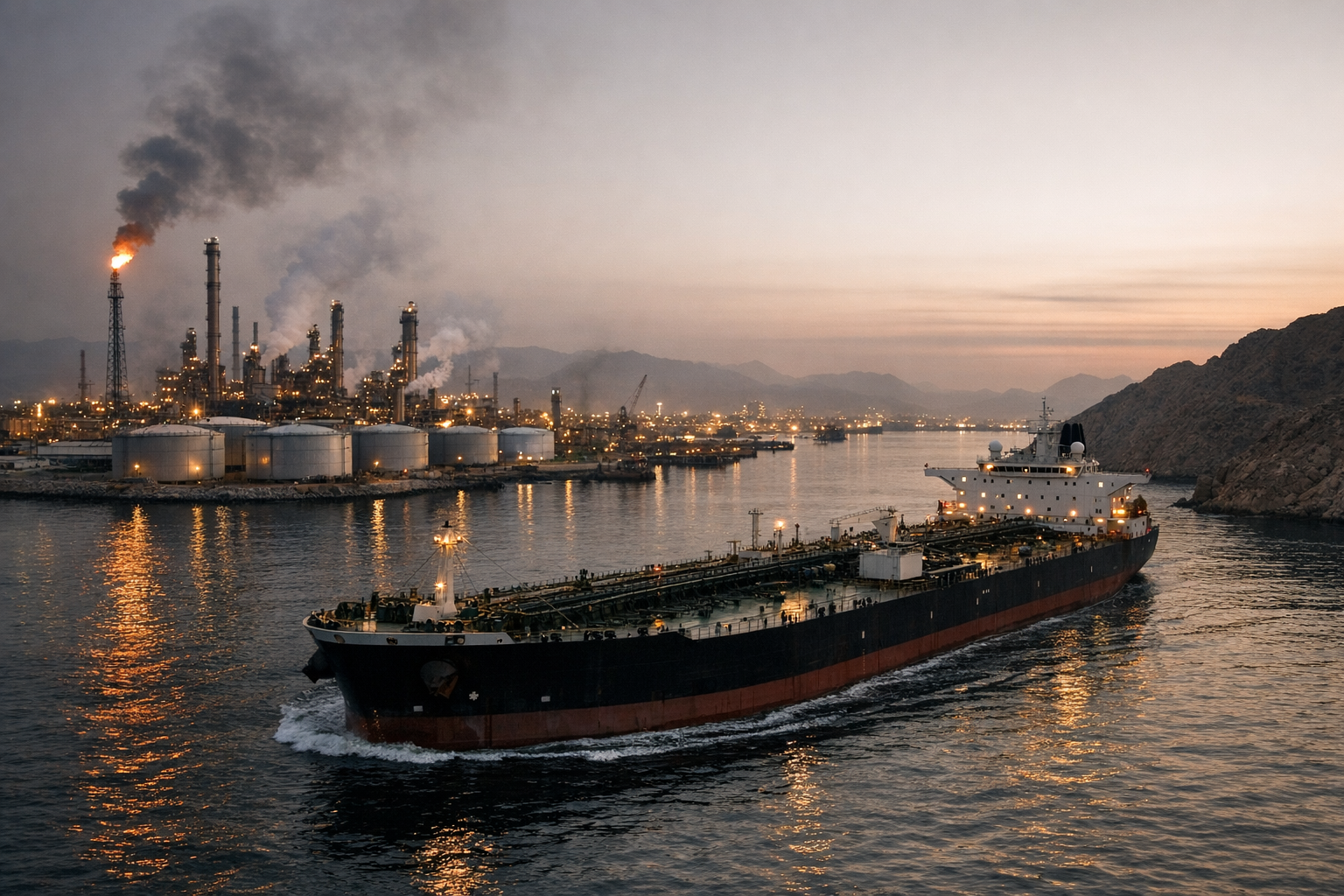
Oil Rises Again as Diesel Shortage Proves Harder to Fix
Oil prices climbed anew on Tuesday as fresh attacks linked to Yemen’s Houthi movement and renewed anxiety over tanker traffic near the Strait of Hormuz reminded traders that the global energy system remains vulnerable, even after emergency government action and a partial recovery in Middle Eastern crude exports.
The rebound in prices underscored a deeper problem confronting governments and consumers: while some crude supply fears have eased, the market for diesel and other refined fuels remains acutely strained. That bottleneck is keeping transport and industrial costs elevated, sustaining unusually rich refining profits and complicating calls for intervention.
Last week, the Group of 7 agreed to release 100 million barrels of diesel and crude from emergency reserves in an effort to calm markets jolted by months of war-related disruption. Gulf oil flows, excluding Iran, have also recovered to more than 81 percent of prewar levels in September, according to Reuters, aided in part by higher Saudi exports.
But those measures have offered only partial relief. Traders are still pricing in the risk that attacks on Saudi infrastructure or shipping lanes could quickly reverse gains in supply, particularly around Hormuz and the Bab el-Mandeb, two of the world’s most important energy chokepoints.
Singapore’s foreign minister said this week that any serious disruption in Hormuz would fall most heavily on Asia, whose economies rely heavily on seaborne energy passing through the waterway. The comment sharpened a reality increasingly evident in energy markets: even when barrels are available, getting them safely to refineries and then into usable fuels has become more expensive and uncertain.
A Crude Problem — and a Refining One
The strain is especially visible in diesel, the fuel that powers freight trucks, farm equipment, ships, construction machinery and backup generators. Because diesel sits at the heart of supply chains, persistent shortages can ripple through food prices, manufacturing costs and retail goods even if gasoline markets are less stressed.
Mike Wirth, Chevron’s chief executive, warned that a ban on U.S. diesel exports would be “unwise,” arguing that restricting trade could aggravate shortages rather than relieve them. His comments reflected growing pressure on policymakers to keep more fuel at home as inventories tighten and prices rise.
Energy executives and analysts say the instinct to wall off domestic supply can backfire in a globally connected market. Diesel shortages are not simply a matter of where crude is produced; they reflect a lack of functioning refining capacity, damage to plants in the Middle East and Russia, and the difficulty of replacing lost output quickly.
Goldman Sachs said this week that diesel prices could remain elevated through 2027 because refinery capacity is too constrained to meet demand comfortably. In that view, high margins are not an anomaly but a signal: prices may need to stay high long enough to curb consumption and allow inventories to rebuild.
That dynamic is already benefiting refiners. Shell said it expected refining margins of about $42 a barrel in the third quarter, up sharply from $24 in the previous quarter, as fuel shortages lifted the value of turning crude into usable products. The company’s forecast suggested that, despite government efforts to cool the market, refiners are still operating in an environment of exceptional scarcity.
Why Emergency Releases Have Not Been Enough
Strategic stockpile releases can help cushion a shock, but they do not repair damaged refineries, reopen insecure shipping routes or guarantee that crude can be transformed into the right products in the right places.
That distinction is becoming central to the current crisis. The latest releases and stronger Saudi exports have helped counter fears of an outright crude shortfall. Yet diesel remains constrained because the industry has less spare refining capacity than it once did, and several key plants have been knocked offline or disrupted by the wider regional conflict.
The war involving Iran this year has magnified those weaknesses. Repeated attacks on Gulf shipping and energy infrastructure have injected a geopolitical risk premium into prices, one that recedes when exports recover but returns quickly when tankers or oil facilities come under threat.
For policymakers, the challenge is increasingly awkward. Consumers and businesses see high fuel prices and demand action. But the most politically tempting tools — export restrictions, abrupt market interventions, or heavy-handed trade barriers — may worsen imbalances in a market already short of refining flexibility.
What Comes Next
The outlook now depends on several uncertain variables. One is whether attacks on Saudi assets, tankers or key transit routes intensify. Another is whether the G7 release proves large and fast enough to relieve product shortages in a meaningful way. A third is whether enough damaged refinery capacity can return before winter demand and shipping needs put further strain on inventories.
There is also the risk of fresh disruptions outside the Middle East, including weather threats to U.S. Gulf Coast production and refining operations. In a system with little slack, even a relatively modest outage can have outsized effects.
For now, the message from the market is that the crisis has entered a more stubborn phase. The immediate panic over crude supply has eased from its worst levels, but the shortage of refined fuels — especially diesel — is proving harder to cure. And as long as that remains true, households, freight carriers, farmers and factories are likely to keep paying the price.
Sources
Further reading and reporting used to add context:
- https://apnews.com/article/f22f20dd78b03b741dfa1279881cedbb
- https://apnews.com/article/67d70a6b39c0c4fb3149e3f3981805ee
- https://apnews.com/article/4c2cf27f819b6e36940f88a7af49ea78
- https://apnews.com/article/774a360d1646d9ce8aba764fdd9959d2
- https://www.axios.com/2026/10/02/saudis-yemen-houthis-bab-al-mandeb-strait
- https://www.theatlantic.com/international/2026/10/oil-hormuz-iran-war/688890/?utm_source=openai
- https://www.mfa.gov.sg/newsroom/press-statements-transcripts-and-photos/transcript-of-minister-for-foreign-affairs-dr-vivian-balakrishnan-s-live-interview-with-cnbc-on-the-sidelines-of-the-milken-asia-summit–singapore–7-october-2026/
- https://www.geocontexto.com/?id=50850&view=noticia
- https://oilmarketdaily.com/diesel-refinery-bottleneck-keep-prices-high-2027/
- https://www.investing.com/news/stock-market-news/europe-discussing-plan-for-diesel-stock-releases-after-us-pressure-source-says-4929100
- https://franktrades.com/2026/10/06/goldman-diesel-prices-set-to-stay-high-through-2027-as-refineries-struggle-to-meet-demand/
- https://freightwatch.news/article/goldman-sees-diesel-prices-staying-elevated-through-2027
- https://uk.finance.yahoo.com/news/chevron-wirth-warns-us-diesel-091204388.html/
- https://stockxpo.com/2026/10/06/diesel-prices-goldman-sachs-predicts-sustained-highs-through-2027-amid-refinery-volatility/
- https://www.glideslope.ai/post/0rdsgjt/goldman-diesel-prices-set-to-stay-high-through-2027-as
- https://boereport.com/2026/10/06/oil-fuel-supply-buffers-are-thinning-as-middle-east-conflict-continues-chevron-ceo-says/amp/
- https://www.24.ae/article/968781/%D8%BA%D9%88%D9%84%D8%AF%D9%85%D8%A7%D9%86-%D8%B3%D8%A7%D9%83%D8%B3-%D8%A3%D8%B3%D8%B9%D8%A7%D8%B1-%D8%A7%D9%84%D8%AF%D9%8A%D8%B2%D9%84-%D9%85%D8%B1%D8%B4%D8%AD%D8%A9-%D9%84%D9%84%D8%A8%D9%82%D8%A7%D8%A1-%D9%85%D8%B1%D8%AA%D9%81%D8%B9%D8%A9-%D8%AD%D8%AA%D9%89-2027
- https://www.investing.com/news/stock-market-news/chevron-ceo-says-depleted-crude-oil-buffers-could-lead-to-higher-prices-4898227?ampMode=1
- https://d3cobg6h0snvt3.cloudfront.net/pdfs/insights/goldman-sachs-research/2026-outlooks/CommoditiesOutlook2026.pdf
- https://www.goldmansachs.com/pdfs/insights/goldman-sachs-research/iran-conflict-how-long-and-how-bad/report.pdf
- https://apnews.com/article/44b75c188756038371cf3112ede9cee8
- https://apnews.com/article/2b1f98d5fc11048ff65fa93952d86844
- https://apnews.com/article/48793b176934f0516b7402c8706a421a
- https://www.theguardian.com/business/2026/oct/07/shell-refineries-forecast-to-make-double-the-profit-from-every-barrel-of-fuel
- https://www.theguardian.com/business/oil
- https://live.euronext.com/en/financial-news/oil-slips-mideast-exports-g7-stockpile-ease-supply-concerns
- https://theactualnews.org/article/240188/shell-refineries-forecast-to-make-double-the-profit-from-every-barrel-of-fuel
- https://snslive.uk/article/2735518
- https://www.marketscreener.com/news/oil-prices-slip-as-traders-weigh-strong-mideast-exports-against-gulf-tensions-ce785dd8dd80f424
- https://www.marketscreener.com/news/oil-prices-stable-as-market-weighs-supply-risks-rising-middle-east-exports-ce785dd9da81f024
- https://www.marketscreener.com/news/oil-slips-as-mideast-exports-g7-stockpile-ease-supply-concerns-ce785dd8df8af324
- https://article.wn.com/view-steel/2026/10/07/Shell_expects_refineries_to_almost_double_the_profit_from_ev/
- https://www.lse.co.uk/news/oil-slips-as-mideast-exports-g7-stockpile-ease-supply-concerns-vp6doocofqani95.html?mobile_view=desktop
- https://www.limpidmarkets.co.uk/article/130506-shell-refineries-forecast-to-make-double-the-profit-from-every-barrel-of-fuel
- https://ae.marketscreener.com/news/oil-slips-as-mideast-exports-g7-stockpile-ease-supply-concerns-ce785dd8df8af324
- https://www.reddit.com/r/unitedkingdom/comments/1wzsbef/shell_expects_refineries_to_almost_double_the/
- https://www.reddit.com/r/MarketFluxHub/comments/1wztqn5/oil_jumps_as_houthi_attacks_on_saudi_arabia/
- https://www.reddit.com/r/MarketFluxHub/comments/1wzq67z/oil_jumps_as_houthi_attacks_on_saudi_arabia/
- https://apnews.com/article/e87beb84a0d146e4f0546b50508f7e32
- https://live.euronext.com/en/financial-news/oil-prices-rise-storms-and-air-strikes-threaten-supply
- https://ca.marketscreener.com/news/oil-gains-as-us-storm-and-houthi-air-strikes-threaten-supply-ce785dd9de8ff62d
- https://au.marketscreener.com/news/oil-gains-as-us-storm-and-houthi-air-strikes-threaten-supply-ce785dd9de8ff62d
- https://www.streetinsider.com/Reuters/Oil%2Bgains%2Bas%2BUS%2Bstorm%2Band%2BHouthi%2Bair%2Bstrikes%2Bthreaten%2Bsupply/27156679.html
- https://au.investing.com/news/commodities-news/oil-prices-rise-as-storms-and-air-strikes-threaten-supply-4676100
- https://energy.economictimes.indiatimes.com/news/oil-and-gas/oil-prices-rise-as-us-storm-threatens-output-saudi-attacks-fuel-supply-concerns/134755699
- https://www.lse.co.uk/news/oil-steadies-as-middle-east-crude-exports-rise-and-g7-to-release-stocks-b90hbkd68c76ery.html
- https://airfreight.news/articles/full/oil-hits-multi-week-highs-after-houthi-attacks-on-saudi-energy-facilities
- https://www.brecorder.com/news/40443049
- https://www.marketscreener.com/news/oil-prices-jump-4-as-houthis-fire-missiles-at-saudi-arabia-ce785aded08df725
- https://www.brecorder.com/news/40442853/oil-slips-as-mideast-exports-g7-stockpile-ease-supply-concerns
- https://in.marketscreener.com/news/oil-gains-as-traders-weigh-gulf-tensions-against-strong-mideast-exports-ce785dd8dc8af720
- Oil gains as US storm and Houthi air strikes threaten supply | MarketScreener Canada
- Goldman: Diesel prices set to stay high through 2027 as refineries struggle to meet demand – FrankTrades.com | Stock Market News, Stock Options Flow, Dark Pool, Product Reviews & more!
- Oil gains as traders weigh Gulf tensions against strong Mideast exports | MarketScreener India