
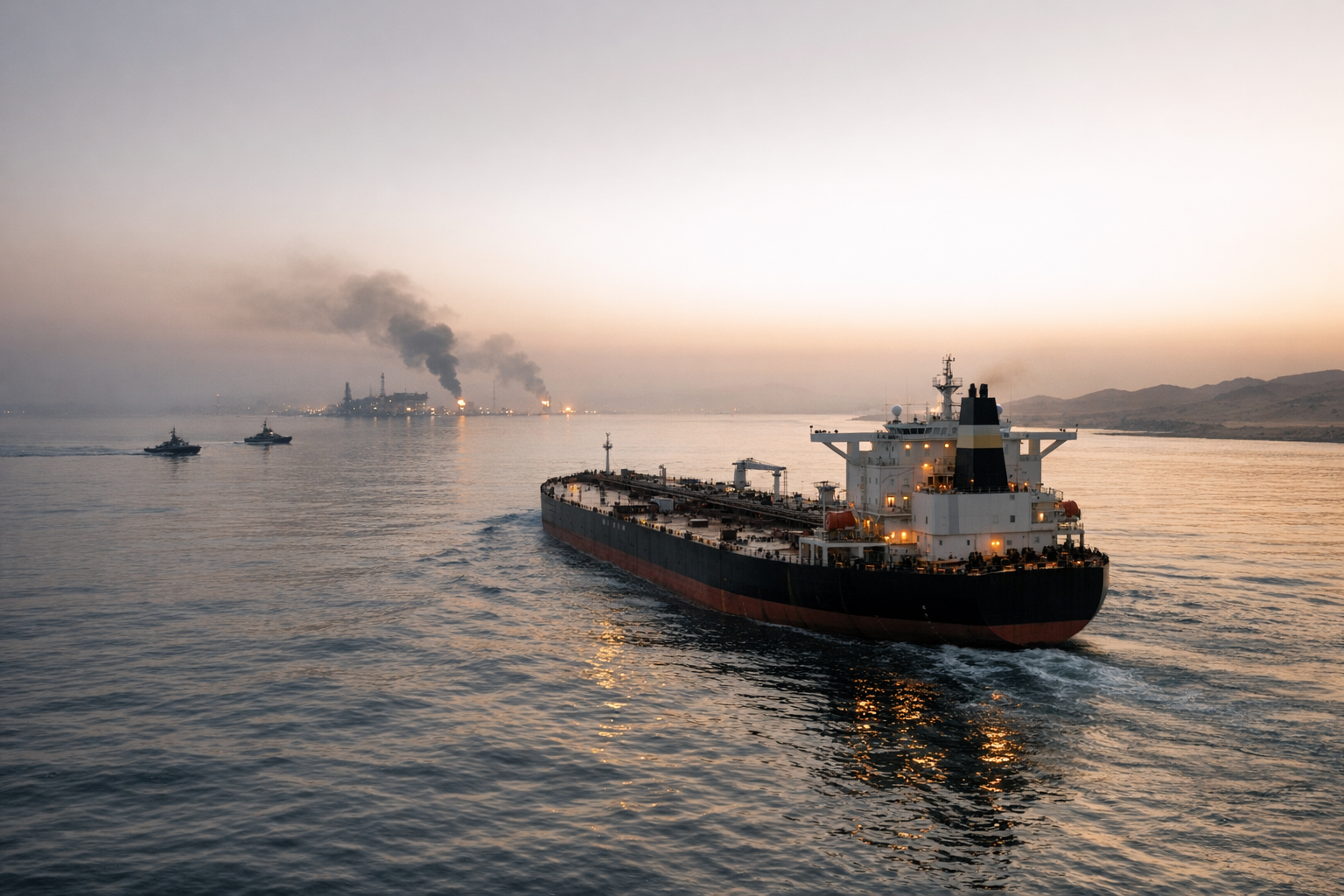
Oil Holds Above $100 as Gulf Attacks and Iranian Threats Rattle Markets
Oil prices remained elevated on Friday, with U.S. crude holding above $100 a barrel and Brent crude hovering near a five-month high, as a new round of attacks in the Gulf and sharper rhetoric from Iran deepened fears that one of the world’s most important energy corridors could become more dangerous.
West Texas Intermediate, the U.S. benchmark, traded just above $100.50 a barrel in early dealings, while Brent, the international standard, stayed near levels reached after a sharp rise a day earlier, when it climbed to around $112 a barrel. The gains extended a rally that has gathered force as investors weigh the possibility that the conflict surrounding Iran could spill more directly into shipping lanes, oil fields and export terminals across the region.
The immediate concern in energy markets is not necessarily a large, confirmed loss of supply. It is the growing risk that attacks on tankers, mines near the Strait of Hormuz and strikes on Saudi infrastructure could disrupt the movement of crude from the Gulf, even if only temporarily. The Strait of Hormuz, through which a significant share of the world’s seaborne oil passes, has long been viewed as one of the global economy’s most vulnerable chokepoints.
Iran’s Islamic Revolutionary Guard Corps said that four vessels were hit in the northern Gulf and that three more struck mines west of Hormuz, adding to a picture of expanding maritime danger that has unsettled traders. Some of those claims remain difficult to independently verify. But even unconfirmed damage reports can move markets when tensions are already high and shipping companies, insurers and governments are forced to recalculate the risks of operating in the area.
President Trump on Thursday accused Iran of trying to manipulate the oil market, reflecting how closely geopolitics and prices have become intertwined. Iranian officials, meanwhile, signaled a more confrontational posture, saying the country was prepared for warfare and warning the United States against further provocation.
A Market Trading on Risk, Not Just Barrels
The latest jump in crude appears to be driven as much by fear as by any demonstrated collapse in exports. Traders are building in a risk premium based on what could happen if attacks continue or widen: delayed cargoes, higher shipping costs, rerouted vessels, damage to loading facilities or a military response that escalates the confrontation.
That distinction matters. For now, the market is reacting to the vulnerability of supply routes rather than to evidence of a sustained physical shortage. But in oil markets, threats to transport infrastructure can be nearly as consequential as disruptions to production itself. Even a short interruption in Gulf flows can tighten supply expectations, particularly when spare capacity elsewhere is limited and demand remains sensitive to any perceived shock.
The broader economic consequences are also coming back into focus. Oil above $100 a barrel risks feeding inflation at a moment when many economies are still struggling with high energy costs, uneven growth and fragile consumer confidence. A prolonged period of elevated crude prices would almost certainly raise pressure on central banks, businesses and households alike.
The Conflict’s Energy Dimension Is Deepening
The rise in prices marks another turn in a conflict environment that has been pushing energy markets higher since fighting involving Iran intensified in February. What now appears to be changing is the degree to which threats are concentrating around the infrastructure and sea lanes that underpin global oil trade.
Attacks linked to the Houthis in Yemen have added to those worries. In Saudi Arabia, near-daily strikes on airports and critical infrastructure have led Washington to order some American diplomats and family members to leave the kingdom. Similar drawdowns have been reported elsewhere in the Gulf, underscoring the sense among U.S. officials that regional security risks are rising, not receding.
For oil traders, those evacuations are more than a diplomatic footnote. They are another signal that governments are preparing for the possibility of a longer and less predictable phase of instability.
What Comes Next
Much remains uncertain. It is not yet clear how extensive the tanker damage is, whether exports will be materially reduced or whether regional militaries will act to secure shipping lanes in ways that calm the market or inflame it further. Another unanswered question is how sticky the current risk premium will prove to be. If oil continues to move freely and naval protection improves, prices could retreat quickly. If attacks persist, or if even one major facility or chokepoint is seriously disrupted, the market could move higher still.
For now, the message from traders is plain: in a region that sits at the center of the world’s oil system, the threat of interruption is becoming powerful enough on its own to keep crude above $100.
Sources
Further reading and reporting used to add context:
- https://apnews.com/article/7b47ef3b037bfba4e34f685329b9b963
- https://www.theatlantic.com/national-security/2026/10/trump-iran-war-strikes-after-midterms/689121/?utm_source=openai
- https://apnews.com/article/1970e79d013cbddcae89c53b4b98f384
- https://apnews.com/article/8e962dcdefefa86ebc91ee9c663f1f3b
- https://www.axios.com/2026/10/22/permitting-deal-lobbying-blitz-hurdles
- https://apnews.com/article/3fc284334ba2c192c6c729ec592443f5
- https://www.axios.com/newsletters/axios-future-of-energy-452c4640-cd60-11f1-9e19-5b71abec4536
- https://apnews.com/article/fa9a4806bff404a23a16a8c209afbd2b
- https://www.axios.com/2026/10/16/iran-backed-militias-sending-money-irgc-centcom
- https://apnews.com/article/0a5ea168499c6ae617c49e10bf48f9c6
- https://www.theatlantic.com/ideas/2026/10/strategy-military-politics-war/689072/?utm_source=openai
- https://www.theguardian.com/business/commodities
- https://www.theguardian.com/business/oil
- https://thedailyguardian.com/business/oil-hits-five-month-high-as-houthi-attacks-stoke-supply-fears-768165/
- https://www.al-monitor.com/originals/2026/10/us-orders-diplomats-depart-saudi-arabia-amid-houthi-strikes
- https://www.theguardian.com/business/business%2Bworld/middleeast
- https://www.theguardian.com/world/2026/oct/22/us-diplomats-told-to-leave-saudi-arabia-amid-houthi-attacks
- https://www.washingtonpost.com/world/2026/10/22/us-orders-some-diplomats-leave-saudi-arabia-amid-houthi-attacks/
- https://www.dailycuppa.com.au/article/oil-prices-jump-to-five-month-high-as-attacks-threaten-global-supply-1422879
- https://rocketnews.com/2026/10/oil-prices-jump-to-five-month-high-as-attacks-threaten-global-supply/
- https://www.newsminimalist.com/articles/oil-prices-hit-five-month-high-as-gulf-attacks-threaten-supply-d6213a58
- https://amp.dw.com/en/us-orders-some-diplomats-to-leave-saudi-arabia-amid-houthi-threat/a-79727353
- https://capitalgridworks.com/article/oil-prices-hit-five-month-high-after-gulf-tanker-attacks
- https://apnews.com/article/1639485a611f2fc6be06ed35d6628416
- https://apnews.com/article/204f5d642d88ab55992a6f0e9ccbe8e9
- https://www.thedailybeast.com/this-is-the-sordid-reason-trump-bows-to-putin-author-michael-wolff
- https://apnews.com/article/dde5b98a8bf961224514994b02babce9
- https://www.axios.com/2026/10/21/oil-prices-inflation-central-banking
- https://www.kiplinger.com/economic-forecasts/energy
- https://www.intellinews.com/iran-s-irgc-says-it-hit-four-ships-in-the-gulf-as-three-more-strike-mines-478015/?source=iran
- https://www.marketscreener.com/news/brent-crude-hits-more-than-five-month-high-on-concern-over-middle-east-escalation-ce785cded18bf321
- https://indiashippingnews.com/export-import/irans-irgc-says-4-ships-hit-set-ablaze-in-gulf-3-others-strike-mines-near-hormuz/
- https://www.aol.com/articles/irans-irgc-navy-says-seven-042415000.html
- https://geopolitiki.com/military/irgc-claims-four-ships-hit-persian-gulf-three-mines-hormuz-warns-us-bases/
- https://www.euronews.com/2026/10/20/irgc-mines-set-tankers-ablaze-as-tehran-threatens-expanded-attacks
- https://en.wikipedia.org/wiki/Timeline_of_the_2026_Iran_war
- Brent crude hits more than five-month high on concern over Middle East escalation | MarketScreener
- Iran says 7 tankers damaged in Strait of Hormuz, and other Mideast news
- US jobless claims fell to 194,000 last week, lowest since July