
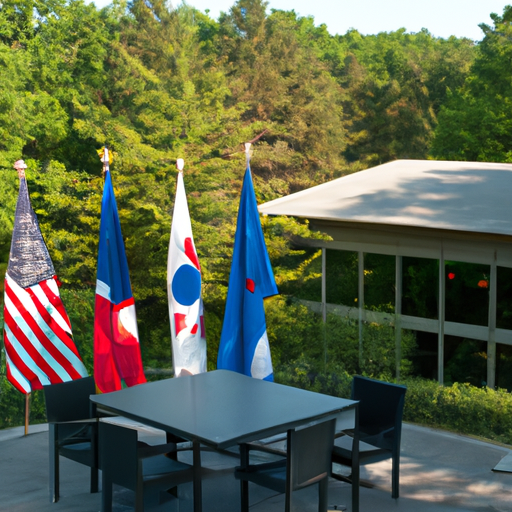
President Joe Biden has signaled a determination to foster a stronger rapport between two indispensable allies in the east – Japan and South Korea, in an effort to solidify an often fractious trilateral relationship that has been marked by historical contention, during what is coming to be a seminal meeting at Camp David.
The president’s ambitions beyond the borders indisputably come with weighty implications. By encouraging a thaw in the historically icy relationship between the two key neighbors, Biden is hoping to bolster military cooperation within the region, a strategic move which comes at a time when the US continues to navigate its stance on China and North Korea’s nuclear ambitions. It’s a move that not only demonstrates Biden’s strategic approach to foreign policy, but also highlights his administration’s commitment to fortifying alliances that were strained under his predecessor.
Tensions between Japan and South Korea have deep historical roots, dating back to Japan’s colonization of the Korean peninsula in the first half of the 20th century. Post-war disagreements over compensations for forced labor and sex slaves, known as “comfort women,” have only poured salt on the enduring scars of past conflict.
Given this contentious history, Biden’s initiative to smooth over these tensions evidences his administration’s recalibration of its Asia-Pacific strategy. This maneuver represents a departure from a more unilateral approach towards a more nuanced engagement with all key regional actors. At its core, it seems to underline the urgency of common security interests amid intensifying geopolitical tension and a rising China.
While for some, Biden’s move might seem overly ambitious or even unrealistic, given the deep-running historical grievances between these two nations, it nonetheless showcases his firm conviction in the indispensability of alliances. It also points to the possibility of a future where rehabilitation and cooperation could overcome the historical and political differences that have long undercut united action.
The Camp David meeting has indirectly nudged Japan and South Korea into a tacit acknowledgement of their shared strategic interests. In the face of mounting regional security threats, and with the unignorable rise of China sparking a geopolitical flux, a revitalized trilateral relationship is undeniably advantageous for all involved.
Regardless of how arduous the path to reinventing these relationships may be, one thing remains clear; Biden seems unflagging his intent on defusing tensions and strengthening the mutually beneficial ties among the United States, Japan, and South Korea. It is an audacious undertaking that requires deft diplomatic maneuvering and a fair share of patience, but with the stakes this high, there’s a gathering sense the payoff could be manifold.
Naturally, only time will tell the extent to which Biden’s vision will materialize, but his endeavor adds an important new chapter in the narrative of the US engagement in the Asia-Pacific region. It serves as a reminder to observers near and far that the President’s priorities lie not only within America’s borders but extend far beyond, in the pursuit of national security objectives via the reinforcement of robust international alliances.