
A New Tariff Offensive Reaches Allies and Rivals Alike
The Trump administration has opened a sweeping new front in its trade agenda, proposing fresh tariffs on imports from about 60 economies on the grounds that their governments have failed to adequately block goods made with forced labor.
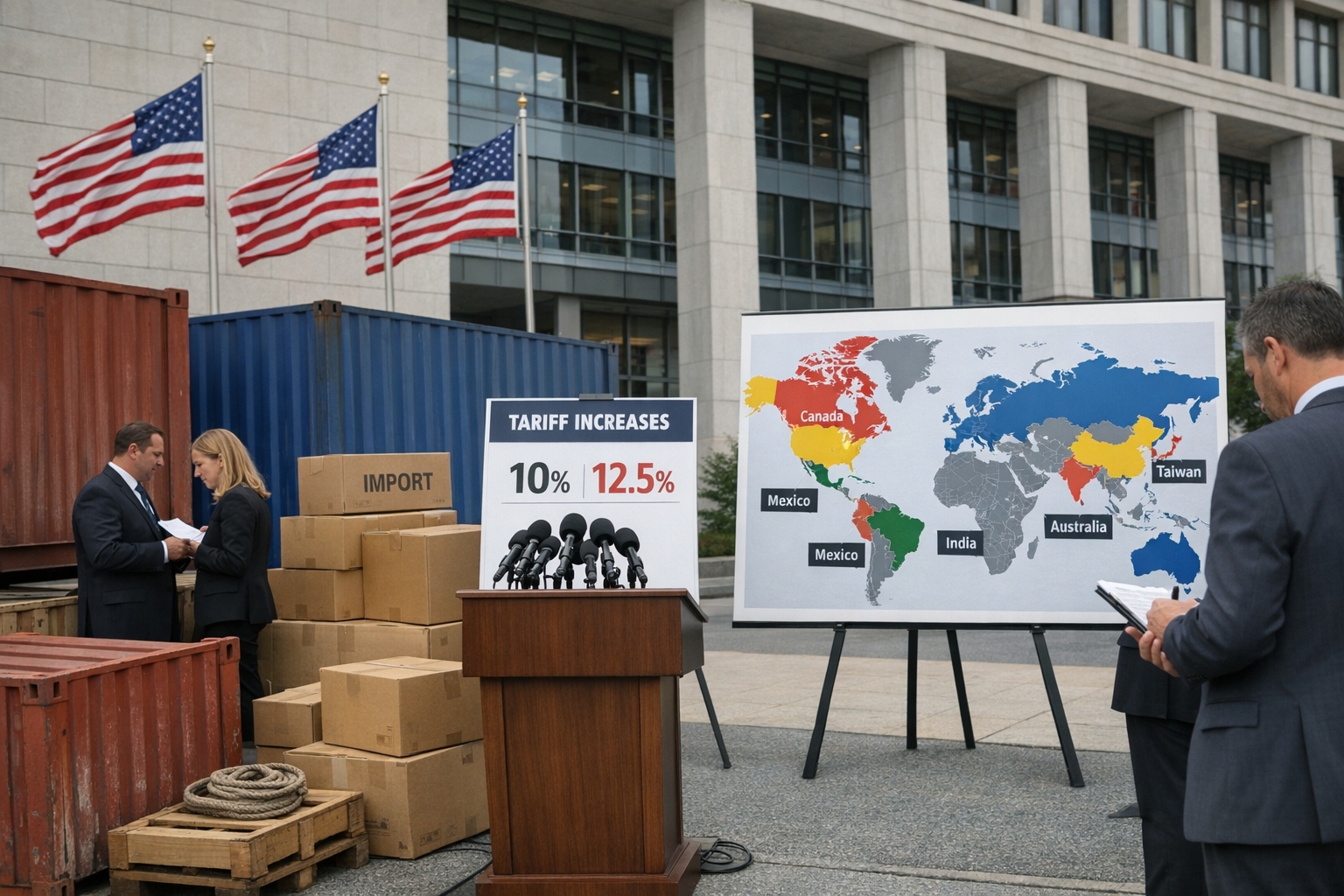
The plan, issued by the Office of the United States Trade Representative, would impose an additional 10 percent duty on economies that have adopted full, partial or trade-agreement-based prohibitions on forced-labor imports, and 12.5 percent on those judged not to have done so. The proposal stretches far beyond geopolitical rivals, ensnaring some of Washington’s closest trading partners, including the European Union, Britain, Canada, Australia, Mexico, Japan, South Korea, Taiwan and India.
The breadth of the move immediately set off resistance abroad and underscored how aggressively President Trump is seeking to reassemble his tariff arsenal after a February Supreme Court ruling curtailed one of the White House’s preferred legal pathways for imposing duties.
Public comments on the proposal are due by July 6, with a hearing scheduled for July 7.
A Human Rights Rationale With Vast Trade Consequences
The administration has framed the tariffs as a response to labor abuses embedded in global supply chains, arguing that foreign governments are not doing enough to prevent products made with forced labor from entering commerce. The investigations underlying the proposal were opened on March 12 under Section 301 of U.S. trade law, a statute that allows Washington to respond to foreign practices it deems unreasonable or discriminatory and burdensome to American commerce.
But the proposal is notable not only for its moral rationale; it is also one of the most expansive trade actions now under consideration by the administration. If enacted broadly, the duties would raise costs on a significant share of imports into the United States and introduce fresh uncertainty for companies that had already been adjusting to a rapidly shifting tariff regime.
The initiative also arrives as the White House has been searching for other legal tools to sustain its confrontational trade policy. In February, the Supreme Court ruled that the International Emergency Economic Powers Act, or IEEPA, does not authorize presidential tariffs, a decision that forced the administration to rely more heavily on authorities such as Section 301.
In that sense, the forced-labor case is both a human-rights argument and a legal workaround — one that could allow Mr. Trump to keep tariffs at the center of his economic strategy even as courts narrow his room to maneuver.
Allies Push Back
Some of the sharpest objections have come from countries that are generally aligned with Washington and that say they already have extensive laws addressing forced labor and modern slavery.
Australia, which was placed among the economies facing a possible 12.5 percent tariff, rejected the premise of the U.S. action, with officials saying the country maintains strong and comprehensive rules against forced labor. The proposed penalty has been especially striking in Canberra because Australia is not typically treated as a trade offender by Washington and has long presented itself as a close security and economic partner of the United States.
European officials also signaled that the proposal could collide with existing understandings between Brussels and Washington. The European Union said it expected the United States to honor the spirit of a tariff arrangement reached last year and argued that duties imposed under this theory would be unjustified.
That response reflects a deeper tension. The E.U. has been building its own forced-labor enforcement framework, but its product ban is not due to begin applying until Dec. 14, 2027. Implementation guidelines are expected this month, on June 14. To U.S. officials, that timetable may suggest insufficient urgency. To European policymakers, it is evidence that the bloc is already moving on the issue through its own legal process and should not be punished by an ally while doing so.
Trade Policy Broadens Again
The forced-labor proposal is the latest sign that the administration is broadening its use of trade penalties well beyond the traditional focus on bilateral deficits or strategic competition with China.
Just a day earlier, the administration proposed 25 percent tariffs on Brazil, accusing Latin America’s largest economy of maintaining unreasonable practices that burden U.S. commerce, even though the United States runs a trade surplus with Brazil. That case, too, suggested a willingness to use tariffs as a general-purpose instrument of pressure, not merely as a response to straightforward imbalances.
By sweeping in more than 50 economies at once on forced-labor grounds, the administration is testing how far that approach can go. It is also putting multinational companies in a difficult position: many have spent years trying to trace labor conditions deep into supply chains that run through multiple jurisdictions, often with uneven transparency and conflicting legal standards.
For importers, the practical question is immediate. If the tariffs take effect, costs could rise on everything from industrial inputs to consumer goods, depending on how the administration structures the final rules and whether it allows product-specific carve-outs. It remains unclear whether some sectors, including textiles, could receive different treatment.
Why the Fight Matters Now
Forced labor has become an increasingly important battleground in global trade, in part because governments are under pressure to show that human-rights concerns carry economic consequences. The United States has already taken a tougher stance in recent years, particularly in efforts to keep goods linked to coercive labor practices out of American markets.
What makes the current proposal different is its scale and its diplomatic reach. Instead of targeting a narrow set of countries or industries, it places a large swath of the world economy under threat of new duties, including nations with their own anti-forced-labor laws and active trade relationships with the United States.
That creates the possibility of a cascading dispute: allies could seek exemptions, challenge the rationale, retaliate with their own measures or try to convert the pressure into negotiated side deals. Even if the final tariff rates are reduced, the proposal gives Washington leverage in talks that extend well beyond labor enforcement.
For now, much depends on what emerges from the comment period and hearing next month. The administration could hold to the proposed rates, soften them, create exceptions or delay implementation. But the message has already been delivered: Mr. Trump intends to keep tariffs central to American economic statecraft, and he is prepared to use even an issue as politically potent as forced labor to widen that campaign.
Sources
Further reading and reporting used to add context:
- https://apnews.com/article/4dce10ec32bbbcf3bfdfddb2ec660d65
- https://ustr.gov/about/policy-offices/press-office/press-releases/2026/march/ustr-initiates-60-section-301-investigations-relating-failures-take-action-forced-labor
- https://www.chosun.com/english/world-en/2026/06/03/223BQTWVUFEFZGRFFYBPDGCB5M/
- https://www.investing.com/news/world-news/us-proposes-additional-tariffs-on-imports-from-60-economies-over-forced-labor-4723286
- https://www.ustr.gov/about/policy-offices/press-office/press-releases/2026/march/american-workers-farmers-and-manufacturers-applaud-ustr-launched-section-301-investigations
- https://www.europarl.europa.eu/committees/en/imco/oversight-activities/working-groups?tabCode=forced-labour
- https://ustr.gov/about/policy-offices/press-office/press-releases/2025/june
- https://www.theguardian.com/business/2026/jun/03/trump-threatens-tariffs-60-countries-forced-labour
- https://single-market-economy.ec.europa.eu/single-market/goods/building-blocks/market-surveillance/forced-labour-regulation_en
- https://www.consilium.europa.eu/en/press/press-releases/2026/04/13/council-and-european-parliament-strike-deal-to-protect-eu-s-steel-industry-from-global-overcapacity/pdf/
- https://www.jetro.go.jp/biznews/2026/06/cd5a74e6bbd7f913.html
- https://www.consilium.europa.eu/de/press/press-releases/2026/05/20/eu-us-trade-council-and-parliament-strike-a-deal-to-implement-the-tariff-elements-of-the-joint-statement/
- https://www.geo.tv/latest/667081-us-proposes-tariffs-on-60-economies-including-pakistan-over-forced-labour-concerns
- https://www.business-standard.com/economy/news/india-us-interim-trade-talks-ustr-duty-forced-labour-rules-trump-tariffs-126060300196_1.html
- https://ustr.gov/sites/default/files/files/Press/Releases/2026/2026%20Trade%20Policy%20Agenda%202025%20Annual%20Report.pdf
- https://www.reddit.com/r/WhatTrumpHasDone/comments/1tvfcqu/us_proposes_fresh_tariffs_on_60_economies_over/
- https://www.dentons.com/en/-/media/2125f4d8567b4677bc8d9dfa64ea1a1e.ashx
- https://www.europarl.europa.eu/legislative-train/carriage/forced-labour-product-ban/report?sid=9901
- https://www.troutman.com/insights/plan-b-after-ieepa-section-301-as-the-new-tariff-framework-for-overcapacity-and-forced-labor/?pdf=display
- https://ustr.gov/about/policy-offices/press-office/press-releases/2026/june/ustr-section-301-determination-brazils-unreasonable-acts-policies-and-practices
- https://www.ustr.gov/about/policy-offices/press-office/press-releases/2026/may/ambassador-jamieson-greer-trade-theory-must-catch-tariffs-industrial-policy-and-costs-globalization
- https://ustr.gov/about/policy-offices/press-office/press-releases/2026/april/public-hearings-regarding-section-301-investigations-relating-failures-take-action-forced-labor
- https://ustr.gov/about/policy-offices/press-office/press-releases/2026/march/ambassador-jamieson-greer-announces-us-japan-action-plan-critical-minerals
- https://ustr.gov/about/policy-offices/press-office/press-releases/2026/february/ambassador-jamieson-greer-announces-critical-minerals-cooperation-european-union-and-japan
- https://ustr.gov/about/policy-offices/press-office/press-releases/2026/march/ambassador-greer-announces-2026-trade-policy-agenda-and-2025-annual-report
- https://ustr.gov/about/policy-offices/congressional-affairs/congressional-hearings-and-testimony/2026/opening-statement-ambassador-jamieson-greer-house-appropriations-committee
- https://ustr.gov/about/policy-offices/press-office/press-releases/2026/january/ambassador-jamieson-greer-outlines-how-president-trump-reviving-americas-historic-trade-playbook
- https://www.ustr.gov/about/policy-offices/press-office/press-releases/2026/april/op-ed-ambassador-jamieson-greer-another-fish-story-wto
- https://ustr.gov/about/policy-offices/press-office/press-releases/2026/march/ambassador-greer-travel-france
- https://ustr.gov/sites/default/files/files/Press/Releases/2026/2026%20NTE%20Report%20_%20Final.pdf
- https://public-inspection.federalregister.gov/2026-05151.pdf
- https://ustr.gov/sites/default/files/files/Press/Releases/2025/Ambassador%20Greer%20Reported%20to%20Congress%20on%20the%20Operation%20of%20the%20USMCA.pdf
- https://ustr.gov/about/policy-offices/press-office/fact-sheets/2026/march/fact-sheet-ustr-initiates-60-section-301-investigations-relating-failures-take-action-forced-labor
- https://www.klsescreener.com/v2/news/view/1731823/US_proposes_tariffs_of_10_or_12_5_on_goods_from_60_economies_over_forced_labor_failures
- https://kpmg.com/us/en/taxnewsflash/news/2026/03/ustr-section-301-investigations-forced-labor.html
- https://www.ustr.gov/about/policy-offices/press-office/press-releases/2026/april/public-hearings-regarding-section-301-investigations-relating-failures-take-action-forced-labor
- https://www.washingtonpost.com/politics/2026/06/03/trade-tariffs-labor-trump-ustr/2ea78778-5f00-11f1-9c46-d6211372eede_story.html
- https://www.wafb.com/2026/06/03/us-says-it-plans-extra-tariffs-10-or-more-most-trading-partners-after-forced-labor-probe/
- https://www.reddit.com/r/worldnews/comments/1tvhbqn/us_proposes_tariffs_of_10_or_125_on_goods_from_60/
- https://www.gtlaw.com/-/media/files/insights/alerts/2026/03/gt-alertcbp-shares-update-on-ieepa-refund-process-ustr-initiates-section-301-investigations-into-global-structural-excess-capacity-and-forced-labor.pdf
- https://www.dfat.gov.au/trade/trade-and-investment/latest-us-tariffs
- https://www.whitehouse.gov/presidential-actions/2026/06/further-adjusting-the-tariff-regimes-for-imports-of-aluminum-steel-and-copper-into-the-united-states/
- https://www.investing.com/news/economy-news/us-opens-unfair-trade-practices-probe-of-60-countries-over-forced-labor-4558825
- https://www.trademinister.gov.au/
- https://www.trademinister.gov.au/minister/don-farrell/media-releases
- https://www.trademinister.gov.au/minister/don-farrell/media-release/securing-australias-future-fuel-supply-and-critical-minerals-strategic-reserve
- https://europa.eu/newsroom/ecpc-failover/pdf/statement-26-731_en.pdf
- https://www.consilium.europa.eu/en/press/press-releases/2025/11/28/eu-us-trade-relations-council-moves-forward-in-implementing-the-tariff-elements-of-the-joint-statement/pdf/
- https://www.europarl.europa.eu/RegData/etudes/BRIE/2026/779864/ECTI_BRI%282026%29779864_EN.pdf
- https://apps.fas.usda.gov/newgainapi/api/Report/DownloadReportByFileName?fileName=UK+Tariff+Suspensions+December+2025+update_London_United+Kingdom_UK2025-0052
- https://ec.europa.eu/commission/presscorner/api/files/document/print/ov/statement_25_752/
- https://ustr.gov/sites/default/files/files/Press/Releases/2026/U.S.-UK%20Pharma%20Pricing%20Arrangement%20-%204.2.2026.pdf
- https://terms.law/Blog/scotus-ieepa-tariff-alternatives/
- https://kpmg.com/us/en/taxnewsflash/news/2026/02/us-supreme-court-presidential-tariffs-exceeded-legal-authority-under-ieepa.html
- https://www.sidley.com/en/insights/newsupdates/2026/02/us-supreme-court-issues-international-emergency-economic-powers-act-tariff-decision
- https://www.dlapiper.com/en-la/insights/publications/2026/02/us-supreme-court-holds-ieepa-does-not-authorize-tariffs
- https://www.venable.com/insights/publications/2026/02/supreme-court-invalidates-ieepa-tariffs-with
- https://www.millerchevalier.com/publication/supreme-court-finds-ieepa-tariffs-unlawful-what-you-need-know
- https://fiata.org/n/alert-us-supreme-court-strikes-down-ieepa-tariffs/
- https://www.kiplinger.com/taxes/supreme-court-strikes-down-trump-tariffs
- https://www.hida.org/hida/distribution/advocacy/Government_Affairs_Alerts/2026/scotus-strikes-ieepa-tariffs.aspx
- https://www.akerman.com/en/perspectives/supreme-court-strikes-down-ieepa-tariffs.html
- https://www.theatlantic.com/economy/2026/02/supreme-court-trump-tariffs/686083/?utm_source=apple_news
- https://www.kriegdevault.com/insights/supreme-court-invalidates-ieepa-tariffs
- https://www.steptoe.com/en/news-publications/global-trade-and-investment-law-blog/us-supreme-court-strikes-down-ieepa-tariffs.html
- https://www.wiley.law/alert-SCOTUS-Invalidates-Use-of-IEEPA-for-Trade-Tariffs
- https://www.gtlaw.com/-/media/files/insights/alerts/2026/02/gt-alert_supreme-court-invalidates-trump-administrations-ieepa-tariffs.ashx?rev=-1
- https://www.pwc.com/us/en/tax-services/publications/insights/assets/pwc-us-supreme-court-invalidates-ieepa-tariffs.pdf
- https://www.gtlaw.com/-/media/files/insights/alerts/2026/04/gt-alert_how-the-us-supreme-courts-invalidation-of-ieepa-tariffs-may-impact-european-companies.pdf?rev=9078301d3b76442eb7c348659f0182b9
- https://au.investing.com/news/economy-news/middle-east-tensions-us-proposes-forced-labor-tariffs–whats-moving-markets-4468980
- https://au.investing.com/news/economy-news/us-proposes-broad-tariffs-of-at-least-10-over-forcedlabor-imports-4468768
- https://www.nst.com.my/amp/business/economy/2026/06/1454246/us-proposes-additional-tariffs-imports-60-economies-over-forced
- https://globalnews.ca/news/11888297/trump-tariffs-canada-forced-labour/
- https://www.wnem.com/2026/06/03/us-says-it-plans-extra-tariffs-10-or-more-most-trading-partners-after-forced-labor-probe/
- https://radiousa.com/2026/06/03/u-s-targets-india-with-forced-labour-tariff-amid-talks-on-trade-pact/
- https://www.uppermichiganssource.com/2026/06/03/us-says-it-plans-extra-tariffs-10-or-more-most-trading-partners-after-forced-labor-probe/
- https://www.investing.com/news/economy-news/canada-seeks-usmca-renewal-for-16-years-sector-tariff-discussions-in-free-trade-talks-4722494
- https://www.europarl.europa.eu/pdfs/news/expert/2026/3/press_release/20260318IPR38502/20260318IPR38502_en.pdf
- https://www.reddit.com/r/geopolitics/comments/1tvl4d1/removed/
- https://www.reddit.com/r/EU_Economics/comments/1tvh0gj/us_proposes_tariffs_of_10_or_125_on_goods_from_60/
- USTR Initiates 60 Section 301 Investigations Relating to Failures to Take Action on Forced Labor | United States Trade Representative
- US proposes tariffs of 10% or 12.5% on goods from 60 economies over forced labor failures By Reuters