
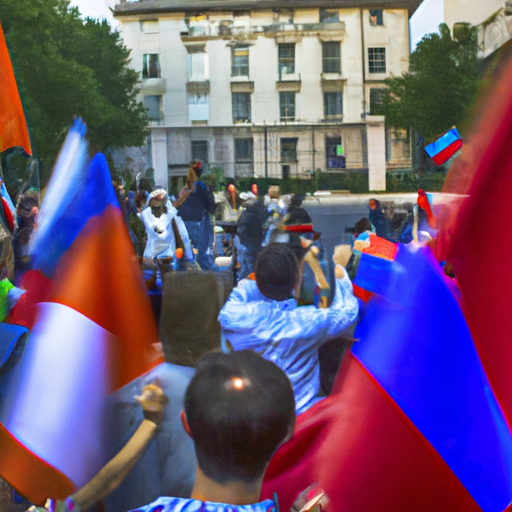
West African leaders, joined by the international community, have strongly condemned the recent coup in Niger, as tensions escalate and regional powers threaten military action against the junta. In a bold display of support, protesters waving Russian flags stormed the French embassy, further complicating an already volatile situation.
The swift condemnation from both Russia and Western countries underscores the gravity of this political upheaval in Niger. The coup, orchestrated by a group of military officers, has alarmed global leaders and elevated concerns about the stability of the region. It is a message that no power can seize control through force with impunity.
The Economic Community of West African States (ECOWAS), a regional body representing 15 countries, has taken a firm stance against the coup in Niger. In a statement, ECOWAS warned that it would not hesitate to deploy military forces to oust the illegitimate regime if a peaceful resolution was not achieved. This strong declaration indicates the seriousness with which the region views this crisis.
The international community has echoed ECOWAS’s disapproval and expressed solidarity with the people of Niger. Russia’s vocal condemnation of the coup is noteworthy, as it further signals the growing influence of the Kremlin in the region. The imagery of protesters brandishing Russian flags at the French embassy underlines the complexities of this emerging power dynamic.
France, which maintains strong ties with its former colony Niger, condemned the takeover and expressed support for ECOWAS’s position. French President Emmanuel Macron called for an immediate return to constitutional order and warned that “sanctions will be taken” against the coup leaders. This clear statement of intent reaffirms France’s commitment to democratic norms and adherence to the rule of law.
The United States and other Western powers also swiftly voiced their concern, urging a peaceful transition of power and a restoration of democratic processes. Secretary of State Antony Blinken called the coup a setback for Niger’s democracy and emphasized the need for a genuine and inclusive transition that respects the will of the people.
The tense situation in Niger has implications beyond the country’s borders. As one of the poorest nations in the world, Niger confronts significant challenges such as terrorism, poverty, and food security. The coup jeopardizes stability not only within Niger but also in the broader Sahel region, where extremist groups already pose a significant threat.
Amidst this crisis, regional and international actors must rally together to find a peaceful resolution. ECOWAS’s threat of military intervention further emphasizes the collective determination to restore democratic norms and governance. However, any use of force must be carefully considered to prevent further instability and protect the welfare of Niger’s citizens.
The events unfolding in Niger serve as a stark reminder of the fragility of democracy and the potential for political upheaval. As the international community watches closely, the junta in Niger must recognize that their actions will have consequences. Nigerians yearn for stability, democracy, and a government that truly represents their interests. It is crucial that the global community stand united in support of a peaceful resolution, respecting the will of the people and ensuring that democracy is restored to Niger.